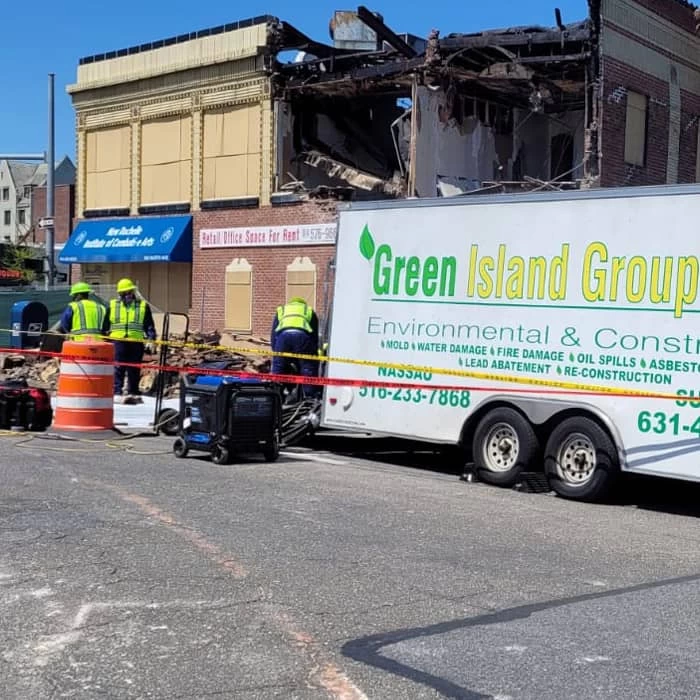
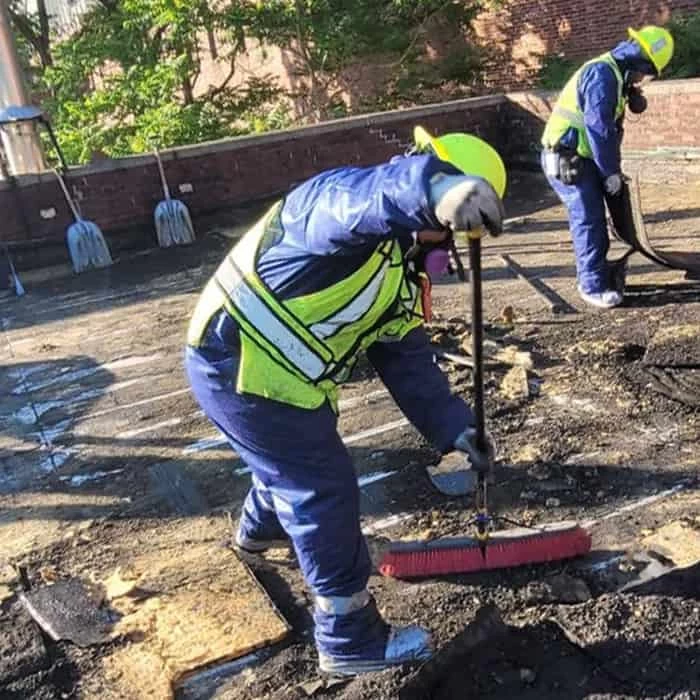
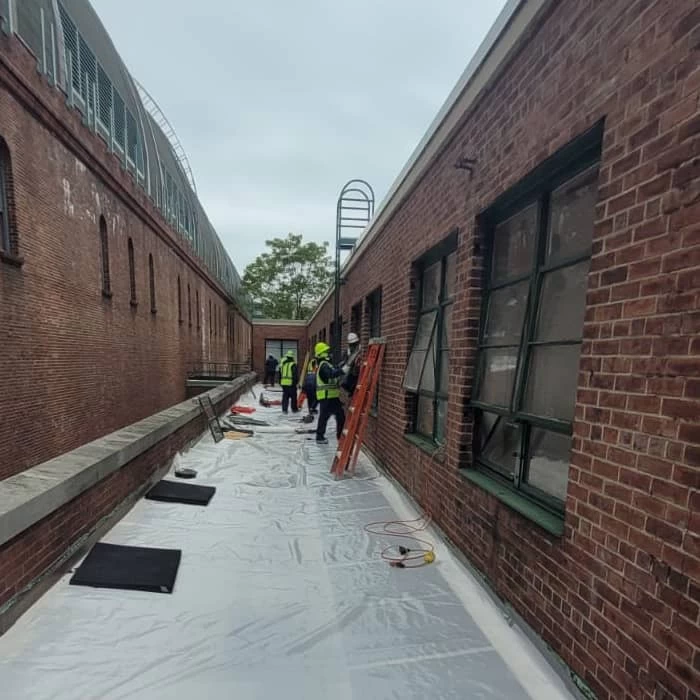
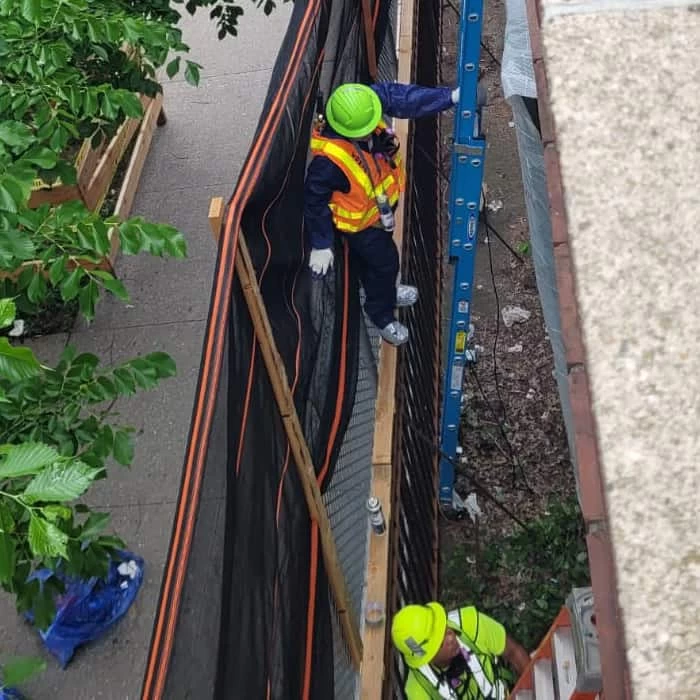
When fire hits a Holbrook home a 1970s ranch off Patchogue-Holbrook Road, a split-level in Parkland, a townhouse in Timber Ridge the damage goes deeper than what you can see. We handle fire damage restoration from the first call to the finished room, so you’re not managing this alone.
I needed a professional consultation explanation of procedure for safe removal of Asbestos in my apartment complex. Without having an account yet, I was very impressed with the caring, knowledgeable and generous advice offered by Jessica, and will look forward to doing business in the future. Thank you so much! I feel much more informed about a sometimes scary endeavor. Peace. Nancy Silva Mineola, NY.
Mia Munoz
Used this company to clean up some water flood in my house. They were fast and easy to work with.very professional, Would recommend to anyone!
Nini Valle
Great company, had a flood and they responded quickly and efficiently. Billed my insurance company directly. I highly recommend this company!
joe colapietro, jr
I had pipe freeze in my basement right before a snow storm and they made to within an hour to help start the clean up process. They we by our side throughout the entire process and even helped with the insurance company. They did such a great job with the cleanup, repair, remidiation, I contracted them to perform the repairs and finishes in the basement. They came with enough manpower and material to get the job done. Leo and Jessica were nothing but a pleasure to deal with!!
Cristian Arredondo c
I had some water damage in my home and Green Island was able to take care of my issue quickly and effectively. I am very pleased with the work they did. They responded quickly and were very professional.
Michael M
Outstanding service! From the office to the field crew everyone was friendly, helpful and responsive. I highly recommend Green Island Group.
Smoke doesn’t stay in the room where the fire started. In Holbrook’s ranch-style homes, open floor plans let smoke spread through the entire living space fast. Split-level stairwells pull it upward through every floor. By the time the fire is out, the damage is already in your walls, your ductwork, your insulation and it won’t come out with surface cleaning.
The real work is what happens behind the visible damage. Soot begins permanently etching surfaces within 24 to 72 hours. Water from firefighting soaks into floors and framing, and mold can start growing within 48 hours of that. In a home built in the 1960s or 1970s which describes most of Holbrook disturbing those materials also means a real risk of asbestos exposure. That’s just the reality of this housing stock, and it’s exactly why fire restoration here requires more than a general contractor.
When fire damage restoration is done completely, you come back to a home that’s structurally sound, air-quality verified, and free of the smell that would otherwise remind you of this every single day. That’s the outcome. Not just clean-looking actually safe, actually finished, actually done.
We Know Holbrook's Homes and the Permits That Come With Them
We’re independently owned and operated on Long Island not a national franchise dispatching crews from somewhere else. When you call, you’re reaching a local team that knows Suffolk County, understands the specific challenges of older Holbrook housing stock, and has real experience navigating the dual-town permit landscape that affects properties on both sides of the LIRR tracks.
Holbrook sits across two separate town jurisdictions the Town of Islip and the Town of Brookhaven and the permitting requirements for post-fire reconstruction differ depending on which side of Portion Road your home sits on. That’s the kind of detail that slows jobs down when a restoration company doesn’t know the area. It’s the kind of detail we already know because we work here regularly.
Multiple customers have named Leo and Jessica by name in their reviews not because it’s a talking point, but because those are the real people managing your job. There’s no mystery about who’s responsible. That accountability matters, especially when you’re dealing with one of the most stressful events a homeowner goes through.
From Emergency Call to Finished Home Here's the Sequence
The first call triggers an emergency response. We have documented sub-hour arrival times, and that speed matters because every hour of delay means more surfaces absorbing soot, more materials requiring full replacement instead of cleaning, and a higher final cost. The initial assessment covers visible fire and smoke damage, water intrusion from firefighting, structural integrity, and in Holbrook’s predominantly pre-1980 homes a screening for asbestos-containing materials before any demolition begins.
From there, the work moves in a clear sequence: water extraction and drying, soot and smoke remediation including ductwork and wall cavities, asbestos abatement if required under New York State NYSDOL licensing, mold remediation if water intrusion created the conditions for growth, and then full reconstruction through final finishes. Nothing gets skipped to save time. The scope is built around what your home actually needs, documented for your insurance claim from day one.
Speaking of insurance that process runs alongside the restoration, not after it. We help document damage, coordinate with adjusters, and advocate for the proper scope of work so your claim reflects the full picture. For a Holbrook home worth over $500,000 in today’s market, getting that right isn’t optional.
Fire Damage Restoration Services, Suffolk County NY
Full Scope Recovery Built for Holbrook's Older Homes
Fire damage restoration in Holbrook isn’t a single service it’s a sequence of connected work that has to happen in the right order. We cover the full scope: emergency stabilization and board-up, water extraction and structural drying, soot removal and smoke odor elimination using thermal fogging and hydroxyl treatment, HVAC and ductwork cleaning, asbestos abatement for pre-1980 construction, mold remediation under NY Labor Law Article 32, and complete reconstruction through finished interiors.
The asbestos piece is worth addressing directly. Most of Holbrook’s housing stock the ranches in Parkland, the homes throughout New England Village, the older splits throughout the community was built during the era when asbestos was standard in floor tiles, ceiling tiles, pipe insulation, and joint compound. A fire that disturbs those materials creates a regulated abatement situation. New York State requires a specific NYSDOL license for that work. We carry it. A restoration company that doesn’t either leaves the problem unaddressed or asks you to hire someone else to handle it.
Smoke odor elimination is treated as a technical process, not a spray-and-hope approach. In Holbrook’s ranch and split-level homes, odor embeds in porous materials throughout the structure. Thermal fogging and hydroxyl generators reach the smoke molecules inside walls and insulation the source of the smell, not just the surface.
What should I do immediately after a house fire in Holbrook, NY?
Don’t re-enter the home until the fire department has cleared it as structurally safe. Once you have that clearance, your next call should be to a fire damage restoration company not after you’ve spoken to your insurance company, not after you’ve tried to assess the damage yourself. The 24 to 72-hour window after a fire is when soot starts permanently etching surfaces and when water from firefighting begins creating mold conditions. Every hour of delay narrows your options and raises the cost.
In Holbrook specifically, there’s an additional consideration: if your home was built before 1980 which covers the majority of homes in neighborhoods like Parkland and New England Village any structural disturbance from the fire or from cleanup work can release asbestos-containing materials. Don’t start pulling out damaged drywall, ceiling tiles, or flooring yourself. A licensed restoration company will assess for that risk before demolition begins, which protects your family and keeps the job legally compliant under New York State requirements.
How does smoke damage spread to rooms that didn't catch fire?
Smoke moves through a home faster than most people expect. It travels through HVAC systems, wall cavities, gaps around electrical outlets, and any opening in the structure. In a ranch-style home the most common style in Holbrook’s Parkland subdivision and throughout much of the community an open floor plan means there’s almost nothing to contain smoke to the room of origin. A kitchen fire can fill the entire living space within minutes.
Split-level homes have a different but equally significant problem: the open stairwells act like chimneys, pulling smoke upward through every floor level. By the time the fire is out, the smoke has already reached rooms that saw no flame at all. This is why a proper fire smoke damage restoration assessment covers the entire structure, not just the burned area. Soot in ductwork and odor embedded in insulation won’t show up on a visual inspection but they’ll show up every time you run the heat.
Does homeowners insurance cover fire damage restoration in New York?
Standard homeowners insurance policies in New York do cover fire damage restoration, including smoke and soot cleanup, water damage from firefighting efforts, and structural repairs. What varies is the scope of what gets approved and that’s where the process gets complicated for most homeowners. Insurance adjusters work from their own damage assessments, and those assessments don’t always capture the full picture, particularly for secondary damage like smoke in wall cavities, mold from water intrusion, or asbestos abatement costs in older homes.
We document damage from the first day on-site and work alongside you through the claim process coordinating with adjusters, providing detailed scope-of-work documentation, and advocating for coverage that reflects the actual damage. For a Holbrook home with a median value over $536,000, the difference between a properly documented claim and an underdocumented one can be significant. You shouldn’t have to navigate that process alone while also trying to figure out where your family is staying.
Does fire damage restoration in Holbrook require permits or inspections?
Yes, and in Holbrook the answer is slightly more complicated than in most towns because the community straddles two separate town jurisdictions. If your home is in the majority of Holbrook the Town of Islip portion reconstruction work after fire damage requires building permits from the Town of Islip Building Department. If your property sits between Portion Road and the Long Island Rail Road tracks, you’re in the Town of Brookhaven, and permits come from that town’s building department instead. The requirements and processes differ between the two.
On top of town-level permits, Suffolk County requires Home Improvement Contractor licensing for restoration and reconstruction work. If asbestos abatement is part of the scope which it often is in Holbrook’s pre-1980 homes New York State NYSDOL licensing is required for that work specifically. And if mold remediation is needed, New York Labor Law Article 32 governs that process for any contamination area over 10 square feet. A restoration company that doesn’t know these layers is going to create delays. We know them because we work here.
How long does fire damage restoration typically take for a Holbrook home?
The honest answer is that it depends on the scope, and scope in Holbrook’s older housing stock is often wider than it first appears. A contained kitchen fire with limited smoke spread might take two to three weeks from emergency stabilization through reconstruction. A fire that has spread smoke through an open-plan ranch, disturbed asbestos-containing materials, and created water damage from firefighting efforts can take six to eight weeks or longer especially when asbestos abatement, mold remediation, and full structural reconstruction are involved.
The factors that extend timelines most often are permit processing through the Town of Islip or Town of Brookhaven, insurance claim approvals for the full scope of work, and the discovery of secondary damage particularly mold that wasn’t visible in the initial assessment. We build the project timeline around what your home actually needs, not an optimistic estimate designed to win the job. You’ll know what to expect before work begins, and our team communicates throughout so you’re not left guessing about where things stand.
Does fire damage also mean I need mold remediation in my Holbrook home?
Not always, but more often than most homeowners expect and the reason is water, not the fire itself. Fire hoses deliver a significant volume of water in a short period of time. That water soaks into floors, wall framing, insulation, and ceilings. In a closed-up home during the colder months and Holbrook’s inland location means genuinely cold winters from December through February that moisture can stay trapped in structural materials long after the visible water is gone. Mold can begin growing within 24 to 48 hours of water intrusion under the right conditions.
In Holbrook’s older homes, this risk is compounded by the fact that original insulation and building materials from the 1960s and 1970s absorb and retain moisture more readily than modern materials. A proper fire restoration assessment includes moisture mapping of the structure not just a visual check to identify where water has traveled and whether drying is complete before reconstruction begins. If mold is found, New York Labor Law Article 32 governs the remediation process for anything over 10 square feet. We handle both, in sequence, under the same project so you’re not coordinating two separate companies to finish one job.