When Your Huntington Bay Home Takes a Hit, Every Hour Matters
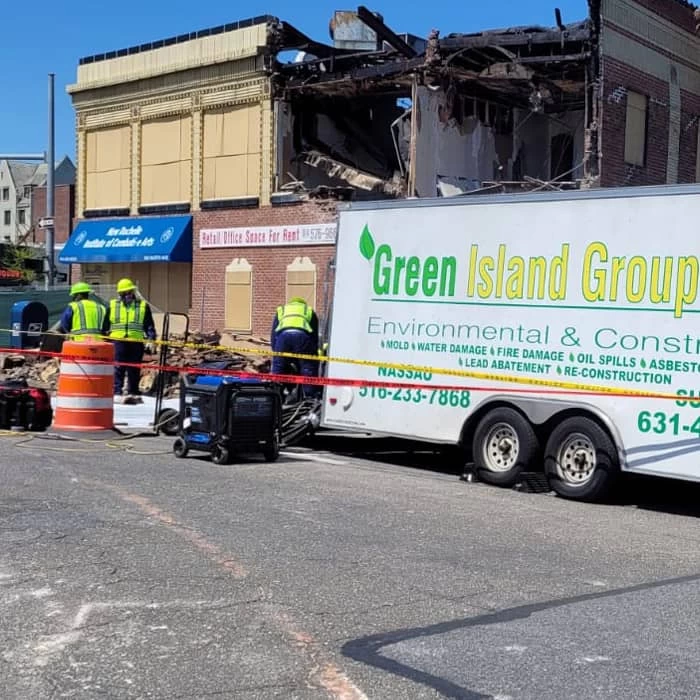
Smoke spreads fast, soot sets in faster, and water from suppression soaks into everything. We respond quickly, handle your insurance, and restore your home completely from emergency board-up to final finishes.
I needed a professional consultation explanation of procedure for safe removal of Asbestos in my apartment complex. Without having an account yet, I was very impressed with the caring, knowledgeable and generous advice offered by Jessica, and will look forward to doing business in the future. Thank you so much! I feel much more informed about a sometimes scary endeavor. Peace. Nancy Silva Mineola, NY.
Mia Munoz
Used this company to clean up some water flood in my house. They were fast and easy to work with.very professional, Would recommend to anyone!
Nini Valle
Great company, had a flood and they responded quickly and efficiently. Billed my insurance company directly. I highly recommend this company!
joe colapietro, jr
I had pipe freeze in my basement right before a snow storm and they made to within an hour to help start the clean up process. They we by our side throughout the entire process and even helped with the insurance company. They did such a great job with the cleanup, repair, remidiation, I contracted them to perform the repairs and finishes in the basement. They came with enough manpower and material to get the job done. Leo and Jessica were nothing but a pleasure to deal with!!
Cristian Arredondo c
I had some water damage in my home and Green Island was able to take care of my issue quickly and effectively. I am very pleased with the work they did. They responded quickly and were very professional.
Michael M
Outstanding service! From the office to the field crew everyone was friendly, helpful and responsive. I highly recommend Green Island Group.
What Full Restoration Actually Looks Like in Huntington Bay
A fire doesn’t stay where it started. In the older, larger homes that define Huntington Bay many built before 1940 and situated on the East Neck peninsula smoke moves fast through HVAC systems, wall cavities, and crawl spaces that have decades of material built up inside them. By the time the Halesite Fire Department clears your property, the invisible damage has already started spreading well beyond the room where the fire began.
What you get from a complete restoration isn’t just cleaned walls and replaced flooring. It’s air that doesn’t carry a smell. It’s knowing the ductwork was actually addressed, not wiped down and called done. It’s structural materials that were properly dried before anything was closed up because water from fire suppression is a mold problem waiting to happen, and in a coastal village with the humidity that comes off Huntington Bay, that timeline is shorter than most people realize.
For a home worth what yours is worth in this community, incomplete restoration isn’t acceptable. The goal is a home that’s fully livable, fully documented for your insurance claim, and built back the right way with no shortcuts taken on materials, air quality, or the permit process that Huntington Bay’s village building officials oversee directly.
Long Island-Based, Locally Accountable, No Franchise Overhead
We’re a locally owned restoration company serving Huntington Bay, Suffolk County, and the broader Long Island area. Not a franchise. Not a call center that dispatches whoever’s available. When you call, you’re reaching a team that works in your backyard familiar with North Shore housing stock, older construction, and what it actually takes to restore a home in a community like Huntington Bay.
Residents here have invested decades into properties that sit along one of the most scenic stretches of the Long Island Sound. That kind of home deserves a restoration company that treats it accordingly. Leo and Jessica are the names you’ll hear from real customers in real reviews not because it’s a selling point, but because consistent communication is just how the job gets done here.
We’ve built our reputation the way most things get built in a village of fewer than 1,500 people: one job at a time, one neighbor telling another.
Fire Damage Restoration Process, Huntington Bay NY
From the First Call to the Final Walkthrough No Handoffs
The first step is stabilization. That means emergency board-up, tarping, and securing the structure so nothing else gets in weather, moisture, or unauthorized access. On the North Shore, where nor’easters and coastal humidity can compound damage quickly, getting that protective layer in place fast isn’t optional.
From there, the assessment begins. Every affected area gets documented not just what burned, but where smoke traveled, where water saturated, and what’s hiding behind walls and inside ductwork. For homes built before 1974, which covers a significant portion of Huntington Bay’s housing stock, that assessment includes identifying potential asbestos-containing materials before any demolition begins. The Town of Huntington requires an asbestos letter for structures built prior to January 1, 1974, and since permits for restoration work in Huntington Bay run through the village’s own building officials not the Town knowing that process matters.
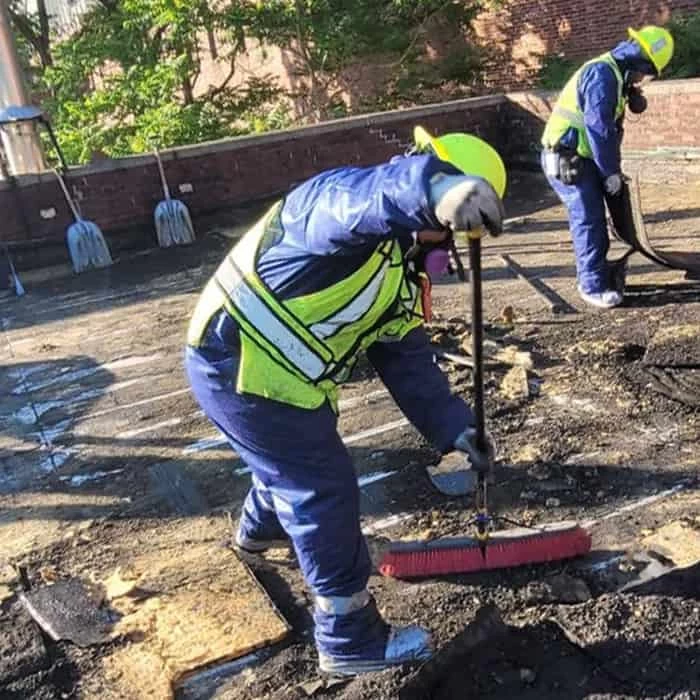
Then comes the actual work: water extraction, structural drying, soot and smoke remediation, odor elimination, and reconstruction. Your insurance adjuster gets documentation at every stage. When the job is done, you walk through it. We don’t consider the project closed until you do.
Everything the Job Requires Not Just the Visible Damage
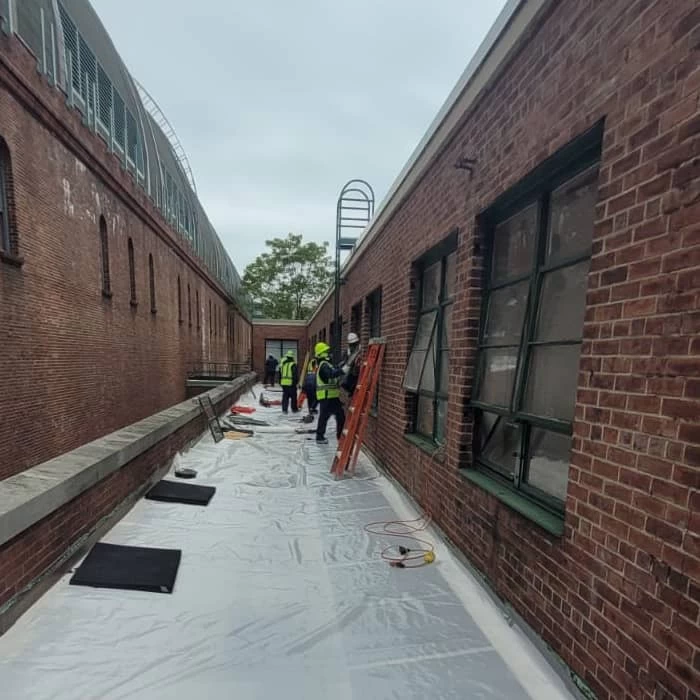
Fire damage restoration in Huntington Bay isn’t a single service it’s a sequence of them. Smoke and soot removal, water extraction from firefighting suppression, structural drying, HVAC decontamination, odor elimination, asbestos and environmental remediation where required, and full reconstruction back to pre-loss condition. We handle all of it under one roof, which matters when you’re dealing with a property that has layers of history and materials that require careful handling.
The homes in this community from the pre-war estates near Bay Crest to the mid-century colonials throughout the village carry materials and construction methods that newer suburban builds don’t. Restoring them properly means understanding what you’re working with before you start tearing things out. It also means knowing when to restore rather than replace, which is both the right call for historic character and the better outcome for your insurance claim.
Insurance documentation runs alongside every phase of the project. We work directly with your adjuster, keep the scope of work clear and supported, and make sure nothing gets missed in the claim that you’re entitled to recover. In Suffolk County, where high-value property claims get more scrutiny, that kind of hands-on claim support isn’t a bonus it’s part of the job.
What should I do immediately after a house fire in Huntington Bay?
The most important thing you can do in the first hour is not go back inside without clearance. Once the Halesite Fire Department has released the property, your next call should be to a restoration company not because of urgency for urgency’s sake, but because soot begins permanently bonding to surfaces within 24 to 72 hours, and water from suppression starts creating mold conditions within 24 to 48 hours. Both clocks are already running.
When you do make that call, we can deploy immediately for emergency stabilization board-up, tarping, and moisture control. From there, a full damage assessment gets documented before anything is touched, which is critical for your insurance claim. Don’t attempt to clean soot yourself, run your HVAC system, or disturb any materials in the affected areas before a professional has assessed what’s there especially in an older Huntington Bay home where wall and ceiling materials may contain asbestos that requires certified handling before removal.
How long does fire damage restoration typically take for a larger home in Huntington Bay?
There’s no honest single answer to this because the timeline depends heavily on the scope of damage, the size of the home, and what’s found during the assessment. A contained kitchen fire in a mid-sized Huntington Bay home might take two to four weeks from emergency response through final reconstruction. A fire that spread through multiple rooms of a large estate or one that required asbestos abatement before demolition could begin could run two to three months or more.
What affects the timeline most isn’t just the physical work. It’s the permitting process, the insurance adjuster’s review, and whether environmental testing reveals materials that need certified remediation. In Huntington Bay, permits for restoration work go through the village’s own building officials, not the Town of Huntington Building Department so working with a contractor who understands that process avoids delays that can add weeks to an already difficult situation. We move as fast as the job allows without cutting corners that create problems later.
Does homeowners insurance cover fire and smoke damage restoration in Huntington Bay, NY?
Standard homeowners insurance policies typically cover fire damage, smoke damage, and the water damage caused by firefighting suppression all as part of the same claim. What they cover in terms of dollar amount depends on your specific policy limits, your deductible, and how well the damage is documented when the adjuster reviews the scope of work.
Where homeowners often lose money isn’t in the policy itself it’s in the documentation. An adjuster working a high-value claim on a Huntington Bay property is going to look closely at the scope, and anything that isn’t clearly supported with photos, moisture readings, and written assessments is easier to dispute or underpay. We document every phase of the project specifically to support your claim not just to satisfy internal records. If there’s a disagreement about scope, having a restoration company that can speak directly to the adjuster with real documentation behind them makes a measurable difference in the final payout.
Does my Huntington Bay home need an asbestos inspection before fire restoration work begins?
If your home was built before January 1, 1974, the answer is effectively yes and a large portion of Huntington Bay’s housing stock falls into that category. The Town of Huntington requires an asbestos letter when applying for building permits on pre-1974 structures, and since Huntington Bay is an incorporated village with its own building officials handling permits, that requirement applies here through the village’s permitting process.
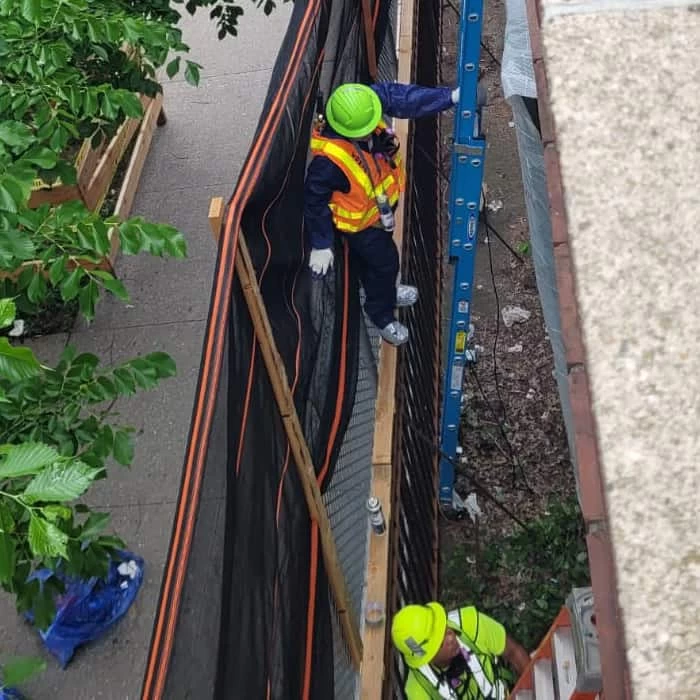
Asbestos was commonly used in pipe insulation, floor tiles, ceiling materials, and joint compounds in homes built before the mid-1970s. A fire that disturbs those materials or demolition work that follows can release fibers if the materials aren’t identified and handled by certified professionals first. This isn’t a technicality. It’s a health and legal requirement. A restoration contractor who isn’t certified for asbestos abatement can’t legally complete a full fire restoration project on many Huntington Bay homes. Before any demo begins, a certified inspector should assess the property and provide the documentation required to proceed.
Will the smoke smell ever fully go away after a fire in my home?
Yes but only if the source is actually eliminated, not just masked. Smoke odor persists when the molecules causing it are still present: embedded in porous materials like insulation, drywall, wood framing, and soft goods, or circulating through an HVAC system that was never fully decontaminated. Spraying a deodorizer over the top of that doesn’t solve it. It just delays the moment when the smell comes back.
Proper odor elimination involves removing or treating every affected material, cleaning or replacing HVAC components, and using professional-grade techniques thermal fogging, hydroxyl generation, or ozone treatment depending on what the situation calls for to neutralize the odor at the molecular level. In a larger Huntington Bay home with a complex HVAC system and multiple floors, this process takes time and can’t be rushed without leaving something behind. If you can still smell it, the job isn’t done. That’s the standard we work to.
How do I know if a fire restoration company is qualified to work in Huntington Bay specifically?
A few things to check before you commit. First, confirm they’re licensed as a Home Improvement Contractor in Suffolk County this is a legal requirement for restoration work in this area, and not every company operating on Long Island carries it. Second, ask specifically whether they have asbestos abatement certification through the NYS Department of Labor. Given the age of housing stock in Huntington Bay, this comes up on more jobs than most homeowners expect, and a contractor without it will either skip that step or have to bring in a subcontractor mid-project, which creates gaps in accountability.
Third and this matters in a village like Huntington Bay ask whether they’re familiar with the local permitting process. Restoration permits here go through Huntington Bay’s own village building officials, not the Town of Huntington. A contractor who doesn’t know that distinction is going to run into delays that cost you time and money during an already difficult stretch. Beyond credentials, look for reviews that name specific staff, describe specific outcomes, and come from homeowners in communities similar to yours. That kind of detail is harder to fake and tells you more than a star rating alone.