When the Fire's Out, the Real Work Begins on This Island
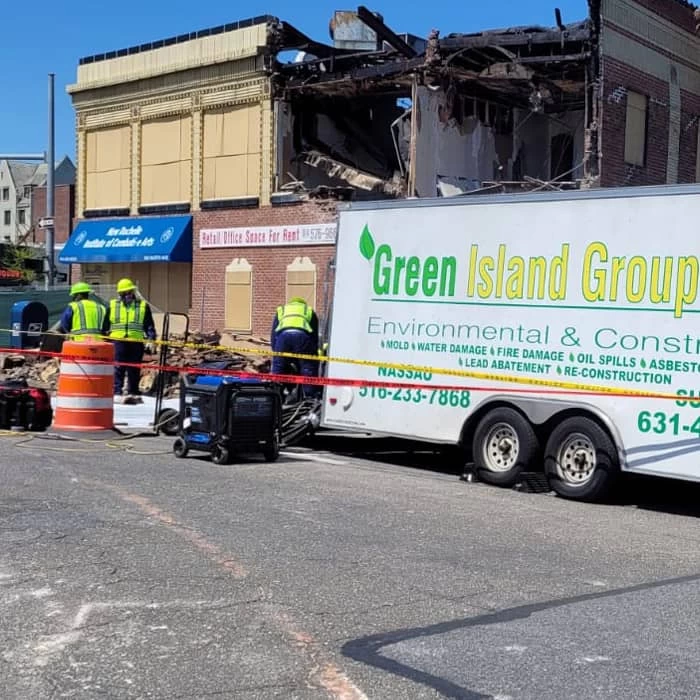
Fire damage in Island Park moves fast — and so does the clock on smoke, soot, and water soaking into walls that have been standing since the 1950s. We respond 24/7 and handle everything from emergency board-up to full structural rebuild under one Nassau County license.
I needed a professional consultation explanation of procedure for safe removal of Asbestos in my apartment complex. Without having an account yet, I was very impressed with the caring, knowledgeable and generous advice offered by Jessica, and will look forward to doing business in the future. Thank you so much! I feel much more informed about a sometimes scary endeavor. Peace. Nancy Silva Mineola, NY.
Mia Munoz
Used this company to clean up some water flood in my house. They were fast and easy to work with.very professional, Would recommend to anyone!
Nini Valle
Great company, had a flood and they responded quickly and efficiently. Billed my insurance company directly. I highly recommend this company!
joe colapietro, jr
I had pipe freeze in my basement right before a snow storm and they made to within an hour to help start the clean up process. They we by our side throughout the entire process and even helped with the insurance company. They did such a great job with the cleanup, repair, remidiation, I contracted them to perform the repairs and finishes in the basement. They came with enough manpower and material to get the job done. Leo and Jessica were nothing but a pleasure to deal with!!
Cristian Arredondo c
I had some water damage in my home and Green Island was able to take care of my issue quickly and effectively. I am very pleased with the work they did. They responded quickly and were very professional.
Michael M
Outstanding service! From the office to the field crew everyone was friendly, helpful and responsive. I highly recommend Green Island Group.
A fire in Island Park isn’t just a fire. The suppression water soaks into subfloors and wall cavities within hours. Smoke travels through aging ductwork and porous materials into every room far from the burn zone. And in a home built before 1960 — which describes most of the housing stock on this island — there’s a real chance the fire disturbed asbestos or lead paint, turning a cleanup job into a licensed abatement situation overnight.
Most restoration companies handle one piece of that. They extract water, or they clean soot, or they do the demo — and then they hand you a list of other contractors to call while you’re still displaced. That gap costs time, money, and peace of mind you don’t have right now.
When we take a job in Island Park, the entire scope stays under one roof. Water extraction, smoke and soot remediation, hazardous material abatement, mold prevention, structural repair, and full reconstruction — all of it. You make one call, you have one point of contact, and the job doesn’t stall between handoffs. For a barrier island community with limited access and older homes carrying compounding hazards, that continuity isn’t a convenience. It’s what gets you back home.
Every License This Job Actually Requires — We Hold Them All
We’re a Long Island-based, locally owned restoration company with over 5,000 completed projects across New York State. We hold IICRC certification for fire and smoke damage restoration, a Nassau County General Contractor license, NYS DOL Asbestos and Mold licenses, and USEPA Lead/RRP certification. That combination is rare — and in Island Park, where a significant portion of homes predate 1960, it’s what separates a company that can legally complete your job from one that can’t.
Nassau County’s Fire Marshal and Arson Bomb Squad regularly respond to Island Park fire investigations before restoration can begin. We know that process, work within it, and are ready to mobilize the moment your property is cleared.
Island Park is a tight-knit community of under 5,000 residents — people talk, neighbors notice, and word travels fast. The reviews that follow us from job to job across Long Island’s South Shore reflect exactly that kind of accountability. We’re not a franchise or a call center. We’re a real company with real licenses doing real work in your neighborhood.
From the Fire Marshal's Clearance to Move-Back-In Day
After a fire in Island Park, the Nassau County Fire Marshal and, in many cases, the Nassau County Detective Arson Bomb Squad will need to clear the scene before any restoration work begins. Once that clearance comes through, the clock on secondary damage — water saturation, mold growth, smoke absorption — is already running. We’re ready to move the moment you get that clearance.
The first priority is stabilization: emergency board-up, roof tarping, and water extraction from firefighting suppression. Simultaneously, our team assesses the full scope — structural damage, smoke and soot penetration, HVAC contamination, and whether asbestos or lead-containing materials were disturbed. In Island Park’s older housing stock, that last step isn’t optional. It’s legally required, and it shapes everything that comes after.
From there, remediation moves in phases: soot and smoke removal using industrial air scrubbers and thermal fogging, licensed asbestos or lead abatement where applicable, mold prevention treatment in water-affected areas, and then structural reconstruction under our Nassau County General Contractor license. Every phase is documented to insurance-standard specifications — which matters when your adjuster is reviewing the claim. By the time the job is complete, your home is restored, permitted, and ready. Not patched. Restored.
Built for Island Park's Homes, Not Just Any House Fire
Island Park’s housing stock presents a specific set of challenges that generic restoration companies aren’t equipped to handle. Homes here were largely built between the 1940s and 1970s — many started as summer bungalows before being converted to year-round residences. That means original oil heating systems, aging electrical wiring, and building materials that almost certainly contain asbestos or lead. When fire or smoke damages those materials, the restoration scope expands well beyond what most companies are licensed to touch.
We offer the full range of services for Island Park: emergency response and property stabilization, fire and smoke damage remediation, water extraction and structural drying, asbestos and lead abatement under NYS DOL and USEPA certifications, mold remediation, HVAC cleaning under NADCA standards, and complete structural reconstruction under Nassau County General Contractor licensure. Oil burner puff-backs — a common issue in Island Park’s older, oil-heated homes — are handled with the same thoroughness as a full fire loss, including ductwork cleaning and surface decontamination throughout the home.
Every job includes direct insurance billing and documentation built to support your claim from the first inspection through final sign-off. If you’ve been through a major loss before — and many Island Park residents have, going back to Sandy — you already know how much that documentation matters when the adjuster starts asking questions.
What should I do immediately after a house fire in Island Park, NY?
The first thing to understand is that you likely won’t be able to re-enter your home right away. In Island Park, the Nassau County Fire Marshal and, depending on the circumstances, the Nassau County Detective Arson Bomb Squad will need to investigate and clear the scene before any restoration work — or even a detailed inspection — can begin. Don’t try to rush that process or re-enter without clearance. It’s both unsafe and legally problematic.
Once the scene is cleared, contact us immediately. The secondary damage from a fire — water saturation from suppression, smoke absorption into walls and contents, and mold growth — begins within 24 to 48 hours. Every hour of delay increases the scope of what needs to be remediated. Call our 24/7 emergency line so we’re staged and ready to move the moment you have clearance. In the meantime, contact your insurance carrier to open a claim, and document what you can from outside the structure with photos or video.
Does homeowners insurance cover fire damage restoration costs in Nassau County?
In most cases, yes — standard homeowners insurance covers fire damage restoration, including smoke and soot cleanup, water damage from suppression, and structural repairs. What varies is how thoroughly the claim is documented and how aggressively your adjuster interprets the scope of damage. That gap between what’s covered and what gets approved is where a lot of homeowners lose money.
We document every phase of the restoration process to insurance-standard specifications and bill insurance directly. That means your adjuster receives a complete, professionally formatted damage assessment — not a rough estimate — which typically results in faster approvals and fewer disputes over scope. For Island Park homeowners who went through Sandy claims, this process will feel familiar. The same principles apply: thorough documentation protects you. A restoration company that cuts corners on paperwork will cost you more in the long run than whatever they saved you upfront.
My Island Park home was built in the 1950s — does that affect fire restoration?
It affects it significantly. Homes built before 1980 commonly contain asbestos in floor tiles, pipe insulation, ceiling tiles, and joint compound. Homes built before 1978 commonly contain lead paint. When fire or smoke damages these materials — or when demo work disturbs them during restoration — you’re no longer dealing with a standard cleanup. You’re dealing with a legally regulated hazardous material situation that only contractors holding specific state and federal certifications can legally address.
We hold the NYS DOL Asbestos License and USEPA Lead/RRP Certification required to handle both. If you hire a restoration company that doesn’t hold these credentials to work in your Island Park home, you could end up with a property that fails inspection, creates ongoing health liability, or requires the work to be redone by a licensed contractor anyway — at your expense. Given that roughly a quarter of Island Park’s housing stock was built before 1950, this isn’t a rare edge case. It’s a standard consideration for fire restoration work in this community.
How long does fire damage restoration typically take for an Island Park home?
The honest answer is that it depends heavily on the scope, and scope in Island Park tends to run broader than in newer construction communities. A contained kitchen fire in a 1960s home might take three to four weeks from clearance to completion. A fire that spread to multiple rooms, disturbed asbestos-containing materials, and introduced significant suppression water into aging structural framing could take two to four months — especially when Nassau County building permits are required for reconstruction work.
The factors that most commonly extend timelines are: the presence of hazardous materials requiring licensed abatement, the extent of water saturation in older, porous building materials, and the permitting process for structural reconstruction in the Village of Island Park or Nassau County for Barnum Island and Harbor Isle residents. We handle all of it — licensing, permitting, abatement, and rebuild — which eliminates the delays that happen when homeowners are trying to coordinate multiple contractors. A realistic timeline is something we’ll give you after the initial assessment, not before.
What's the difference between fire damage and smoke damage restoration?
Fire damage refers to what the flames physically destroyed — charred framing, burned materials, structural loss. Smoke damage is a separate and often more widespread problem. Smoke travels through wall cavities, HVAC systems, and structural gaps far beyond the burn zone, depositing soot and odor-causing particles on every surface it contacts. In Island Park’s older homes, which often have original ductwork and porous plaster walls, smoke penetrates deeply and holds odor for months if it isn’t addressed at the source.
The remediation approach for smoke is different from fire cleanup. It requires industrial air scrubbers, HEPA filtration, thermal fogging, and in many cases NADCA-standard HVAC cleaning to remove contamination from the ductwork that distributes soot throughout the home. Surface cleaning alone doesn’t solve it — if the smell comes back weeks after a cleaning, it’s because the source contamination was never fully addressed. Our fire and smoke restoration process treats both the visible damage and the hidden penetration, which is the only way to genuinely restore indoor air quality rather than just make the home look clean.
Can you handle a puff-back from an oil burner in Island Park?
Yes — and this is one of the more common calls we receive from South Shore Nassau County homeowners. Island Park has a high concentration of older, oil-heated homes, many with original heating systems from the 1950s and 1960s. When an oil burner misfires, the resulting puff-back sends a fine, oily soot through the furnace exhaust and into the home’s air supply — coating walls, ceilings, furniture, and every surface the air current reaches. There’s no fire, but the contamination is real and widespread.
The cleanup for a puff-back is a full smoke and soot restoration job, not a surface wipe-down. It requires the same professional-grade approach as post-fire soot remediation: decontamination of all affected surfaces, NADCA-standard cleaning of the HVAC system and ductwork that distributed the soot, and air quality treatment to eliminate the oily odor that persists long after visible residue is removed. If you’ve had a puff-back in your Island Park home and the smell won’t clear despite repeated cleaning, the ductwork is almost certainly still contaminated. That’s the part that needs professional attention, and it’s work we handle routinely for homeowners throughout this community.