When Your Islandia Home Needs More Than a Cleanup Crew
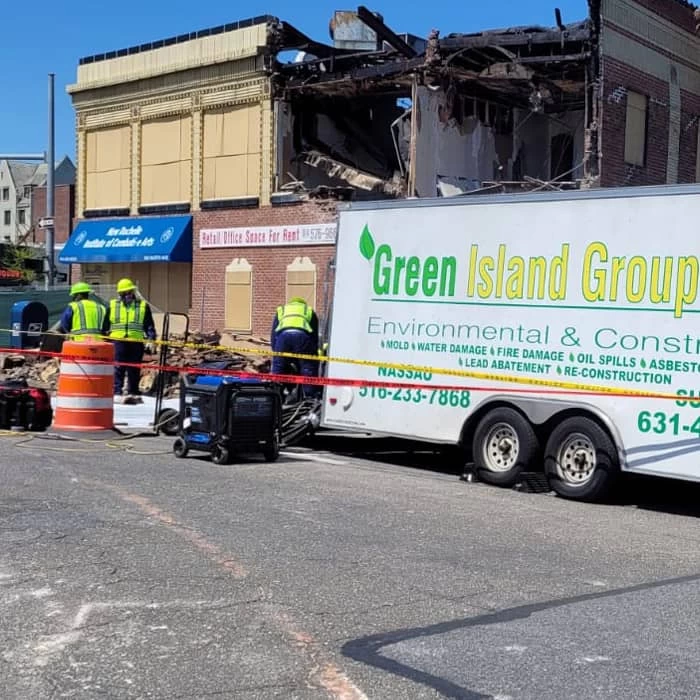
Fire damage doesn’t stop at the burn mark. Smoke moves through your walls, soot starts etching surfaces within hours, and water from the hoses creates its own problem. We handle all of it one call, full recovery, from emergency response through the final coat of paint.
I needed a professional consultation explanation of procedure for safe removal of Asbestos in my apartment complex. Without having an account yet, I was very impressed with the caring, knowledgeable and generous advice offered by Jessica, and will look forward to doing business in the future. Thank you so much! I feel much more informed about a sometimes scary endeavor. Peace. Nancy Silva Mineola, NY.
Mia Munoz
Used this company to clean up some water flood in my house. They were fast and easy to work with.very professional, Would recommend to anyone!
Nini Valle
Great company, had a flood and they responded quickly and efficiently. Billed my insurance company directly. I highly recommend this company!
joe colapietro, jr
I had pipe freeze in my basement right before a snow storm and they made to within an hour to help start the clean up process. They we by our side throughout the entire process and even helped with the insurance company. They did such a great job with the cleanup, repair, remidiation, I contracted them to perform the repairs and finishes in the basement. They came with enough manpower and material to get the job done. Leo and Jessica were nothing but a pleasure to deal with!!
Cristian Arredondo c
I had some water damage in my home and Green Island was able to take care of my issue quickly and effectively. I am very pleased with the work they did. They responded quickly and were very professional.
Michael M
Outstanding service! From the office to the field crew everyone was friendly, helpful and responsive. I highly recommend Green Island Group.
The fire truck leaves, and it looks like the worst is over. It’s not. Soot starts permanently bonding to surfaces within 24 to 72 hours. Smoke has already traveled through your ductwork and settled into walls, insulation, and ceilings in rooms that never saw a flame. That’s the damage most homeowners don’t find out about until weeks later when the smell won’t go away and the air quality test comes back wrong.
For Islandia homeowners, there’s an additional layer that most restoration companies aren’t equipped to handle. The original residential core of this village was built by Levitt and Sons around 1963. Homes of that era commonly contain asbestos in floor tiles, ceiling tiles, pipe insulation, and joint compounds. When a fire disturbs those materials, New York State law requires assessment and abatement before any restoration work can legally proceed. A fire-only cleanup crew can’t do that. We can.
If you’re in Towne House Village or The Polo Club at Islandia, the concern shifts slightly but doesn’t get simpler. Smoke and suppression water don’t respect shared walls. In attached and semi-detached units, damage can cross into neighboring units through shared HVAC systems and structural cavities which means documentation, coordination with building management, and insurance complexity that a standard crew isn’t built for.
We’re a locally owned restoration company based on Long Island, serving Nassau and Suffolk Counties. When you call us after a fire in your Islandia home, you’re not reaching a national call center. You’re reaching people who know this area the housing stock along Old Nichols Road, the permitting process through the Village of Islandia’s own Building Department, and the multi-district reality of working across three separate fire districts: Central Islip, Hauppauge, and Lakeland.
Customers consistently name Leo and Jessica by name in their reviews not because it’s a talking point, but because the same people who answer the phone are the ones managing your project from the first call through the final walkthrough. That’s not something a franchise operation can offer. In a village of roughly 4,000 people where word travels fast, that kind of accountability matters more than a brand logo.
We also carry environmental remediation credentials, including asbestos abatement a capability that’s directly relevant to Islandia’s 1963-era Levitt homes and one that most fire restoration companies simply don’t have.
The first thing we do is respond. Documented arrival times under one hour mean that on the I-495 corridor through Islandia, you’re not waiting half a day for someone to show up. Our initial visit covers an emergency assessment, board-up if needed, and a full evaluation of what the fire, smoke, and suppression water have actually affected not just what’s visible.
From there, if your home is one of Islandia’s older Levitt-era builds, the process includes an asbestos assessment before any demolition or cleaning begins. That’s a New York State requirement, and we handle it directly no subcontracting, no delays while you find a separate environmental firm. Once the site is cleared, the remediation work begins: soot and smoke removal, HVAC cleaning, water extraction, and moisture mapping to prevent mold from taking hold within the 24 to 48-hour window it needs to start growing.
Reconstruction follows structural repairs, drywall, flooring, paint, finishes through to completion. And because the Village of Islandia has its own Building Department operating separately from the Town of Islip’s process, permits need to be pulled correctly from the start. We manage that process. Throughout all of it, our team works directly with your insurance adjuster, documents everything the claim requires, and keeps you informed without making you chase anyone down for updates.
Everything the Job Actually Requires Done by One Team
Fire damage restoration isn’t one service it’s several, and the order matters. We cover the full scope: emergency board-up and site securing, asbestos and lead paint assessment for older homes, soot and smoke remediation, HVAC and ductwork cleaning, water extraction and structural drying, mold prevention, contents evaluation, and full reconstruction through final finishes. You don’t coordinate between three different contractors. One team handles it start to finish.
The insurance piece is built into our process, not added on as an afterthought. We have a documented track record of working directly with adjusters, building the documentation the claim requires, and helping homeowners avoid the most common outcome of an underprepared claim: a payout that doesn’t cover the actual damage. For Islandia homeowners with median home values pushing $490,000 to $690,000 and above, the difference between a well-documented claim and a poorly handled one can be significant.
For residents in the commercial corridor along Veterans Memorial Highway, or for businesses near the LIE interchange, our restoration capability extends to commercial properties as well. Every job residential or commercial, single-family home or attached unit comes with a straightforward satisfaction guarantee: the work isn’t done until you say it is.
Does fire damage restoration in Islandia require permits from the village?
Yes and this is one of the details that catches a lot of homeowners off guard. Because Islandia is an incorporated village with its own Building Department, any structural repairs, reconstruction, or significant mechanical and electrical work requires permits pulled from the Village of Islandia specifically not just from the Town of Islip. These are two separate processes, and contractors who aren’t familiar with the local regulatory environment can create delays by going to the wrong office or skipping a step.
Our experience working throughout central Suffolk County means we’re already familiar with the Village of Islandia’s permitting requirements, the coordination involved with the local fire marshal, and how that process interacts with New York State building codes. We handle permit applications as part of the restoration project you don’t have to figure out which forms to file or which office to call while you’re also dealing with an insurance claim and a displaced household.
My home was built in the 1960s does that affect the fire restoration process?
It does, and it’s worth knowing before any work begins. Homes built around 1963 like the original Levitt and Sons development that forms the residential core of Islandia commonly contain asbestos-containing materials in floor tiles, ceiling tiles, pipe insulation, roofing materials, and joint compounds. Lead-based paint is also common in original paint layers. When a fire disturbs these materials, New York State law requires a certified assessment and abatement process before any demolition or cleaning can legally proceed.
This isn’t something a general fire cleanup crew is equipped to handle. We hold the environmental remediation credentials required for asbestos abatement in New York State, which means the assessment and abatement are done in-house no waiting for a separate environmental contractor to clear the site before restoration can begin. For owners of Islandia’s older homes, this capability isn’t a bonus feature. It’s a legal requirement, and having one team that can do it all is what keeps the project moving.
How quickly does smoke damage need to be addressed after a fire?
The window is shorter than most people expect. Soot begins permanently bonding to and etching surfaces within 24 to 72 hours of a fire. Smoke particles that have traveled through the HVAC system and settled into walls, insulation, and soft materials start causing lasting damage within the same timeframe. The longer professional remediation is delayed, the more surface area is permanently affected and the higher the total restoration cost.
Water from fire suppression adds urgency on a separate front. Fire hoses push a significant volume of water into a structure, and that moisture can trigger mold growth within 24 to 48 hours if it isn’t extracted and dried properly. In Islandia’s older Levitt-era homes, where aging structural materials absorb moisture more readily than newer construction, that window is especially tight. Our documented response times under one hour from an emergency call mean the process starts before the damage has a chance to compound.
Will my homeowner's insurance cover fire damage restoration in Suffolk County?
Most standard homeowner’s insurance policies do cover fire damage restoration, including smoke and soot remediation, water damage from fire suppression, and structural repairs. But the coverage you actually receive depends heavily on how the claim is documented. Adjusters work from the evidence in front of them incomplete documentation, missed damage, or a scope of work that doesn’t capture the full extent of the loss can result in a payout that falls well short of what the restoration actually costs.
For Islandia homeowners, where median home values are approaching $490,000 to $690,000 and above, the gap between a well-documented claim and a poorly handled one can be tens of thousands of dollars. We work directly with your adjuster throughout the process documenting damage, building the scope of work the claim requires, and making sure nothing gets missed. Multiple customers have specifically called this out in reviews as one of the most valuable parts of working with us, separate from the physical restoration work itself.
Can smoke from a fire in my unit affect my neighbors in Islandia's attached communities?
Yes, and it happens more often than people realize. In attached and semi-detached communities like Towne House Village or The Polo Club at Islandia, smoke and soot can travel through shared HVAC systems, wall cavities, and structural connections into neighboring units even if the fire itself was contained to one home. Suppression water can also migrate through shared flooring and wall assemblies.
When this happens, the restoration process becomes significantly more complex. You’re now dealing with multiple homeowners, HOA insurance policies, shared liability questions, and the need to document damage across unit lines in a way that each party’s insurance claim can actually use. We have experience handling multi-unit fire and smoke damage scenarios, including the documentation and coordination required when more than one household is affected. If you’re in an attached community and a fire has occurred in your unit or an adjacent one it’s worth having a professional assessment done regardless of where the fire started.
How do I choose a fire restoration company near Islandia, NY that I can actually trust?
The most important thing to look for is whether the company can handle the full scope of what a fire actually causes not just the visible burn damage. That means smoke and soot remediation, water extraction, mold prevention, environmental hazard assessment for older homes, and full reconstruction. If a company can only do part of that, you’ll end up coordinating between multiple contractors during one of the most stressful situations you’ll face as a homeowner.
For Islandia specifically, you also want a company that understands the local permitting environment. Because the village has its own Building Department separate from the Town of Islip, restoration work here requires navigating a specific local process and a contractor who isn’t familiar with it can create delays that cost you time and money. Beyond credentials and capability, look at reviews carefully. Named staff, consistent communication, and documented insurance assistance are the signals that separate companies who finish the job from companies who disappear once the visible work is done. In a village this size, reputation is easy to verify ask around, read the reviews, and trust what you find.