When Fire Hits a Jericho Home, Damage Goes Deeper Than What You See
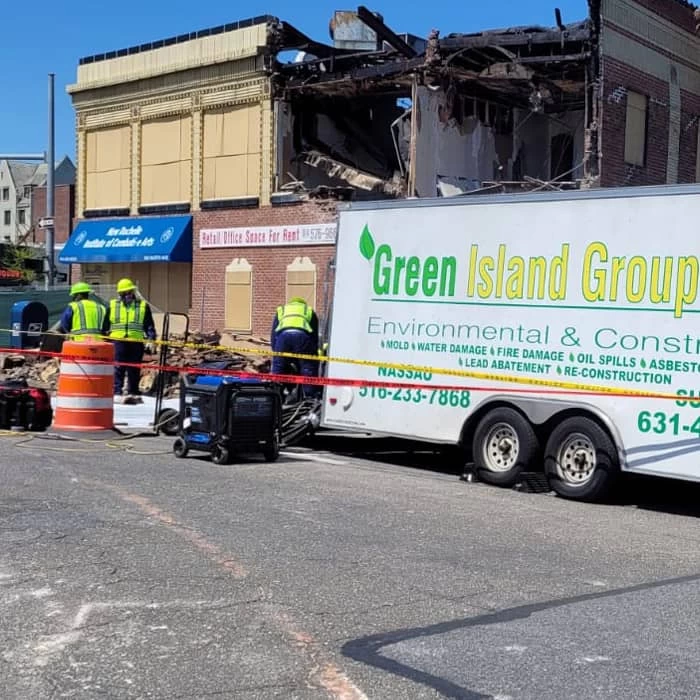
When fire hits a $1 million home in East Birchwood or a condo on Vista Drive in Jericho, the damage goes a lot deeper than what you can see. We handle fire damage restoration in Jericho from the first emergency call all the way through complete reconstruction — one licensed team, no handoffs.
I needed a professional consultation explanation of procedure for safe removal of Asbestos in my apartment complex. Without having an account yet, I was very impressed with the caring, knowledgeable and generous advice offered by Jessica, and will look forward to doing business in the future. Thank you so much! I feel much more informed about a sometimes scary endeavor. Peace. Nancy Silva Mineola, NY.
Mia Munoz
Used this company to clean up some water flood in my house. They were fast and easy to work with.very professional, Would recommend to anyone!
Nini Valle
Great company, had a flood and they responded quickly and efficiently. Billed my insurance company directly. I highly recommend this company!
joe colapietro, jr
I had pipe freeze in my basement right before a snow storm and they made to within an hour to help start the clean up process. They we by our side throughout the entire process and even helped with the insurance company. They did such a great job with the cleanup, repair, remidiation, I contracted them to perform the repairs and finishes in the basement. They came with enough manpower and material to get the job done. Leo and Jessica were nothing but a pleasure to deal with!!
Cristian Arredondo c
I had some water damage in my home and Green Island was able to take care of my issue quickly and effectively. I am very pleased with the work they did. They responded quickly and were very professional.
Michael M
Outstanding service! From the office to the field crew everyone was friendly, helpful and responsive. I highly recommend Green Island Group.
Why Surface Cleaning Isn't Enough in Jericho Homes
Most homeowners in Jericho don’t realize how far fire damage actually travels. Smoke moves through wall cavities, HVAC ductwork, and insulation — reaching rooms that never saw a single flame. In the postwar Colonials and Split-levels that make up the majority of Jericho’s housing stock, those hidden pathways are everywhere. What looks like a contained kitchen fire can mean toxic residue embedded in bedrooms two floors away.
Then there’s the water. Firefighting soaks everything, and in Nassau County’s humid summers, mold can take hold within 24 to 48 hours. A restoration company that handles the fire but isn’t licensed for mold leaves you exposed to a second crisis before the first one is even resolved. That’s a pattern we see play out in homes across this area every year.
When the job is done right, you’re not just getting the smell out and repainting the walls. You’re getting a home that’s been fully assessed, properly cleared of hazardous materials, and rebuilt to code — so your family can come back to a house that’s actually safe, not just one that looks fine on the surface. For a family that chose Jericho specifically for the schools, the neighborhood, and the long-term investment, that distinction matters.
We’re a locally owned restoration company based on Long Island, with a Nassau County General Contractor license that covers work in the Town of Oyster Bay — the municipality that governs Jericho. That means we can legally pull permits, perform structural repairs, and complete full reconstruction without handing the project off to a separate contractor. Most restoration companies can’t say that.
We also hold IICRC certification in Fire and Smoke Damage Restoration, a NYS DOL Asbestos License, a NYS DOL Mold License, and USEPA Lead/RRP certification. In a community where more than 65% of homes in Jericho were built before 1970, those aren’t optional credentials — they’re the legal requirement for doing this work correctly. Asbestos in floor tiles, lead paint on the walls, mold behind the drywall — these are real findings in Jericho homes, and we’re licensed to handle all of it.
With over 5,000 completed restoration projects across New York State, this isn’t a company learning on your job. We’ve been in homes like yours throughout Jericho and Nassau County, and we know exactly what to expect.
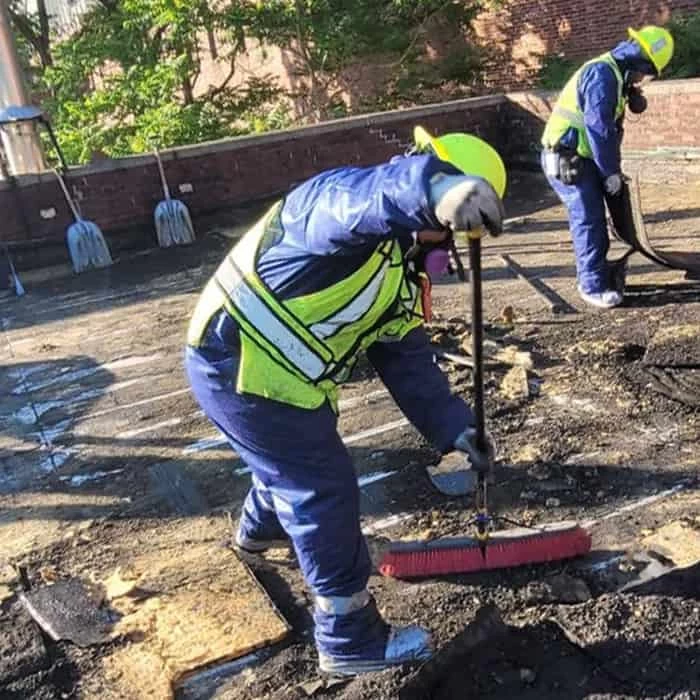
The first call triggers an emergency response. We can reach Jericho within one hour via I-495 or Jericho Turnpike, any time of day or night. When we arrive, the priority is stabilizing the property — boarding up openings, extracting standing water, and setting up air scrubbers to begin controlling smoke and soot before they cause permanent damage to your surfaces and contents.
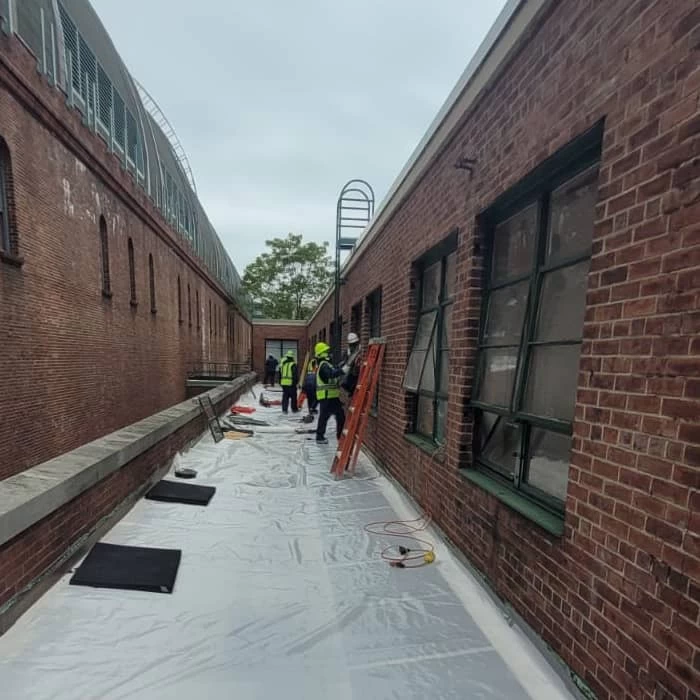
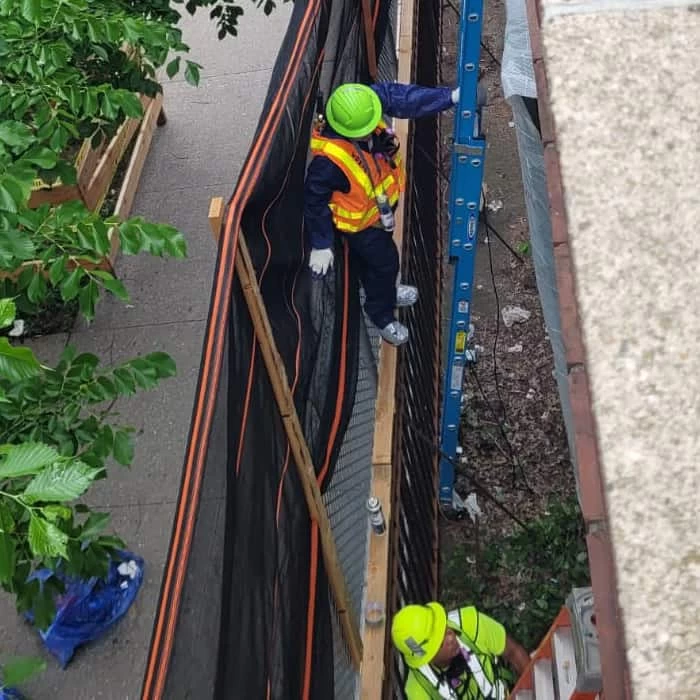
From there, the full assessment begins. In a Jericho home built before 1980, that assessment includes testing for asbestos and lead before any demolition or cleaning work touches the affected materials. This isn’t a delay — it’s a legal requirement under New York State law, and skipping it exposes your family to serious health risks. Once testing is complete, the licensed abatement and remediation work begins, followed by structural repairs and reconstruction under the Town of Oyster Bay building permits that we pull directly.
Throughout the entire process, we handle the insurance documentation. Every step is recorded, every scope item is communicated to your adjuster, and billing goes directly to the insurer. You’re kept informed without being buried in paperwork. The goal from day one is a completed, permitted, move-in-ready home — not a handoff to someone else halfway through.
Fire and Smoke Damage Restoration Services, Jericho
Built for What Jericho Homes Actually Deal With
Fire damage restoration in Jericho isn’t a one-size-fits-all job. The postwar housing stock here — the four-bedroom Colonials in Princeton Park, the Split-levels in West Birchwood, the attached condo units in Maple Run and Hamlet East — each comes with its own set of structural characteristics and hazardous material risks. Our scope of work is built around what these homes actually contain, not a generic checklist.
On the remediation side, that means IICRC-standard soot and smoke removal, HVAC system cleaning, odor neutralization using thermal fogging and ozone treatment, and licensed asbestos and lead abatement where testing confirms their presence. Oil heat is common throughout Jericho, and puff-back cleanup — where a furnace misfire sends oily soot through the entire duct system — is handled as a distinct service, not an afterthought. In attached homes and condo communities, where fire can spread across multiple units as it did on Vista Drive in December 2024, the scope can expand to multi-unit commercial-scale work that most residential-only restoration companies aren’t equipped or licensed to handle.
On the reconstruction side, our Nassau County GC license means we rebuild what was damaged — framing, drywall, flooring, electrical, plumbing — and close out the permits with the Town of Oyster Bay. You don’t need to find a separate contractor to finish the job. It’s all handled.
What should I do immediately after a house fire in Jericho, NY?
The most important thing is to not re-enter the property until the fire department has cleared it as structurally safe. Once you have that clearance, your next call should be to a licensed restoration company — not because of any sales pressure, but because the damage clock is already running. Soot begins permanently bonding to walls, ceilings, and contents within hours. In Jericho’s summer humidity, mold from firefighting water can start developing within 24 to 48 hours.
While you’re waiting, document everything you can from a safe distance — photos, video, a written list of visible damage. Contact your homeowner’s insurance company to open a claim, but don’t sign anything or agree to any scope of work before a licensed restoration contractor has assessed the full extent of the damage. Jericho homes built before 1980 may contain asbestos or lead paint, and disturbing those materials without proper testing first is both a health risk and a violation of New York State law. A qualified company will test before they touch anything.
How long does fire damage restoration typically take for a Jericho home?
It depends heavily on the scope of the damage, but for a typical Jericho Colonial or Split-level with moderate fire and smoke damage, you’re generally looking at two to six weeks for remediation, followed by a separate reconstruction phase that can range from a few weeks to several months depending on what needs to be rebuilt.
What tends to extend timelines in Jericho specifically is the age of the housing stock. Homes built in the 1950s and 1960s frequently require asbestos testing and, if materials test positive, licensed abatement before any demolition or cleaning can proceed. That adds time, but it’s non-negotiable under New York State law. The other factor is permitting — any structural reconstruction in the Town of Oyster Bay requires building permits, and the review and approval process adds time to the back end of the job. Working with a contractor who already holds a Nassau County GC license and knows the local permit process helps avoid unnecessary delays on that front.
Does homeowners insurance in New York cover fire damage restoration costs?
In most cases, yes — standard homeowners insurance policies in New York cover fire damage, including the cost of restoration and reconstruction, temporary housing while your home is uninhabitable, and the replacement of damaged personal property. But the coverage you actually receive depends heavily on how the claim is documented and presented to the adjuster.
Insurance companies work from scope-of-work documentation. If the restoration company you hire doesn’t document every affected area, every damaged material, and every remediation step using industry-standard protocols, you may receive a settlement that doesn’t cover the full cost of the job. This is especially relevant in Jericho, where homes are valued at $1 million or more and a thorough restoration can involve asbestos abatement, mold remediation, HVAC cleaning, and full structural reconstruction — all of which need to be properly documented and billed. We bill insurance companies directly and handle the adjuster communication throughout the process, which removes that burden from you and reduces the risk of underpayment.
Does fire damage in older Jericho homes mean asbestos is involved?
Not automatically, but the probability is high. More than 65% of Jericho’s housing stock was built between the 1940s and 1960s — the era when asbestos was used extensively in floor tiles, pipe insulation, ceiling tiles, textured coatings, and joint compound. If your home was built before 1980 and fire or the demolition that follows disturbs any of those materials, New York State law requires testing and, if the results are positive, licensed abatement by a NYS DOL-certified asbestos contractor.
This isn’t something a general handyman or an unlicensed restoration crew can legally handle. The testing has to happen before any cleaning or demolition touches the suspected materials — not after. We hold a NYS DOL Asbestos License and include pre-demolition testing as a standard part of our assessment process for any Jericho home built before 1980. If asbestos is found, abatement is handled in-house, not subcontracted to a third party you’ve never met. The same applies to lead paint, which is equally common in Jericho’s postwar homes and requires USEPA Lead/RRP certified contractors for any renovation or repair work.
What is a puff-back, and is it common in Jericho homes?
A puff-back happens when an oil-fired furnace misfires or backfires, sending a blast of oily, acidic soot back through the heating system and into your home. It doesn’t involve an actual fire, but it can coat walls, ceilings, ductwork, furniture, clothing, and personal belongings throughout the entire house in a matter of seconds. The residue is sticky, corrosive, and extremely difficult to remove without professional equipment and training.
Long Island has one of the highest concentrations of oil-heated homes in the country, and Jericho is no exception. Puff-backs are a real and recurring issue here, particularly during the heating season. In a Jericho home with hardwood floors, custom millwork, high-end appliances, and imported furnishings, the contents damage from a single puff-back can be substantial — and surface cleaning alone won’t solve it. If the ductwork isn’t cleaned, the soot redistributes every time the system runs. We address puff-back cleanup at the source, including full HVAC duct cleaning, surface decontamination, and odor treatment, so the problem doesn’t come back the next time you turn on the heat.
Do I need a permit to repair fire damage in the Town of Oyster Bay?
Yes, for any structural work. The Town of Oyster Bay — which governs Jericho — requires building permits for structural repairs, electrical work, plumbing, and HVAC work that results from fire damage. This applies whether you’re replacing a single wall or rebuilding an entire section of the house. Cosmetic repairs like repainting or replacing flooring in undamaged areas typically don’t require a permit, but anything that touches the structure does.
Pulling permits in the Town of Oyster Bay requires a licensed General Contractor. This is one of the more common points of confusion after a fire — homeowners sometimes hire a restoration company that handles the remediation side competently, then discover that the same company can’t legally pull permits for the reconstruction because they don’t hold the right GC license. We hold a Nassau County General Contractor license specifically, which covers Town of Oyster Bay permit requirements. That means we handle the permit applications, coordinate the inspections, and close out the project with the municipality — so you’re not left managing that process yourself while you’re already dealing with an insurance claim and a displaced family.