When Your Kensington Home Needs More Than a Cleanup Crew
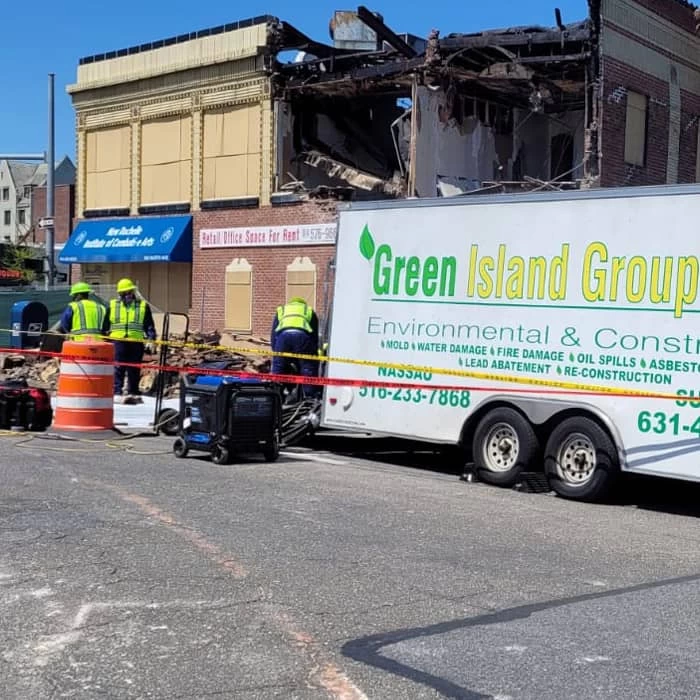
Fire damage in a pre-war Colonial or Tudor on the Great Neck Peninsula isn’t a job for whoever shows up first. We handle fire damage restoration in Kensington, NY from emergency response through full reconstruction — one company, one call, no handoffs.
I needed a professional consultation explanation of procedure for safe removal of Asbestos in my apartment complex. Without having an account yet, I was very impressed with the caring, knowledgeable and generous advice offered by Jessica, and will look forward to doing business in the future. Thank you so much! I feel much more informed about a sometimes scary endeavor. Peace. Nancy Silva Mineola, NY.
Mia Munoz
Used this company to clean up some water flood in my house. They were fast and easy to work with.very professional, Would recommend to anyone!
Nini Valle
Great company, had a flood and they responded quickly and efficiently. Billed my insurance company directly. I highly recommend this company!
joe colapietro, jr
I had pipe freeze in my basement right before a snow storm and they made to within an hour to help start the clean up process. They we by our side throughout the entire process and even helped with the insurance company. They did such a great job with the cleanup, repair, remidiation, I contracted them to perform the repairs and finishes in the basement. They came with enough manpower and material to get the job done. Leo and Jessica were nothing but a pleasure to deal with!!
Cristian Arredondo c
I had some water damage in my home and Green Island was able to take care of my issue quickly and effectively. I am very pleased with the work they did. They responded quickly and were very professional.
Michael M
Outstanding service! From the office to the field crew everyone was friendly, helpful and responsive. I highly recommend Green Island Group.
There’s a difference between a home that looks cleaned and a home that’s actually safe to live in again. Smoke particles are microscopic. They move through wall cavities, settle into original hardwood floors, and travel through older ductwork into rooms that never saw a single flame. In a Kensington home built in the 1920s or 1930s — with plaster walls, cast-iron radiator systems, and decades of original materials — that contamination goes deeper than any surface wipe-down can reach.
What you actually need is a company that treats the whole structure, not just the visible damage. That means air scrubbers, thermal fogging, ozone treatment, and HVAC cleaning that addresses smoke at the source — not just the smell on the surface. It means industrial drying equipment deployed fast enough to stop the firefighting water from turning into a mold problem inside your walls within the next 48 hours.
And because most homes in Kensington predate 1978 — many predate 1955 — there’s a real chance that fire disturbed asbestos in your floor tiles, pipe insulation, or plaster, and lead paint in your walls. Those aren’t just cleanup issues. They’re legal and health issues that require licensed specialists. The outcome you’re looking for isn’t just “back to normal.” It’s fully restored, properly documented, and safe for your family to come home to.
Licensed for Everything a House Fire Can Uncover in a Pre-War Kensington Home
We’re a locally owned restoration and environmental services company serving Nassau County, including the Village of Kensington and the broader Great Neck Peninsula. With over 5,000 completed restoration projects across New York State, we’ve worked through every scenario Kensington’s older housing stock produces — and the North Shore’s pre-war homes produce plenty of them.
What sets us apart in this market is the credential stack. IICRC certification for fire and water damage restoration. NYS DOL licenses for asbestos and mold remediation. USEPA Lead/RRP certification. Nassau County General Contractor license. That combination means we can legally and competently handle every phase of fire recovery in Kensington — from the first emergency call to the final walkthrough — without subcontracting critical work to someone you’ve never met.
For Kensington homeowners navigating a major insurance claim on a high-value property, that continuity matters. One team. One contract. One company accountable for the outcome.
From the First Call to the Day You Walk Back Into Your Kensington Home
The process starts the moment you call — 24 hours a day, every day of the year. We aim to be on-site within one hour, because the clock starts running the second the fire is out. Soot begins permanently bonding to surfaces within hours. Water from the Vigilant Fire Department’s response starts creating mold risk within 24 to 48 hours. The faster the response, the more of your home — and your contents — can be saved.
Once on-site, our team secures the structure, assesses the full scope of damage, and begins emergency stabilization. That includes water extraction, structural drying, and air quality control. For homes in Kensington built before 1980, the assessment also includes testing for asbestos and lead disturbance — because a fire in a pre-war home almost always involves both. This isn’t an add-on service. It’s a required step that unlicensed contractors legally cannot perform, and we handle it in-house.
From there, the work moves through remediation, reconstruction, and final inspection. Because we hold a Nassau County General Contractor license alongside our restoration certifications, we manage the rebuild — custom millwork, structural repairs, permit coordination with the Village of Kensington’s building authority — under the same contract. You’re not sourcing a second contractor while you’re already dealing with an insurance claim. The whole process is documented in the format insurance adjusters require, which means faster approvals and fewer disputes on your end.
Fire and Smoke Damage Restoration Services Kensington
What's Actually Included When You Call Us
Fire damage restoration in Kensington isn’t a single service — it’s a sequence of interconnected ones, and gaps between them cost homeowners money. We cover the full sequence. Emergency response and structural stabilization. Smoke and soot removal using IICRC-standard methods — air scrubbers, ozone generators, thermal foggers, and NADCA-certified HVAC cleaning for ductwork that carried smoke into every room. Water extraction and industrial drying to prevent the secondary mold problem that follows virtually every fire on the peninsula.
For Kensington’s older housing stock specifically, our service includes licensed asbestos testing and abatement under NYS DOL certification, lead paint handling under USEPA RRP protocols, and mold remediation if moisture has already taken hold. These aren’t services you want to coordinate separately with three different contractors while managing a displaced family and an open insurance claim. They’re handled here, by one licensed team.
Our fire damage restoration service also includes direct insurance billing and full claims documentation. We work with your adjuster, document every phase of the job with the precision that insurance companies require, and have helped Nassau County homeowners secure appropriate settlements on high-value restoration jobs — including the kind of custom materials and period-appropriate finishes that a Kensington home may require. The goal is a home that’s not just habitable, but fully restored to what it was before.
How quickly can fire damage restoration begin in Kensington, NY?
We operate 24 hours a day, 365 days a year, and the target response time is one hour from your call. That response window matters more than most homeowners realize in the immediate aftermath of a fire. Soot and smoke residue begin permanently bonding to walls, ceilings, and surfaces within the first few hours. Firefighting water — the kind deployed during a response from the Vigilant Fire Department serving the Great Neck Peninsula — saturates wall cavities and flooring fast, and mold can begin developing within 24 to 48 hours of that water exposure.
For homes in Kensington, where many structures were built in the early 1900s with plaster walls and original wood framing, that water absorption is deeper and faster than in newer construction. The sooner a certified restoration team is on-site extracting water, stabilizing the structure, and controlling air quality, the more of the home — and its contents — can be salvaged rather than replaced. Speed at the start of this process directly affects the total cost and scope of the job.
Will my homeowners insurance cover fire damage restoration costs in Kensington?
In most cases, yes — standard homeowners insurance policies cover fire damage restoration, including smoke cleanup, water damage from firefighting efforts, and structural repairs. The more relevant question is whether your claim will be documented thoroughly enough to get you a fair settlement, because the gap between what an adjuster initially offers and what full restoration actually costs can be significant on a high-value Kensington property.
We bill insurance companies directly and document every phase of the restoration process in the format adjusters require. That includes detailed scope-of-work records, material specifications, and photo documentation at each stage. For Kensington homes with custom millwork, period-appropriate finishes, or high-value contents, that documentation is what ensures the settlement reflects the actual cost of restoring the home — not a generic estimate based on average replacement costs. We’ve worked with Nassau County homeowners through complex claims and have helped them secure appropriate coverage for the full scope of the job.
What's the difference between smoke damage and fire damage — and why does it matter?
Fire damage refers to what the flames physically burned or destroyed. Smoke damage is what the fire left behind everywhere else — and in most residential fires, smoke damage affects two to three times more of the home than the fire itself did. Smoke particles are microscopic. They travel through HVAC ductwork, penetrate wall cavities, and settle into porous materials like insulation, plaster, and original hardwood floors throughout the entire structure, not just the rooms near the fire.
In a Kensington home with older forced-air ductwork or cast-iron radiator systems, smoke can reach every room in the house even when the fire was contained to one area. The smell that no consumer product eliminates — the one that comes back weeks later — is almost always embedded smoke residue that was never fully addressed. Proper fire smoke damage restoration uses a combination of air scrubbers, ozone treatment, thermal fogging, and NADCA-certified HVAC cleaning to treat the contamination at the molecular level. Surface cleaning alone doesn’t solve it, and a home that smells like smoke six months later is a home that wasn’t properly restored.
Could my older Kensington home have asbestos or lead that the fire disturbed?
If your home was built before 1980 — which describes the majority of homes in Kensington, where most of the housing stock dates to between 1909 and 1955 — there is a real possibility that it contains asbestos in floor tiles, pipe insulation, ceiling materials, plaster, or joint compound. Virtually all pre-1978 construction also contains lead-based paint. A fire disturbs these materials, and once disturbed, they become an active health and legal hazard that only licensed contractors can handle.
New York State law requires NYS DOL Asbestos certification for any contractor performing asbestos abatement. USEPA RRP regulations require certified contractors for renovation work disturbing lead paint in pre-1978 homes. These aren’t optional compliance steps — they’re legal requirements, and violations carry significant penalties. We hold both the NYS DOL Asbestos license and the USEPA Lead/RRP certification, meaning we can assess, contain, and properly remediate any hazardous materials the fire disturbed without bringing in a separate subcontractor. For a Kensington homeowner already managing a displacement and an insurance claim, not having to source a licensed hazmat contractor separately is a meaningful practical difference.
What is an oil burner puff-back, and do I need professional restoration for it?
A puff-back happens when an oil furnace misfires — instead of igniting cleanly, the burner backfires and forces a blast of unburned oil, soot, and combustion gases back through the heating system and into the home. It is not a fire in the traditional sense, but the result can look and smell like one. Oily black soot coats walls, ceilings, furniture, clothing, and HVAC vents throughout the entire house — often in rooms far from the furnace itself.
Long Island has one of the highest concentrations of oil-heated homes in the country, and the Great Neck Peninsula is no exception. Many homes in Kensington still rely on oil heating systems, some of which are aging. Puff-backs are a relatively common service call in this area, particularly in late fall and winter when furnaces are first cycling back on after the warmer months. The soot from a puff-back is oily and sticky — it does not wipe off with household cleaners and will smear and spread if handled incorrectly. Professional restoration using the right equipment and cleaning agents is the only way to fully remove it without causing additional surface damage throughout the home.
How long does fire damage restoration typically take for a home in Kensington?
The honest answer is that timeline depends entirely on the scope of the damage — and in Kensington, the scope is often broader than it first appears. A contained kitchen fire in a newer home might be fully restored in two to three weeks. A fire that spread into wall cavities, triggered asbestos abatement, saturated original wood framing with firefighting water, and requires structural reconstruction in a pre-war home can take two to four months or longer.
For Kensington homes specifically, a few factors tend to extend timelines compared to newer construction elsewhere in Nassau County. The age of the housing stock means more layers of materials to assess and more potential for hazardous materials to slow the remediation phase. Permit coordination with the Village of Kensington’s building authority adds a step that doesn’t exist in unincorporated areas. And restoring period-appropriate finishes — original millwork, plaster details, custom materials — takes more time than standard drywall and trim work. We give homeowners a realistic scope and timeline assessment after the initial on-site evaluation, so you’re not making plans based on a number that changes every week. The goal is a clear process from day one, with no surprises at the end.