When a 1960s Ranch Burns, the Damage Goes Deeper Than the Flames
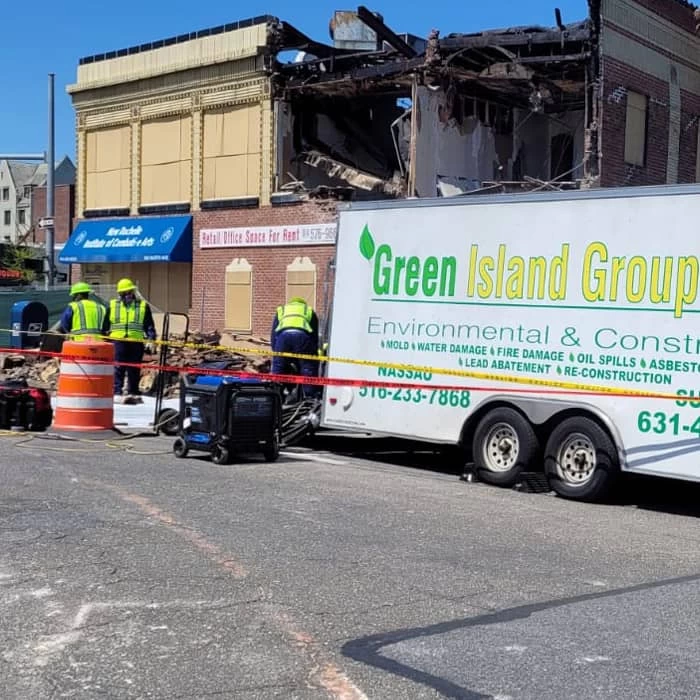
Smoke travels through every room. Suppression water soaks into walls built before modern codes. And the clock starts the moment the fire is out. We respond fast and handle everything from soot to rebuilt rooms, including the asbestos abatement Lake Grove’s older homes almost always require.
I needed a professional consultation explanation of procedure for safe removal of Asbestos in my apartment complex. Without having an account yet, I was very impressed with the caring, knowledgeable and generous advice offered by Jessica, and will look forward to doing business in the future. Thank you so much! I feel much more informed about a sometimes scary endeavor. Peace. Nancy Silva Mineola, NY.
Mia Munoz
Used this company to clean up some water flood in my house. They were fast and easy to work with.very professional, Would recommend to anyone!
Nini Valle
Great company, had a flood and they responded quickly and efficiently. Billed my insurance company directly. I highly recommend this company!
joe colapietro, jr
I had pipe freeze in my basement right before a snow storm and they made to within an hour to help start the clean up process. They we by our side throughout the entire process and even helped with the insurance company. They did such a great job with the cleanup, repair, remidiation, I contracted them to perform the repairs and finishes in the basement. They came with enough manpower and material to get the job done. Leo and Jessica were nothing but a pleasure to deal with!!
Cristian Arredondo c
I had some water damage in my home and Green Island was able to take care of my issue quickly and effectively. I am very pleased with the work they did. They responded quickly and were very professional.
Michael M
Outstanding service! From the office to the field crew everyone was friendly, helpful and responsive. I highly recommend Green Island Group.
What Full Recovery Actually Looks Like for Lake Grove Homeowners
A fire in your Lake Grove home doesn’t end when the trucks leave. Soot starts permanently bonding to surfaces within 24 to 72 hours. The water used to suppress the fire sometimes hundreds of gallons soaks into your floors, walls, and insulation, and mold can start growing in that moisture within two days. What you’re dealing with isn’t just fire damage. It’s a compounding event that gets more expensive the longer it sits.
For Lake Grove specifically, that timeline matters even more. Most homes here were built in the 1950s and 1960s, which means there’s a real probability that a fire disturbed asbestos-containing materials floor tiles, ceiling tiles, pipe insulation, joint compound. New York State requires licensed abatement before any reconstruction begins. A restoration company that can’t handle that legally and safely isn’t equipped to fully restore your home.
When the job is done right, you walk back into a home that’s been fully cleaned, structurally repaired, environmentally cleared, and rebuilt to current code. No lingering smoke odor. No hidden mold. No half-finished rooms waiting on a subcontractor. That’s what complete fire damage restoration actually means and that’s the only outcome worth accepting.
We’re a locally owned, Long Island-based restoration company not a franchise, not a call center, not a brand that dispatches anonymous crews. When you call, you’re talking to the people who will actually manage your project. Our customers know Leo and Jessica by name because that’s how this works: consistent, accountable people from the first call to the final walkthrough.
We serve Nassau and Suffolk Counties and understand the specific realities of restoring homes in Lake Grove older housing stock off Middle Country Road and Nicolls Road, Town of Brookhaven permitting requirements, and the Village of Lake Grove’s own Fire Marshal oversight. That local knowledge isn’t incidental. It’s what keeps your project from stalling at a permit desk while your home sits unfinished.
We handle every phase: emergency response, smoke and soot cleanup, water extraction, asbestos and mold remediation, demolition, reconstruction, and final finishes. One company. One point of contact. No juggling three separate contractors while you’re living out of a hotel.
From the First Call to Walking Back Through Your Front Door
The first step is emergency stabilization and it happens fast. We have documented sub-hour response times because in fire restoration, the difference between saving your hardwood floors and replacing them is often measured in hours, not days. When our team arrives, the priority is stopping the damage from spreading: extracting suppression water, securing the structure, and assessing the full scope of what the fire actually touched including areas that never saw a flame but absorbed smoke through your HVAC system.
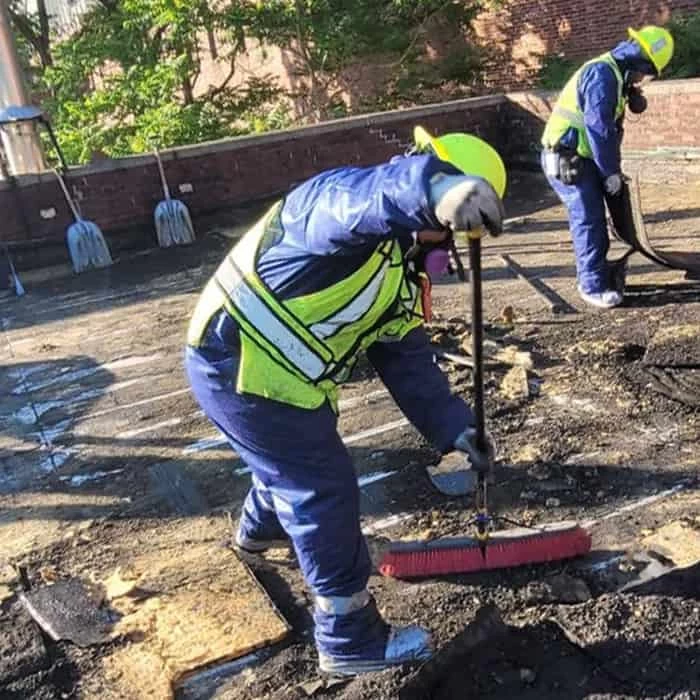
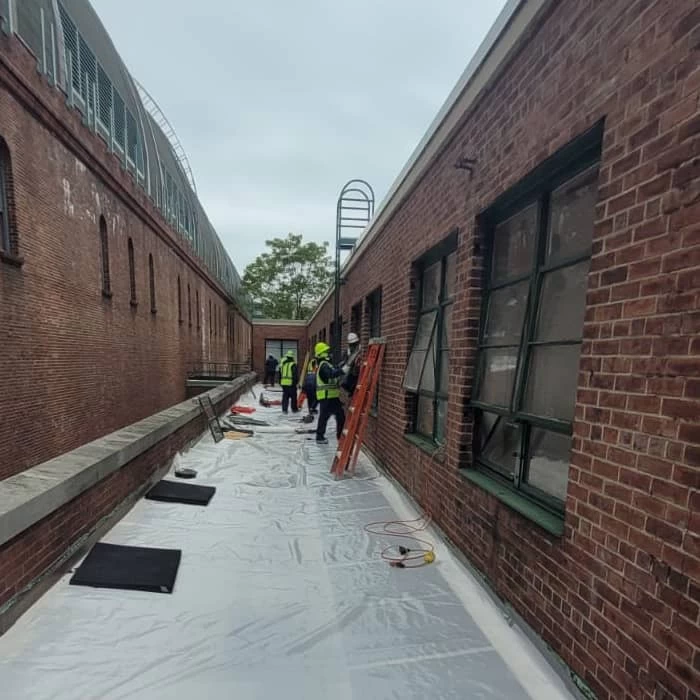
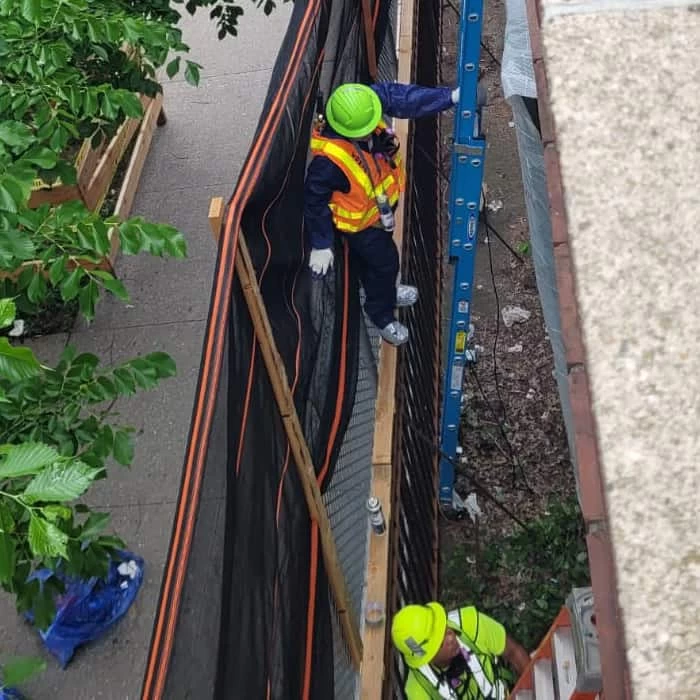
From there, the remediation phase begins. In Lake Grove, this almost always includes an environmental assessment for asbestos-containing materials given the age of the housing stock. If abatement is required and in pre-1980 homes, it frequently is we handle it directly under New York State NYSDOL certification requirements. This step cannot be skipped, and it cannot be subcontracted informally. It’s a legal requirement before reconstruction can begin, and having it handled in-house keeps your timeline intact.
Once the structure is cleared and cleaned, reconstruction begins. We work within Town of Brookhaven building permit requirements and the current New York State Uniform Code, which was updated in late 2025. Throughout the entire process, we document everything for your insurance claim scope of work, environmental findings, repair costs so you’re not left negotiating with an adjuster on your own.
Every Phase Covered Including What Most Companies Can't Touch
Fire damage restoration in Lake Grove isn’t a single-step job. It’s a sequence of specialized work that has to happen in the right order, by people who are licensed and equipped for each phase. We cover the full sequence: emergency board-up and stabilization, smoke and soot removal, suppression water extraction, asbestos abatement, mold remediation, structural demolition, full reconstruction, and final finishes. If your home in the Brittany Hills area or anywhere else in the 11755 ZIP code has been through a fire, every one of those phases may apply.
Smoke damage gets particular attention because it’s the most deceptive part of a fire loss. Smoke doesn’t stay in the room where the fire started. In the open floor plans typical of Lake Grove’s ranch homes, it spreads through the entire living area and into ductwork within minutes. The remediation process addresses smoke in wall cavities, insulation, and HVAC systems not just surfaces that are visibly stained.
Insurance coordination is built into our process, not offered as an afterthought. We help document the full scope of damage, communicate with adjusters, and ensure the claim reflects what a fire in a 1960s Long Island home actually requires including environmental remediation costs that adjusters sometimes push back on without proper documentation. You shouldn’t have to fight that battle alone.
Does my Lake Grove home likely have asbestos that a fire could have disturbed?
If your home was built before 1980 which describes the majority of Lake Grove’s housing stock, with a median construction year of 1969 there is a real and meaningful probability that asbestos-containing materials are present. Asbestos was commonly used in floor tiles, ceiling tiles, pipe insulation, roofing materials, and joint compound during that era. A fire disturbs these materials, releasing fibers that are hazardous to breathe and that trigger mandatory remediation requirements under New York State law.
This isn’t a precaution it’s a legal requirement. New York State requires NYSDOL-certified contractors to handle asbestos abatement before any reconstruction can begin. If a restoration company cannot perform this work themselves, your project will stall while you wait on a separate abatement contractor to be scheduled, permitted, and cleared. We handle abatement in-house, which keeps the timeline moving and ensures the work is done under the proper certifications without adding another contractor to manage.
How quickly does smoke damage become permanent after a house fire?
Faster than most people expect. Soot begins chemically bonding to surfaces walls, ceilings, countertops, fixtures within 24 to 72 hours of a fire. After that window, what could have been cleaned now needs to be replaced. Porous materials like drywall, wood trim, and insulation absorb smoke molecules quickly, and once those odors are embedded, surface cleaning won’t remove them. The structure itself has to be addressed.
This is why response time matters so much in fire restoration. The faster a qualified team is on-site, the more of your home can be saved rather than replaced and in a Lake Grove home valued near $559,000, that difference in scope translates directly into lower out-of-pocket costs and a faster return to your normal life. Getting a crew there quickly isn’t just a service feature. It’s how you protect your investment.
Will my homeowners insurance cover the full cost of fire damage restoration in Lake Grove?
Most standard homeowners insurance policies do cover fire damage restoration, including smoke cleanup, water damage from suppression, and structural repairs. What gets complicated is the scope specifically, whether the insurer’s initial assessment captures everything the job actually requires. In Lake Grove’s older homes, that often means asbestos abatement, mold remediation from suppression water, and HVAC decontamination. These line items are sometimes underscoped or pushed back on by adjusters who aren’t familiar with what pre-1970s Long Island construction actually involves.
Proper documentation from the start is what protects you. When the damage is thoroughly assessed, photographed, and written up with the correct scope including environmental remediation costs the claim is much harder to reduce. We work alongside homeowners through the insurance process, not just on the physical restoration. Multiple customers have specifically credited that involvement as the reason they recovered the full cost of their restoration rather than settling for a partial payout.
What happens to my HVAC system after a fire in my ranch-style Lake Grove home?
In a ranch home which is one of the most common housing styles in Lake Grove smoke has a direct path through the entire living area and into the HVAC system almost immediately. Because ranch homes are single-story with open floor plans, there are no floors or closed-off stairwells to slow smoke migration. Once smoke enters the ductwork, it distributes throughout every room the system serves, including bedrooms and spaces that were nowhere near the fire.
If the HVAC system isn’t properly decontaminated, the smoke odor comes back every time the system runs even after the rest of the home has been cleaned and rebuilt. HVAC decontamination is part of a complete fire restoration scope, not an optional add-on. It involves cleaning or replacing ductwork, treating air handler components, and in some cases replacing filters and insulation within the system. Skipping this step is one of the most common reasons homeowners end up with persistent smoke odor months after a restoration is supposedly complete.
How long does fire damage restoration typically take for a home in Lake Grove, NY?
The honest answer is that timeline depends heavily on the scope of the damage, and in Lake Grove, that scope is often larger than it first appears. A minor smoke and soot job in a room or two might be resolved in one to two weeks. A fire that affected structural elements, triggered asbestos abatement requirements, and caused suppression water damage throughout the home could take several months from emergency response through final reconstruction.
The variables that extend timelines most often in this area are asbestos abatement which requires testing, permitting, and clearance testing before reconstruction can begin and Town of Brookhaven building permits for reconstruction work. Both of these are non-negotiable steps, and both take time. What you can control is how quickly you get a qualified company on-site to begin stabilization and assessment. The sooner that happens, the sooner the full scope is documented, permits are applied for, and the process moves forward.
Can mold develop after a house fire, and how does that affect the restoration process?
Yes and it’s one of the most overlooked consequences of a house fire. Fire hoses deliver a significant volume of water, and that water saturates floors, walls, subfloors, and insulation quickly. Mold can begin colonizing wet structural materials within 24 to 48 hours, which means by the time most homeowners are even thinking about restoration contractors, mold growth may already be underway inside wall cavities and under flooring.
In Lake Grove’s older homes, this is compounded by the fact that 1950s and 1960s construction often used materials wood framing, plaster, older insulation that absorb moisture readily and dry slowly. A restoration process that only addresses fire and smoke damage without assessing and treating suppression water intrusion is an incomplete job. Our scope includes moisture assessment, water extraction, and mold remediation as part of the fire restoration process because in practice, you rarely get one without the other, and treating them separately leads to problems that surface months later.