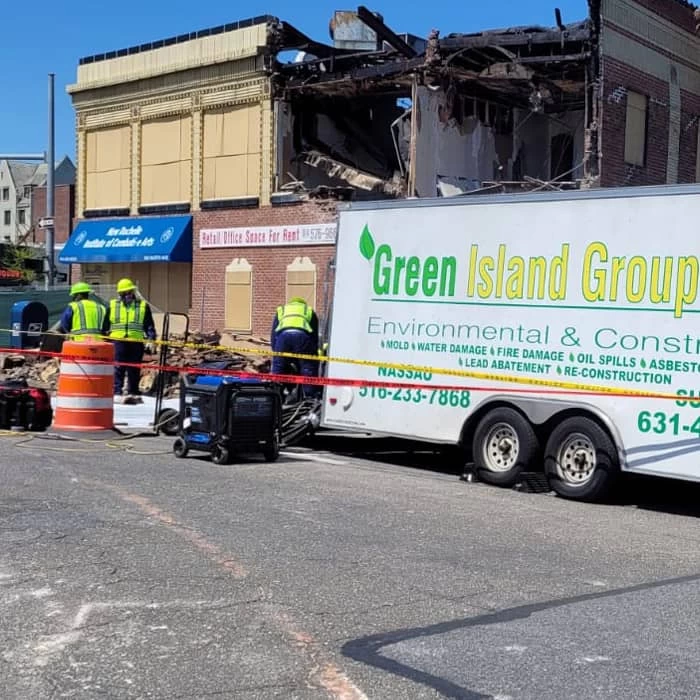
When fire hits a home in Lake Success, the clock starts immediately — and so does the hidden damage. We respond 24/7 and handle everything from emergency stabilization to complete rebuild, so you’re not managing three contractors while displaced from a $2 million home.
I needed a professional consultation explanation of procedure for safe removal of Asbestos in my apartment complex. Without having an account yet, I was very impressed with the caring, knowledgeable and generous advice offered by Jessica, and will look forward to doing business in the future. Thank you so much! I feel much more informed about a sometimes scary endeavor. Peace. Nancy Silva Mineola, NY.
Mia Munoz
Used this company to clean up some water flood in my house. They were fast and easy to work with.very professional, Would recommend to anyone!
Nini Valle
Great company, had a flood and they responded quickly and efficiently. Billed my insurance company directly. I highly recommend this company!
joe colapietro, jr
I had pipe freeze in my basement right before a snow storm and they made to within an hour to help start the clean up process. They we by our side throughout the entire process and even helped with the insurance company. They did such a great job with the cleanup, repair, remidiation, I contracted them to perform the repairs and finishes in the basement. They came with enough manpower and material to get the job done. Leo and Jessica were nothing but a pleasure to deal with!!
Cristian Arredondo c
I had some water damage in my home and Green Island was able to take care of my issue quickly and effectively. I am very pleased with the work they did. They responded quickly and were very professional.
Michael M
Outstanding service! From the office to the field crew everyone was friendly, helpful and responsive. I highly recommend Green Island Group.
Why Fire Damage Spreads Differently in Lake Success Homes
Most of the homes in Lake Success were built between 1940 and 1969. That’s not a small detail — it shapes everything about how fire damage behaves in this village and what it takes to actually fix it. When fire or smoke moves through a mid-century colonial here, it doesn’t stay in the room it started in. It travels through the ductwork, into wall cavities, and settles into finishes that took years to get right. The visible damage is rarely the whole story.
Then there’s what’s behind the walls. Homes of this era almost certainly contain asbestos-containing materials — floor tiles, pipe insulation, joint compound — and lead paint throughout. A fire disturbs all of it. If your restoration contractor isn’t licensed to handle those materials in-house, work stops while they find someone who is. That delay costs you time, money, and additional damage that keeps compounding.
When the process is done right, you get back a home that’s genuinely restored — not patched. No lingering smoke odor. No hidden soot in the HVAC system showing up six months later. No gaps in the rebuild because the restoration company couldn’t pull the permits or finish the work themselves. That’s what a complete recovery looks like in Lake Success.
One Company That Can See It Through, From Lake Success to All of Nassau County
We’re a locally owned restoration company serving Nassau County, Suffolk County, and New York City. We hold a Nassau County General Contractor license, IICRC certification for both fire and water damage restoration, NYS DOL licenses for asbestos and mold, and USEPA Lead/RRP certification. In plain terms: we’re legally authorized and operationally equipped to handle every phase of fire restoration in Lake Success — including the hazardous materials work that older homes in this village almost always require.
This matters because Lake Success has its own building department, its own permitting process, and construction hours restricted to weekdays between 8 AM and 5 PM. A contractor who doesn’t know that or can’t navigate it will slow your project down before the first wall goes up. We’ve worked across Nassau County’s North Shore communities and understand exactly what it takes to move a project through correctly — from the first call to the final inspection.
From Emergency Call to Move-Back-In Day in Lake Success
The first step is stabilization. When we arrive — within one hour, around the clock — the priority is securing the property, stopping secondary damage, and documenting everything for your insurance claim. That means board-up, water extraction from firefighting suppression, and a full assessment of what the fire, smoke, and soot have actually affected. In a Lake Success home, that assessment includes testing for asbestos and lead before any demolition work begins, because the village’s housing stock makes those findings nearly certain in any significant fire event.
From there, the remediation phase addresses smoke and soot removal, odor elimination, HVAC cleaning, and any hazardous materials abatement required by New York State law. These aren’t separate contractors — it’s the same team, under the same license, working on the same timeline. Once the home is clean and cleared, reconstruction begins under our Nassau County General Contractor license. That includes structural repairs, finish work, and anything else needed to bring the home back to its pre-loss condition.
Because Lake Success restricts construction to weekday business hours, the schedule is planned accordingly from day one. No surprises, no permit delays, no handoff gaps. You stay informed throughout, and your insurance company gets the documentation they need without you having to chase it down yourself.
Built for Older Homes, High-Value Losses in Lake Success
Fire damage restoration in Lake Success isn’t a standard job. The homes here are older, the values are high, and the regulatory requirements are specific to Nassau County in ways that matter. Under the Nassau County Fire Prevention Ordinance — most recently amended in 2024 — any contractor performing board-up or restoration services in Nassau County must be licensed with the Nassau County Fire Marshal. That license requires IICRC certification, valid asbestos and lead credentials, and a documented training curriculum. We meet every requirement. Many contractors operating in this area do not.
The full scope of what we handle includes emergency response and property securing, smoke and soot removal, odor elimination through air scrubbing and thermal fogging, water extraction and drying, HVAC cleaning, asbestos and lead abatement, mold remediation, structural demolition, and complete reconstruction. For Lake Success homeowners with oil heating systems — which are common throughout Nassau County’s North Shore — that also includes puff-back cleanup, where a furnace misfire coats the interior of a home in fine black soot. The damage to custom finishes and high-end materials in a home of this caliber can be substantial, and it requires the same professional-grade approach as any fire restoration job.
Everything is handled under one roof, billed directly to your insurance carrier, and managed by a team that has completed over 5,000 restoration projects across New York State.
Does fire damage restoration in Lake Success require special permits or inspections?
Yes, and it’s worth understanding before work begins. The Village of Lake Success has its own building department that governs all construction within the village, including post-fire repairs and reconstruction. Any structural work requires a building permit issued by the Lake Success Building Inspector, and the finished work must pass a final inspection before a certificate of occupancy is issued. Additionally, under the Nassau County Fire Prevention Ordinance, the restoration contractor itself must be licensed with the Nassau County Fire Marshal to legally perform board-up and restoration services in this jurisdiction.
One detail that catches people off guard: Lake Success restricts construction work to Monday through Friday, 8 AM to 5 PM. No weekend or holiday work is permitted. That’s a real constraint on the project timeline, and a contractor who doesn’t account for it upfront will create delays that extend your displacement unnecessarily. We hold a Nassau County General Contractor license and are familiar with the village’s specific permitting process, so the project moves through correctly from the start.
My Lake Success home was built in the 1950s — does that affect the restoration process?
Significantly. Homes built before 1980 commonly contain asbestos-containing materials — floor tiles, ceiling tiles, pipe insulation, and joint compound are the most frequent locations. Homes built before 1978 also likely contain lead-based paint. When a fire damages a home of that era, it almost certainly disturbs both. Under New York State law, only contractors holding a valid NYS DOL Asbestos License and USEPA Lead/RRP certification may legally handle those materials during restoration.
If your contractor doesn’t hold those credentials in-house, they’re required to stop work and bring in a licensed abatement specialist before proceeding. That gap adds weeks to your timeline and real costs to your claim. We carry both licenses internally, which means the hazardous materials work is handled as part of the same project — no stoppage, no separate contractor, no gap in accountability. Given that the median construction year in Lake Success is 1956, this isn’t an edge case. It applies to nearly every home in the village.
How does smoke damage spread through a house, and how do you know you've found all of it?
Smoke doesn’t stay where the fire was. It’s microscopic, and it moves through HVAC ductwork, wall cavities, and structural gaps into parts of the home that never saw direct fire or heat. In a Lake Success home with central HVAC — which is standard in mid-century construction — smoke contamination can spread throughout the entire structure. Rooms on the opposite side of the house from the fire can still carry soot deposits and odor if the system was running during or after the event.
Finding all of it requires more than a visual inspection. We use air quality testing, thermal imaging, and HVAC system evaluation to identify where smoke has traveled. Remediation includes air scrubbing, thermal fogging, ozone treatment, and duct cleaning — addressing contamination at the source, not just the surfaces you can see. Soot that’s left behind becomes permanently bonded over time and produces ongoing odor and air quality issues. The goal isn’t just to make the home look clean — it’s to make it genuinely safe and livable again.
Will my homeowner's insurance cover fire damage restoration, and how does billing work?
In most cases, yes — standard homeowner’s insurance policies cover fire damage restoration, including smoke and soot cleanup, water damage from firefighting suppression, and structural repairs. For a home in Lake Success valued at $1.5 million or more, the claim can be substantial, and the documentation requirements are detailed. Adjusters will want a full scope of work, itemized damage assessments, and evidence that the restoration was performed by a qualified contractor.
We bill insurance companies directly and handle the documentation throughout the process. That means your adjuster gets what they need without you having to coordinate between the contractor and the insurance company while you’re displaced. The IICRC certification we hold is specifically recognized by insurance carriers — it’s one of the credentials adjusters look for when reviewing claims. If there’s a dispute about scope or coverage, having a certified, licensed contractor with thorough documentation on your side makes a real difference in how that conversation goes.
What is an oil burner puff-back, and is cleanup covered under fire damage restoration?
A puff-back happens when an oil furnace misfires — instead of igniting cleanly, it backfires and blasts a fine black soot throughout the home’s interior via the ductwork and heating vents. It’s not a fire in the traditional sense, but the damage to walls, ceilings, furniture, clothing, and HVAC components can be extensive. In a high-end Lake Success home with custom finishes and premium materials, the cleanup cost can reach tens of thousands of dollars.
Oil heating is extremely common on Nassau County’s North Shore, and puff-backs are a recurring issue — particularly during the heating season from November through March. Most homeowner’s insurance policies do cover puff-back damage, typically under the sudden and accidental discharge provision. We handle puff-back cleanup using the same soot removal, deodorization, and HVAC cleaning approach we bring to fire restoration jobs. If you’ve had a puff-back and you’re not sure whether it qualifies for a claim, it’s worth getting a professional assessment before you assume it doesn’t.
How do I choose a fire restoration contractor in Lake Success, NY that's actually qualified?
Start with the legal requirements, because they narrow the field quickly. Under the Nassau County Fire Prevention Ordinance, any contractor performing restoration or board-up services in Nassau County must be registered with the Nassau County Fire Marshal. That registration requires IICRC fire restoration certification, valid asbestos and lead abatement licenses, and a documented training curriculum. A contractor who can’t verify those credentials isn’t legally authorized to work in this jurisdiction — and in a village like Lake Success, where virtually every home predates 1980, the asbestos and lead credentials aren’t optional.
Beyond the legal baseline, look for a contractor who holds a Nassau County General Contractor license, because restoration without reconstruction capability means you’re handing off your project mid-stream to someone else. Ask whether they bill insurance directly and whether they’ve worked in Lake Success specifically — the village’s permitting process, construction hour restrictions, and building department requirements are specific enough that local experience matters. We check every one of those boxes and have the documentation to back it up.