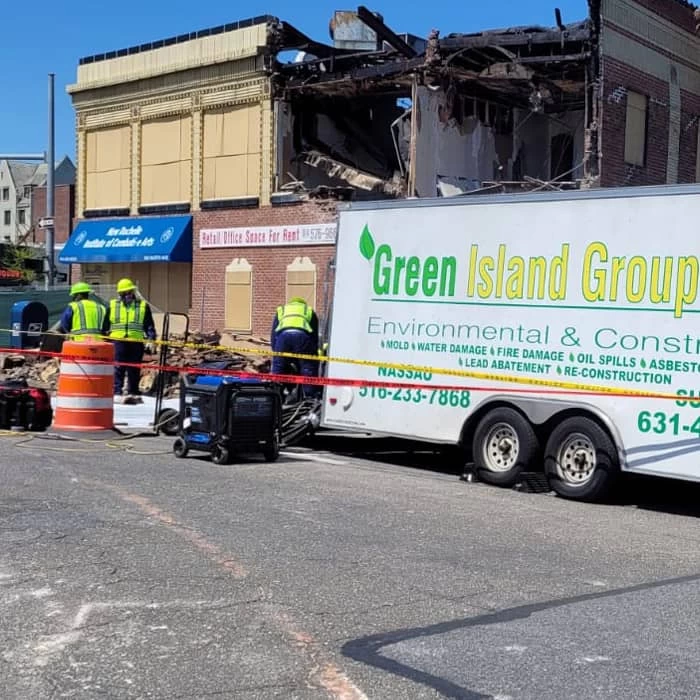
When fire hits a mid-century Cape Cod or split-level in Lakeview, the damage runs deeper than what you can see — we handle fire damage restoration from the first call to the final rebuild.
I needed a professional consultation explanation of procedure for safe removal of Asbestos in my apartment complex. Without having an account yet, I was very impressed with the caring, knowledgeable and generous advice offered by Jessica, and will look forward to doing business in the future. Thank you so much! I feel much more informed about a sometimes scary endeavor. Peace. Nancy Silva Mineola, NY.
Mia Munoz
Used this company to clean up some water flood in my house. They were fast and easy to work with.very professional, Would recommend to anyone!
Nini Valle
Great company, had a flood and they responded quickly and efficiently. Billed my insurance company directly. I highly recommend this company!
joe colapietro, jr
I had pipe freeze in my basement right before a snow storm and they made to within an hour to help start the clean up process. They we by our side throughout the entire process and even helped with the insurance company. They did such a great job with the cleanup, repair, remidiation, I contracted them to perform the repairs and finishes in the basement. They came with enough manpower and material to get the job done. Leo and Jessica were nothing but a pleasure to deal with!!
Cristian Arredondo c
I had some water damage in my home and Green Island was able to take care of my issue quickly and effectively. I am very pleased with the work they did. They responded quickly and were very professional.
Michael M
Outstanding service! From the office to the field crew everyone was friendly, helpful and responsive. I highly recommend Green Island Group.
A fire leaves more behind than char and ash. Smoke travels through every room, soot bonds to walls and ceilings within hours, and the water used to put the fire out starts working against your home the moment the trucks leave. If that damage isn’t addressed completely — not just wiped down, but fully remediated — you’re living with a problem that compounds every single day.
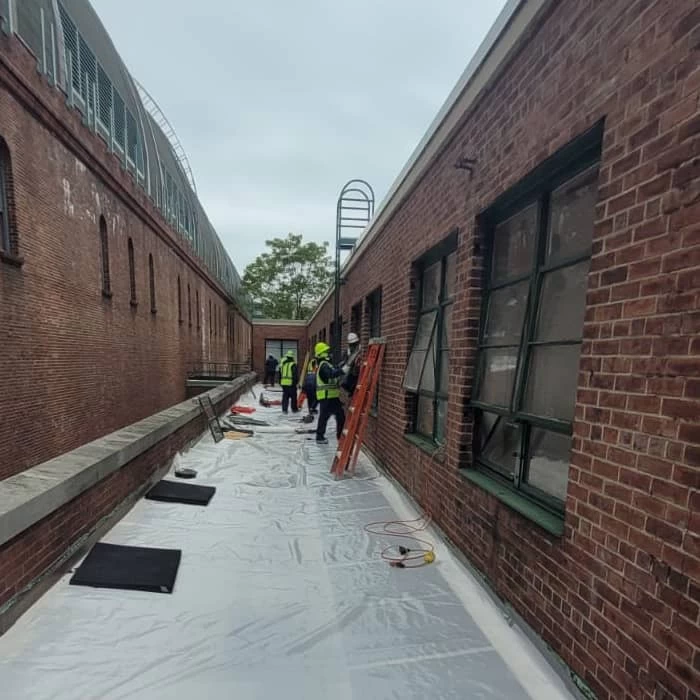
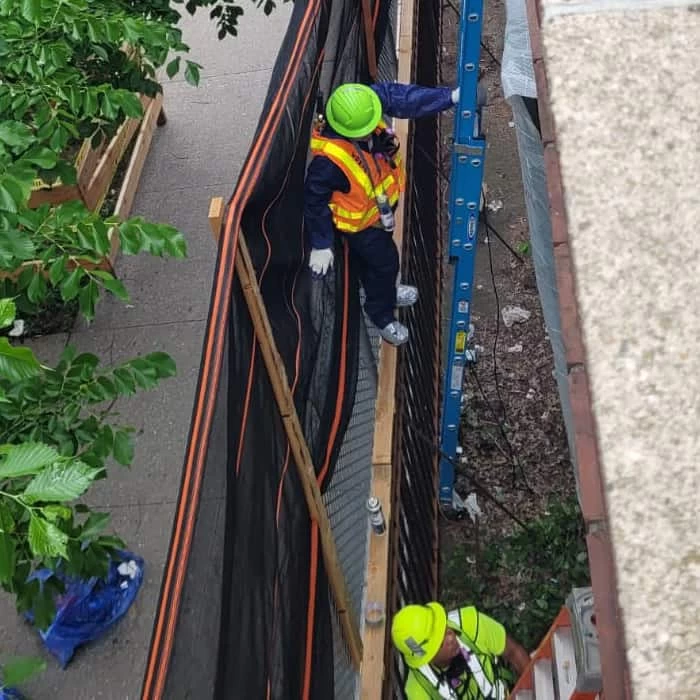
For Lakeview homeowners, that reality hits harder than most. The majority of homes here were built between the 1940s and 1970s, which means there’s a real chance your walls, floors, or pipe insulation contain asbestos. Your trim and paint may contain lead. A fire that burns through those materials doesn’t just damage your home — it creates a hazmat situation that most restoration companies aren’t licensed to touch. We hold the NYS DOL Asbestos License and USEPA Lead/RRP Certification, so nothing gets torn out before it gets tested.
And because Long Island runs on oil heat, puff-back incidents are one of the most common fire-related calls we get in Nassau County. When an oil burner misfires, it coats an entire home in petroleum-based soot — the kind that smears on contact with water and can’t be cleaned with anything from a hardware store. That’s a specific problem that needs a specific response, and it’s one we handle regularly in homes just like yours throughout Lakeview.
We’re a locally owned and operated restoration company based on Long Island, serving all of Nassau County — including Lakeview and the surrounding Town of Hempstead. With over 5,000 completed restoration projects across New York State and IICRC certifications for both Fire and Smoke Damage Restoration and Water Damage Restoration, we’re not a team that’s figuring it out on your property.
What separates us from most of the names you’ll find online is our ability to take a job from emergency response all the way through full reconstruction — legally and completely. We hold a Nassau County General Contractor License alongside our remediation credentials, which means we can pull permits from the Town of Hempstead, handle structural repairs, and rebuild what the fire took — without handing you off to a second or third contractor mid-project.
We also bill insurance directly. That matters when you’re already dealing with enough.
From Emergency Call to Finished Home — Here's What to Expect
It starts the moment you call. We respond 24 hours a day, seven days a week, and commit to being on-site within one hour. The first priority is stabilizing the property — boarding up openings, securing the structure, and stopping any active water intrusion from firefighting suppression before it has a chance to create a secondary mold problem. In Lakeview’s older housing stock, where wall cavities and subfloors absorb water quickly, that window matters.
Once the property is secured, the assessment begins. Every affected surface gets documented — walls, ceilings, ductwork, contents — not just for the scope of work, but for your insurance claim. We work directly with your carrier, which means the documentation is thorough, organized, and built to support the full value of your loss. Before any demolition starts on a pre-1980 home, materials are tested for asbestos. That’s not optional in New York State — it’s the law — and it’s a step that protects you legally and physically.
From there, remediation moves in phases: soot and smoke removal, structural drying, odor neutralization, and hazardous material abatement where required. Once the home is clean and safe, reconstruction begins under the same roof. You get one point of contact, one contract, and a team that already knows your home by the time the rebuild starts.
Every Layer of Damage Covered — Not Just the Visible Part
Fire damage restoration in Lakeview isn’t a single-step job. The visible damage — burned walls, charred framing, blackened ceilings — is only part of what needs to be addressed. Smoke infiltrates HVAC systems and distributes soot into rooms that never saw a flame. Firefighting water saturates wall cavities and subfloors, creating mold risk within 24 to 48 hours. And in a community where most homes were built before 1980, the demolition phase almost always requires hazardous material testing before a single piece of drywall comes down.
Our fire restoration service covers the full scope: emergency board-up and stabilization, soot and smoke remediation, industrial water extraction and structural drying, asbestos and lead testing and abatement where required, mold remediation under our NYS DOL Mold Remediation License, and complete structural reconstruction under our Nassau County General Contractor License. Every phase is documented to insurance-standard specifications, and we handle direct billing with your carrier so you’re not managing that process alone.
For Lakeview homeowners dealing with oil burner puff-backs specifically — a common winter occurrence in Nassau County — the petroleum-based soot requires a different cleaning protocol than standard fire soot. That’s a distinction most companies miss, and one we address as a routine part of the job.
What should I do immediately after a house fire in Lakeview, NY?
The most important thing is not to re-enter the home until the Lakeview Fire Department or a structural professional has confirmed it’s safe. Once it’s cleared, your next call should be to a licensed restoration company — not because of urgency as a sales tactic, but because the clock on secondary damage is real. Soot begins chemically bonding to surfaces within hours. Firefighting water starts creating mold risk within 24 to 48 hours. Every hour that passes without extraction and drying is an hour of damage compounding inside your walls.
When you call us, the first step is getting someone on-site to assess and stabilize the property — boarding up openings, documenting the damage, and beginning water extraction if needed. From there, we coordinate directly with your insurance carrier so you’re not left managing that process while also trying to figure out where your family is staying. Don’t throw anything away and don’t attempt to clean soot yourself — petroleum-based soot from oil burner puff-backs, which are common in Nassau County homes like those in Lakeview, smears on contact and requires professional equipment to remove without spreading further.
Does homeowners insurance cover fire damage restoration in Nassau County?
In most cases, yes — standard homeowners insurance policies in New York cover fire damage restoration, including smoke and soot cleanup, water damage from firefighting suppression, and structural repairs. What varies is how thoroughly the claim is documented and whether the adjuster’s estimate reflects the full scope of what needs to be done. That gap is where homeowners lose money.
We document every phase of the damage and restoration process to insurance-standard specifications and bill your carrier directly. That means the paperwork your adjuster receives is detailed, organized, and built to support the actual cost of the work — not a rough estimate. Customers have specifically noted that we attended material selection appointments with them to make sure replacement costs were being valued fairly. In Nassau County, where home values have appreciated significantly and the cost of skilled labor and materials is high, that kind of advocacy makes a real difference in what you ultimately recover.
How long does fire damage restoration take for a typical Lakeview home?
It depends on the scope, but for a typical Lakeview Cape Cod or split-level with moderate fire and smoke damage, you’re generally looking at anywhere from a few weeks for remediation-only work to two to four months for a full restoration that includes reconstruction. The variables that extend timelines in Nassau County are usually permit processing through the Town of Hempstead and the results of hazardous material testing.
If asbestos-containing materials are found — which is common in Lakeview homes built before 1980 — abatement has to be completed before demolition can proceed. That’s a legally required step, not an optional one, and it adds time to the front end of the project. The upside of working with a company that holds the NYS DOL Asbestos License in-house is that you’re not waiting for a separate subcontractor to be scheduled and cleared. We handle it internally, which keeps the project moving as efficiently as the scope allows.
Will fire restoration uncover asbestos or lead in my Lakeview home?
It might — and that’s something you need to know going in, not after demolition has already started. Lakeview’s residential character is defined by homes built between the 1930s and 1970s, and that era of construction routinely used asbestos in floor tiles, pipe insulation, ceiling materials, and joint compound. Lead paint was standard on walls and trim in pre-1978 homes. A fire that burns through those materials — or a restoration that demolishes them without testing — creates a legal and health liability for the homeowner.
Before any demolition begins on a pre-1980 property, we test for asbestos and lead. If either is found, abatement is handled in-house under our NYS DOL Asbestos License and USEPA Lead/RRP Certification. You don’t need to find a separate licensed abatement contractor, and you don’t have to coordinate that process while you’re already displaced. It’s handled as part of the restoration, documented for your insurance claim, and completed before any reconstruction begins.
Can fire damage cause mold in my home, and how is that handled?
Yes, and it’s one of the most commonly overlooked consequences of a house fire. The water used to extinguish a fire doesn’t evaporate on its own — it saturates wall cavities, subfloors, insulation, and structural framing, and mold can begin growing within 24 to 48 hours of initial exposure. A restoration company that addresses fire and smoke damage but doesn’t extract the water and dry the structure is leaving the second problem in place.
We deploy industrial water extraction and structural drying equipment alongside fire and smoke remediation — the two processes happen simultaneously, not sequentially. If mold has already developed by the time work begins, our NYS DOL Mold Remediation License authorizes us to address it legally and completely. In Lakeview’s older homes, where wall cavities are often dense and airflow is limited, moisture can hide in places that aren’t immediately visible. Thermal imaging and moisture meters are used to find it before it becomes a larger problem, so you’re not discovering mold six weeks after the restoration is supposedly finished.
How does Green Island Group handle fire restoration differently than a national franchise?
The most practical difference is accountability. When you call a national franchise, you’re calling a brand — the actual crew that shows up may be a rotating roster of subcontractors with no direct relationship to the company name on the truck. When you call us, you’re calling a Long Island company with a real address, verifiable licenses, and a direct stake in the outcome of your project. In a community as tight-knit as Lakeview — roughly 6,000 people within one square mile — that kind of local accountability isn’t abstract. It’s how a business either builds a reputation or loses one.
The credentials also tell a different story. Most national franchise operators handle remediation but stop short of reconstruction, which means you’re handed off to a separate general contractor mid-project. We hold a Nassau County General Contractor License alongside our IICRC certifications and NYS DOL licenses, so the same team that cleans and remediates your home can also rebuild it — under one contract, with one point of contact, and without the coordination gaps that come from managing multiple companies at once. For Lakeview homeowners dealing with the full range of what a fire exposes in older construction, that continuity matters more than a recognizable brand name.