Estate-Scale Fire Restoration for Laurel Hollow Homes
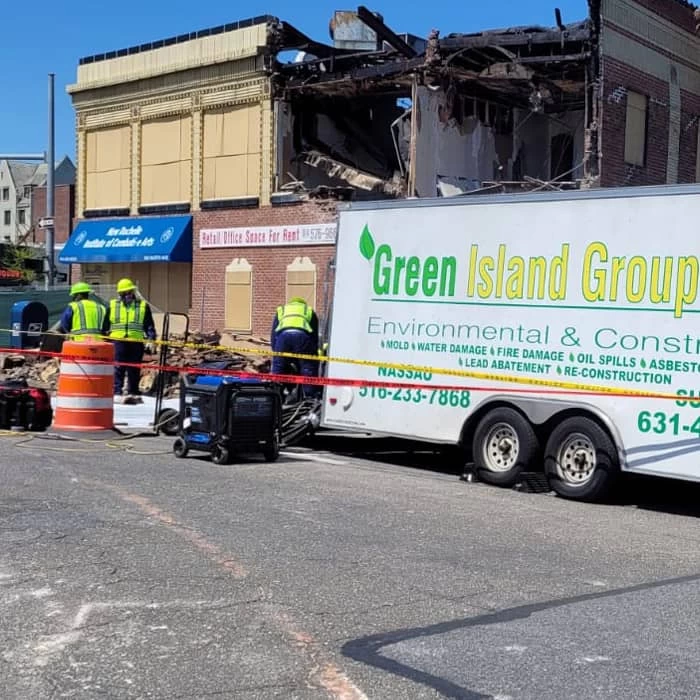
When a fire hits a home on Cold Spring Road or anywhere in Laurel Hollow, the damage doesn’t stop when the Syosset Fire Department leaves. We arrive next — licensed, certified, and ready to handle everything from smoke cleanup to full reconstruction.
I needed a professional consultation explanation of procedure for safe removal of Asbestos in my apartment complex. Without having an account yet, I was very impressed with the caring, knowledgeable and generous advice offered by Jessica, and will look forward to doing business in the future. Thank you so much! I feel much more informed about a sometimes scary endeavor. Peace. Nancy Silva Mineola, NY.
Mia Munoz
Used this company to clean up some water flood in my house. They were fast and easy to work with.very professional, Would recommend to anyone!
Nini Valle
Great company, had a flood and they responded quickly and efficiently. Billed my insurance company directly. I highly recommend this company!
joe colapietro, jr
I had pipe freeze in my basement right before a snow storm and they made to within an hour to help start the clean up process. They we by our side throughout the entire process and even helped with the insurance company. They did such a great job with the cleanup, repair, remidiation, I contracted them to perform the repairs and finishes in the basement. They came with enough manpower and material to get the job done. Leo and Jessica were nothing but a pleasure to deal with!!
Cristian Arredondo c
I had some water damage in my home and Green Island was able to take care of my issue quickly and effectively. I am very pleased with the work they did. They responded quickly and were very professional.
Michael M
Outstanding service! From the office to the field crew everyone was friendly, helpful and responsive. I highly recommend Green Island Group.
Your Laurel Hollow Home Restored — Not Just Cleaned Up
A fire in a Laurel Hollow estate isn’t a simple cleanup job. These are large, complex homes — some spanning 6,000 square feet or more — with central HVAC systems that pull smoke into every room, premium finishes that react badly to acidic soot, and older construction that may contain asbestos or lead paint disturbed by the fire. Surface cleaning alone doesn’t fix any of that.
What you actually need is a company that can assess the full scope of damage, handle hazardous materials legally, dry out the water left behind by suppression efforts, and rebuild what was lost — all without you managing three separate contractors while you’re living out of a hotel. That’s the difference between a restoration company and a cleanup crew.
Homes in Laurel Hollow also carry something that replacement cost alone doesn’t capture — architectural detail, custom millwork, and in some cases, genuine historical character. The goal isn’t just to make it structurally sound again. It’s to bring it back to what it was.
We’re a locally owned restoration and environmental services company serving Laurel Hollow, Nassau County, and the broader Long Island area. We hold a Nassau County General Contractor license, IICRC certification for fire, smoke, and water damage restoration, a NYS DOL Asbestos License, a NYS DOL Mold License, and USEPA Lead/RRP certification. In a community like Laurel Hollow — where homes predate modern construction standards and sit well above the million-dollar mark — that combination of licenses isn’t a bonus. It’s the baseline requirement for doing the job right and legally.
With over 5,000 completed restoration projects across New York State, we’ve worked through the full range of what fire damage looks like on Long Island’s North Shore: large estate properties, older housing stock, oil-heated homes with puff-back damage, and post-fire water damage that creates mold risk within 48 hours. We bill insurance directly and have guided Laurel Hollow and Nassau County homeowners through the claims process from first call to final sign-off.
What Happens From the First Call to Move-Back-In Day
The process starts the moment you call — 24 hours a day, any day of the year. We stage equipment on Long Island and commit to arriving on-site within one hour. That matters because acidic soot begins bonding permanently to surfaces within hours of a fire, and every hour of delay adds to the total scope of damage. The first visit covers emergency board-up, structural safety assessment, and immediate steps to stop secondary damage from spreading.
From there, we document everything to insurance-standard specifications — photos, moisture readings, air quality testing, hazardous material identification — before a single remediation step begins. In Laurel Hollow specifically, that documentation phase often includes testing for asbestos and lead, given the age of many homes in the village. Any materials that require licensed abatement are handled in-house, not subcontracted to a separate firm you’ve never met.
Once the structure is cleared and stabilized, the restoration and rebuild phase begins under our Nassau County General Contractor license. The Village of Laurel Hollow maintains its own building code administration, and all work is permitted and inspected through the village’s Building Inspector and Village Engineer before a certificate of occupancy is issued. We handle that process — you don’t have to.
Fire damage restoration in a Laurel Hollow home typically involves more than most homeowners expect when they first call. Beyond the visible char and smoke staining, there’s usually water damage from suppression — the Syosset Fire Department response to the November 2025 house fire at 433 Cold Spring Road involved approximately 200 firefighters and significant water deployment before the blaze was contained. That water creates mold risk fast, especially in a large home with a finished basement and multiple floors. We handle fire cleanup, smoke and soot removal, odor elimination, water extraction, structural drying, and mold remediation as a single coordinated scope of work.
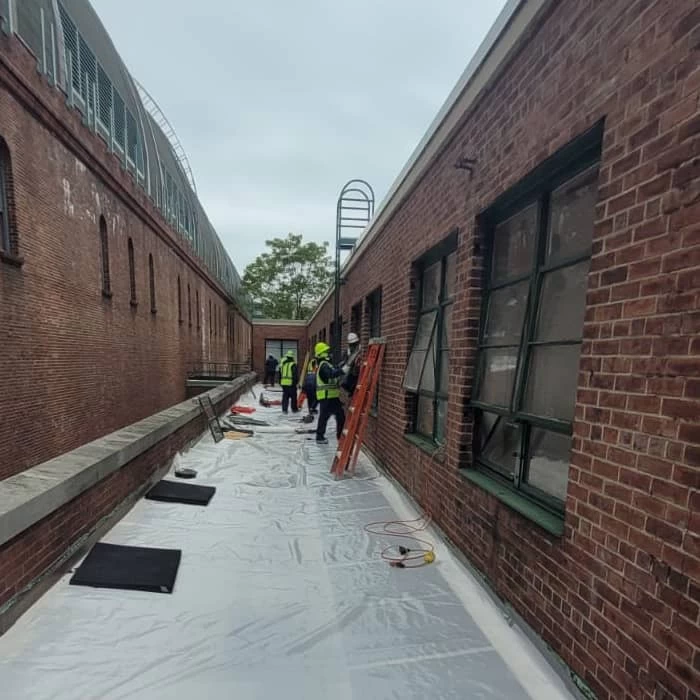
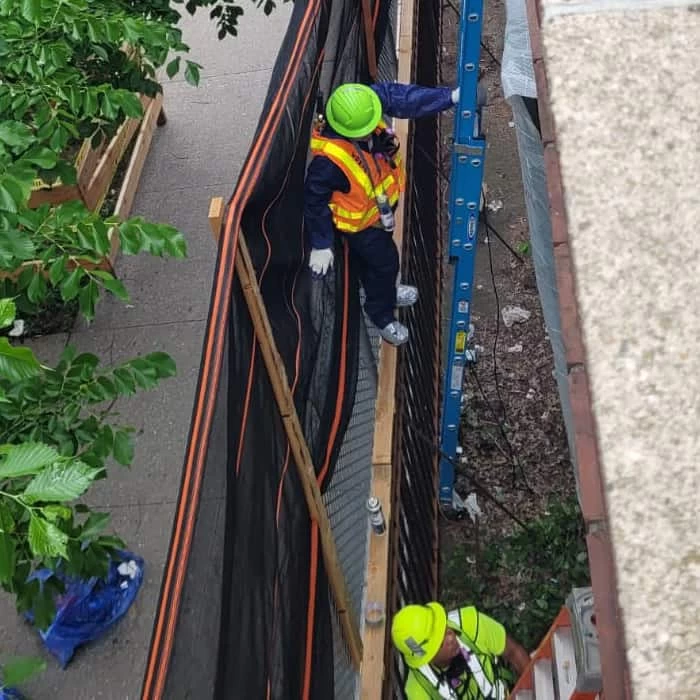
For homes in Laurel Hollow built before 1980, the fire damage picture also includes the potential disturbance of asbestos-containing materials — floor tiles, pipe insulation, ceiling tiles, joint compound. Homes built before 1978 add lead paint to that list. New York State law requires a licensed contractor to handle both. We carry the NYS DOL Asbestos License and USEPA Lead/RRP certification, which means we can legally manage the full hazardous material scope in-house without requiring you to source a separate abatement contractor mid-project.
If your home uses oil heat — common throughout Laurel Hollow and the broader North Shore — puff-back damage from a furnace misfire creates the same oily, acidic soot contamination as a structural fire, and it requires the same professional remediation. Our HVAC cleaning capability addresses both the surfaces and the ductwork in one pass.
Is it safe to stay in my Laurel Hollow home after a fire?
In most cases, no — at least not immediately. Even a contained fire in one part of the home can push smoke, soot, and combustion byproducts through the entire HVAC system, meaning rooms that appear unaffected may have air quality issues that are genuinely harmful to breathe. Soot particles are acidic and fine enough to penetrate deep into lungs, and some fires — particularly in older Laurel Hollow homes — may have disturbed asbestos or lead-containing materials, which creates a separate hazard that requires testing before re-entry.
The honest answer is that a professional assessment needs to happen before you decide whether the home is safe to occupy. That assessment should include air quality testing, moisture readings, and a structural safety evaluation — not just a visual walkthrough. If the fire was significant enough to require fire department response, assume the home needs professional clearance before anyone sleeps there.
How long does fire damage restoration typically take in Laurel Hollow?
It depends heavily on the scope of the damage and the size of the property. For a smaller, contained fire in a single room, remediation and repairs might wrap up in two to three weeks. For a larger fire in a Laurel Hollow estate — a 5,000 to 7,000 square foot home with smoke contamination throughout the HVAC system, water damage from suppression, and potential hazardous material abatement — the full process from emergency response through final building inspection can take several months.
The permitting timeline in Laurel Hollow adds a layer that doesn’t exist in every municipality. The village maintains its own building code administration, and reconstruction work requires permits issued through the village’s Building Inspector with final certification from the Village Engineer. An experienced contractor who knows this process can keep it moving — but it’s not something you can skip or shortcut. Realistic timelines are built around the full scope of work, not just the cleanup phase.
Does my homeowners insurance cover fire damage restoration in Laurel Hollow?
Standard homeowners insurance policies cover fire damage, including smoke and soot cleanup, water damage from suppression efforts, and structural repairs — but the coverage outcome depends significantly on how well the damage is documented. Insurance adjusters work from what’s in front of them. If the scope isn’t fully documented — every affected surface, every contaminated HVAC duct, every square foot of water-damaged flooring — the settlement offer may not reflect the full cost of restoring a large estate to its pre-loss condition.
For a Laurel Hollow home valued at $2 million or more, the difference between a well-documented claim and a poorly documented one can be substantial. We bill insurance directly and document every element of the damage to insurance-standard specifications before remediation begins. Our staff has accompanied homeowners to material selection appointments to ensure fair pricing is reflected in the claim — a level of involvement that makes a real difference when the stakes are this high.
What is puff-back damage, and do Laurel Hollow homes face this risk?
Puff-back happens when an oil-fired furnace or boiler misfires — instead of a clean ignition, the burner produces a pressure wave that sends a spray of oily, unburned fuel and soot back through the heating system and into the home. It coats walls, ceilings, furniture, and everything inside the HVAC ducts in a fine, greasy film that smears on contact with standard cleaning products and embeds in porous surfaces like drywall and upholstery.
Long Island has one of the highest concentrations of oil-heated homes in the country, and Laurel Hollow is no exception. In a 5,000 to 7,000 square foot estate, a puff-back can contaminate every room in the house and leave a persistent odor that surface cleaning alone won’t eliminate. Remediation requires the same professional approach as smoke damage from a structural fire — cleaning every affected surface and decontaminating the entire HVAC system. The cost for a home of this scale typically runs between $10,000 and $30,000 depending on the extent of contamination, and it’s generally covered under homeowners insurance.
Does fire damage in older Laurel Hollow homes disturb asbestos or lead paint?
Yes, and this is one of the most important things to understand before you hire anyone to work in your home after a fire. Homes built before 1980 commonly contain asbestos in floor tiles, pipe insulation, ceiling tiles, and joint compound. Homes built before 1978 commonly contain lead paint. When a fire occurs in these structures, the heat and physical damage can disturb both materials — turning what was previously a contained, stable presence into an active hazard.
New York State law requires a licensed contractor to handle asbestos abatement and lead remediation. That’s not a suggestion — it’s a legal requirement. Hiring a restoration company that doesn’t hold a NYS DOL Asbestos License or USEPA Lead/RRP certification means the hazardous material scope either gets skipped entirely or handed off to a separate contractor you didn’t vet. We carry both licenses and handle the full hazardous material scope in-house, which matters in a village like Laurel Hollow where a meaningful portion of the housing stock predates these construction standards.
How quickly can we reach Laurel Hollow after a fire?
Fires don’t wait for business hours, and neither does the damage they cause. Soot begins bonding permanently to surfaces within hours of a fire. Moisture from suppression water starts creating mold conditions within 24 to 48 hours. The faster a qualified restoration company gets on-site after the fire department clears the scene, the more secondary damage gets stopped before it compounds.
We operate 24 hours a day, 365 days a year, and stage equipment on Long Island to maintain a one-hour on-site response commitment. For a Laurel Hollow homeowner dealing with a middle-of-the-night emergency, that’s not a marketing line — it’s the practical difference between a manageable scope of work and a restoration project that doubles in size because the first 12 hours were lost. Our customer reviews confirm we’ve honored that response time for after-hours emergencies across Nassau and Suffolk Counties.