Estate-Scale Fire Damage Needs More Than a Cleanup Crew
When your Lloyd Harbor home takes a hit from fire, the damage runs deeper than what you can see and the stakes are too high to hand it off to just anyone.
I needed a professional consultation explanation of procedure for safe removal of Asbestos in my apartment complex. Without having an account yet, I was very impressed with the caring, knowledgeable and generous advice offered by Jessica, and will look forward to doing business in the future. Thank you so much! I feel much more informed about a sometimes scary endeavor. Peace. Nancy Silva Mineola, NY.
Mia Munoz
Used this company to clean up some water flood in my house. They were fast and easy to work with.very professional, Would recommend to anyone!
Nini Valle
Great company, had a flood and they responded quickly and efficiently. Billed my insurance company directly. I highly recommend this company!
joe colapietro, jr
I had pipe freeze in my basement right before a snow storm and they made to within an hour to help start the clean up process. They we by our side throughout the entire process and even helped with the insurance company. They did such a great job with the cleanup, repair, remidiation, I contracted them to perform the repairs and finishes in the basement. They came with enough manpower and material to get the job done. Leo and Jessica were nothing but a pleasure to deal with!!
Cristian Arredondo c
I had some water damage in my home and Green Island was able to take care of my issue quickly and effectively. I am very pleased with the work they did. They responded quickly and were very professional.
Michael M
Outstanding service! From the office to the field crew everyone was friendly, helpful and responsive. I highly recommend Green Island Group.
What Full Restoration Actually Looks Like in Lloyd Harbor
In Lloyd Harbor, where the average home runs over 6,000 square feet and sits on a minimum two-acre lot, fire damage isn’t a standard job. Smoke moves fast through large, complex floor plans through HVAC ductwork, into wall cavities, through custom millwork and historic materials and it doesn’t stop at the room where the fire started. By the time the fire department leaves, the damage has already spread further than most homeowners realize.
Soot starts permanently etching and staining surfaces within 24 to 72 hours. In a home of this scale, every hour that passes means more surface area compromised, more of those irreplaceable architectural details absorbing smoke, and a higher total cost to restore. Speed isn’t just a convenience here it’s what protects the value of what you’ve built.
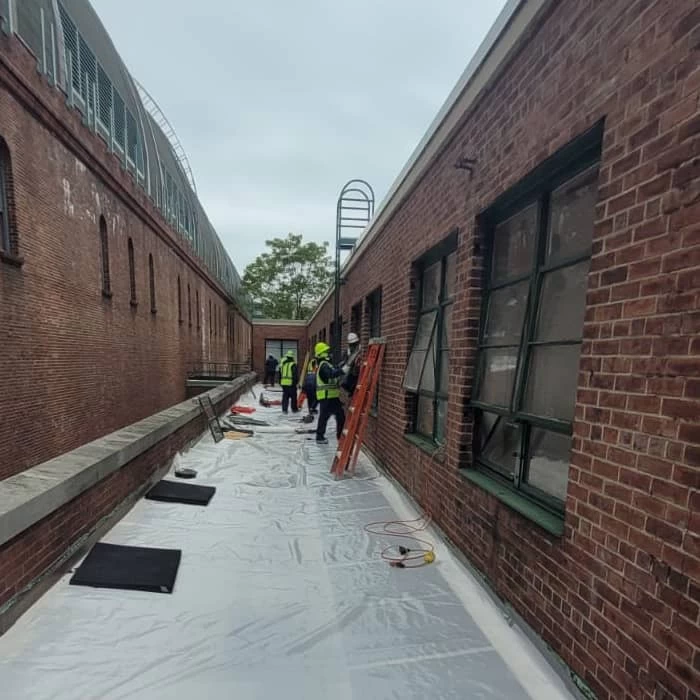
Lloyd Harbor’s older estate homes many with roots in the Gold Coast era also carry a layer of complexity that newer construction doesn’t. Asbestos-containing materials show up regularly in mid-century and earlier builds, in insulation, floor tiles, and pipe wrapping. A fire can disturb those materials without anyone realizing it. Proper restoration in a home like yours means identifying those hazards before any reconstruction begins, not discovering them halfway through the job.
We’re a locally owned Long Island restoration company not a franchise, not a call center. When you reach out, you’re talking to the people who will actually manage your project from start to finish. That matters more than it sounds when you’re looking at a months-long restoration on a property worth several million dollars.
Our team has worked across Suffolk County’s North Shore communities, including Lloyd Harbor and the surrounding Huntington area towns. That means familiarity with the housing stock, the local building departments, and the kind of homes that require more than a surface-level approach. Lloyd Harbor’s village building department has its own permit process separate from the Town of Huntington and failing to navigate that correctly leads to stop-work orders and added costs. That’s not a surprise you want mid-project.
From emergency stabilization through environmental remediation, full reconstruction, and final finishes, everything stays under one roof. Real customers have named specific team members Leo and Jessica in independent reviews, not because they were asked to, but because the experience was personal enough to remember.
The first step is getting there fast. Documented response times from real customers put us on-site within an hour of an emergency call. In Lloyd Harbor, where West Neck Road is the primary artery in and out of Lloyd Neck, knowing the local road network and how to navigate it efficiently is part of the job.
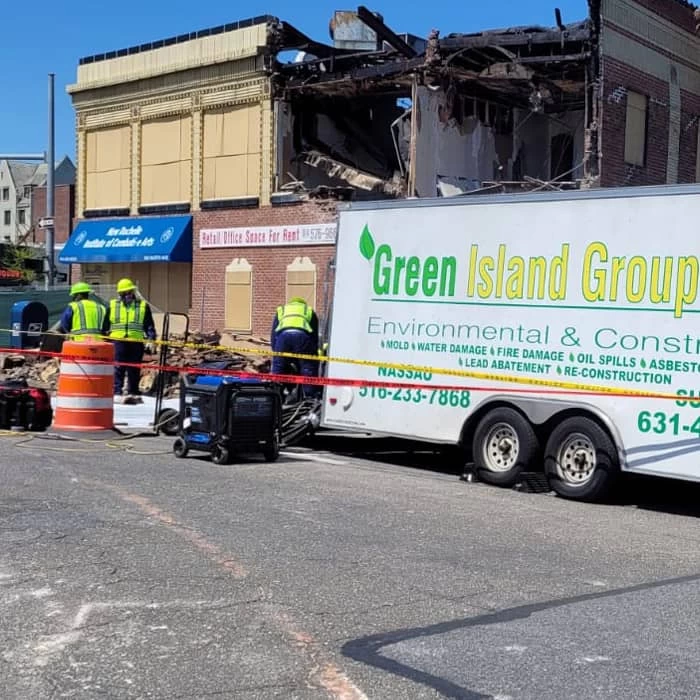
Once on-site, our immediate focus is stabilization: securing the structure, boarding up openings, and stopping any secondary water damage left behind by firefighting suppression. Water from a fire hose can soak into floors, walls, and ceilings quickly, and in a large home, mold can take hold within 24 to 48 hours if it isn’t addressed. That phase happens at the same time as the initial damage assessment, so nothing gets missed and nothing gets delayed.
From there, the scope gets documented thoroughly smoke penetration, soot damage, structural impact, and any environmental hazards like asbestos that may have been disturbed. That documentation matters for your insurance claim, especially if you’re carrying a high-value policy through a carrier like Chubb or PURE that requires detailed scope-of-work records. Reconstruction and finishes follow once remediation is complete and permits are in place through the village’s building department. You get one point of contact throughout, and the work doesn’t end until you’re satisfied with the result.
Fire damage restoration in a Lloyd Harbor estate isn’t one service it’s several, running in sequence, each one dependent on the last being done correctly. We handle the full range in-house: emergency board-up and stabilization, smoke and soot remediation, water extraction, air quality treatment using HEPA scrubbers and hydroxyl technology, environmental hazard assessment and abatement, structural reconstruction, and final finishes.
The environmental piece is worth calling out specifically. New York State requires NYSDOL-certified contractors to handle asbestos abatement and in Lloyd Harbor’s older homes, that step is more common than most people expect. A restoration company that isn’t certified for that work will hit a wall and leave you scrambling for a separate abatement contractor, which stalls the entire project. That capability is built into what we bring to every job.
Smoke odor is another area where shortcuts show up later. Masking odor isn’t the same as eliminating it. Our approach goes after the source treating affected materials, running air scrubbers, and using thermal fogging where needed so the odor doesn’t return after the job is closed out. For a home in a village like Lloyd Harbor, where your property is your private retreat and the standard of living is high, “good enough” isn’t the bar. The work is done right, or it isn’t done.
Does fire damage restoration in Lloyd Harbor require a village building permit?
Yes and this is one of the most important things to get right from the start. The Village of Lloyd Harbor operates its own building department with its own permit process, separate from the Town of Huntington. Any structural repairs or reconstruction following fire damage require a permit issued by the village, and the village has been explicit that failure to obtain proper approvals results in stop-work orders, fines, and added project costs.
This isn’t a formality it’s a real procedural step that affects your timeline. A restoration company that treats Lloyd Harbor like any other Suffolk County address and skips the village-specific permit process will create problems that take weeks to untangle. We’re familiar with working within incorporated village building departments across Long Island’s North Shore and factor that process into the project timeline from day one.
Can smoke and soot damage be fully removed from a large historic home?
Yes, but the scope of what “fully removed” actually means is larger than most people initially expect. In a home with complex ductwork, historic plaster walls, custom millwork, and porous materials throughout which describes a significant portion of Lloyd Harbor’s older estate properties smoke doesn’t just settle on visible surfaces. It penetrates wall cavities, infiltrates insulation, and travels through HVAC systems into rooms that were never near the fire.
Effective remediation addresses all of it, not just what’s visible. That means cleaning ductwork, treating affected materials at the source, running HEPA air scrubbers, and using thermal fogging or hydroxyl treatment to eliminate odor compounds rather than masking them. In homes with irreplaceable architectural details the kind that can’t be sourced from a catalog the approach also has to account for the sensitivity of those materials and how cleaning methods interact with them. The goal is complete restoration, not a surface-level pass that leaves problems behind.
Could a fire in my Lloyd Harbor home have disturbed asbestos or lead paint?
It’s a real possibility, and it’s one that should be assessed before any restoration work begins. Many of Lloyd Harbor’s homes were built during the mid-twentieth century or earlier, when asbestos-containing materials were standard in construction used in insulation, floor and ceiling tiles, pipe wrapping, and roofing. Lead-based paint was also common in homes built before 1978. Fire and the physical damage that comes with it can disturb both.
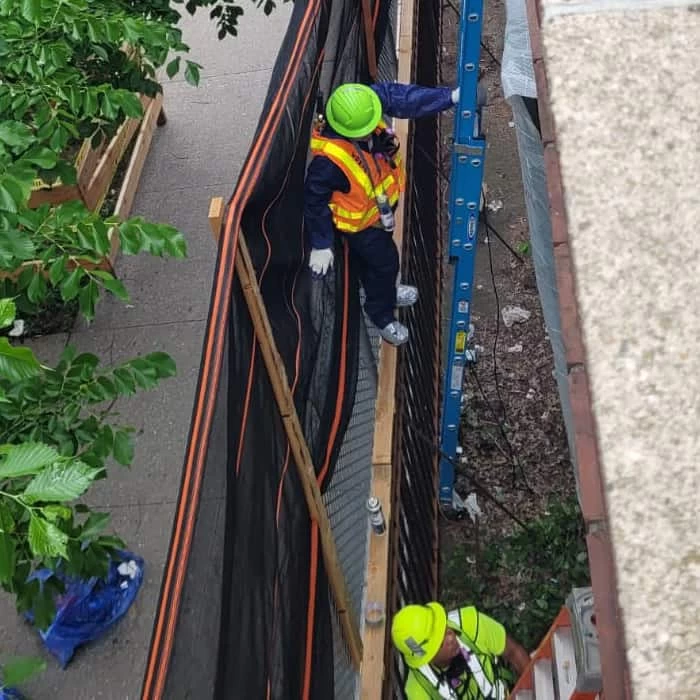
New York State requires NYSDOL-certified contractors to handle asbestos abatement. If a restoration company starts work without identifying and properly containing those materials first, they’re creating a health risk and a regulatory problem at the same time. We have NYSDOL certification for environmental remediation, which means that assessment and abatement if needed happens as part of the restoration process, not as a surprise that stops the project in its tracks and forces you to find a separate contractor.
How does firefighting water damage factor into a fire restoration job?
It’s often as significant as the fire itself, and in a large home, it can be more widespread. The water used to suppress a fire soaks into flooring, wall assemblies, ceilings, and structural framing quickly. In a home averaging over 6,000 square feet with multiple stories and complex construction, that water can travel further and deeper than it appears on the surface.
The critical window for mold growth opens within 24 to 48 hours of water intrusion. If extraction and drying aren’t handled promptly and thoroughly, you’re looking at a secondary remediation problem on top of the fire damage. We address water damage as part of the initial emergency response extraction, structural drying, and moisture monitoring so it doesn’t become a separate issue discovered weeks later when visible mold appears behind a newly reconstructed wall.
How does Green Island Group help with the insurance claim after a fire in Lloyd Harbor?
Many Lloyd Harbor homeowners carry high-value property policies through carriers like Chubb, AIG Private Client, or PURE policies that involve independent adjusters, detailed documentation requirements, and a more involved claims process than a standard homeowners policy. That process can feel overwhelming when you’re also trying to manage the immediate aftermath of a fire.
We document damage thoroughly from the start producing detailed scope-of-work records and insurance-compatible estimates that hold up when an adjuster reviews them. Multiple independent customer reviews specifically credit our team with guiding homeowners through the insurance process, not just restoring the property. That means being present when the adjuster arrives, answering questions, and making sure the full scope of damage is represented accurately including secondary damage from smoke and water that can be easy to undervalue in an initial assessment.
What are the biggest fire risks for homes on Lloyd Neck specifically?
Lloyd Neck’s geography creates a few specific risk factors worth knowing. The peninsula is heavily wooded, and Lloyd Harbor’s zoning ordinances which protect the tree canopy aggressively mean that mature trees sit in close proximity to many homes. A structural fire can spread to nearby trees, and conversely, a tree struck by lightning or ignited by an exterior fire can threaten a structure. That wildland-urban interface dynamic is more pronounced here than in most Long Island communities.
The peninsula’s exposure to nor’easters and coastal storms also plays a role. Power outages from winter storms drive generator use, which is a documented cause of electrical fires. When power is restored after an outage, surges can also trigger electrical fires in homes with older wiring a relevant concern given the age of some of Lloyd Neck’s estate properties. Seasonal wind exposure from multiple directions accelerates fire spread when it starts, which makes response time even more critical. Knowing the area including the fact that West Neck Road is the primary access point in and out of Lloyd Neck is part of being prepared to respond effectively when something goes wrong.