When a Gold Coast Home Burns, the Stakes Are Different
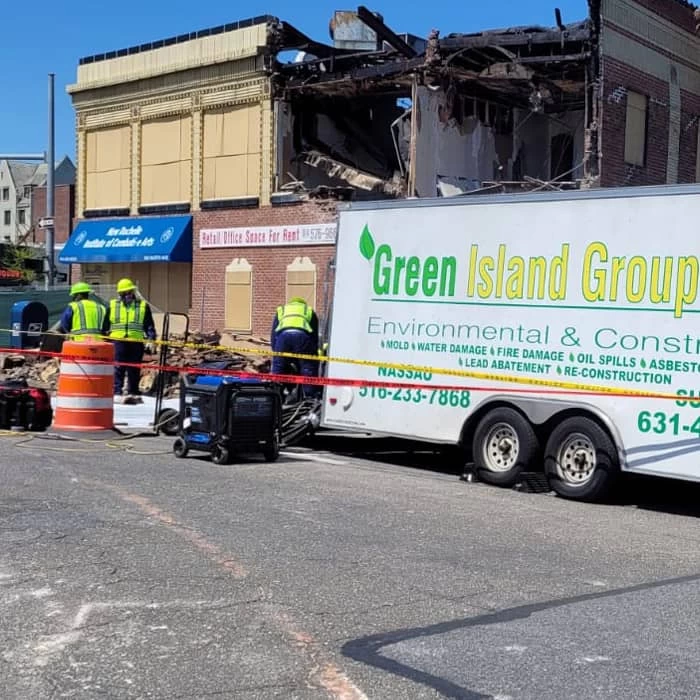
Fire damage in Locust Valley isn’t just a cleanup job — it’s a high-value property with pre-war construction, older materials, and an insurance claim that needs to be handled right from the start. We understand what’s at stake when a home built in the 1940s or earlier catches fire. The architectural details, the original hardwood, the plaster walls — these aren’t things you replace from a catalog. They’re what make a Locust Valley property worth what it is.
I needed a professional consultation explanation of procedure for safe removal of Asbestos in my apartment complex. Without having an account yet, I was very impressed with the caring, knowledgeable and generous advice offered by Jessica, and will look forward to doing business in the future. Thank you so much! I feel much more informed about a sometimes scary endeavor. Peace. Nancy Silva Mineola, NY.
Mia Munoz
Used this company to clean up some water flood in my house. They were fast and easy to work with.very professional, Would recommend to anyone!
Nini Valle
Great company, had a flood and they responded quickly and efficiently. Billed my insurance company directly. I highly recommend this company!
joe colapietro, jr
I had pipe freeze in my basement right before a snow storm and they made to within an hour to help start the clean up process. They we by our side throughout the entire process and even helped with the insurance company. They did such a great job with the cleanup, repair, remidiation, I contracted them to perform the repairs and finishes in the basement. They came with enough manpower and material to get the job done. Leo and Jessica were nothing but a pleasure to deal with!!
Cristian Arredondo c
I had some water damage in my home and Green Island was able to take care of my issue quickly and effectively. I am very pleased with the work they did. They responded quickly and were very professional.
Michael M
Outstanding service! From the office to the field crew everyone was friendly, helpful and responsive. I highly recommend Green Island Group.
When the fire is out and the trucks leave, the real work begins. Smoke doesn’t stay in the room where the fire started — it moves through wall cavities, ductwork, and every unsealed gap in the structure. In Locust Valley, where more than half the housing stock was built in the 1940s or earlier, that means smoke can reach original plaster walls, wide-plank hardwood floors, and custom millwork that simply cannot be replaced from a catalog.
Getting the restoration right means those materials survive. Getting it wrong means they don’t — and you’re looking at a permanent loss of the architectural character that makes your Locust Valley home irreplaceable. The difference between a company that understands historic construction and one that doesn’t shows up fast.
The other thing that shows up fast in this area is moisture damage. Locust Valley sits close to Long Island Sound, and the ambient coastal humidity here is higher than it is inland. Firefighting water soaks into structural members quickly, and mold can take hold within 24 hours in these conditions. We move fast on water extraction and thorough structural drying — not because we’re rushing, but because we understand the specific climate challenges of living near the Sound. Slow drying in Locust Valley becomes a mold problem within a day.
Fire Damage Restoration Service near Locust Valley, NY
Every License the Job Actually Requires — Already in Hand
We’re a Long Island-based restoration company with over 5,000 completed projects across New York State. We hold IICRC certification for fire and smoke damage restoration, a Nassau County General Contractor license, and NYS DOL licenses for both asbestos and mold — which matters more in Locust Valley than almost anywhere else on the Island, given how much of the housing stock here predates 1950.
We’ve worked throughout the Town of Oyster Bay and understand how permitting flows through that office — not a local Locust Valley building department, which doesn’t exist. That’s a detail a lot of contractors miss, and it costs homeowners time they don’t have when they’re displaced. We handle the permitting process ourselves, which means you’re not trying to figure out which office to call or what forms to file while you’re dealing with fire damage.
We bill insurance directly, document damage to the standard insurers actually require, and stay on the job from emergency board-up through full reconstruction. One company, start to finish.
Fire Restoration Damage Process near Locust Valley
From the Night of the Fire to the Day You Move Back In
The first call starts the clock. We commit to on-site arrival within one hour, around the clock. That matters in Locust Valley because the Locust Valley Fire Department is an all-volunteer organization — dedicated and capable, but response times can vary. By the time the fire is out, water from firefighting efforts has already begun working into your floors and walls. The faster extraction starts, the less total damage you’re dealing with.
Once we’re on site, we assess the full scope — not just what burned, but where smoke traveled, what materials were disturbed, and whether the age of the structure raises any hazardous material concerns. Pre-1978 homes have lead paint. Pre-1980 construction commonly contains asbestos in floor tiles, pipe insulation, and joint compound. We test before we touch, because disturbing those materials without proper containment creates a second problem on top of the first.
From there, the process moves through water extraction, structural drying, smoke and soot removal, odor treatment, and — where needed — full reconstruction under our Nassau County GC license. All permits go through the Town of Oyster Bay, and we handle that process. You don’t need to figure out which office to call or what forms to file. We’ve done this before in this jurisdiction, and we manage it.
Built for Older Homes, High-Value Claims, and Real Hazards
Fire damage restoration in Locust Valley covers more ground than it does in newer construction communities. With a median home build year of 1945 and nearly half the housing stock predating 1940, most significant fire jobs here involve at least one layer of regulated hazardous materials — asbestos, lead paint, or both. We hold the NYS DOL Asbestos License and USEPA Lead/RRP certification required to handle those materials legally in New York State. We don’t stop work and refer you somewhere else when something turns up mid-project.
The service scope includes emergency board-up and securing, water extraction from firefighting, structural drying, full smoke and soot removal from all affected surfaces and HVAC systems, odor elimination, asbestos and mold remediation where required, and complete reconstruction. Our NADCA-certified HVAC cleaning capability is particularly relevant on Long Island, where oil-heated homes are common and a furnace puff-back — when a misfiring oil burner blows petroleum-based soot through your entire heating system — is a separate but related service we handle regularly.
For Locust Valley properties, where a home’s value can approach or exceed $2.69 million and original architectural details are part of what makes it irreplaceable, we assess what can be restored before defaulting to replacement. That’s not a philosophical position — it’s the practical difference between a finished project that feels like your home and one that doesn’t.
Is my Locust Valley home safe to re-enter after a fire?
Not always — and the answer depends on more than whether the structure is standing. After a fire, there are several overlapping hazards: compromised structural integrity, air quality contaminated with smoke particulates and carbon, and in older Locust Valley homes, the very real possibility that fire disturbed asbestos-containing materials or lead paint. Both are common in pre-1950 construction, which describes the majority of homes in this area.
The right answer is to have a licensed restoration professional assess the property before you re-enter for anything beyond a brief, supervised retrieval of essential items. We can walk through the property, identify structural and air quality concerns, and give you a clear picture of what’s safe and what isn’t. That assessment also becomes part of the documentation your insurance company needs — so it’s not an extra step, it’s the right first step.
How does fire damage affect my homeowners insurance claim in Nassau County?
Your insurer will send an adjuster, and that adjuster’s job is to document the damage — not to advocate for the maximum payout. The initial estimate they produce is a starting point, not a final number, and for a high-value Locust Valley property it’s common for the true scope of damage to exceed that first assessment once hidden smoke infiltration, structural drying needs, and hazardous material abatement are properly documented.
We bill insurance companies directly and document damage to the standard that insurers actually require for processing. That means detailed line-item records of every affected surface, every material, and every step of the remediation process. For a home worth what Locust Valley properties are worth, the difference between thorough documentation and incomplete documentation can be tens of thousands of dollars in claim value. We’ve worked with all major carriers and know what the paperwork needs to look like.
What is a puff-back and does it count as fire damage for insurance purposes?
A puff-back happens when an oil burner misfires and backfires into the heating system, pushing a cloud of petroleum-based soot through your ducts and into your living spaces. It’s not an open flame, but the damage is real — oily soot coats walls, ceilings, furniture, clothing, and every surface the air reaches. Long Island has one of the highest concentrations of oil-heated homes in the country, and in Locust Valley’s older housing stock, many of those oil burners have been running for decades.
Most standard homeowners’ insurance policies do cover puff-back damage, but the cleanup is more involved than typical smoke damage. Petroleum soot smears when handled with dry methods and requires specific wet-cleaning chemistry plus full HVAC decontamination — not just surface wiping. We handle puff-back cleanup as a distinct service, and our NADCA-certified HVAC cleaning ensures the source of the contamination is addressed, not just the visible surfaces.
My Locust Valley home is pre-war — does that change how fire restoration works?
Yes, significantly. Homes built before 1940 — which accounts for nearly half of Locust Valley’s housing stock — were constructed with materials and methods that require a different approach than postwar construction. Asbestos was commonly used in floor tiles, pipe insulation, ceiling materials, and joint compound through the late 1970s. Lead paint is present on virtually every painted surface in homes built before 1978. Fire disturbs both, and once disturbed, they become regulated hazardous materials that only a licensed contractor can legally handle in New York State.
Beyond the hazmat considerations, older homes have construction details worth preserving — original plaster walls, hardwood floors, custom trim — that respond poorly to the aggressive water and chemical approaches some restoration companies default to. We assess the materials in front of us and use methods appropriate to them. That’s not a slower process — it’s a smarter one that protects the value of what you already have.
How long does fire damage restoration typically take in Locust Valley?
The honest answer is that it depends on the scope, and scope in Locust Valley tends to run broader than in newer construction areas. A contained kitchen fire with smoke damage to adjacent rooms might be resolved in one to two weeks. A more significant fire involving structural damage, hazardous material abatement, and full reconstruction in a large pre-war home can take several months.
The variables that extend timelines here specifically are: asbestos testing and abatement (which has mandatory waiting periods under New York State law), the Town of Oyster Bay permitting process for any structural reconstruction work, and the drying time required for older, thicker construction materials that hold moisture longer than modern building products. We manage all of those timelines — we pull the permits, coordinate the inspections, and keep the project moving. We’ll give you a realistic estimate upfront, not a number designed to win the job that quietly stretches once work begins.
How do you get smoke smell out of a house completely — not just temporarily?
Smoke odor that keeps coming back after a fire is almost always a sign that the source wasn’t fully addressed. Smoke penetrates porous materials — drywall, insulation, wood framing, plaster — and if those materials aren’t properly cleaned or replaced, the odor off-gasses for months or years regardless of how many times the surfaces are repainted or the carpets are cleaned. In Locust Valley’s older homes, where plaster walls and original hardwood floors are common, this is a particularly relevant issue because those materials are more porous than modern alternatives.
Permanent odor elimination requires a combination of approaches: thermal fogging or hydroxyl treatment to neutralize odor molecules in the air and on surfaces, HEPA air scrubbing to remove particulates, cleaning or replacing affected porous materials, and full HVAC decontamination to prevent the system from redistributing smoke residue every time it runs. We use all of these methods in sequence — the goal is to eliminate the source, not mask it. If you’ve had a previous restoration and the smell returned, that’s usually a sign the HVAC system or a structural cavity wasn’t fully treated.