Malverne's Pre-War Homes Deserve More Than a Generic Cleanup Crew
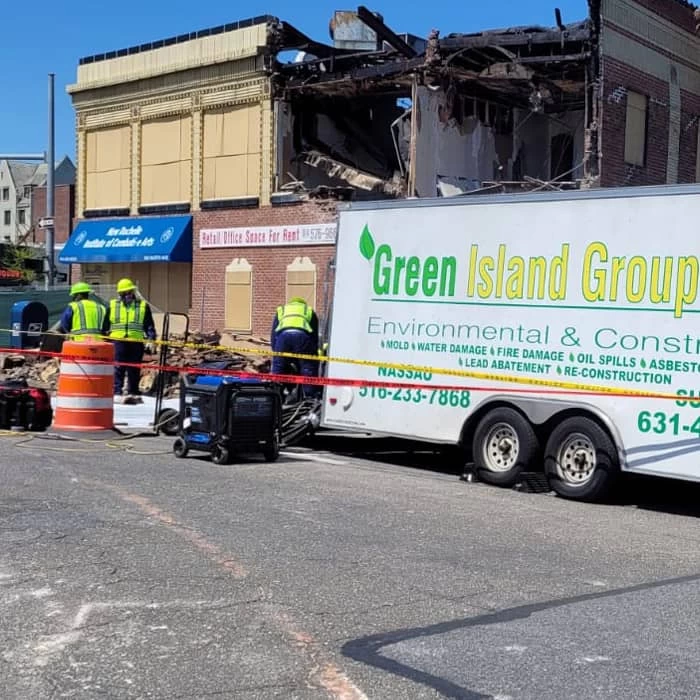
When fire hits a home that’s been standing since the 1920s, the damage runs deeper than what you can see — and the restoration has to match. We respond 24/7 and are on-site in Malverne within an hour.
I needed a professional consultation explanation of procedure for safe removal of Asbestos in my apartment complex. Without having an account yet, I was very impressed with the caring, knowledgeable and generous advice offered by Jessica, and will look forward to doing business in the future. Thank you so much! I feel much more informed about a sometimes scary endeavor. Peace. Nancy Silva Mineola, NY.
Mia Munoz
Used this company to clean up some water flood in my house. They were fast and easy to work with.very professional, Would recommend to anyone!
Nini Valle
Great company, had a flood and they responded quickly and efficiently. Billed my insurance company directly. I highly recommend this company!
joe colapietro, jr
I had pipe freeze in my basement right before a snow storm and they made to within an hour to help start the clean up process. They we by our side throughout the entire process and even helped with the insurance company. They did such a great job with the cleanup, repair, remidiation, I contracted them to perform the repairs and finishes in the basement. They came with enough manpower and material to get the job done. Leo and Jessica were nothing but a pleasure to deal with!!
Cristian Arredondo c
I had some water damage in my home and Green Island was able to take care of my issue quickly and effectively. I am very pleased with the work they did. They responded quickly and were very professional.
Michael M
Outstanding service! From the office to the field crew everyone was friendly, helpful and responsive. I highly recommend Green Island Group.
Your Home Restored — Not Just Cleaned Up and Handed Back
A fire doesn’t end when the flames do. Soot starts bonding to surfaces within hours. The water the Malverne Fire Department used to put out the fire — sometimes thousands of gallons — soaks into original plaster walls and wood framing and creates mold conditions within 24 to 48 hours. In a home built in the 1930s, that’s not a minor concern. That’s a compounding crisis if it isn’t handled fast and handled right.
What you actually need after a fire is someone who understands what’s inside the walls of a pre-war home — and what fire does to it. Nearly half of all homes in Malverne were built before 1939. That means there’s a real chance your home contains asbestos pipe insulation, original knob-and-tube wiring remnants, 9×9 floor tiles with asbestos binders, and lead paint on every surface. Fire disturbs all of it. A restoration team that isn’t licensed to handle those materials isn’t equipped to restore your home — full stop.
When the work is done correctly, you get your home back. Not just cleaned up, but structurally sound, safe to live in, and documented in a way your insurance company recognizes. For a home worth $650,000 to $800,000 in a village where most families have lived for decades, that outcome is the only acceptable one.
We are a locally owned restoration company serving Nassau County, Suffolk County, and New York City. We hold IICRC certification for both fire and smoke damage restoration and water damage restoration — the credential insurance adjusters look for when reviewing documented claims. We also hold a Nassau County General Contractor license, a NYS DOL Asbestos License, NYS DOL Mold License, and USEPA Lead/RRP certification. In a village like Malverne, where the housing stock is among the oldest in Nassau County, those aren’t extras — they’re requirements.
With over 5,000 completed restoration projects across New York State, we’ve worked in homes throughout the West Hempstead area, across the South Shore, and in communities where pre-war construction is the norm, not the exception. We bill insurance directly, handle the documentation, and stay on the job from emergency response through complete reconstruction. One company, one point of contact, start to finish.
What Happens From the First Call to Move-Back-In Day
When you call, someone picks up — day or night, including weekends and holidays. We can be on-site in Malverne within an hour. The first thing we do is assess the full scope of what the fire affected, which in an older home often extends well beyond the visible burn zone. Smoke travels through HVAC systems, wall cavities, and attic spaces. In a 1920s or 1930s home, those pathways are rarely sealed to modern standards, so the contamination zone is almost always larger than it looks.
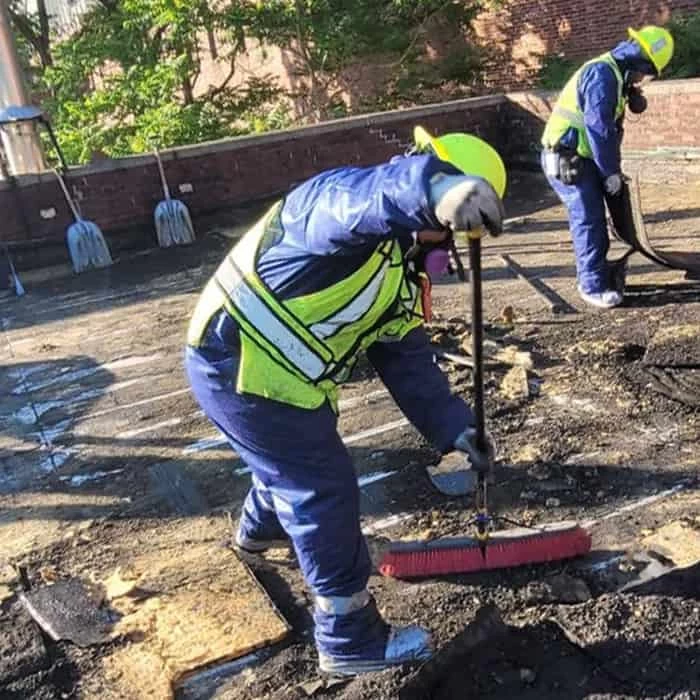
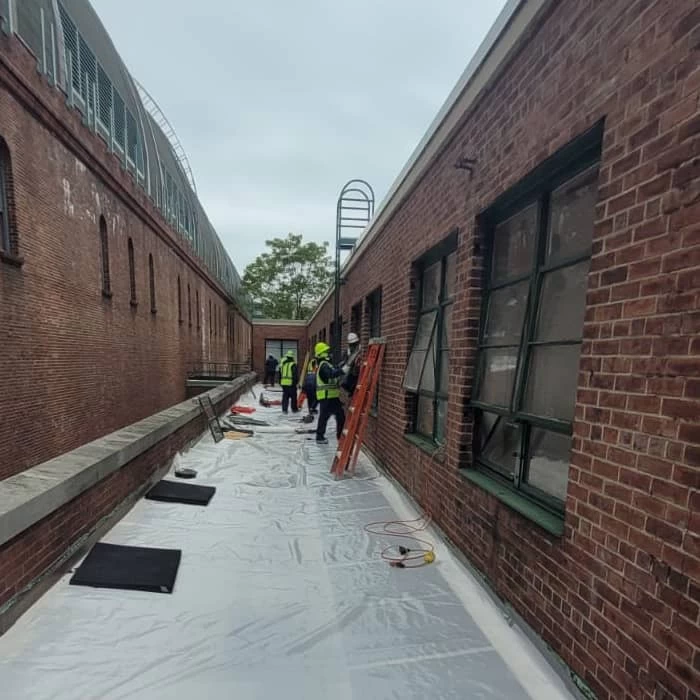
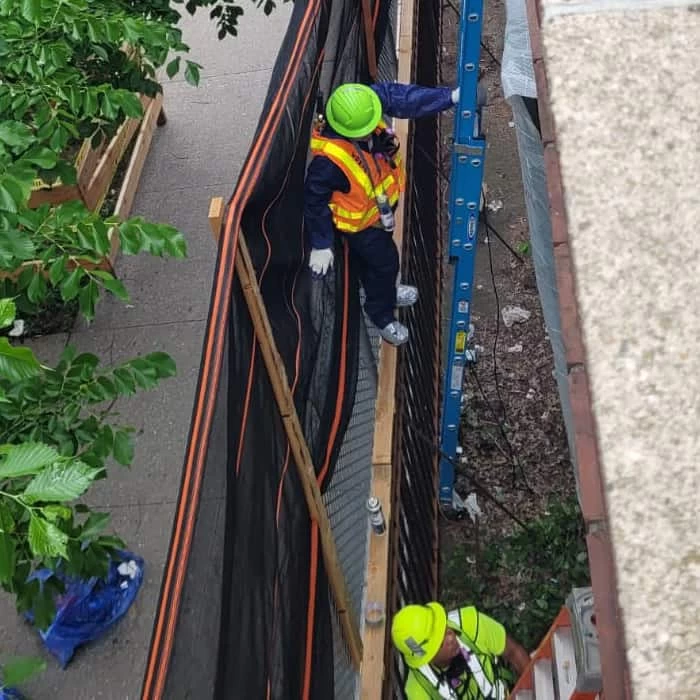
From there, we secure the structure, begin water extraction if suppression water is present, and start the process of identifying any hazardous materials that fire may have disturbed. In Malverne specifically, that step matters — asbestos abatement and lead paint containment are governed by New York State law, and only a licensed contractor can legally perform that work. We hold both licenses and handle that phase in-house, without bringing in a separate subcontractor.
Once the structure is stabilized and hazardous materials are addressed, the restoration and reconstruction phase begins. Because we hold a Nassau County General Contractor license, we can pull the required building permits through the Village of Malverne Building Department and complete the rebuild ourselves. You’re not managing multiple contractors or chasing down permits on your own — we handle it.
Fire damage restoration in Malverne isn’t a one-size situation. The Tudor-style homes in the Westwood section, the brick bungalows near the Malverne LIRR station, the Cape Cods throughout the village — they were built in an era before modern building materials, modern wiring codes, and modern vapor barriers. When fire hits one of these homes, the restoration scope reflects that reality. Our service covers emergency board-up and structural securing, full soot and smoke odor removal, HVAC cleaning and decontamination, water extraction and structural drying, asbestos and lead abatement where required, and complete reconstruction through permit and inspection.
Oil heat is the dominant fuel source throughout Nassau County, and Malverne is no exception. That means puff-back events — oil burner backfires that coat a home’s interior with black, oily soot — are a real and common scenario here, separate from an actual fire. We are NADCA-certified for HVAC cleaning and experienced with the specific cleanup that puff-back residue requires in older oil-heated homes. If your furnace caused the damage rather than a fire, the response and the process are the same.
Everything is documented to insurance standards throughout. We bill your insurance company directly and have guided Nassau County homeowners through the claims process on jobs of every scale — from contained kitchen fires to major structural losses. The goal is that you come out of this with your home restored and your claim handled, without having to fight for either.
How quickly does fire damage get worse if I wait to call?
Faster than most people expect. Soot begins permanently bonding to walls, ceilings, and surfaces within the first few hours after a fire. Acidic smoke residue starts corroding metal fixtures, appliances, and hardware within 24 to 72 hours. If firefighting water is present — and in most residential fires it is — mold growth can begin within 24 to 48 hours in saturated materials. In a Malverne home with original plaster walls and wood framing from the 1920s or 1930s, that water absorbs quickly and deeply.
Every hour between the fire and the start of professional restoration increases the scope of damage and the total cost of recovery. What might be a contained smoke and soot cleanup on day one can become a mold remediation project by day three. Calling immediately — even before you’ve spoken to your insurance company — is the right move. We can be on-site in Malverne within an hour of your call, any time of day or night.
Does my homeowner's insurance cover fire damage restoration in Malverne?
In most cases, yes — fire damage is one of the most commonly covered perils in standard homeowner’s insurance policies. That said, coverage depends on your specific policy terms, and the quality of the documentation submitted with your claim has a direct impact on the outcome. A poorly documented scope of work, missing line items, or an unlicensed contractor’s assessment can result in a lower payout than you’re entitled to.
For Malverne homeowners, there’s an additional layer to consider. Homes built before 1939 — which make up nearly half the village — are likely to contain asbestos and lead paint. When fire disturbs those materials, the abatement cost is significant, and it needs to be properly documented and included in the claim. We bill insurance directly, prepare documentation to industry standards, and have worked with Nassau County adjusters on claims that include hazardous material abatement. You shouldn’t have to navigate that process alone, and with the right restoration company, you don’t have to.
Do I need a building permit for fire damage repairs in Malverne, NY?
Yes, if the repairs involve any structural work, demolition, or reconstruction. The Village of Malverne requires a building permit for construction, alteration, reconstruction, or demolition of any structure under Chapter 265 of the Village Code. That means most fire damage restoration jobs that go beyond surface cleaning will require a permit from the Village of Malverne Building Department before work begins.
This is one of the reasons hiring a licensed general contractor matters. We hold a Nassau County General Contractor license and are familiar with the permitting process through the Village of Malverne Building Department. We handle the permit application as part of the job — you don’t need to figure out the process yourself while you’re already dealing with the aftermath of a fire. The Village’s Building Department can be reached at 516-599-1200 if you have questions about a specific scope of work, but your restoration contractor should be the one managing that process on your behalf.
What does fire restoration actually do about smoke smell in my Malverne home?
Smoke odor is one of the most persistent and misunderstood parts of fire damage. It’s not just in the air — it’s embedded in porous materials: drywall, insulation, wood framing, carpet, upholstery, and HVAC ductwork. In older Malverne homes with original plaster walls, wood floors, and aging ductwork, smoke penetrates deeply and doesn’t respond to surface cleaning or air fresheners.
Professional smoke odor removal involves a combination of methods depending on the severity and what materials are affected. That includes HEPA air scrubbing, thermal fogging, ozone treatment in unoccupied spaces, and direct treatment of affected surfaces and materials. HVAC systems require separate decontamination — if smoke entered your ductwork, it will continue circulating odor through the house until the system is properly cleaned. We are NADCA-certified for HVAC cleaning, which is a specific credential for duct system decontamination, not just a general claim. The goal is that when you move back in, there’s no residual odor — not just a masked one.
My Malverne home is from the 1930s — should I be worried about asbestos after a fire?
Yes, and it’s worth taking seriously. In homes built before 1939 — which describes nearly half of all homes in Malverne — asbestos-containing materials are common. Pipe insulation in the basement, boiler insulation, floor tiles (especially the 9×9 tiles typical of that era), ceiling tiles, and certain plaster mixes all potentially contain asbestos. Under normal conditions, these materials are not a hazard. But fire cracks tiles, burns through insulation, and disturbs materials that were previously stable — and when that happens, asbestos fibers can be released into the air throughout the structure.
Under New York State law, only a contractor holding a NYS DOL Asbestos License can legally perform asbestos abatement. This is not optional, and it’s not something a general cleanup crew can handle. We hold this license and perform asbestos identification and abatement in-house as part of the restoration process. If asbestos is present and has been disturbed by fire, it gets addressed properly — documented, contained, and removed by licensed professionals — before any other restoration work proceeds in those areas.
How do I choose a fire restoration company in Malverne over a national franchise?
The most important thing to verify is licensure — not just IICRC certification, but the specific licenses required to legally perform the full scope of work on a Malverne home. That means a Nassau County General Contractor license for reconstruction, a NYS DOL Asbestos License for abatement, and USEPA Lead/RRP certification for work in pre-1978 homes. A national franchise may hold IICRC certification and provide solid emergency response, but if they don’t hold those state and county-level licenses, they cannot legally or safely complete the full job on a pre-war home in Nassau County.
Beyond credentials, consider accountability. Malverne is a tight-knit village — one square mile, high owner-occupancy, and a community where residents have deep roots. A locally operated company with a Nassau County license and a verifiable track record across Long Island is accountable in a way that a franchise call center isn’t. We have completed over 5,000 restoration projects in New York State, hold every license this work requires, and bill your insurance directly. Those aren’t talking points — they’re the specific things worth confirming before you sign anything.