When a Million-Dollar Home Burns, You Need More Than a Cleanup Crew
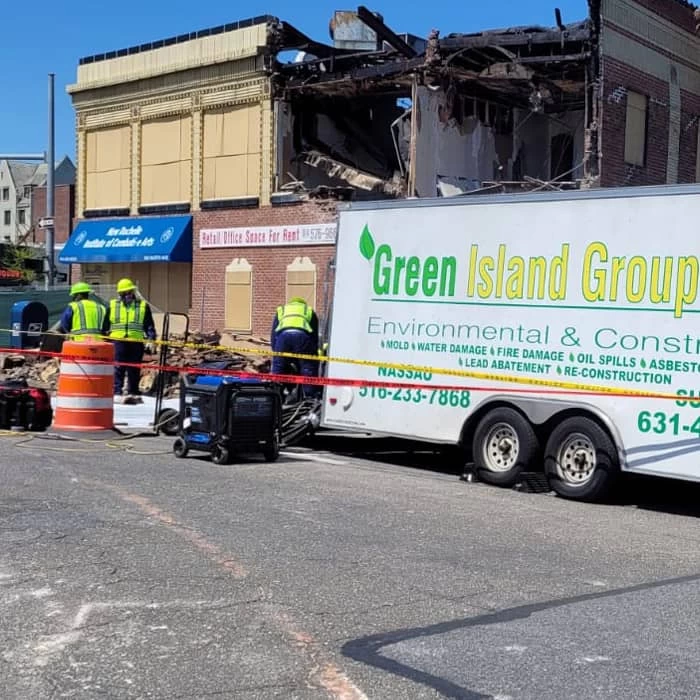
We respond 24/7 to fire damage in Manhasset Hills — handling everything from emergency stabilization through full reconstruction, so you never have to find a second contractor while you’re displaced from your home.
I needed a professional consultation explanation of procedure for safe removal of Asbestos in my apartment complex. Without having an account yet, I was very impressed with the caring, knowledgeable and generous advice offered by Jessica, and will look forward to doing business in the future. Thank you so much! I feel much more informed about a sometimes scary endeavor. Peace. Nancy Silva Mineola, NY.
Mia Munoz
Used this company to clean up some water flood in my house. They were fast and easy to work with.very professional, Would recommend to anyone!
Nini Valle
Great company, had a flood and they responded quickly and efficiently. Billed my insurance company directly. I highly recommend this company!
joe colapietro, jr
I had pipe freeze in my basement right before a snow storm and they made to within an hour to help start the clean up process. They we by our side throughout the entire process and even helped with the insurance company. They did such a great job with the cleanup, repair, remidiation, I contracted them to perform the repairs and finishes in the basement. They came with enough manpower and material to get the job done. Leo and Jessica were nothing but a pleasure to deal with!!
Cristian Arredondo c
I had some water damage in my home and Green Island was able to take care of my issue quickly and effectively. I am very pleased with the work they did. They responded quickly and were very professional.
Michael M
Outstanding service! From the office to the field crew everyone was friendly, helpful and responsive. I highly recommend Green Island Group.
Your Manhasset Hills Home Restored — Not Just Cleaned and Left Half-Done
A fire in a Manhasset Hills home is rarely just a fire. The homes here — most of them split-levels and ranches built between the 1940s and 1960s — were constructed with materials that complicate everything. Asbestos in floor tiles and pipe insulation. Lead paint on nearly every surface. Original oil heating systems that can spread soot through ductwork before anyone even realizes how far the damage has traveled. When you call a company that only does cleanup and hands you off to someone else for the rebuild, you’re managing a crisis on top of a crisis.
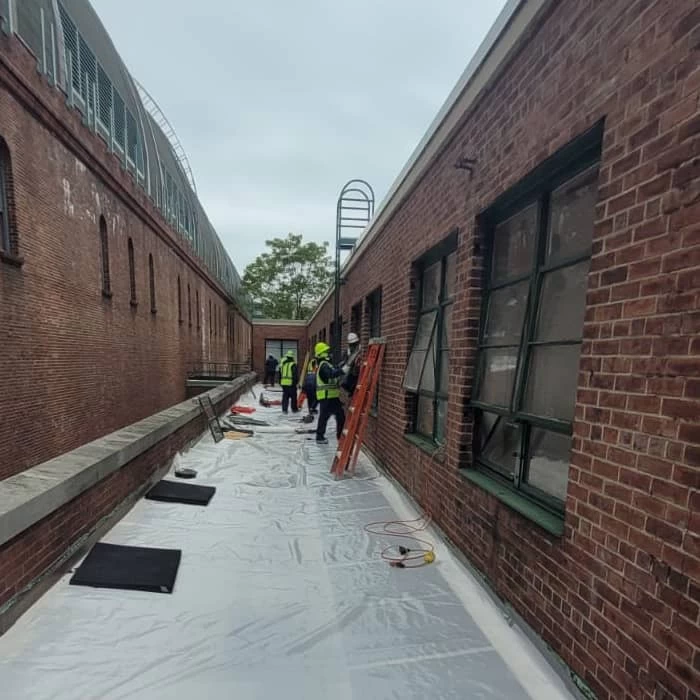
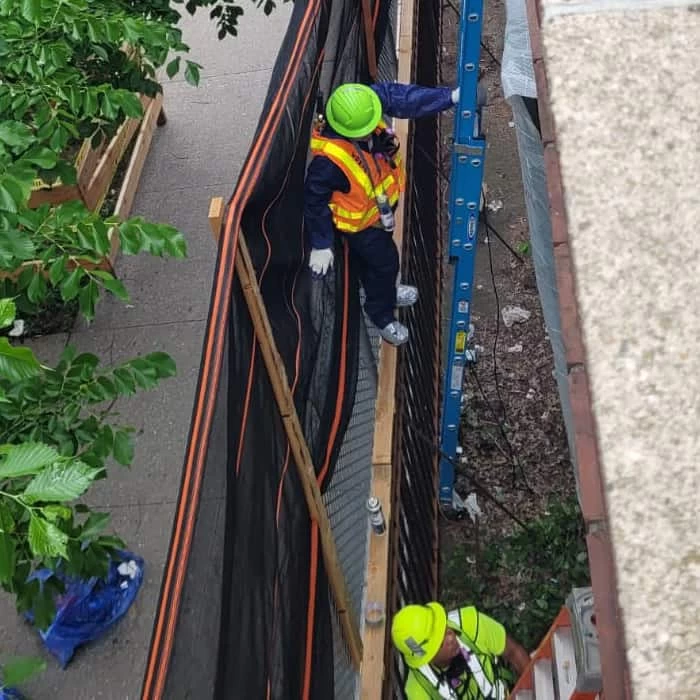
What you actually need is someone who can walk in on night one and stay through the final inspection. That means emergency board-up and stabilization, hazardous material testing, licensed asbestos and lead abatement if required, full smoke and soot remediation, water extraction from firefighting suppression, mold prevention, HVAC cleaning, and complete reconstruction — all under one roof, with one Nassau County General Contractor License pulling permits directly through the Town of North Hempstead. We handle all of this in-house.
The homes in Manhasset Hills are worth protecting at that level. With median property values exceeding $1,000,000, a restoration that cuts corners — or leaves you coordinating between three different contractors — isn’t a restoration at all. It’s a liability.
Licensed for What Manhasset Hills Homes Actually Require
We’re a locally owned restoration and environmental services company serving Nassau County, Suffolk County, Queens, and New York City. With over 5,000 completed projects across New York State, our team has worked through every type of fire and smoke damage scenario that Long Island’s post-war housing stock produces — from kitchen fires in North Shore split-levels to oil burner puff-backs in 1950s ranches where the soot coats every room without a single visible flame.
What sets us apart in Manhasset Hills specifically is the combination of credentials required to legally work in homes built before 1980. The NYS DOL Asbestos License, USEPA Lead/RRP certification, IICRC certification for fire and smoke restoration, NADCA certification for HVAC cleaning, and Nassau County General Contractor License aren’t marketing badges — they’re legal requirements for the work that actually needs to happen in a home this age. Most restoration companies operating in the 11040 ZIP code hold one or two of these. We hold all of them.
When your home is in the Cherrywood neighborhood or anywhere else in Manhasset Hills, you need a company that already knows what’s inside the walls — and is licensed to deal with it.
From the Emergency Call to Your Home's Final Walkthrough
The first call triggers an immediate response. We operate 24/7/365 and stage crews across Nassau County, so when you call after a fire in Manhasset Hills, someone is on the way — not scheduled for the next morning. On arrival, our priority is stabilization: board-up, tarping, and securing the structure so that no additional damage occurs overnight. That first few hours matter more than most people realize, because acidic soot starts bonding permanently to surfaces within hours, and the water used to put the fire out begins creating mold risk within 24 to 48 hours.
Once the property is stabilized, the assessment begins. Because virtually every home in Manhasset Hills was built before 1978, testing for asbestos and lead happens before any demolition or material removal. If either is present — and in homes built between 1940 and 1969, asbestos in floor tiles or pipe insulation is common — licensed abatement is completed before remediation proceeds. This is a legal requirement under New York State law, and it’s a step that unlicensed contractors routinely skip.
From there, the process moves through smoke and soot removal, structural drying, HVAC cleaning, and odor neutralization. Once the space is clean and safe, reconstruction begins — permits pulled through the Town of North Hempstead Building Department, work executed under our Nassau County General Contractor License. The goal is a finished home, not a remediated shell waiting on a second contractor.
Fire and Smoke Damage Restoration, Nassau County NY
What's Actually Included When You Call Us
Fire damage restoration in Manhasset Hills covers more ground than most homeowners expect going in. The visible burn damage is usually the smallest part of the problem. Smoke travels through wall cavities and HVAC ductwork, depositing soot in rooms that never saw a flame. Firefighting water saturates subfloors and insulation in ways that set up a mold problem weeks later if not properly extracted and dried. And in a home built in the 1950s or 1960s, every stage of the cleanup has to account for the possibility of asbestos and lead — materials that require licensed handling under New York State and federal regulations.
Our fire restoration service includes emergency response and structural stabilization, asbestos and lead testing and abatement where required, complete smoke and soot remediation, water extraction and structural drying, mold prevention and remediation under our NYS DOL Mold License, NADCA-certified HVAC duct cleaning, contents evaluation and pack-out if needed, and full reconstruction through to final permit inspection with the Town of North Hempstead. We handle insurance documentation in-house and bill insurers directly — so you’re not managing paperwork while you’re displaced.
If your heating system experienced a puff-back — the oil burner backfire that coats an entire home in black, oily soot without a visible fire — that’s covered too. It’s one of the most common restoration calls on the North Shore of Nassau County, and we treat it with the same licensed process as any other smoke damage event.
Is my Manhasset Hills home safe to re-enter after a fire?
Not always — and the answer depends on more than just whether the fire is out. Smoke and soot contain carbon monoxide, hydrogen cyanide, and dozens of other toxic byproducts that linger in the air and on surfaces long after the flames are gone. In a Manhasset Hills home built before 1980, a fire also likely disturbed asbestos-containing materials — floor tiles, pipe insulation, joint compound — which can release airborne fibers that are dangerous to inhale. Until a professional assessment confirms the air quality and identifies any hazardous material exposure, re-entry carries real risk.
Our team can walk through the property, assess what’s safe and what isn’t, and give you a clear picture of what needs to happen before you or your family go back inside. That assessment is the first step — not something to skip because the structure looks intact from the outside.
Will my homeowner's insurance cover fire damage restoration in Nassau County?
In most cases, yes — standard homeowner’s insurance policies cover fire damage, smoke damage, and the water damage caused by firefighting suppression. What varies is how thoroughly the damage is documented and whether the scope of the claim reflects the full extent of what was affected. Insurance adjusters work for the insurance company, not for you, and their initial estimates don’t always account for hidden smoke damage in wall cavities, HVAC contamination, or the cost of asbestos abatement in a pre-1980 home.
We document every phase of the restoration process using IICRC-standard protocols, which insurance companies recognize and use to process claims. We also bill insurers directly, so you’re not fronting costs and waiting for reimbursement. For a Manhasset Hills home valued at over $1,000,000, making sure the claim is fully documented from day one is one of the most important things you can do.
Does fire damage in older Manhasset Hills homes require asbestos testing before cleanup?
Yes, and this is one of the most important things to understand before any cleanup begins. Homes built between 1940 and 1969 — which describes the overwhelming majority of Manhasset Hills’s housing stock — commonly contain asbestos in 9-inch vinyl floor tiles, pipe insulation on oil-fired heating systems, ceiling tiles, and joint compound. When a fire occurs, these materials are often disturbed or damaged. Under New York State Department of Labor regulations, asbestos testing must be completed before any demolition or material removal, and only a contractor holding an NYS DOL Asbestos License can legally perform the abatement.
This step cannot be skipped or rushed. A restoration company that begins tearing out damaged materials without testing first is creating a health hazard and a regulatory violation. We hold the NYS DOL Asbestos License and incorporate testing into the assessment phase of every project involving pre-1980 construction — which in Manhasset Hills means virtually every project.
How long does fire damage restoration typically take for a home in Manhasset Hills?
The honest answer is that it depends on the scope — but most residential fire restoration projects in Nassau County range from two to eight weeks for the remediation phase, with reconstruction adding additional time depending on what needs to be rebuilt. A kitchen fire with contained smoke damage might be resolved in two to three weeks. A fire that spread to multiple rooms, involved asbestos abatement, and requires structural reconstruction could take two to four months.
For Manhasset Hills specifically, the permit process through the Town of North Hempstead Building Department adds a step that needs to be factored into the timeline. We handle permit applications directly, which eliminates delays that can occur when homeowners try to navigate that process themselves while managing displacement. We’ll give you a realistic timeline after the initial assessment — not a number designed to get you to sign, but an honest projection based on what’s actually in front of us.
What is a puff-back and how is it cleaned up in a Nassau County home?
A puff-back happens when an oil burner misfires and sends a backfire of soot, smoke, and combustion gases through the heating system and into the living space. It’s not a fire in the traditional sense — there’s no visible flame, no charred walls — but the result is an entire home coated in fine, oily black soot that gets into everything: walls, ceilings, furniture, clothing, and every room connected to the duct system. On the North Shore of Nassau County, where oil heat is the norm in homes built in the 1950s and 1960s, puff-backs are one of the most common restoration calls.
Cleanup requires the same professional approach as any smoke damage event — soot removal from all surfaces, HVAC cleaning by a NADCA-certified technician, and deodorization to eliminate the oily odor that penetrates porous materials. Most homeowner’s insurance policies cover puff-back damage, and we handle the documentation and direct billing to make the claim process as straightforward as possible.
Do I need a permit to repair fire damage in my Manhasset Hills home?
If the restoration involves any structural work, electrical repairs, plumbing, or significant demolition and reconstruction, yes — permits are required. Manhasset Hills is an unincorporated hamlet within the Town of North Hempstead, which means all building permits are issued through the Town of North Hempstead Building Department. This is different from incorporated villages in Nassau County that have their own village building departments. If you’re unsure which jurisdiction applies to your property, the Town of North Hempstead is the right starting point.
We hold a Nassau County General Contractor License, which authorizes us to pull permits, manage inspections, and execute reconstruction work in Manhasset Hills. This matters because a restoration company that can remediate but not rebuild legally cannot pull those permits on your behalf — leaving you to manage that process while you’re already dealing with displacement, insurance claims, and temporary housing. Having one licensed contractor handle the full scope from emergency response through final inspection is the cleaner, faster path back into your home.