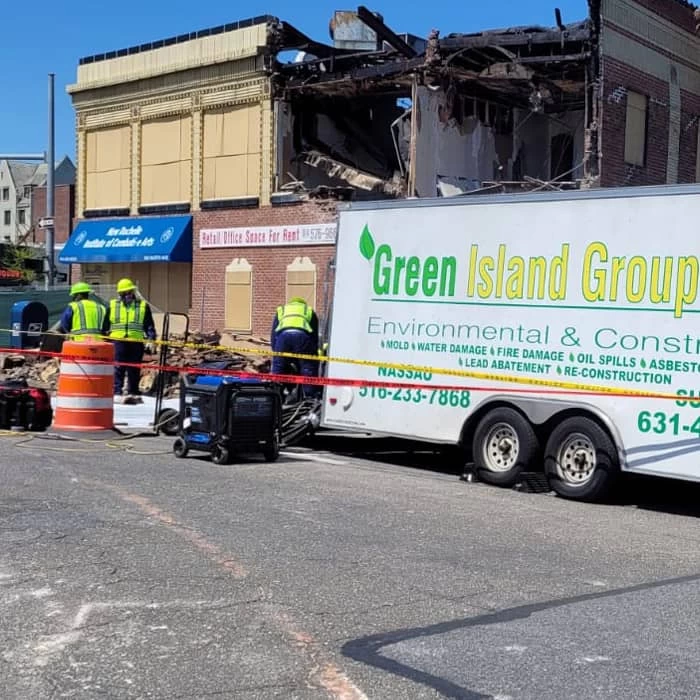
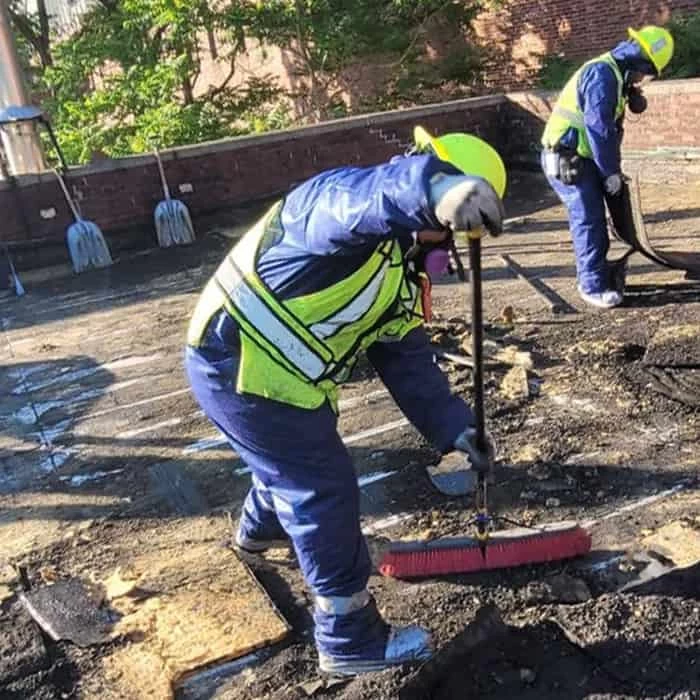
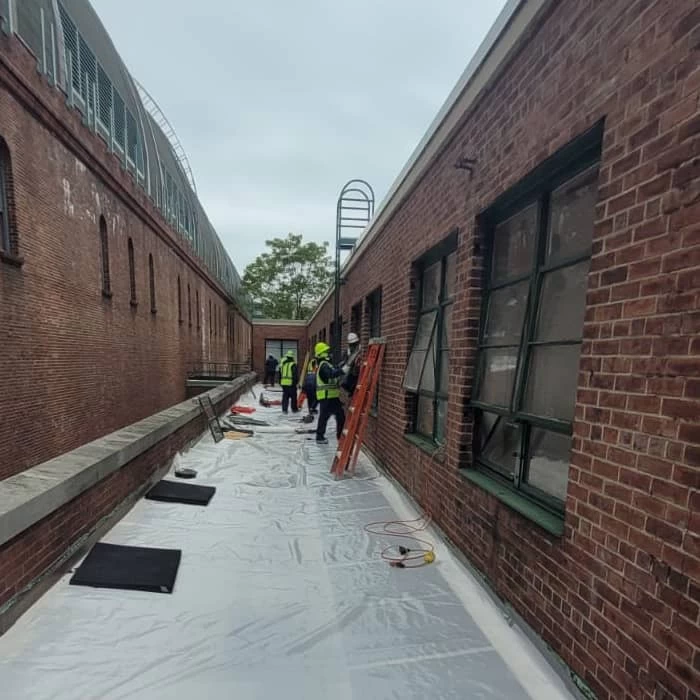
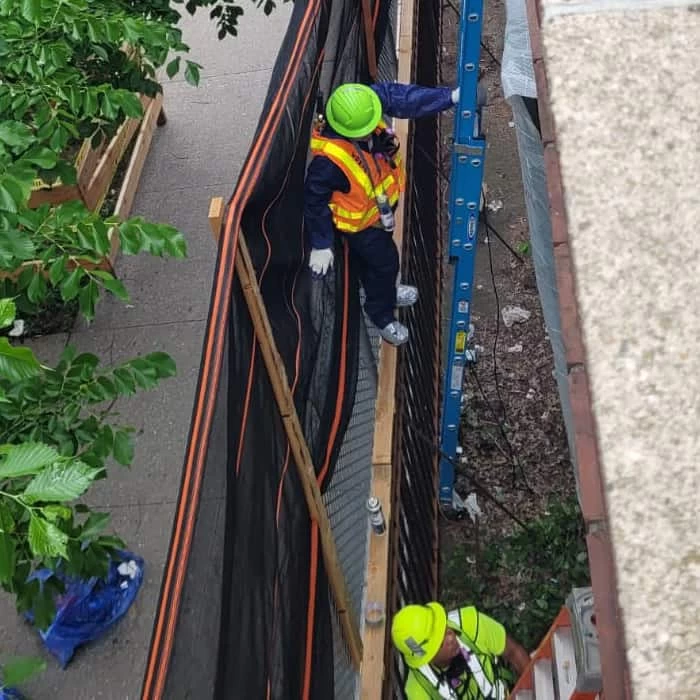
Fire damage in Manorville hits differently smoke travels through entire homes, wooded lots complicate everything, and the clock starts the moment the trucks leave. We handle fire damage restoration from first call to final finish, so you’re not managing five different contractors while your home sits open.
I needed a professional consultation explanation of procedure for safe removal of Asbestos in my apartment complex. Without having an account yet, I was very impressed with the caring, knowledgeable and generous advice offered by Jessica, and will look forward to doing business in the future. Thank you so much! I feel much more informed about a sometimes scary endeavor. Peace. Nancy Silva Mineola, NY.
Mia Munoz
Used this company to clean up some water flood in my house. They were fast and easy to work with.very professional, Would recommend to anyone!
Nini Valle
Great company, had a flood and they responded quickly and efficiently. Billed my insurance company directly. I highly recommend this company!
joe colapietro, jr
I had pipe freeze in my basement right before a snow storm and they made to within an hour to help start the clean up process. They we by our side throughout the entire process and even helped with the insurance company. They did such a great job with the cleanup, repair, remidiation, I contracted them to perform the repairs and finishes in the basement. They came with enough manpower and material to get the job done. Leo and Jessica were nothing but a pleasure to deal with!!
Cristian Arredondo c
I had some water damage in my home and Green Island was able to take care of my issue quickly and effectively. I am very pleased with the work they did. They responded quickly and were very professional.
Michael M
Outstanding service! From the office to the field crew everyone was friendly, helpful and responsive. I highly recommend Green Island Group.
Most homeowners in Manorville are surprised by how far the damage actually goes. A fire in one room doesn’t stay in one room smoke travels through HVAC systems, settles into wall cavities, and coats surfaces in rooms that never saw a single flame. Soot starts permanently etching and staining within 24 to 72 hours of a fire. That window closes fast.
Manorville’s wooded, large-lot properties add a layer most restoration companies aren’t prepared for. Wildfire smoke from the Pine Barrens carries a different chemical composition than a typical kitchen fire burning pitch pine and scrub oak produce compounds that penetrate deeper and linger longer. If your home was near the March 2025 fire that started on North Cozine Road, or the 2012 blaze that burned over 1,100 acres across Manorville and Ridge, you already know what that smoke can do to a structure.
When the job is done right, you’re not just getting a clean house you’re getting verified air quality, a dried and mold-free structure, and a home that’s genuinely safe to live in again. That’s the standard. Fully restored.
We’re a locally owned and operated restoration company based on Long Island, serving Manorville and the surrounding communities across Suffolk County including the Eastport-South Manor area, Calverton, Wading River, and Ridge. This isn’t a franchise recently sold to new owners. We have real roots in this market and real accountability to the people living here in Manorville.
What sets the experience apart is that you work with the same team from emergency call through final reconstruction. Leo and Jessica are named in review after review for a reason they’re actually reachable, they stay on the project, and they don’t disappear after the initial cleanup. Multiple customers have come back to contract additional work after seeing how the restoration was handled.
The satisfaction guarantee is straightforward: the job isn’t finished until you’re satisfied with the result. That’s not a tagline it’s how we manage every project.
The first step is getting there fast. Soot and smoke damage compound quickly, and water from firefighting especially in areas of Manorville where departments rely on tanker trucks rather than hydrants can saturate floors and walls in ways that aren’t immediately visible. Our initial assessment covers the full scope: structural damage, smoke and soot infiltration, moisture mapping for hidden water intrusion, and any environmental hazards like asbestos in older construction.
From there, the work moves in a clear sequence. Emergency stabilization comes first boarding, tarping, and securing the structure. Then comes the remediation phase: smoke and soot removal, HVAC decontamination, odor elimination using thermal fogging or hydroxyl treatment, and full water extraction and drying. Every step is documented for your insurance claim, using the same Xactimate estimating format that adjusters work from. That alignment matters when your claim involves overlapping damage types, which is common in Manorville fire events.
Once the structure is clean, dry, and cleared, reconstruction begins. Framing, drywall, flooring, electrical, plumbing, finishes all handled under one roof. Because Manorville falls under the Town of Brookhaven’s jurisdiction for most of the hamlet, we pull and manage all required building permits as part of the process. You don’t have to navigate the Brookhaven Building Department on your own.
Fire damage restoration in Manorville isn’t a single service it’s a coordinated sequence of work that most contractors aren’t equipped to handle end to end. We cover emergency stabilization, smoke and soot remediation, water extraction and structural drying, mold prevention and remediation, asbestos abatement where required, HVAC decontamination, odor elimination, and complete structural reconstruction through final finishes.
The environmental piece matters more here than in most towns. Many homes in Manorville rely on private wells, and the community has lived with documented PFAS contamination concerns tied to the former Grumman facility in adjacent Calverton. When a fire occurs especially one involving chemical suppression agents the questions homeowners ask go beyond “is the smoke gone?” Our environmental remediation credentials allow us to address those concerns directly, not pass them off to a separate specialist you’d have to find and coordinate yourself.
For insurance purposes, we document every phase and align it with how adjusters evaluate claims. Manorville fire claims can be unusually complex wildfire-adjacent damage, potential environmental components, large property footprints, and older housing stock that may involve asbestos or other hazardous materials. Having one company manage the documentation, the adjuster communication, and the physical work keeps the claim moving and reduces the gap between what’s damaged and what gets covered.
Does homeowners insurance cover wildfire smoke damage to my Manorville home?
In most cases, yes standard homeowners insurance covers smoke damage from wildfires, including damage to homes that weren’t directly burned. If your property was near the March 2025 fire that originated on North Cozine Road, or in the path of smoke from the 2012 Manorville blaze, you likely have a legitimate claim even if there was no structural fire on your property.
The key is documentation. Smoke damage that isn’t properly assessed and documented early can be difficult to claim later, especially if soot has already begun etching surfaces or smoke has infiltrated the HVAC system. Insurance adjusters work from detailed scope-of-loss reports, and the more comprehensive your documentation is from the start, the better your claim outcome tends to be. We prepare that documentation using Xactimate the same estimating software adjusters use which helps keep the claim process moving without unnecessary back-and-forth.
How quickly does fire and smoke damage become permanent in a home?
Faster than most people expect. Soot begins permanently staining and etching porous surfaces walls, ceilings, grout, natural stone, wood within 24 to 72 hours of a fire. Smoke odor compounds bond to fabrics, insulation, and HVAC components quickly, and once that happens, surface cleaning alone won’t remove it. The longer the delay between the fire and the start of professional remediation, the larger the scope of permanent damage.
Water from firefighting adds a parallel clock. In areas of Manorville where fire departments respond with tanker trucks rather than hydrant-fed hoses, water delivery can be less controlled and the saturation more widespread. Mold can begin developing in wet wall cavities and under flooring within 24 to 48 hours of water intrusion often in places you can’t see. Speed of response isn’t just about convenience. It’s the difference between a manageable restoration and a significantly larger, more expensive one.
Can wildfire smoke damage the HVAC system in my home?
Yes, and it’s one of the most commonly missed components of fire and smoke damage restoration. HVAC systems pull air through the entire structure, which means smoke from a nearby wildfire or from a fire in one part of your home can be distributed through every room via the ductwork. Wildfire smoke from the Pine Barrens carries compounds from burning pitch pine and scrub oak that are chemically different from typical house fire smoke, and those compounds can coat duct interiors, contaminate air handlers, and continue off-gassing long after the visible damage is addressed.
A thorough HVAC inspection and decontamination is a standard part of fire smoke damage restoration for any Manorville property. This includes duct cleaning, air handler inspection, and filter replacement at minimum and in cases of heavy smoke infiltration, more intensive treatment of the system components. If the HVAC isn’t addressed, the smoke odor and air quality issues will return even after everything else has been cleaned.
Is my private well safe to use after a fire on my Manorville property?
This is a legitimate concern and worth taking seriously. Many homes in Manorville rely on private wells rather than municipal water, and when a fire occurs particularly one involving chemical suppression agents or foam there’s a real question about what may have entered the soil and groundwater near the well head. This concern is heightened in Manorville specifically given the documented history of PFAS contamination in private wells tied to the former Grumman Calverton facility nearby. Residents here are already attuned to well water quality in a way that most Long Island communities aren’t.
The honest answer is that you shouldn’t assume the well is safe without testing. If suppression chemicals were used near your well, or if significant runoff occurred across your property, a post-fire water quality test through the Suffolk County Department of Health Services is the right step. We can help coordinate environmental assessment as part of the broader restoration scope this isn’t something you should have to figure out separately while managing everything else a fire leaves behind.
How long does fire damage restoration typically take for a home in Manorville?
It depends heavily on the scope of damage, but for a typical residential fire in Manorville, the remediation phase smoke and soot removal, water extraction, drying, and environmental work generally takes one to two weeks. Reconstruction, depending on what was damaged, can range from a few weeks for contained structural repairs to several months for a more extensive rebuild. Homes on larger wooded lots in Manorville often have more complex damage profiles than smaller suburban properties, which can extend the timeline.
The insurance process runs parallel to the physical work, and how smoothly the claim moves affects the overall timeline as well. Claims involving multiple damage types smoke, water, structural, and potential environmental components require more detailed documentation and can take longer to fully settle. Having a restoration company that manages the documentation and adjuster communication directly, rather than leaving that to you, keeps the process from stalling. The goal is always to get you back in your home as quickly as the work can be done correctly.
Does fire damage restoration in Manorville require permits from the Town of Brookhaven?
Yes. Most of Manorville falls within the Town of Brookhaven, and any structural repairs following fire damage including electrical work, plumbing, HVAC replacement, and framing require building permits from the Brookhaven Building Department. The northeast corner of the hamlet falls under the Town of Riverhead, so the applicable jurisdiction depends on where your property sits. Either way, permitted work is not optional it protects you legally, ensures the work meets code, and matters significantly when you go to sell the property or file a future insurance claim.
All contractors performing home improvement work in Suffolk County are also required to hold a New York State Home Improvement Contractor license. If asbestos-containing materials are disturbed during the fire or during demolition which is a real possibility in Manorville homes built in the 1970s and 1980s a separate NYSDOL asbestos handling certification is required before that material can be removed. We hold the credentials to handle these components directly, so permits, abatement, and reconstruction are managed as one coordinated process rather than pieces you have to assemble yourself.