When a Peninsula Home Burns, Every Hour Is Working Against You
Mastic Beach homes face more after a fire than most coastal humidity, older construction, and flood-zone complications don’t wait. We respond fast and handle everything, from smoke and soot to full rebuild.
I needed a professional consultation explanation of procedure for safe removal of Asbestos in my apartment complex. Without having an account yet, I was very impressed with the caring, knowledgeable and generous advice offered by Jessica, and will look forward to doing business in the future. Thank you so much! I feel much more informed about a sometimes scary endeavor. Peace. Nancy Silva Mineola, NY.
Mia Munoz
Used this company to clean up some water flood in my house. They were fast and easy to work with.very professional, Would recommend to anyone!
Nini Valle
Great company, had a flood and they responded quickly and efficiently. Billed my insurance company directly. I highly recommend this company!
joe colapietro, jr
I had pipe freeze in my basement right before a snow storm and they made to within an hour to help start the clean up process. They we by our side throughout the entire process and even helped with the insurance company. They did such a great job with the cleanup, repair, remidiation, I contracted them to perform the repairs and finishes in the basement. They came with enough manpower and material to get the job done. Leo and Jessica were nothing but a pleasure to deal with!!
Cristian Arredondo c
I had some water damage in my home and Green Island was able to take care of my issue quickly and effectively. I am very pleased with the work they did. They responded quickly and were very professional.
Michael M
Outstanding service! From the office to the field crew everyone was friendly, helpful and responsive. I highly recommend Green Island Group.
What Stays Hidden After a Fire Can Cost You Everything
Most people think fire damage is what they can see. The burned cabinet. The scorched wall. But smoke moves through your entire home in minutes through ductwork, into insulation, behind drywall and it doesn’t stop until it’s treated. In a Mastic Beach home built in the 1960s or 70s, that smoke is traveling through decades-old construction that absorbs odor and soot differently than newer builds. What looks like surface damage often isn’t.
Then there’s the water. Fire hoses push roughly 250 gallons per minute into a structure. In a community that already sits in FEMA-designated flood zones along Moriches Bay, that firefighting water doesn’t drain the way it would in an inland home. It lingers. And in Mastic Beach’s coastal humidity, mold can establish itself within 24 to 48 hours of a fire being put out in walls you haven’t even opened yet.
Getting the full picture handled smoke, soot, water, mold, and structural damage under one contractor means no gaps, no handoffs, and no moment where your home is sitting in limbo between one crew leaving and the next one showing up. That continuity is what actually gets you back home.
We Know South Shore Homes Because We Work on Them Every Week
Green Island Group is a locally owned restoration company serving Nassau and Suffolk County not a national franchise that lumps Mastic Beach into a territory stretching from here to Montauk. When you call, you’re reaching a local team that knows South Shore homes, knows what post-Sandy construction looks like from the inside, and understands what it means to restore a home in a community where the houses are older, the flood risk is real, and the stakes are personal.
We handle everything end-to-end. Fire cleanup, smoke remediation, water extraction, asbestos abatement for older homes, mold prevention, and full reconstruction all under one roof. No subcontracting the hard parts out to someone else and hoping it connects. Customers have specifically called out our team by name in reviews, which tells you something about how we operate.
For Mastic Beach homeowners navigating a fire loss many for the first time we also walk you through the insurance process. That’s not a side service. For a lot of families here, it’s the most important thing.
No Guesswork Here's What the Restoration Actually Looks Like
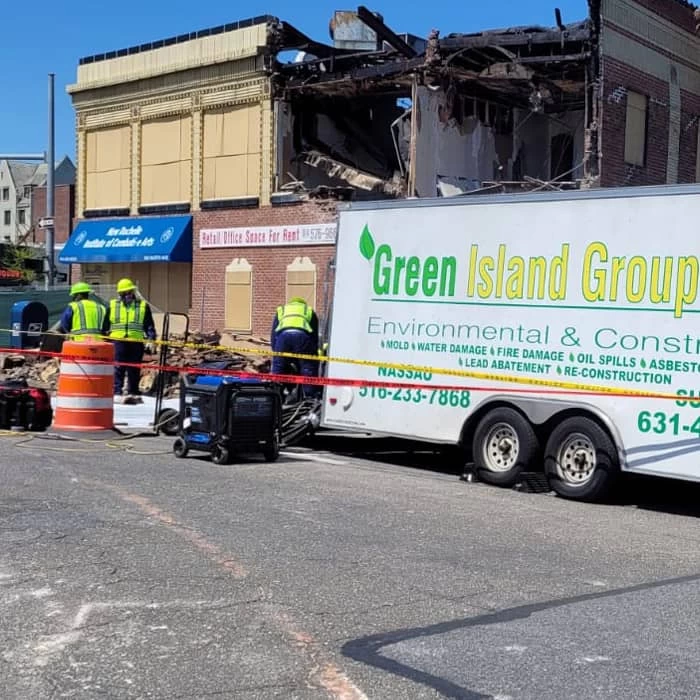
It starts with emergency response. When you call, our goal is to get someone on-site fast because in Mastic Beach, waiting even a few hours after a fire means soot starts permanently bonding to surfaces and moisture starts finding its way into a structure that may already have elevated groundwater underneath it. The first visit is about stabilizing the property: assessing what’s been affected, boarding up if needed, and starting water extraction before secondary damage compounds.
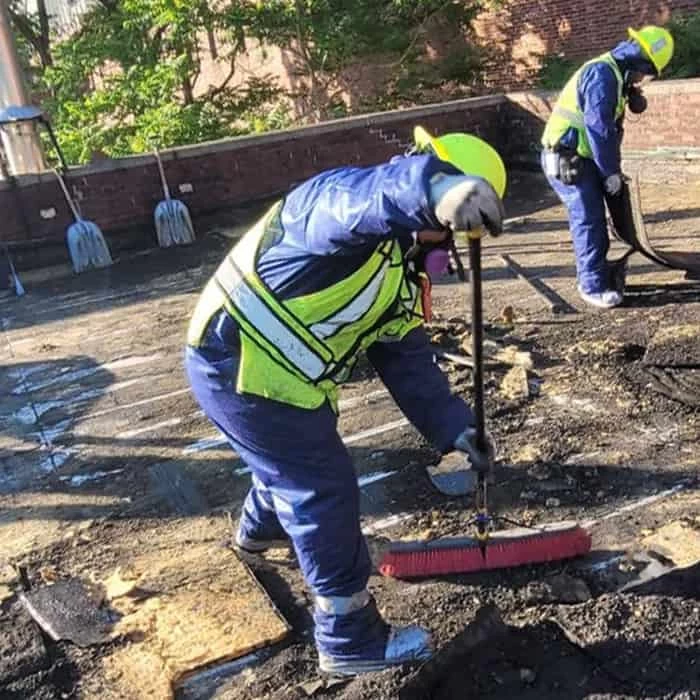
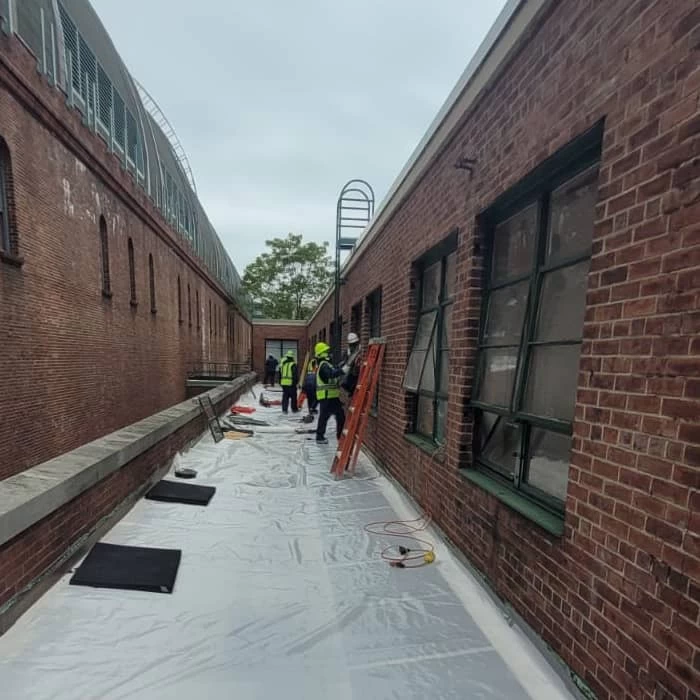
From there, the remediation phase begins. That means soot and smoke removal from every affected surface not just the visible ones. HVAC systems get inspected and cleaned because smoke travels through ductwork and contaminates rooms that never saw a flame. In homes built before 1980, which describes most of Mastic Beach’s housing stock, we assess for asbestos-containing materials before any demolition or reconstruction starts. This isn’t optional it’s required by New York State, and skipping it creates serious liability. We handle the abatement in-house, which keeps the timeline moving instead of stalling while you search for a separate contractor.
Reconstruction comes last. Structural repairs, drywall, finishes brought back to where they were, or better. Before the job closes, the work gets documented thoroughly, which matters when you’re working through a claim with your insurance adjuster.
Older Homes, Coastal Conditions the Scope Has to Match
Fire restoration in Mastic Beach isn’t a one-size scope. The community’s housing stock most of it built between the 1940s and 1970s comes with specific realities that affect how a restoration has to be approached. Asbestos in floor tiles, ceiling materials, and insulation is common in homes of that era. Lead paint is standard in anything pre-1978. A fire that disturbs those materials doesn’t just create a cleanup job it creates a regulated abatement requirement before reconstruction can legally begin. We carry the certifications to handle that work directly, which means you’re not stuck coordinating between three different contractors while your home sits open.
Beyond the environmental piece, Mastic Beach properties in AE and VE flood zones the high-risk and coastal wave-action designations FEMA assigns to parts of this peninsula may trigger additional permitting requirements through the Town of Brookhaven when structural repairs are involved. Homes that sustain damage exceeding 50% of their pre-loss value in a flood zone may also face elevation requirements before reconstruction can proceed. Knowing this going in, and having a restoration team that’s already familiar with Brookhaven’s building and floodplain permit process, prevents surprises midway through a project.
The full scope covers emergency response, board-up, water extraction and structural drying, smoke and soot remediation, HVAC cleaning, asbestos and environmental abatement where required, mold prevention and treatment, and complete reconstruction through final finishes. One contractor, start to finish.
What should I do immediately after a house fire in Mastic Beach?
The first thing is don’t go back inside until the fire department has cleared the structure as safe to enter. After that, call your insurance company to report the loss and document as much as you can from the outside photos, video, anything you can capture before a restoration crew arrives.
Then call a restoration company as quickly as possible. This is where timing really matters. Soot begins permanently etching and staining porous surfaces within 24 to 72 hours of a fire. In Mastic Beach specifically, the coastal humidity and the water left behind by firefighting suppression create a secondary mold risk that starts within 24 to 48 hours. The longer the property sits without extraction and drying, the more the damage compounds and the more expensive the restoration becomes. Getting a team on-site fast isn’t just about speed, it’s about limiting the total scope of what needs to be fixed.
Will my homeowner's insurance cover fire damage restoration in Mastic Beach, NY?
In most cases, yes standard homeowner’s insurance policies cover fire damage, including smoke remediation, water damage from firefighting, and structural repairs. But the details matter, and there are a few things Mastic Beach homeowners should be aware of specifically.
Many policies in this area were written years ago when home values were significantly lower. The median home value in Mastic Beach has risen to over $354,000, and if your coverage limit hasn’t kept pace, you could face a gap between what the insurance pays and what full restoration actually costs. Additionally, homes in FEMA flood zones which applies to portions of Mastic Beach sometimes have separate flood policies that interact with fire claims in complicated ways when firefighting water is involved. We work alongside homeowners through the claims process, help document damage in the format adjusters need, and make sure the scope of work is captured accurately before anything gets settled.
Does a house fire in an older Mastic Beach home mean there's an asbestos risk?
If your home was built before 1980 which is the case for the majority of Mastic Beach’s housing stock, given the community’s median construction year of 1971 there’s a real possibility that asbestos-containing materials are present. Floor tiles, ceiling tiles, pipe insulation, joint compound, and roofing materials from that era commonly contained asbestos. A fire that causes structural damage almost always disturbs those materials.
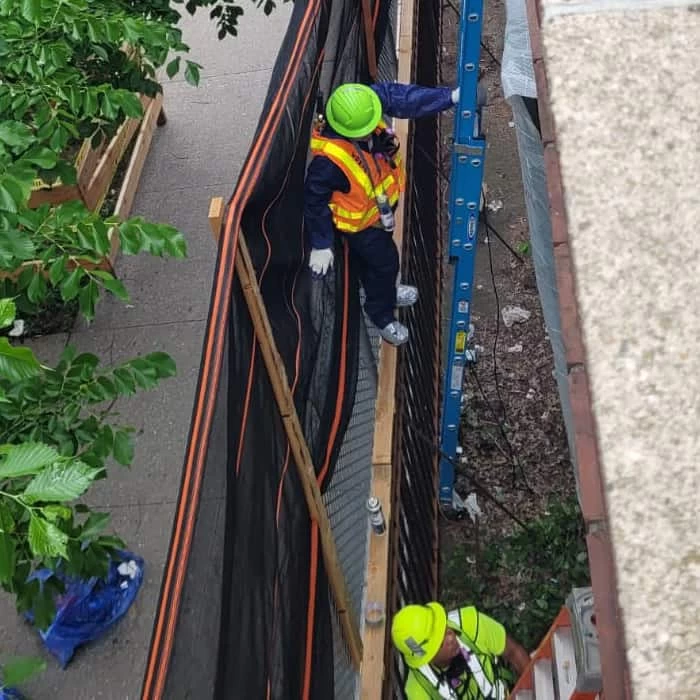
Under New York State law, asbestos-containing materials that are disturbed during a fire or during subsequent demolition and reconstruction require certified abatement before the rebuild can begin. This isn’t something that can be skipped or worked around. We hold the certifications required to perform asbestos abatement in New York, which means this step gets handled in-house rather than creating a delay while you search for a separate abatement contractor. For Mastic Beach homeowners, this is often one of the most important questions to ask any restoration company before signing anything.
How long does fire damage restoration typically take from start to finish?
It depends heavily on the scope of the damage, but here’s a realistic breakdown. Emergency stabilization water extraction, board-up, initial assessment happens within the first day or two. The remediation phase, which covers soot removal, smoke treatment, HVAC cleaning, and structural drying, typically runs one to two weeks for a moderate-sized fire in a single-family home. If asbestos abatement is required, that adds time to the timeline before reconstruction can start.
Full reconstruction drywall, structural repairs, finishes can range from a few weeks to a couple of months depending on how much of the home was affected. For Mastic Beach properties in a flood zone, any required permitting through the Town of Brookhaven adds additional time to the front end of the rebuild. The honest answer is that a thorough restoration takes longer than most homeowners expect, and any contractor promising an unusually fast full-rebuild timeline is worth questioning. What matters more than speed is that the work is done in the right order so nothing gets sealed up before it’s actually dry and clean.
Can smoke damage affect rooms that weren't near the fire in my Mastic Beach home?
Yes and this is one of the most commonly misunderstood parts of fire damage. Smoke doesn’t stay in the room where the fire occurred. It moves through HVAC ductwork, gaps in framing, and wall cavities, and it penetrates every porous surface it contacts drywall, insulation, wood framing, upholstery, clothing. In an older Mastic Beach home where ductwork may run through multiple rooms and the construction isn’t as tightly sealed as newer builds, smoke can reach bedrooms, closets, and living spaces that never saw a flame.
The practical implication is that a kitchen fire, for example, can result in smoke contamination throughout the entire house. Rooms that look fine may still have soot particles and odor compounds embedded in the walls and ceiling. This is why proper remediation includes air scrubbing, HVAC inspection and cleaning, and post-treatment verification not just cleaning what’s visibly burned. For families with children, which describes a significant portion of Mastic Beach households, making sure the air quality is genuinely safe not just visually acceptable is a non-negotiable part of the job.
How does mold become a concern after a fire, and is it worse in Mastic Beach?
Mold becomes a risk because of the water not the fire itself. Fire suppression hoses deliver an enormous volume of water into a structure in a short period of time, and that water saturates framing, insulation, flooring, and wall cavities. If the structure isn’t dried out properly and quickly, mold can begin growing within 24 to 48 hours of the fire being extinguished.
In Mastic Beach, this risk is genuinely elevated compared to inland communities. The peninsula sits along Moriches Bay, with portions of the community in FEMA high-risk and coastal flood zones. The water table is higher, drainage is more limited, and the ambient humidity along the South Shore creates conditions where moisture lingers longer in building materials. Homes that experienced any prior flood damage and after Hurricane Sandy, many in this area did may already have moisture vulnerabilities in their structure that a fire event and subsequent water suppression can reactivate. Mold remediation isn’t an add-on to think about later. In Mastic Beach, it’s a core part of the fire restoration process that needs to be addressed from the start.