When Fire Hits a Gold Coast Estate, You Need More Than a Generic Restoration Crew
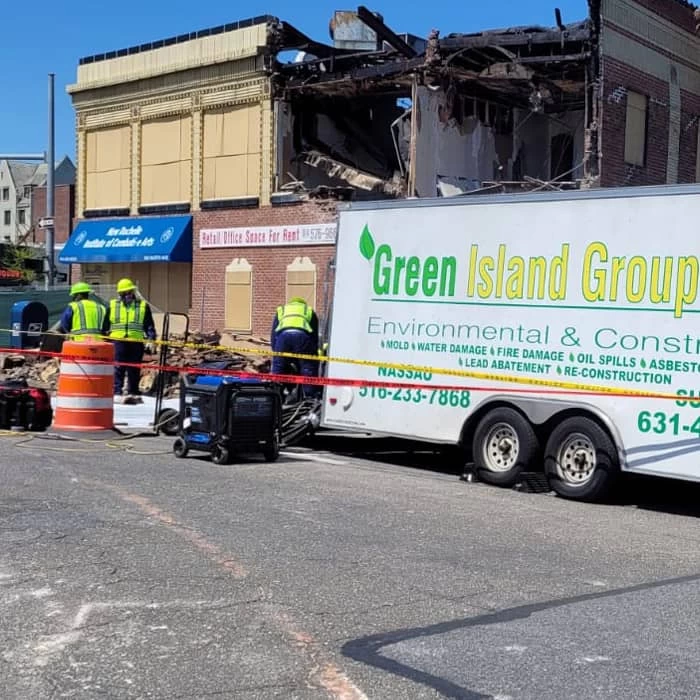
When fire or smoke hits a pre-war Matinecock estate, the stakes aren’t average — and neither is the work required. We arrive within the hour, handle everything from emergency response to full reconstruction, and know exactly what’s inside these older North Shore homes. The difference between a crew that understands Matinecock’s architectural heritage and one that treats every job the same shows up immediately in what gets saved and what gets lost.
I needed a professional consultation explanation of procedure for safe removal of Asbestos in my apartment complex. Without having an account yet, I was very impressed with the caring, knowledgeable and generous advice offered by Jessica, and will look forward to doing business in the future. Thank you so much! I feel much more informed about a sometimes scary endeavor. Peace. Nancy Silva Mineola, NY.
Mia Munoz
Used this company to clean up some water flood in my house. They were fast and easy to work with.very professional, Would recommend to anyone!
Nini Valle
Great company, had a flood and they responded quickly and efficiently. Billed my insurance company directly. I highly recommend this company!
joe colapietro, jr
I had pipe freeze in my basement right before a snow storm and they made to within an hour to help start the clean up process. They we by our side throughout the entire process and even helped with the insurance company. They did such a great job with the cleanup, repair, remidiation, I contracted them to perform the repairs and finishes in the basement. They came with enough manpower and material to get the job done. Leo and Jessica were nothing but a pleasure to deal with!!
Cristian Arredondo c
I had some water damage in my home and Green Island was able to take care of my issue quickly and effectively. I am very pleased with the work they did. They responded quickly and were very professional.
Michael M
Outstanding service! From the office to the field crew everyone was friendly, helpful and responsive. I highly recommend Green Island Group.
What Gets Protected When the Right Crew Shows Up First in Matinecock
The homes along Piping Rock Road and Duck Pond Road in Matinecock weren’t built in a factory. Hand-plastered ceilings, original hardwood floors, custom millwork from the 1920s — these aren’t materials you can order from a supply house. When fire or smoke moves through a home like that, the difference between a contractor who knows what they’re doing and one who doesn’t shows up immediately. The wrong call early on means original material gets ripped out that could have been saved.
Smoke is also a much bigger problem than most people expect. In a large Matinecock estate — five, eight, ten thousand square feet — smoke doesn’t stay in the room where the fire started. It moves through ductwork, wall cavities, and every connected space. A kitchen fire or an oil burner puff-back can push soot into rooms on the opposite end of the house before the fire department even leaves. That contamination starts bonding to surfaces within hours.
There’s also the water side of it. Firefighting leaves moisture behind, and Matinecock’s proximity to Long Island Sound means ambient humidity is already elevated. Mold can start within 24 to 48 hours in the right conditions — and a large estate with a basement, attic, and crawl spaces gives it plenty of places to go. Getting extraction and drying started fast isn’t optional. It’s what keeps a fire restoration from turning into a mold remediation on top of everything else.
One Company, Every License, No Handoffs — Built for Matinecock's Older Estates
We’re a locally owned restoration company based on Long Island, holding General Contractor licenses in Nassau County, Suffolk County, and New York City. That matters in Matinecock because most restoration companies can clean and remediate — but they can’t legally rebuild. In a community where a fire event in a pre-war estate often requires structural reconstruction, you need one contractor who can take the job all the way through without passing it off.
Beyond the GC license, we hold IICRC certification for fire and water damage restoration, a NYS DOL Asbestos License, USEPA Lead/RRP certification, and a NYS DOL Mold License. For homes built before 1960 — which describes most of Matinecock’s housing stock — those credentials aren’t optional extras. They’re legal requirements. A contractor without them can’t touch the asbestos-containing materials or lead paint that a fire almost certainly disturbs in a home of that age.
Over 5,000 completed restoration projects across New York State. Available 24 hours a day, every day of the year. One call gets our whole team moving.
Fire Damage Restoration Process, North Shore Nassau
From the First Call to the Final Walkthrough — Here's What Actually Happens
When you call, someone answers. Not a call center, not a voicemail — a person. We commit to being on-site within one hour, which for a Matinecock address means staging from Long Island, not routing a crew from somewhere across the city. The first priority on arrival is stopping the damage from spreading: board-up, tarping, water extraction if firefighting moisture is present, and a full assessment of what’s affected — including areas that don’t have visible fire damage but may have smoke or soot contamination.
From there, the scope gets documented thoroughly. This matters more than people realize. At the property values present in Matinecock, the difference between a well-documented insurance claim and a poorly documented one can be significant — sometimes tens of thousands of dollars. We handle insurance billing directly and work through the documentation process in a way that insurance carriers recognize, in part because of the IICRC certification that backs our work.
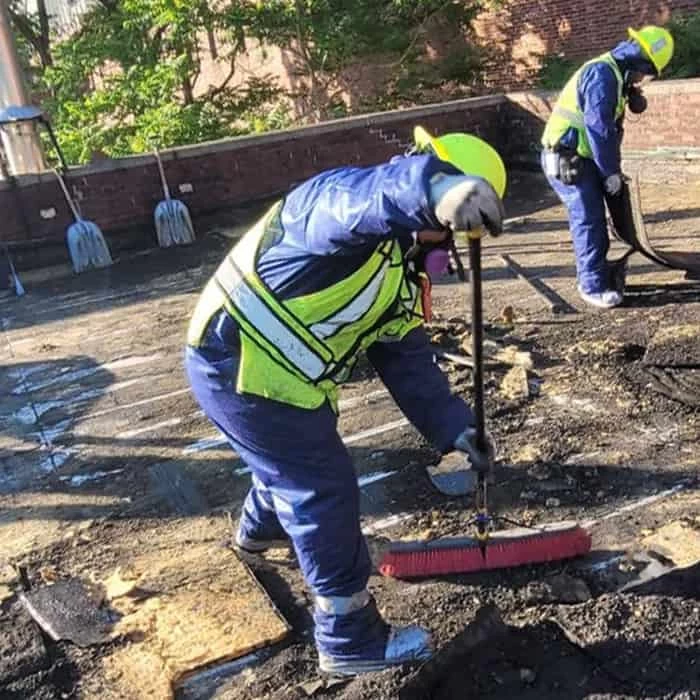
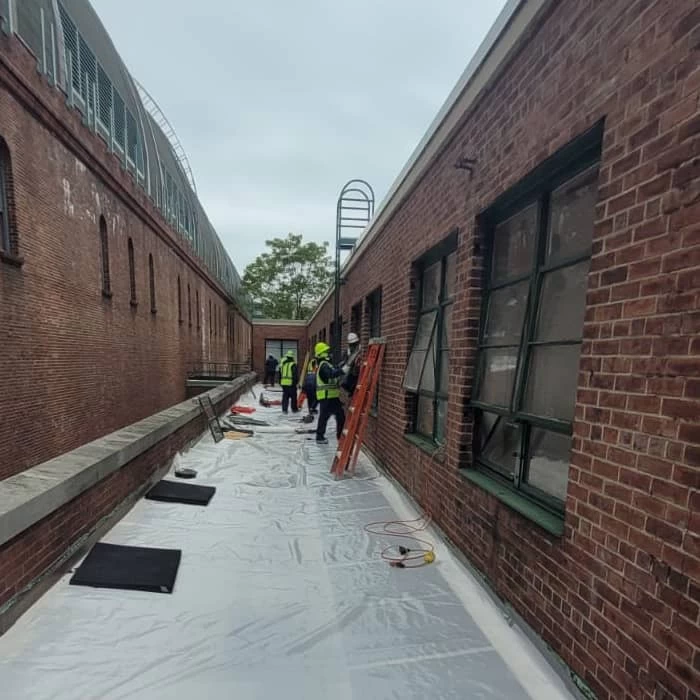
The remediation phase addresses fire damage, smoke and soot removal, odor treatment, and water damage simultaneously — not in separate trips by separate companies. If asbestos or lead paint has been disturbed, that’s handled under the appropriate NYS DOL and USEPA licenses before any reconstruction begins. Reconstruction, permitted through the Village of Matinecock’s local building process, is handled in-house under our Nassau County General Contractor license. One company, one timeline, one point of contact.
Fire and Smoke Damage Restoration, Oyster Bay Area
What's Actually Included When Your Matinecock Home Needs Full Restoration
Fire damage restoration in a Matinecock estate isn’t a single service — it’s a sequence of licensed, coordinated work that has to happen in the right order. Emergency response comes first: securing the structure, extracting water, and preventing further damage to original materials. Then comes a full assessment that accounts for smoke migration through the HVAC system, soot contamination in rooms far from the burn zone, and any hazardous materials that may have been disturbed by the fire or the heat.
Soot remediation in a large North Shore estate requires professional-grade air scrubbers, thermal fogging, ozone treatment, and NADCA-certified duct cleaning — because in a home with thousands of square feet of ductwork, surface cleaning alone doesn’t address what’s been distributed through the system. Odor removal is part of the process, not an add-on. The same goes for structural drying and mold prevention, which run concurrently with fire and smoke remediation given the coastal humidity conditions in this part of Nassau County.
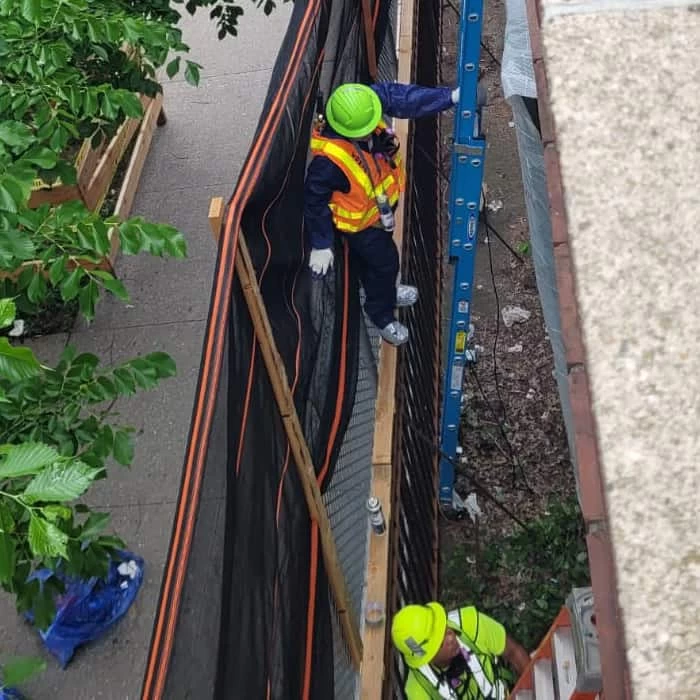
For pre-1960 homes — and that’s most of Matinecock — asbestos abatement and lead paint handling are built into the scope wherever the assessment identifies disturbed materials. These aren’t optional steps. They’re legally required, and they protect both the occupants and the integrity of the claim. Reconstruction, from framing through finish work, is completed under our Nassau County GC license. The goal throughout is to restore what’s original wherever possible — not default to replacement because it’s faster.
What should I do immediately after a fire at my Matinecock home?
The most important thing is to not re-enter the structure until it’s been cleared by the fire department and assessed by a licensed restoration contractor. Even after the fire is out, the structure may be compromised, and smoke residue in the air is a real health hazard — especially in a large Matinecock estate with extensive enclosed spaces like basements, attics, and mechanical rooms common in homes built before 1950.
Once it’s safe to coordinate from outside, call a restoration company that can be on-site within the hour. The first 24 hours are the window where the most damage either gets prevented or locked in permanently. Soot begins bonding to original surfaces — plaster, hardwood, millwork — within hours. Firefighting water starts creating mold conditions almost immediately, particularly given the elevated humidity near Long Island Sound. The sooner extraction and drying begin, the more of the home’s original material can be saved rather than replaced.
Does homeowners insurance cover fire damage restoration in Matinecock, NY?
In most cases, yes — standard homeowners insurance covers fire damage restoration, including smoke damage, water damage from firefighting, and structural repairs. But the coverage you actually receive depends heavily on how well the damage is documented and how the claim is submitted. At Matinecock’s property values, the gap between a thorough claim and a rushed one can be substantial.
We bill insurance companies directly and document every phase of the restoration to the specifications that carriers recognize — in part because IICRC-certified contractors produce documentation that insurance companies are familiar with and accept. We’ve guided hundreds of Long Island homeowners through this process and can work alongside your personal insurance broker if you have one. The goal is to make sure the claim reflects the full scope of what your property actually needs, not just what’s easiest to document quickly.
How does smoke damage affect a large estate home differently than a smaller house?
Scale changes everything. In a 1,500-square-foot house, a kitchen fire might affect two or three rooms. In a 7,000 or 10,000-square-foot Matinecock estate, the same fire can push smoke and soot through a much larger HVAC system, into more rooms, and into more enclosed spaces — attics, basements, mechanical rooms, closets — before anyone realizes how far it’s traveled. The surface area exposed to contamination is dramatically larger, and so is the cost of addressing it properly.
There’s also the material consideration. Older Matinecock estate homes have plaster walls and ceilings, original hardwood floors, and detailed millwork that absorb smoke odor and soot differently than modern drywall and synthetic finishes. The cleaning approach has to match the material — aggressive cleaning techniques that work fine on modern surfaces can permanently damage original plaster or strip finish from century-old hardwood. Knowing the difference, and having the equipment to handle it correctly, is what separates a restoration company with real experience from one that treats every job the same way.
My Matinecock home was built in the 1920s — does that change the restoration process?
Significantly, yes. Homes built before 1960 — and especially those from the 1910s and 1920s that make up a large portion of Matinecock’s estate housing stock — almost universally contain asbestos-containing materials and lead-based paint. Pipe insulation, floor tiles, ceiling tiles, joint compound, and roofing materials from that era frequently tested positive for asbestos. Lead paint is present in virtually every pre-1978 home.
When fire or the heat from a fire event disturbs those materials, New York State law requires a NYS DOL Licensed Asbestos Contractor to handle the abatement. Federal USEPA regulations require RRP certification for any work in pre-1978 homes where lead paint may be disturbed. These aren’t technicalities — they’re legal requirements, and a contractor without those credentials cannot legally complete the work. We hold both licenses, which means the full scope of a fire restoration in a pre-war Matinecock home can be handled legally, completely, and without bringing in a separate hazmat subcontractor.
What is an oil burner puff-back and is it covered as fire damage?
A puff-back happens when an oil burner has a delayed ignition — essentially a small internal explosion — that forces soot and combustion byproducts back through the heating system and into the home. There’s no open flame, no structural fire, but the result can be thousands of square feet of walls, ceilings, furniture, drapery, and flooring coated in fine, oily black soot. In a large Matinecock estate with an older oil burner system, that contamination can reach every room connected to the ductwork.
Most homeowners insurance policies do cover puff-back damage, though the claim process can vary by carrier. The soot produced by an oil burner puff-back is different from the dry soot left by burning wood or paper — it’s oily, it smears when touched, and it requires specific cleaning techniques that household products can’t address. The older the heating system, the higher the puff-back risk, and Matinecock’s pre-war estate homes with aging oil heat infrastructure are particularly susceptible. Getting a licensed contractor on-site quickly — before the soot has time to set into original surfaces — makes a real difference in how much can be cleaned versus what has to be replaced.
How long does fire damage restoration take for a large home in Matinecock?
There’s no single answer, because scope varies widely. A contained kitchen fire with limited smoke migration in a well-maintained home might be fully restored in two to four weeks. A more significant fire event in a large pre-war Matinecock estate — one that involves structural damage, asbestos abatement, extensive smoke migration through a large duct system, and reconstruction of original architectural details — can take several months.
What affects the timeline most in Matinecock specifically is the combination of factors that come with older, estate-scale homes: hazardous materials abatement has to be completed and cleared before reconstruction can begin, original materials require more careful and time-intensive restoration work than modern replacements, and the Village of Matinecock’s local building permit process adds a step that doesn’t apply in unincorporated areas. We handle the permit coordination as part of the project, so you’re not managing that separately while also dealing with an insurance claim and temporary displacement. The goal is always to move as quickly as the work allows — without cutting corners on a property that deserves to be done right.