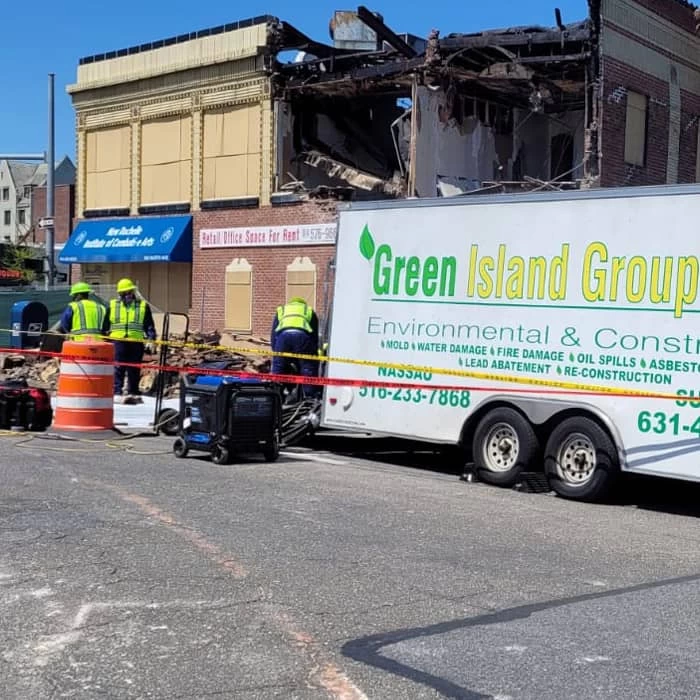
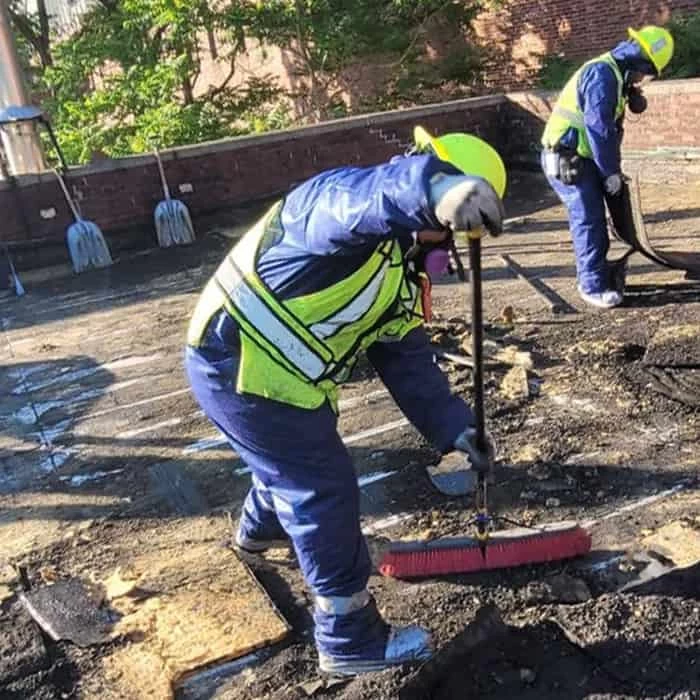
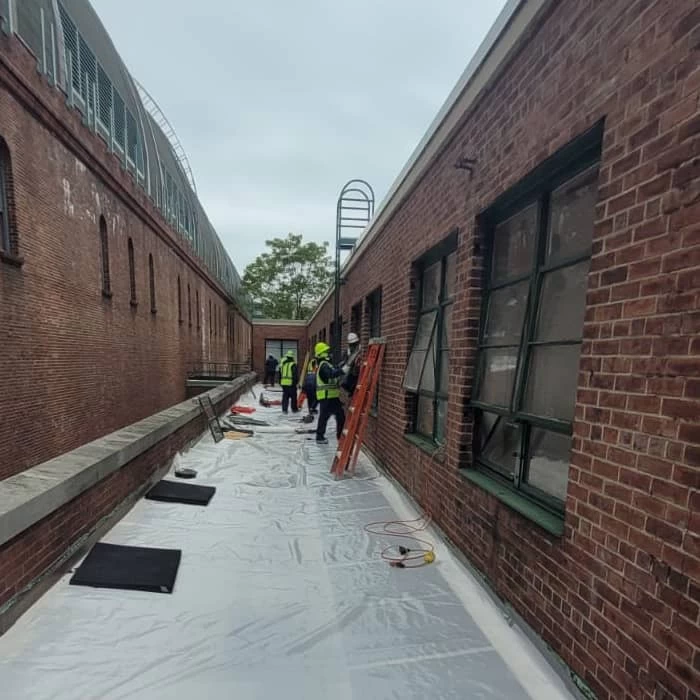
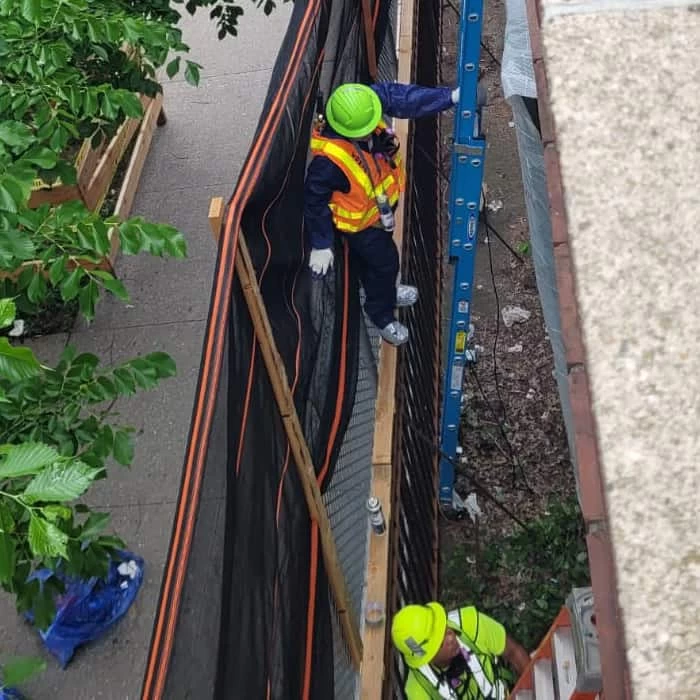
Soot sets in fast. Smoke hides in places you can’t see. We respond to fire damage in Melville within the hour and handle everything from cleanup to full rebuild.
I needed a professional consultation explanation of procedure for safe removal of Asbestos in my apartment complex. Without having an account yet, I was very impressed with the caring, knowledgeable and generous advice offered by Jessica, and will look forward to doing business in the future. Thank you so much! I feel much more informed about a sometimes scary endeavor. Peace. Nancy Silva Mineola, NY.
Mia Munoz
Used this company to clean up some water flood in my house. They were fast and easy to work with.very professional, Would recommend to anyone!
Nini Valle
Great company, had a flood and they responded quickly and efficiently. Billed my insurance company directly. I highly recommend this company!
joe colapietro, jr
I had pipe freeze in my basement right before a snow storm and they made to within an hour to help start the clean up process. They we by our side throughout the entire process and even helped with the insurance company. They did such a great job with the cleanup, repair, remidiation, I contracted them to perform the repairs and finishes in the basement. They came with enough manpower and material to get the job done. Leo and Jessica were nothing but a pleasure to deal with!!
Cristian Arredondo c
I had some water damage in my home and Green Island was able to take care of my issue quickly and effectively. I am very pleased with the work they did. They responded quickly and were very professional.
Michael M
Outstanding service! From the office to the field crew everyone was friendly, helpful and responsive. I highly recommend Green Island Group.
After a fire, the visible damage is only part of the story. Smoke travels through every duct, every wall cavity, and every porous surface in your home including rooms that never saw a flame. In Melville’s mid-century split-levels and ranches, many built in the 1950s and ’60s, those older HVAC systems create more pathways for smoke to move through a structure than most homeowners realize. What looks like a contained kitchen fire can mean smoke contamination in bedrooms two floors away.
When restoration is done right, you’re not just getting a cleaned-up version of what burned. You’re getting your home back the way it was, with the finishes, the air quality, and the structural integrity that a Melville property demands. Homes in this area carry real value, and that means the standard of work has to match. A $900,000 home doesn’t get restored with builder-grade materials and a surface wipe-down.
There’s also the water damage that most people don’t think about until it’s too late. Firefighting suppression leaves significant moisture behind, and in Long Island winters when temperatures drop hard and nor’easters roll through that moisture creates mold and structural issues fast if it isn’t extracted properly. Restoration that skips that step isn’t really restoration.
Local to Melville and the Town of Huntington, Accountable to Your Community
We’re a locally owned, Long Island-based restoration company not a franchise with a corporate playbook and rotating crews. When you call us in Melville, you’re working with a team that knows Suffolk County’s housing stock, understands the Town of Huntington’s building codes and requirements, and has real experience with the environmental and structural challenges that come with older Long Island construction.
You’ll work with real people, including named team members who stay with your project from the first emergency call through the final walk-through. Jessica specifically handles insurance coordination helping Melville homeowners navigate adjuster conversations and claim documentation on losses that can reach six figures. That’s not a service most restoration companies offer. It’s something our customers bring up by name in their reviews.
We serve Melville and the surrounding communities in the Town of Huntington, and our reputation lives here. That accountability matters in a community like Melville, where word travels fast through Half Hollow Hills school networks and professional circles.
From Emergency Call to Final Walkthrough One Company, No Handoffs
The first thing that happens when you call is simple: we pick up. From there, we mobilize quickly verified customers document our arrival within one hour. When we arrive, we assess the full scope of damage, not just what’s visible. That means checking your HVAC system for smoke penetration, testing for moisture left by suppression water, and identifying any environmental hazards that need to be addressed before restoration work can begin.
In Melville’s older homes particularly those built before 1980 that environmental assessment often includes checking for asbestos-containing materials. Floor tiles, pipe insulation, ceiling materials, and joint compound from that era frequently contain asbestos. A fire that disturbs those materials requires certified abatement before anything else moves forward. This is a step that a basic cleanup crew can’t legally perform. We can, and we handle the coordination with the Town of Huntington’s Building Department for any permits required for structural repairs.
Once the environment is cleared and stabilized, we move through smoke and soot remediation, water extraction, odor elimination, and full reconstruction. You work with us through every phase. No handoff to a separate general contractor, no gap in communication, no moment where you’re left managing the project yourself.
Fire damage restoration isn’t one service it’s a sequence of them, and every step matters. We cover the full scope for Melville residential and commercial properties: emergency stabilization, smoke and soot remediation, water extraction from firefighting suppression, asbestos and mold abatement, odor elimination, and complete structural reconstruction through final finishes.
For Melville homeowners, the asbestos piece is particularly relevant. A significant portion of the hamlet’s housing stock was built during the decades when asbestos was standard in construction materials. When a fire damages those materials or when the water and structural disturbance from firefighting disturbs them certified abatement is legally required before any restoration work proceeds. We hold the credentials to handle that in-house, which keeps your project moving without delays caused by bringing in a separate subcontractor.
Melville isn’t only a residential community. The Route 110 corridor hosts corporate offices, regional headquarters, and commercial facilities where a fire or smoke event is also a business continuity crisis. We handle commercial fire damage restoration at scale larger square footage, complex HVAC systems, and the urgency that comes with every day a business is out of operation. Whether it’s a family home near Tuxedo Hills or a commercial property off the LIE, the scope of what we do doesn’t change: we restore it completely, and we don’t walk away until it’s right.
What should I do immediately after a house fire in Melville, NY?
The most important thing you can do in the first hour is call a restoration company not start cleaning. Soot begins permanently bonding to surfaces within 24 to 72 hours of a fire, and certain cleaning attempts (using the wrong products on the wrong materials) can actually push contamination deeper into porous surfaces and make restoration harder and more expensive.
Once you’ve made that call, stay out of affected areas if possible. Smoke residue and post-fire air contain particles that are genuinely harmful to breathe, especially for children. If your Melville home has pre-1980 construction which covers a meaningful portion of the hamlet’s housing stock disturbing damaged materials before an environmental assessment can release asbestos fibers. Let our restoration team do the initial walkthrough before you start moving things or opening windows. The faster a professional team gets eyes on the damage, the better the outcome.
Does homeowners insurance cover fire damage restoration costs in New York?
In most cases, yes standard homeowners insurance policies in New York cover fire damage restoration, including smoke remediation, water extraction from suppression, and structural repairs. But the process of actually getting that coverage applied correctly is where things get complicated. Insurance adjusters work for the insurance company, not for you, and the initial scope they document doesn’t always capture everything particularly hidden smoke damage in HVAC systems or moisture that hasn’t yet caused visible mold.
This is exactly why our insurance coordination matters. Jessica works directly with Melville homeowners throughout the claims process helping document the full scope of damage, communicating with adjusters, and making sure the work that needs to happen is the work that gets covered. On a major restoration in Melville, where the home value and scope of damage can push claims into the $50,000 to $200,000 range, having someone in your corner who understands how to navigate that process is genuinely valuable. You focus on your family. We handle the paperwork battle.
How far does smoke damage actually spread beyond the room that burned?
Further than most people expect and this is one of the most commonly underestimated aspects of fire damage. Smoke is not contained to the room where the fire started. It moves through HVAC ducts, wall cavities, and any gap or opening in the structure, depositing soot and odor-causing particles in rooms that may look completely unaffected. In a two-story colonial or split-level the dominant housing type in Melville smoke from a first-floor kitchen fire can contaminate second-floor bedrooms before the fire is even out.
Older HVAC systems, which are common in Melville’s mid-century homes, often have less efficient duct sealing than modern systems, which means smoke spreads more broadly through the structure. A thorough restoration addresses the entire affected pathway, not just the burn zone. That includes cleaning or replacing ductwork, treating porous materials in adjacent rooms, and using professional-grade odor elimination not air fresheners or ozone machines left running overnight. If a restoration company only quotes you on the burned room, ask them what their plan is for the rest of the house.
Do I need building permits for fire damage repairs in the Town of Huntington?
Yes. For any structural repair, modification, or reconstruction following fire damage, you need a building permit from the Town of Huntington’s Department of Engineering Services. Melville is a hamlet within the Town of Huntington, so all permitting falls under their jurisdiction. Under Huntington’s building code, it is unlawful to repair or modify a structure without a permit and this applies to fire restoration work that goes beyond surface cleaning into structural repairs, framing, electrical, or mechanical systems.
The Town of Huntington Building Department is open Monday through Friday, 8:30 AM to 3:00 PM. For homeowners already dealing with the stress of a fire event, managing that permitting process on top of everything else is a real burden. We handle permit coordination as part of the restoration process we know what’s required, we know how to submit correctly, and we keep the project moving without delays caused by permitting gaps. You shouldn’t have to become an expert in Huntington building code on top of everything else you’re managing.
How long does fire damage restoration typically take for a Melville home?
It depends on the scope, but here’s a realistic range: minor smoke and soot cleanup with no structural damage typically takes three to seven days. Moderate fire damage involving one or two rooms, water extraction, and partial reconstruction usually runs two to six weeks. A major fire like a working fire that involves multiple rooms or causes roof or structural damage can take three to six months through full reconstruction.
For Melville homes, a few factors can affect that timeline. If the home was built before 1980 and asbestos-containing materials are disturbed, certified abatement has to be completed before restoration work can begin that adds time but it’s not optional. Insurance documentation and adjuster approvals also affect pacing, which is another reason having someone who manages that process on your behalf matters. We give every Melville homeowner a realistic timeline at the assessment stage, and we don’t move goalposts once the work is underway.
Is it safe to stay in my Melville home during fire damage restoration?
Usually not during the active remediation phase, and here’s why: post-fire air quality is a real health concern. Soot particles, smoke residue, VOCs released from burned materials, and the chemical byproducts of combustion are harmful to breathe particularly for children and anyone with respiratory sensitivities. Families in Melville with school-age kids should take this seriously. The Half Hollow Hills community is full of households where parents are making careful decisions about their children’s environment, and moving back in before air quality is properly cleared is a risk that isn’t worth taking.
During the reconstruction phase once remediation is complete and the environment has been tested and cleared re-occupancy becomes a case-by-case decision based on which parts of the home are still under active work. We walk every Melville homeowner through what’s safe and when, based on the actual test results and the current phase of the project. We don’t give a blanket answer because every fire is different. What we can tell you is that we won’t tell you it’s safe until it actually is.