When Your New Cassel Home Needs More Than a Cleanup Crew
Fire damage in an older Nassau County home isn’t just a cleanup job — it’s a hazmat situation, a permit process, and an insurance negotiation all at once. We handle every piece of it.
I needed a professional consultation explanation of procedure for safe removal of Asbestos in my apartment complex. Without having an account yet, I was very impressed with the caring, knowledgeable and generous advice offered by Jessica, and will look forward to doing business in the future. Thank you so much! I feel much more informed about a sometimes scary endeavor. Peace. Nancy Silva Mineola, NY.
Mia Munoz
Used this company to clean up some water flood in my house. They were fast and easy to work with.very professional, Would recommend to anyone!
Nini Valle
Great company, had a flood and they responded quickly and efficiently. Billed my insurance company directly. I highly recommend this company!
joe colapietro, jr
I had pipe freeze in my basement right before a snow storm and they made to within an hour to help start the clean up process. They we by our side throughout the entire process and even helped with the insurance company. They did such a great job with the cleanup, repair, remidiation, I contracted them to perform the repairs and finishes in the basement. They came with enough manpower and material to get the job done. Leo and Jessica were nothing but a pleasure to deal with!!
Cristian Arredondo c
I had some water damage in my home and Green Island was able to take care of my issue quickly and effectively. I am very pleased with the work they did. They responded quickly and were very professional.
Michael M
Outstanding service! From the office to the field crew everyone was friendly, helpful and responsive. I highly recommend Green Island Group.
Your Home Restored — Not Just Cleaned and Handed Back
Most New Cassel homes were built between the 1940s and 1960s. That era of construction means asbestos floor tiles, lead paint on the walls, and heating systems that were never designed for the electrical loads running through them today. When a fire hits a home like that, the damage goes a lot deeper than what you can see. Soot gets into wall cavities. Smoke travels through ductwork. Water from suppression soaks into subfloors and starts the clock on mold. What looks like a contained kitchen fire can quietly affect the entire house.
The outcome you actually want isn’t just “cleaned up” — it’s a home that’s safe to live in again. That means air quality restored, not just surfaces wiped down. It means hazardous materials properly identified and removed under the licenses New York State actually requires. And it means a full rebuild if the structure needs it, handled by the same team, not handed off to a contractor you’ve never met.
For families in New Cassel — where property taxes run over $10,000 a year and your home represents everything you’ve worked for — getting this right the first time isn’t optional. A restoration that cuts corners today becomes a mold problem, a code violation, or a failed inspection six months from now.
Licensed Fire Restoration Contractor Nassau County
One Team, Every License, No Handoffs
Green Island Group is a Long Island-based restoration company that holds a Nassau County General Contractor License, NYS DOL licenses for asbestos abatement and mold remediation, and USEPA Lead/RRP certification. Those aren’t just credentials on a wall — they’re the specific licenses required by law to do the work that fire damage in New Cassel’s older housing stock actually demands. Most restoration companies don’t hold all of them, which means they’ll clean what they can and leave the rest to someone else.
We’re IICRC-certified in water and fire damage restoration — the only ANSI-accredited certification in the industry, and the one insurance adjusters actually recognize when reviewing documentation. That matters when your claim is being processed and you need every dollar you’re owed.
With over 5,000 completed restoration projects across New York State, we’ve seen what fire does to mid-century homes throughout Nassau County — including the ones near the Northern State Parkway corridor and throughout the Town of North Hempstead, where New Cassel is located. We know the local permit process, the county’s asbestos regulations, and what it takes to get a home through a Town of North Hempstead building inspection after a major fire.
What Actually Happens From the First Call to Move-Back-In Day
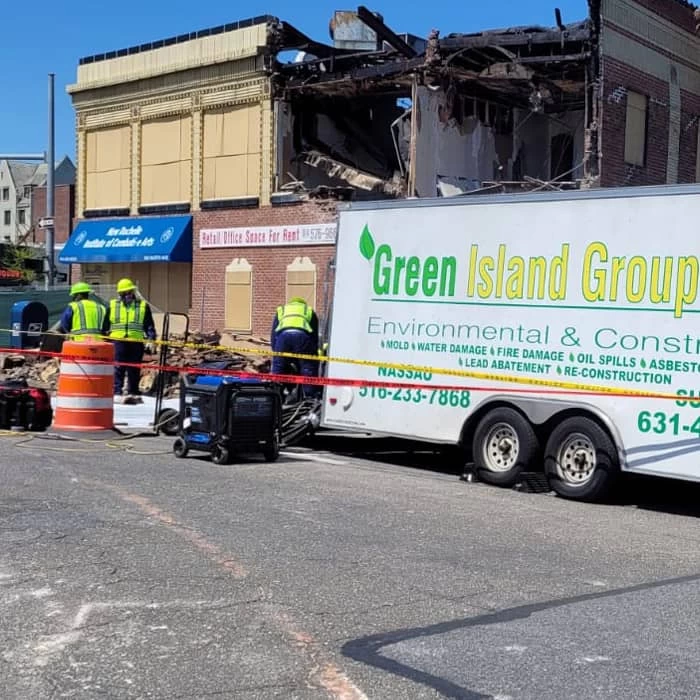
The process starts the moment you call. We respond 24 hours a day, 365 days a year, and aim to be on-site within an hour. The first priority is stopping the damage from getting worse — that means emergency board-up, tarping if the roof is compromised, and water extraction if suppression water is still sitting in the structure. In New Cassel’s densely built neighborhoods, where homes sit close together, getting that containment done quickly also protects adjacent properties.
From there, we do a full assessment. In homes built before 1978 — which is most of New Cassel — that assessment includes testing for asbestos-containing materials and lead paint before any demolition or debris removal begins. This isn’t optional. New York State law requires it, and Nassau County adds its own layer of asbestos regulations on top of state requirements. Skipping this step isn’t just dangerous — it’s illegal, and it can create liability that follows the homeowner, not just the contractor.
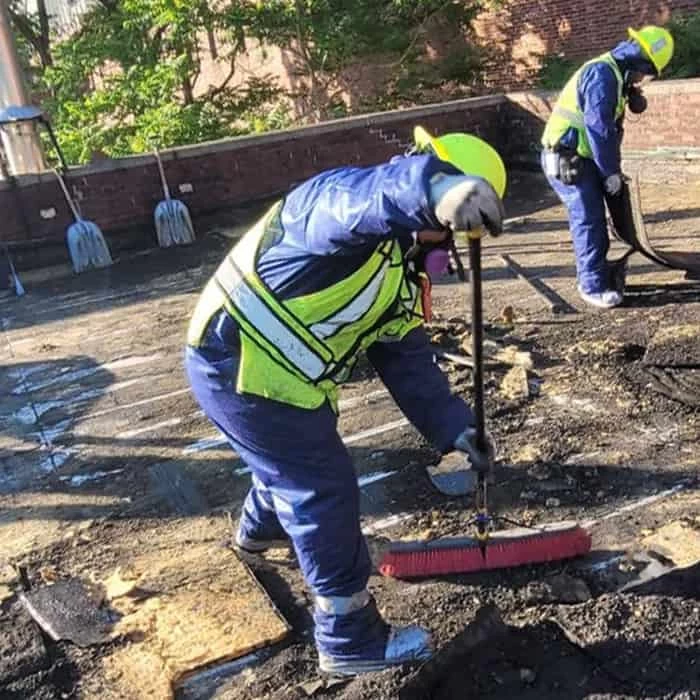
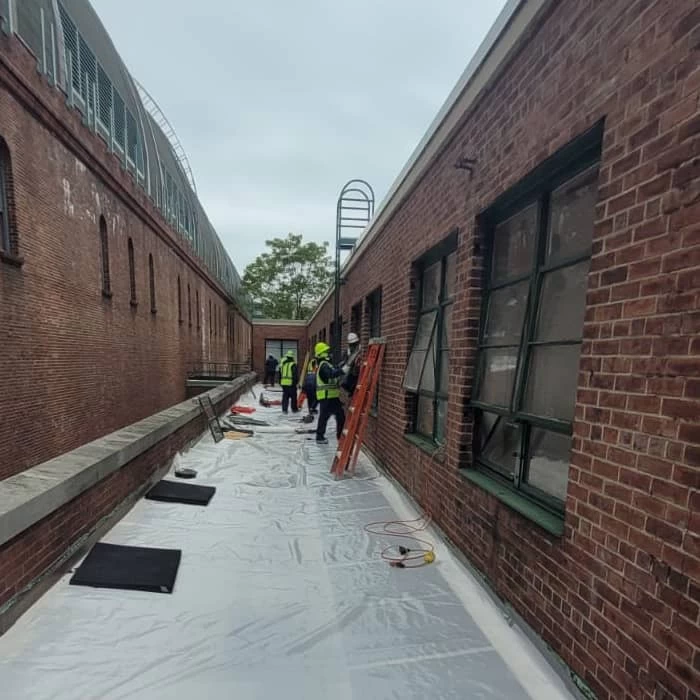
Once the hazardous materials assessment is complete, the remediation begins: smoke and soot removal, structural drying, odor treatment including HVAC cleaning, and controlled demolition of materials that can’t be saved. After remediation is signed off, the rebuild starts — permits pulled from the Town of North Hempstead, construction completed under our Nassau County GC license, and inspections handled from start to finish. Your insurance company gets billed directly throughout the process. You don’t have to manage the paperwork.
Fire and Smoke Damage Restoration Services New Cassel
Everything the Job Requires — Under One Licensed Roof
Fire damage restoration in New Cassel isn’t a single service — it’s a sequence of legally distinct work types that have to be done in the right order, by the right licensed professionals. We cover the full sequence: emergency response and board-up, water extraction and structural drying, asbestos and lead abatement, smoke and soot remediation, mold remediation, full reconstruction, and direct insurance billing. Every phase is handled in-house.
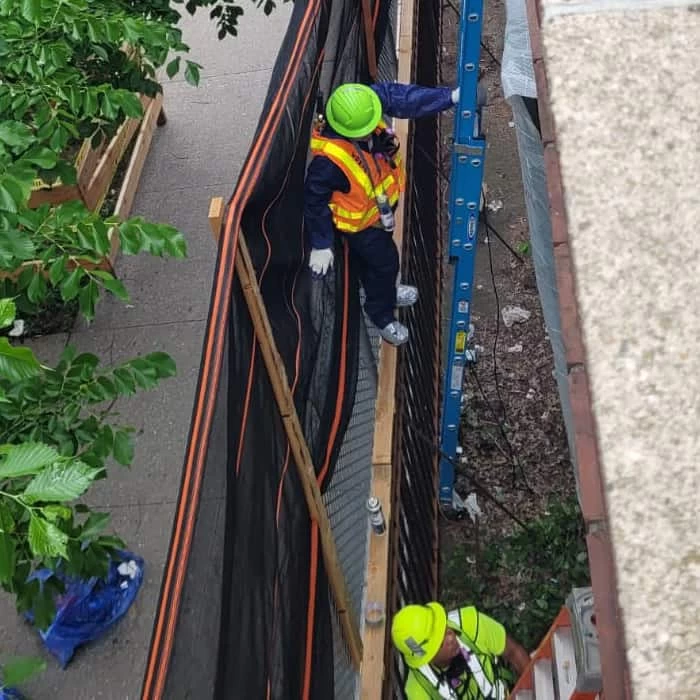
The asbestos and lead piece is worth calling out specifically. The Nassau County Department of Health enforces EHRP/EHRT regulations for asbestos work that go beyond what New York State requires on its own. A contractor who holds a state asbestos license but isn’t familiar with Nassau County’s county-level requirements can create compliance problems that delay your project and complicate your insurance claim. We operate under both sets of requirements regularly — this isn’t new territory for us.
Oil burner puff-backs are also a common call throughout Nassau County, including New Cassel. A puff-back isn’t a fire, but it produces oily black soot that coats an entire interior and can’t be removed with household products. The remediation process is the same as fire damage — professional-grade equipment, proper containment, and surface-by-surface cleaning. If your heating system misfired and left your home looking like the inside of a chimney, that’s a job we handle regularly in this area.
Does my New Cassel home likely have asbestos or lead paint after a fire?
If your home was built before 1978 — which covers the majority of New Cassel’s housing stock — the answer is almost certainly yes. Homes built between the 1940s and 1960s routinely used asbestos in floor tiles, pipe insulation, ceiling materials, and joint compound. Lead paint was standard on interior and exterior surfaces until it was banned for residential use in 1978. Under normal conditions, these materials aren’t an immediate danger if they’re intact. Fire changes that. Heat and structural disturbance break these materials apart and release particles into the air and throughout the home.
New York State law requires licensed contractors to test for and abate asbestos before any demolition or debris removal begins. Nassau County adds its own regulatory layer through EHRP/EHRT requirements that go beyond state rules. This means you need a contractor who holds the NYS DOL Asbestos License and understands Nassau County’s specific compliance requirements — not just someone with a general contractor’s license who thinks they can handle it. We hold both, and this is a standard part of every fire restoration assessment we conduct in New Cassel.
How does the insurance claim process work for fire damage restoration?
Filing a fire damage claim is more complicated than most homeowners expect. The insurer sends an adjuster to assess the damage, but their initial estimate isn’t always complete — especially in older homes where hidden damage to wall cavities, ductwork, and structural systems isn’t immediately visible. If the documentation submitted by your restoration contractor doesn’t match the scope of work required, the insurer can underpay or dispute the claim, leaving you to cover the gap out of pocket.
We bill insurance companies directly and document every phase of the restoration process with the specificity that adjusters require. IICRC-certified contractors are recognized by the insurance industry — the certification signals that the work was performed to a documented standard, which reduces disputes and speeds up claim processing. For New Cassel homeowners, where the average fire restoration runs $27,000 or more and household incomes are working to middle class, getting the full claim value isn’t a nice-to-have. It’s the difference between a complete restoration and a job that stops halfway because the money ran out.
How quickly does fire and smoke damage need to be addressed in a Nassau County home?
The window is shorter than most people realize. Soot begins permanently bonding to walls, ceilings, and surfaces within hours of a fire. Smoke residue that isn’t treated quickly becomes much harder — sometimes impossible — to fully remove, which means more demolition and more cost. The water used by the fire department to suppress the fire creates a separate problem: mold can begin growing within 24 to 48 hours in the walls, subfloor, and structural cavities of an older home, especially during Nassau County’s warm and humid summer months.
In New Cassel’s densely built neighborhoods, there’s also the question of adjacent properties. Homes are close together, and smoke and water can travel further than the burn zone. Getting a restoration team on-site quickly — ideally the same day — limits the spread and reduces the total scope of the job. Our 24/7 response commitment exists specifically because waiting until business hours on Monday is not a real option when your home is actively deteriorating.
What permits are required for fire damage restoration and rebuild in New Cassel?
Because New Cassel is an unincorporated hamlet governed by the Town of North Hempstead — not the Town of Hempstead, which covers most of Nassau County — building permits for reconstruction work after fire damage are pulled through the Town of North Hempstead Building Department. The permitting requirements depend on the scope of the damage: cosmetic repairs may not require a permit, but any structural work, electrical, plumbing, or HVAC replacement will. If asbestos abatement is required, that work must also be permitted and documented separately under Nassau County’s EHRP/EHRT regulations.
A contractor who isn’t familiar with North Hempstead’s permitting process — or who tries to skip permits to move faster — creates a serious problem for the homeowner. Unpermitted work can surface during a future sale, trigger fines, or void your insurance coverage for related repairs. We hold a Nassau County General Contractor License and pull permits as a standard part of every rebuild project. The inspections are handled by our team, not delegated to you.
Can smoke odor really be fully removed from a home after a fire?
Yes — but it depends on how thoroughly the work is done. Smoke odor doesn’t just sit on surfaces. It embeds in porous materials like drywall, insulation, wood framing, and upholstery, and it travels through HVAC ductwork and deposits throughout the entire system. A home that smells clean on the surface can still have smoke residue circulating through the air every time the heating or cooling system runs. In New Cassel’s older oil-heated homes, the ductwork and air handling systems are often decades old, with gaps and joints that allow smoke to penetrate deeply.
Professional odor removal involves more than spraying a deodorizer. It requires air scrubbers, ozone treatment or hydroxyl generators, and in most cases a full HVAC cleaning performed to NADCA standards. We address the air, not just the walls. For families with children, elderly residents, or anyone with asthma or respiratory conditions — which are more common in densely populated communities like New Cassel — restoring actual air quality, not just surface appearance, is what makes a home livable again.
What should I do immediately after a fire in my New Cassel home?
The first step is making sure the Westbury Fire Department has cleared the property and declared it safe to enter. Don’t go back in until that happens. Once it’s cleared, call your insurance company to open a claim and document everything you can with photos before anything is moved or cleaned — this documentation becomes part of your claim record and protects you if there’s a dispute later about the scope of damage.
Then call a licensed restoration contractor before you touch anything. Well-meaning attempts to clean up soot or dry out water-damaged areas yourself can actually complicate the restoration — certain cleaning methods smear oily soot deeper into surfaces, and disturbing materials in an older New Cassel home before asbestos testing has been done creates a real health and legal risk. We can be on-site the same day, assess the full scope of the damage, and begin the emergency stabilization process while you focus on your family and your insurance claim. The sooner the process starts, the better the outcome — both for the condition of your home and the strength of your claim.