Nissequogue Homes Deserve More Than a Surface Cleanup
When fire hits a home worth over a million dollars, you need more than a crew with shop vacs. You need someone who understands what’s actually at stake and knows how to handle fire damage restoration the right way, start to finish.
I needed a professional consultation explanation of procedure for safe removal of Asbestos in my apartment complex. Without having an account yet, I was very impressed with the caring, knowledgeable and generous advice offered by Jessica, and will look forward to doing business in the future. Thank you so much! I feel much more informed about a sometimes scary endeavor. Peace. Nancy Silva Mineola, NY.
Mia Munoz
Used this company to clean up some water flood in my house. They were fast and easy to work with.very professional, Would recommend to anyone!
Nini Valle
Great company, had a flood and they responded quickly and efficiently. Billed my insurance company directly. I highly recommend this company!
joe colapietro, jr
I had pipe freeze in my basement right before a snow storm and they made to within an hour to help start the clean up process. They we by our side throughout the entire process and even helped with the insurance company. They did such a great job with the cleanup, repair, remidiation, I contracted them to perform the repairs and finishes in the basement. They came with enough manpower and material to get the job done. Leo and Jessica were nothing but a pleasure to deal with!!
Cristian Arredondo c
I had some water damage in my home and Green Island was able to take care of my issue quickly and effectively. I am very pleased with the work they did. They responded quickly and were very professional.
Michael M
Outstanding service! From the office to the field crew everyone was friendly, helpful and responsive. I highly recommend Green Island Group.
A fire doesn’t just burn what it touches. Smoke moves fast through walls, into your HVAC system, across every room and in a Nissequogue home with 5,000 or 6,000 square feet, that means damage can reach areas nowhere near the original fire. When the restoration is done properly, every affected surface is addressed, every contaminated duct is cleaned, and the air in your home is verified safe. Not just visually clean. Actually safe.
For Nissequogue homeowners specifically, this matters more than most people realize. Many homes here were built before the 1980s, which means a fire can disturb asbestos-containing materials in insulation, floor tiles, or pipe wrap materials that require state-certified handling, not just a standard cleanup crew. A restoration that skips that step isn’t a restoration. It’s a liability.
There’s also the water side of this. When the Village of Nissequogue Volunteer Fire Department suppresses a fire, hundreds of gallons of water go into your home in minutes. That water soaks into floors, framing, and walls and mold can start developing within 24 to 48 hours. The right restoration handles both the fire damage and the water damage together, so you’re not dealing with a mold problem six months from now because someone only cleaned what they could see.
Fire Damage Restoration Service in Nissequogue, NY
Locally Owned, Long Island Accountable
We’re a locally owned, independently operated restoration company serving Nassau and Suffolk Counties. Not a franchise. Not a call center. When you reach out, you’re talking to real people the same team that shows up, does the work, and follows through until the job is done. Customers consistently reference team members by name, which tells you something about how we operate.
Nissequogue sits in a part of Suffolk County where the homes are large, the properties are historic, and the stakes are high. The village’s estate character large wooded lots, waterfront positions along the Long Island Sound and Stony Brook Harbor, homes with complex older construction requires a restoration company that actually understands what it’s working with. We have that experience across Long Island’s North Shore communities, and it shows in the quality of our work.
Our satisfaction guarantee is simple: the job isn’t done until you’re satisfied. That’s not filler language it’s the standard every project is held to.
Fire Restoration Process for Nissequogue Homeowners
No Guesswork Here's Exactly What Happens
The first call triggers an immediate response. Fire damage doesn’t wait, and neither do we. Once on-site, our priority is stabilization boarding up compromised entry points, securing the structure, and stopping any ongoing water intrusion from firefighting efforts. That first few hours matters more than most homeowners expect.
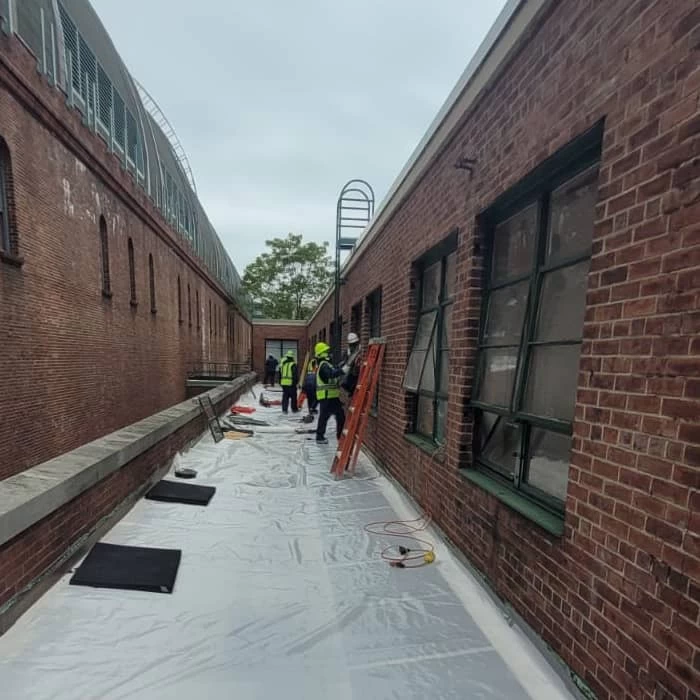
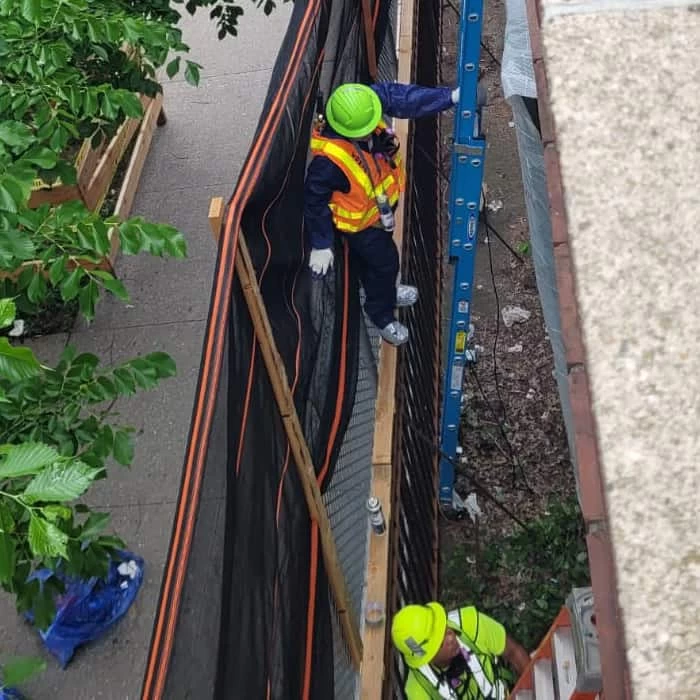
From there, we assess the full scope of damage. That includes the visible burn areas, but also smoke migration through your HVAC system, soot deposition in unaffected rooms, and in older Nissequogue homes an evaluation for any disturbed asbestos-containing materials. If hazardous materials are present, that work is handled by New York State-certified abatement professionals before any further restoration begins. Skipping that step isn’t an option here, and any company that doesn’t flag it isn’t being straight with you.
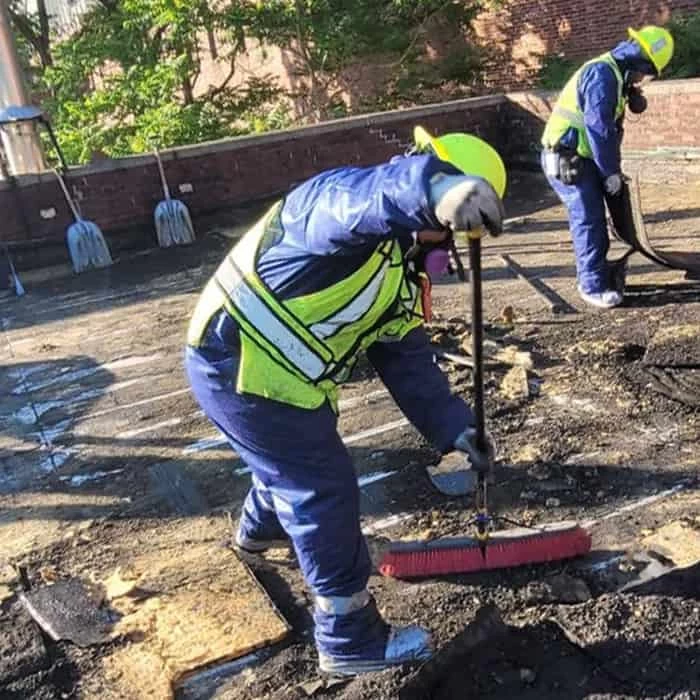
Once the environment is safe, we begin remediation: soot and smoke removal, structural drying, odor elimination through thermal fogging or hydroxyl treatment, and HVAC cleaning. After that comes reconstruction framing, drywall, finishes, and everything else needed to bring your home back. Because Nissequogue has its own village building department and code enforcement process, we pull permits through the village directly, and we complete the work to satisfy the Certificate of Occupancy requirements. You don’t have to figure that out on your own.
Fire Restoration Damage Services Near Nissequogue, NY
Full-Scope Restoration Built for Homes Like Yours
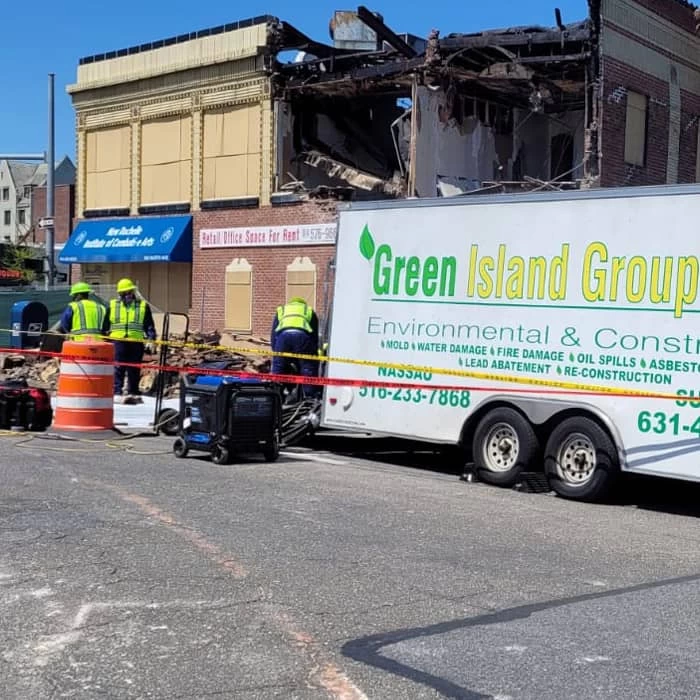
Fire damage restoration in a Nissequogue home isn’t a single-trade job. The scope almost always spans multiple disciplines and we handle all of them. Emergency stabilization and board-up. Smoke and soot remediation across every affected surface and room. Complete water extraction and structural drying from firefighting suppression. Asbestos and environmental abatement where required for older homes. HVAC decontamination. Odor elimination. And full reconstruction and finish work, from framing through final paint.
The insurance piece is part of this too. Filing a major claim on a high-value property in Nissequogue where median home values sit around $1.2 million and many estates are worth significantly more is not a simple process. We use industry-standard Xactimate estimating, the same software insurance adjusters use, and work alongside your adjuster throughout the process to make sure the full scope of damage is documented and claimed. Multiple homeowners have specifically called this out in reviews as one of the most valuable parts of working with us. When your claim involves a property of this value, having someone in your corner who knows the process is worth a lot.
From the first emergency call to the final village inspection, everything runs through one company and one relationship. That continuity matters especially when you’re navigating a restoration that can take weeks or months.
Is it safe to stay in my Nissequogue home after a fire?
In most cases, no at least not until a professional assessment has been completed. Smoke and soot contain carbon monoxide, formaldehyde, and other toxic compounds that linger in the air and on surfaces long after the visible fire is out. Even a fire contained to one room can push contaminated air through your entire HVAC system within minutes, affecting spaces that look completely untouched.
In older Nissequogue homes, there’s an additional concern. If the fire disturbed insulation, floor tiles, ceiling tiles, or pipe wrap that contain asbestos which is common in homes built before the 1980s those materials can release fibers into the air that are dangerous to breathe. Until an environmental assessment confirms those materials are intact or have been properly abated, the home should not be occupied. We flag this proactively, not waiting for you to ask.
How long does fire damage restoration take for a large home?
It depends on the scope of the damage, but for a large Nissequogue home and properties here often run 4,000 to 8,000 square feet or more a full restoration from emergency response through final reconstruction can take anywhere from several weeks to several months. A contained kitchen fire with primarily smoke damage might be resolved in two to four weeks. A fire with significant structural damage, water intrusion from suppression, and required asbestos abatement will take longer.
The honest answer is that the timeline becomes clearer once the full assessment is done. What slows projects down most often is incomplete scoping at the start missing secondary damage, underestimating smoke migration, or failing to account for permit and inspection timelines. Because Nissequogue has its own village building department, permits and the Certificate of Occupancy process are handled through the village directly, which is a step some restoration companies aren’t prepared for. Knowing that upfront keeps the project on track.
Does homeowners insurance cover fire damage restoration in New York?
Standard homeowners insurance policies in New York typically cover fire damage, including the cost of cleanup, remediation, and reconstruction. But what the policy actually pays depends heavily on how the claim is documented and what scope of work the adjuster approves. An underdocumented claim on a high-value Nissequogue property can result in a significant gap between what the damage actually costs to restore and what the insurer agrees to pay.
This is where we make a difference beyond just the physical work. We use Xactimate the same estimating platform insurance adjusters use and work directly alongside your adjuster to make sure the full scope of damage is captured and submitted properly. That includes secondary damage like smoke in HVAC systems, water from firefighting suppression, and environmental hazards in older homes. If any of that gets missed in the initial claim, it becomes much harder to add later. Getting it right the first time protects your recovery.
What's the difference between smoke damage and fire damage restoration?
Fire damage refers to what the flames physically burned or destroyed structural elements, finishes, personal property. Smoke damage is everything else: the soot deposited on surfaces, the odor compounds absorbed into porous materials like drywall, wood, and insulation, and the contamination that travels through your HVAC system into rooms that never saw a flame. Both require professional remediation, and they require different techniques.
Soot left on surfaces begins etching and permanently staining within 24 to 72 hours. Smoke odor that isn’t treated at the source meaning the contaminated materials themselves, not just a surface spray will return. In a large Nissequogue home, smoke migration through an extensive HVAC system can affect every room in the house from a single contained fire. Proper smoke damage restoration includes thermal fogging or hydroxyl treatment for odor, room-by-room soot assessment, and full HVAC decontamination. Treating only the burn area and calling it done is one of the most common ways a fire restoration gets done wrong.
Does fire damage in older Nissequogue homes require asbestos testing?
If your home was built before 1980, the answer is almost always yes and it should happen before any restoration work begins. Asbestos-containing materials were standard in residential construction through the late 1970s, showing up in floor tiles, ceiling tiles, insulation, pipe wrap, and joint compound. A fire can disturb these materials, breaking them apart and releasing fibers into the air. Once that happens, the home has an environmental hazard that requires New York State-certified abatement not just cleanup.
Nissequogue’s housing stock includes a significant number of older estates, many with complex construction that predates modern building codes. A restoration company without environmental remediation credentials cannot legally or safely complete a full restoration in many of these homes. We hold state-certified asbestos abatement credentials, which means the entire scope of damage including hazardous materials is handled under one company, one project, and one accountability structure. You don’t want to find out your contractor can’t handle this step after work has already started.
Why does Green Island Group serve Nissequogue specifically what do you know about this area?
Nissequogue is genuinely different from most communities on Long Island, and the restoration work here reflects that. It’s an incorporated village with its own building department, its own code enforcement officer, and its own volunteer fire department which means permits and the Certificate of Occupancy process go through the village directly, not just through Suffolk County. A restoration company that doesn’t know that will create delays and compliance issues that fall on you to resolve.
The homes here are large, often historic, and many contain older construction materials that require environmental handling alongside standard fire restoration. The village’s position along the Nissequogue River and the Long Island Sound also means storm-related fire and water damage is a real and recurring risk the August 2024 flooding event that put the Nissequogue River over its banks and triggered a Suffolk County state of emergency is a recent example of how quickly conditions here can compound. We serve the North Shore communities of Suffolk County and understand the specific combination of high-value properties, older construction, coastal exposure, and village-level permitting that defines restoration work in Nissequogue. That familiarity isn’t incidental it’s what makes the difference between a restoration that’s done and one that’s done right.