Your 1960s North Babylon Home Deserves More Than a Surface Cleanup
Most North Babylon homes were built when asbestos was standard. Fire changes everything and real fire damage restoration means handling what’s behind the walls, not just what you can see.
I needed a professional consultation explanation of procedure for safe removal of Asbestos in my apartment complex. Without having an account yet, I was very impressed with the caring, knowledgeable and generous advice offered by Jessica, and will look forward to doing business in the future. Thank you so much! I feel much more informed about a sometimes scary endeavor. Peace. Nancy Silva Mineola, NY.
Mia Munoz
Used this company to clean up some water flood in my house. They were fast and easy to work with.very professional, Would recommend to anyone!
Nini Valle
Great company, had a flood and they responded quickly and efficiently. Billed my insurance company directly. I highly recommend this company!
joe colapietro, jr
I had pipe freeze in my basement right before a snow storm and they made to within an hour to help start the clean up process. They we by our side throughout the entire process and even helped with the insurance company. They did such a great job with the cleanup, repair, remidiation, I contracted them to perform the repairs and finishes in the basement. They came with enough manpower and material to get the job done. Leo and Jessica were nothing but a pleasure to deal with!!
Cristian Arredondo c
I had some water damage in my home and Green Island was able to take care of my issue quickly and effectively. I am very pleased with the work they did. They responded quickly and were very professional.
Michael M
Outstanding service! From the office to the field crew everyone was friendly, helpful and responsive. I highly recommend Green Island Group.
What Full Restoration Actually Looks Like in North Babylon
When a fire hits a home in North Babylon, the damage rarely stays in one room. Smoke travels through older ductwork, soot settles into porous walls, and suppression water soaks into subfloors that were laid down sixty-plus years ago. The visible damage is just the beginning.
Most of the homes in North Babylon were built during the post-war boom and that means floor tiles, ceiling materials, joint compound, and pipe insulation that may contain asbestos. A fire that disturbs those materials doesn’t just create a cleanup job. It creates a hazardous materials situation that requires licensed environmental remediation, not just a restoration crew with a shop vac. That’s a reality specific to North Babylon’s housing stock, and it matters enormously when choosing who handles your recovery.
When the job is done right, you’re not just looking at a home that appears restored. You’re living in one that’s actually safe no hidden odor, no compromised air quality, no materials left behind that shouldn’t be there. That’s the difference between a company that checks boxes and one that understands what fire restoration means in neighborhoods like Parkdale Estates or the streets surrounding Belmont Lake.
We’re independently owned and operated on Long Island no franchise parent, no national call center, no rotating anonymous crews. When you call, you reach people who actually know North Babylon and have a real stake in how your job turns out.
We serve North Babylon and the broader Town of Babylon corridor, including the surrounding communities along Deer Park Avenue and the South Shore. We handle everything from the first emergency call through final reconstruction which means you’re not managing handoffs between a cleanup company, an environmental contractor, and a separate builder. One team carries it through.
What sets us apart in a community like North Babylon isn’t a slogan. It’s that we show up prepared, we know what older Long Island homes actually contain, and we don’t consider a job finished until you do. That’s not a marketing line it’s documented by name in reviews from real homeowners across the island.
The first step is stabilization. That means securing the structure, boarding up any openings, and stopping secondary damage from spreading whether that’s smoke continuing to migrate through the HVAC system or suppression water working its way deeper into your subfloor. In North Babylon’s older homes, where ductwork is often unlined and insulation is minimal, that window matters. The faster this happens, the less damage compounds.
From there, the environmental assessment comes before anything else is touched. Given that the median construction year for homes in this hamlet is 1960, there’s a real probability that disturbed materials require licensed abatement before standard restoration work can begin. We hold the environmental remediation credentials to handle that in-house no waiting on a separate contractor, no gap in the timeline. All environmental work in New York State requires specific Department of Labor certification, and that’s already covered.
Once the site is cleared and safe, the restoration and reconstruction phase begins. That includes structural repairs, odor neutralization, and finishing work drywall, paint, flooring, whatever the fire took. Every step requires coordination with the Town of Babylon’s Building Division for permits, and that’s handled as part of the process. You stay informed throughout. Nothing moves forward without you knowing where things stand.
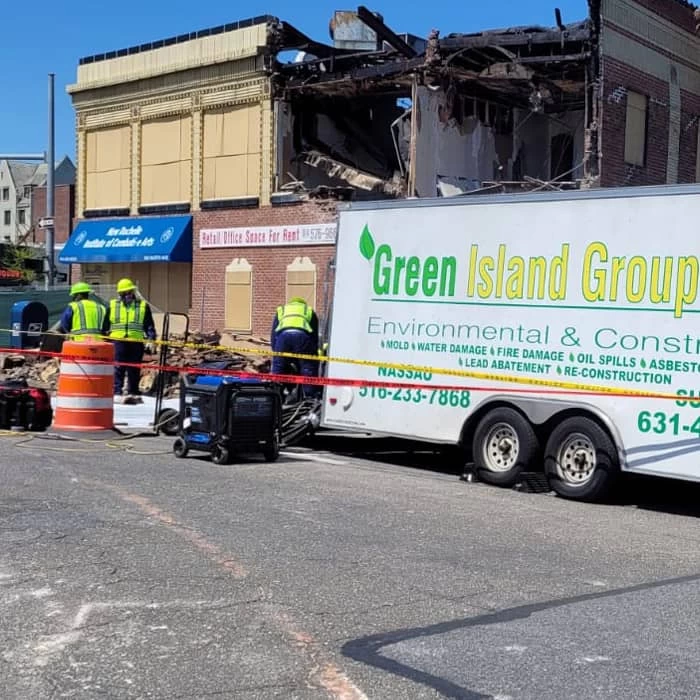
Fire damage restoration in North Babylon isn’t a single-scope job. It’s smoke and soot removal, water extraction from firefighting suppression, odor elimination, structural assessment, environmental hazard remediation, and full reconstruction all under one roof. We handle the complete range, which is especially important in a community where the homes themselves add complexity to every step.
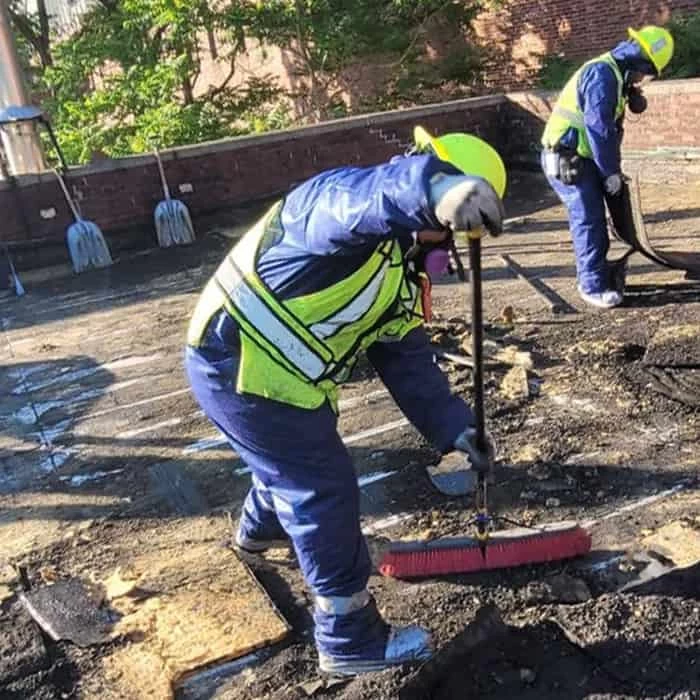
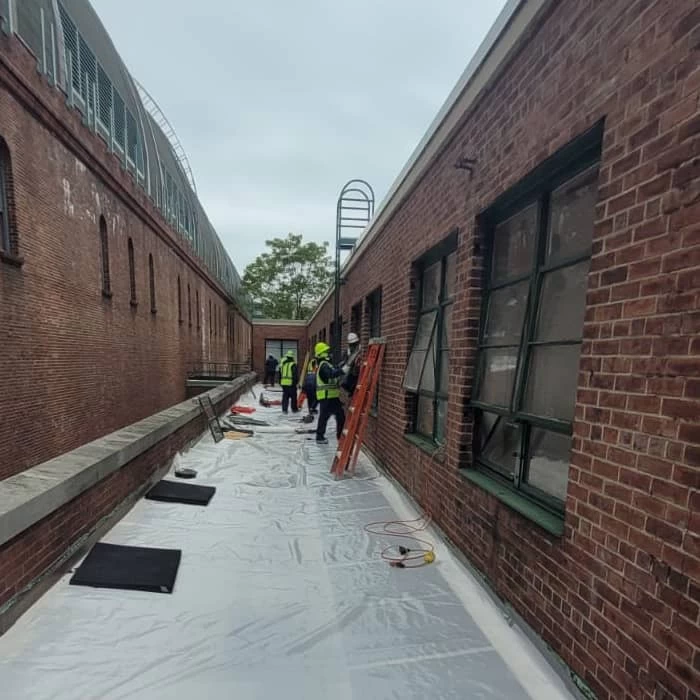
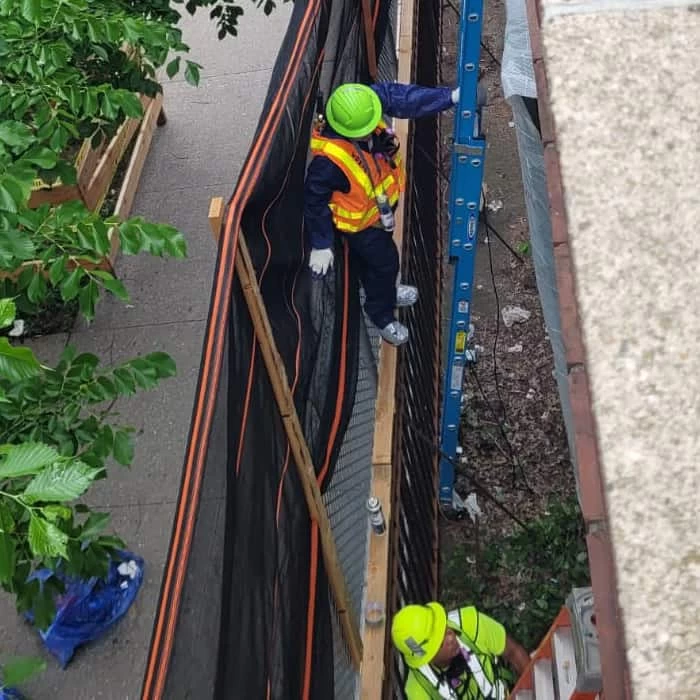
The environmental piece is where a lot of restoration companies fall short in this area. Homes built in the 1950s and 1960s which describes most of North Babylon commonly contain asbestos in floor tiles, ceiling tiles, and pipe insulation. When fire disturbs those materials, you need a contractor who is licensed to test, contain, and remove them legally. That’s not optional, and it’s not something you want to discover mid-project that your restoration company isn’t equipped to handle.
Beyond the environmental work, the service includes insurance claim support from start to finish. Most homeowners in North Babylon have never navigated a major property claim before. The process is confusing, adjusters don’t always advocate for full scope, and the difference between a properly documented claim and an underpaid one can be significant when your home is your family’s primary asset. We work alongside you through that process not just on the property, but on the paperwork and documentation that determines what your insurer actually covers.
Does a house fire in North Babylon likely mean asbestos exposure too?
It’s a real concern that most homeowners don’t think about until someone raises it and in North Babylon, it’s worth raising early. The majority of homes in this hamlet were built between the late 1940s and mid-1960s, which is exactly the window when asbestos-containing materials were standard in residential construction. Floor tiles, ceiling tiles, pipe insulation, joint compound, and textured coatings from that era frequently contain asbestos.
When a fire occurs, the heat, structural damage, and suppression water can all disturb those materials and release fibers into the air. That makes it a hazardous materials situation, not just a fire cleanup. In New York State, any contractor who disturbs or removes asbestos-containing materials must hold specific Department of Labor certification it’s not something a general restoration contractor can legally handle without that credential. Before any restoration work begins in a pre-1978 North Babylon home, an environmental assessment should be performed. We handle that in-house, so there’s no waiting on a separate environmental firm before the recovery process can move forward.
How quickly does smoke damage become permanent after a fire?
Faster than most people expect. Soot begins chemically bonding to surfaces walls, ceilings, trim, fixtures within the first 24 to 72 hours after a fire. The longer it sits, the harder it becomes to remove without damaging the underlying material. In some cases, surfaces that could have been cleaned with prompt action end up needing full replacement because the window closed.
In North Babylon’s older homes, this is especially relevant. The plaster walls, wood trim, and porous building materials common in mid-century construction absorb smoke more readily than modern drywall. Smoke also travels through HVAC systems and in homes with older, unlined ductwork, it can reach rooms that never saw any flame or direct heat. That’s why the timeline from fire to professional response matters so much. The goal isn’t just to clean what’s visible. It’s to stop secondary damage from turning a contained fire into a whole-house remediation.
Will my homeowners insurance cover fire damage restoration in North Babylon, NY?
Standard homeowners insurance policies in New York typically cover fire damage, including the cost of cleanup, smoke remediation, and structural repairs. But what the policy covers and what the insurance company’s adjuster initially approves aren’t always the same thing. Adjusters work for the insurer, and their first estimate doesn’t always capture the full scope of what a proper restoration actually requires especially in older homes where hidden damage, environmental hazards, and code-upgrade requirements add legitimate costs that aren’t always obvious on a first walkthrough.
For North Babylon homeowners specifically, the environmental remediation component asbestos testing and abatement if required is a legitimate, covered expense under most policies, but it needs to be properly documented and included in the claim. The same goes for any code-required upgrades to electrical or structural systems that come to light during restoration of a home built in the 1950s or 1960s. We work alongside you through the entire claims process, helping ensure the documentation supports the full scope of what the job actually requires.
How long does fire damage restoration take for a typical North Babylon home?
It depends on the scope, but a realistic range for a typical North Babylon single-family home is anywhere from a few weeks for a contained, single-room fire to several months for a more significant structural loss. The variables that affect timeline most are the extent of smoke migration, whether water damage from suppression is involved, and whether environmental hazards like asbestos require abatement before other work can begin.
In North Babylon, the environmental assessment phase adds time that homeowners sometimes don’t anticipate. If asbestos-containing materials are confirmed and require abatement, that work has to be completed and cleared before reconstruction begins it’s not something that can run parallel to other trades. Permit timelines through the Town of Babylon’s Building Division also factor in, particularly for structural or electrical work. The honest answer is that a rushed timeline often means corners get cut. A properly sequenced restoration assessment, environmental clearance, structural work, finishes takes the time it takes, and the result is a home that’s actually safe and code-compliant when it’s done.
What's the difference between fire cleanup and full fire damage restoration?
Fire cleanup typically refers to removing debris, wiping down surfaces, and addressing the most visible signs of damage. It’s the first layer of the job. Full fire damage restoration goes much further it includes structural assessment and repair, smoke and odor remediation throughout the entire structure (not just the affected room), water extraction and drying from suppression efforts, environmental hazard testing and abatement if required, and complete reconstruction of damaged areas back to livable, code-compliant condition.
For a homeowner in North Babylon, the distinction matters because a surface-level cleanup can leave serious problems behind. Smoke odor embedded in wall cavities doesn’t go away on its own. Water from fire hoses that soaked into a 1960s subfloor creates mold conditions within 24 to 48 hours if it isn’t properly extracted and dried. And if asbestos-containing materials were disturbed, a cleanup crew that doesn’t address them hasn’t actually made the home safe they’ve just made it look that way. Full restoration means the home is genuinely returned to safe, livable condition, not just presentable.
Can Green Island Group handle both the fire remediation and the rebuild in North Babylon?
Yes and for most North Babylon homeowners, that’s one of the most practical advantages of working with us. Managing a fire recovery with separate contractors for cleanup, environmental work, and reconstruction creates gaps: in communication, in timeline, in accountability. When one company handles the full scope, there’s no finger-pointing between vendors, no delays waiting for one phase to hand off to the next, and no homeowner stuck in the middle trying to coordinate it all while also dealing with an insurance claim and temporary displacement.
We carry the project from the initial emergency stabilization through final finishes drywall, paint, flooring, whatever the fire took. For families in North Babylon, where homes often represent a multi-generational investment and the stakes of getting it right are high, that continuity matters. You’re not re-explaining your situation to a new contractor every few weeks. The same team that assessed the damage is the team that finishes the job, and the standard we hold ourselves to is straightforward: the work isn’t done until you’re satisfied with it.