When a North Bellmore House Fire Stops Everything, We Start Moving
We respond within the hour, handle your insurance claim, and take your North Bellmore home from emergency board-up all the way through full reconstruction — no handoffs, no gaps.
I needed a professional consultation explanation of procedure for safe removal of Asbestos in my apartment complex. Without having an account yet, I was very impressed with the caring, knowledgeable and generous advice offered by Jessica, and will look forward to doing business in the future. Thank you so much! I feel much more informed about a sometimes scary endeavor. Peace. Nancy Silva Mineola, NY.
Mia Munoz
Used this company to clean up some water flood in my house. They were fast and easy to work with.very professional, Would recommend to anyone!
Nini Valle
Great company, had a flood and they responded quickly and efficiently. Billed my insurance company directly. I highly recommend this company!
joe colapietro, jr
I had pipe freeze in my basement right before a snow storm and they made to within an hour to help start the clean up process. They we by our side throughout the entire process and even helped with the insurance company. They did such a great job with the cleanup, repair, remidiation, I contracted them to perform the repairs and finishes in the basement. They came with enough manpower and material to get the job done. Leo and Jessica were nothing but a pleasure to deal with!!
Cristian Arredondo c
I had some water damage in my home and Green Island was able to take care of my issue quickly and effectively. I am very pleased with the work they did. They responded quickly and were very professional.
Michael M
Outstanding service! From the office to the field crew everyone was friendly, helpful and responsive. I highly recommend Green Island Group.
The hour after a fire is when the most expensive mistakes get made. Soot begins bonding permanently to walls and ceilings within hours. The water the North Bellmore Fire Department used to suppress the fire — sometimes thousands of gallons in a multi-alarm response — soaks into subfloors, wall cavities, and insulation. If that water isn’t extracted and dried within 24 to 48 hours, you’re not just dealing with fire damage anymore. You’re dealing with mold.
Most homes in North Bellmore were built in the 1950s and 1960s. That means your home almost certainly contains asbestos-containing materials — pipe insulation, floor tile, joint compound — that a fire can disturb without anyone realizing it. A restoration company without a NYS DOL Asbestos License can’t legally handle that. One that doesn’t know to look for it will leave you with a liability you didn’t know you had.
When the scope is handled correctly from the start, the outcome looks completely different. Your home gets dried before mold takes hold. Hazardous materials get identified and removed by licensed professionals. Smoke odor gets eliminated at the source — not masked. And you move back into a home that’s been fully restored, not just cleaned up enough to close the claim.
Licensed Fire Restoration Contractor, Nassau County NY
Every License That North Bellmore's 1950s Housing Stock Demands
We’re a Long Island-based restoration company headquartered in Bohemia, NY, with General Contractor licenses in Nassau County, Suffolk County, and New York City. That combination matters here. It means we can legally perform every phase of your recovery — remediation, abatement, structural repair, full reconstruction — without subcontracting any of it out to someone you’ve never met.
We hold IICRC certification for Fire and Smoke Restoration, a NYS DOL Asbestos License, a NYS DOL Mold License, USEPA Lead/RRP certification, and NADCA certification for HVAC cleaning. For a community like North Bellmore — where the median home was built in 1958 and oil heat is the norm — those aren’t resume items. They’re the difference between a restoration that’s done right and one that creates a second problem.
With more than 5,000 completed restoration projects across New York State, we’ve worked through every scenario Nassau County’s mid-century housing stock can produce. We bill insurance directly, document everything to insurance-standard specifications, and stay on the job until your home is back to where it was.
Fire Damage Restoration Process, North Bellmore NY
From the Scene to Move-In Day — Here's What We Handle
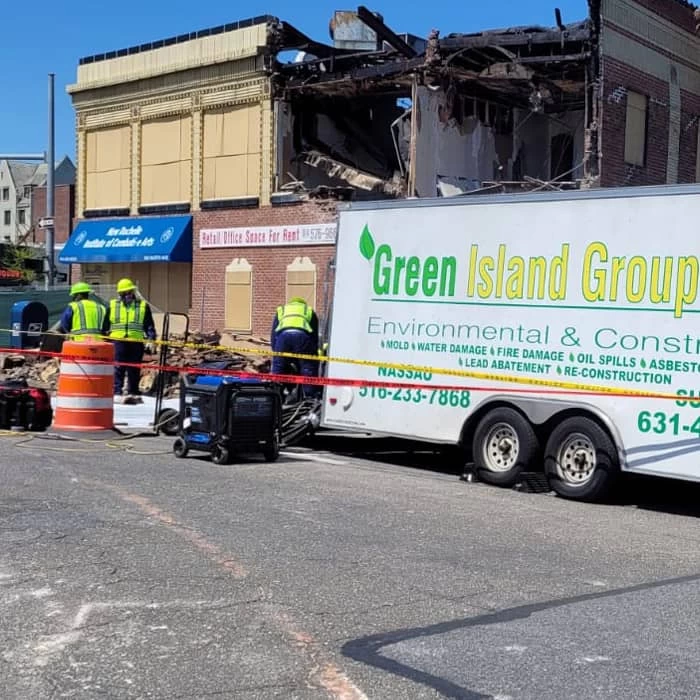
The first call triggers an emergency response. We arrive within the hour, assess the full scope of damage — including areas beyond the visible burn zone — and secure the property. That means boarding up openings, tarping the roof if needed, and making sure the structure is safe before anything else happens. In North Bellmore, where a working fire can bring eight mutual aid departments to the scene and leave behind significant water intrusion, that initial assessment often uncovers secondary damage that a less thorough crew would miss entirely.
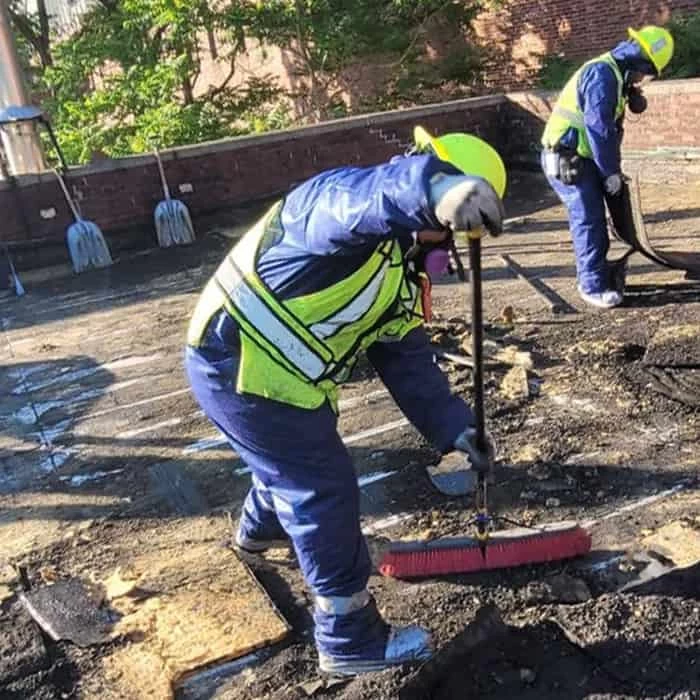
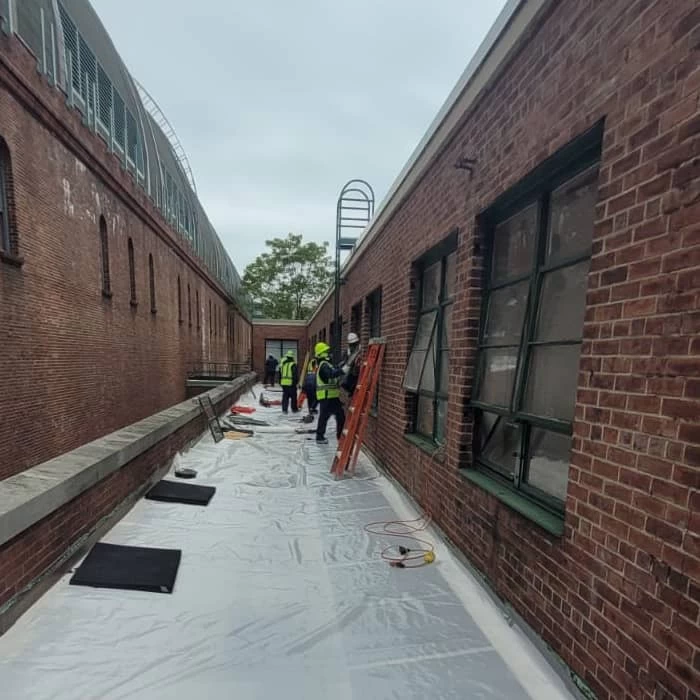
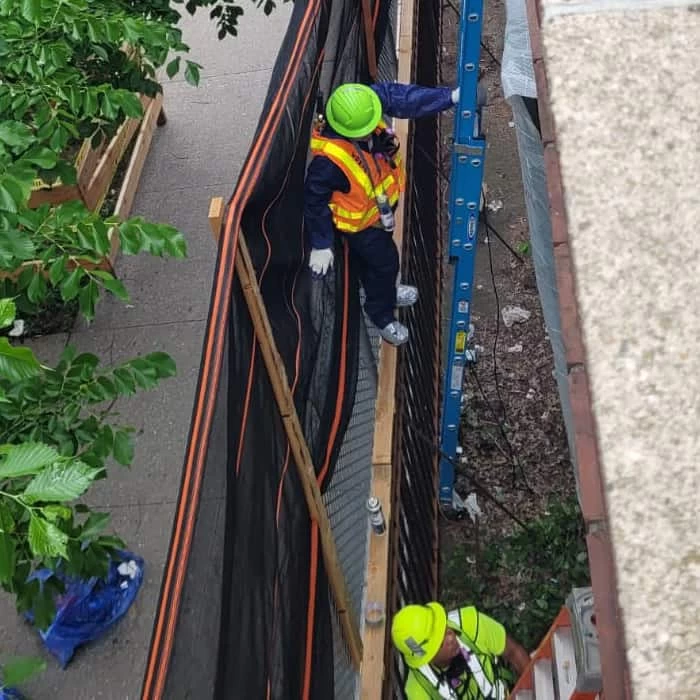
From there, water extraction and structural drying begin immediately. Industrial drying equipment runs until moisture readings confirm the structure is dry — not until it looks dry. Simultaneously, we identify any hazardous materials that the fire may have disturbed. In a pre-1980 home, that typically means testing for asbestos in floor tile, pipe insulation, and wall materials before any demolition work begins. All abatement is performed under NYS DOL licensing and disposed of in compliance with Nassau County Department of Health regulations.
Once the structure is clean, dry, and cleared, reconstruction begins. Our Nassau County General Contractor license covers the full rebuild — framing, drywall, flooring, cabinetry, whatever your home needs to get back to pre-loss condition. Permits are pulled through the Town of Hempstead’s Building Department. You don’t manage that process. We do.
Smoke and Fire Restoration Services, North Bellmore NY
The Scope That 1950s North Bellmore Homes Actually Require
Fire restoration in a 65-year-old North Bellmore home is not a one-service job. It’s a sequence of interconnected problems that have to be addressed in the right order by the right credentials. We handle all of it.
Smoke and soot removal goes well beyond the rooms where visible damage occurred. Smoke particles travel through HVAC ductwork within minutes of a fire, settling into bedrooms, closets, and personal belongings throughout the house. We use air scrubbers, thermal fogging, ozone treatment, and NADCA-certified duct cleaning to address contamination across the entire structure — not just the burn area. For families with children, which describes more than a third of North Bellmore households, restoring safe indoor air quality isn’t optional.
Oil burner puff-back incidents are their own category, and they’re common on Long Island’s South Shore. When an aging furnace backfires, it coats walls, ceilings, and ductwork in oily, petroleum-based soot that smears and embeds deeper if cleaned incorrectly. The approach that works is dry-chemistry sponging before any wet cleaning — and that’s exactly how our technicians are trained to handle it. If your home on Newbridge Road or anywhere in the 11710 zip code has experienced a puff-back, this is not a job for a general cleaning service.
What should I do immediately after a house fire in North Bellmore?
The most important thing you can do in the first hour is call a licensed restoration company — not a general contractor, not a cleaning service. Time is working against you from the moment the fire is out. Acidic soot begins permanently bonding to surfaces within hours, and the water used by the North Bellmore Fire Department and any mutual aid departments starts creating mold conditions almost immediately.
Don’t re-enter the property until it’s been assessed for structural safety and air quality. Don’t try to clean soot yourself — the wrong technique embeds it deeper into drywall and upholstery. And don’t throw anything away before the insurance adjuster has documented it. Call your insurance company to report the claim, then call us. We’ll handle the rest, including direct communication with your insurer throughout the process.
Does homeowners insurance cover fire damage restoration in North Bellmore, NY?
In most cases, yes — standard homeowners insurance covers fire damage restoration, including smoke damage, water damage from firefighting suppression, and the cost of temporary housing while your home is being restored. What varies is how thoroughly your insurer documents and pays the full scope.
This is where working with an IICRC-certified contractor matters. Insurance carriers recognize IICRC documentation, which means faster approvals and fewer disputes when the adjuster reviews the claim. We bill insurance directly and document every phase of the restoration to insurance-standard specifications. For a North Bellmore home where the full restoration scope might include asbestos abatement, mold remediation, HVAC cleaning, and structural reconstruction — all of which are legitimate covered expenses — having a contractor who knows how to present that documentation to your insurer is a real financial advantage.
Is there asbestos in my North Bellmore home, and does that affect fire restoration?
If your North Bellmore home was built before 1980 — and the median construction year here is 1958 — there’s a strong likelihood that asbestos-containing materials are present somewhere in the structure. The most common locations are pipe insulation on oil-fired heating systems, 9-inch vinyl floor tile in kitchens, bathrooms, and basements, and joint compound on drywall seams. Nine-inch floor tile from this era can contain asbestos at levels between 10 and 30 percent by weight.
When a fire burns through a home with these materials, it almost certainly disturbs them. New York State law requires a NYS DOL Asbestos License to perform any abatement work, and Nassau County has its own disposal regulations enforced through the Nassau County Department of Health. A restoration contractor without this license cannot legally handle asbestos — and one that disturbs it without proper containment creates a health liability and a legal exposure for you as the homeowner. We hold the NYS DOL Asbestos License and handle all abatement in full compliance with state and county requirements.
How long does fire damage restoration take for a home in North Bellmore?
The honest answer is that it depends on the scope — and in North Bellmore’s older housing stock, the scope is often larger than it first appears. A contained kitchen fire with no structural damage might take two to three weeks from initial cleanup through final repairs. A more significant fire that requires asbestos abatement, mold remediation from firefighting water, structural reconstruction, and full interior restoration can take two to four months.
The biggest variable is what the assessment uncovers in the first 24 to 48 hours. Hidden damage in wall cavities, contamination in HVAC ductwork, and hazardous materials that need to be tested and abated before any demolition can begin — these are common in 1950s and 1960s construction and they affect the timeline. We walk you through a realistic scope estimate upfront so you’re not getting surprised three weeks into the project. We also coordinate directly with your insurance carrier throughout, which prevents the claim approval delays that can stall a job unnecessarily.
What is a puff-back, and do I need professional cleanup in North Bellmore?
A puff-back happens when an oil burner backfires — instead of igniting cleanly, the furnace releases a pressurized burst of unburned oil and combustion gases that shoots oily, black soot throughout your home via the heating system. It can happen in seconds and coat walls, ceilings, furniture, clothing, and HVAC ductwork in a fine, petroleum-based film that looks and smells like a fire even though there was no open flame.
On Long Island’s South Shore, where oil heat is standard and many North Bellmore homes are running furnaces that are decades old, puff-backs are a documented and recurring problem — particularly during the heavy winter heating months when systems are running at maximum load. The reason professional cleanup is necessary is the nature of the soot itself. Oily soot smears and embeds deeper into porous surfaces if you try to wipe it. The correct approach is dry-chemistry sponging first, then wet cleaning — a specific technique that our technicians are trained to use. A general cleaning service that doesn’t know this will make the contamination worse.
Can smoke damage spread beyond the rooms that burned in my North Bellmore home?
Yes — and in most house fires, it does. Smoke particles are small enough to travel through wall gaps, ceiling penetrations, and HVAC ductwork within minutes of a fire starting. By the time the North Bellmore Fire Department has the fire under control, smoke contamination may have reached every room in the house, including bedrooms and closets far from the visible burn area. You may not notice it immediately, but over the following days the odor becomes apparent and the health effects of residual smoke particulates become a real concern — especially for children, which is relevant in a community where more than a third of households have kids under 18.
Proper smoke damage restoration addresses the entire structure, not just the burned rooms. That means air scrubbers running throughout the home, thermal fogging or ozone treatment to neutralize odor at the molecular level, and NADCA-certified cleaning of your HVAC ductwork to prevent the system from recirculating contaminated air every time the heat or air conditioning runs. Skipping the duct cleaning is one of the most common mistakes homeowners make after a fire — and it’s why the smoke smell comes back weeks later even after the visible damage has been repaired.