When the Smoke Clears, Your Home Still Needs Saving
Fire damage doesn’t stop when the flames do. We respond fast to North Great River homes handling everything from smoke and soot to full reconstruction, so you’re not left managing a dozen contractors during the worst week of your life.
I needed a professional consultation explanation of procedure for safe removal of Asbestos in my apartment complex. Without having an account yet, I was very impressed with the caring, knowledgeable and generous advice offered by Jessica, and will look forward to doing business in the future. Thank you so much! I feel much more informed about a sometimes scary endeavor. Peace. Nancy Silva Mineola, NY.
Mia Munoz
Used this company to clean up some water flood in my house. They were fast and easy to work with.very professional, Would recommend to anyone!
Nini Valle
Great company, had a flood and they responded quickly and efficiently. Billed my insurance company directly. I highly recommend this company!
joe colapietro, jr
I had pipe freeze in my basement right before a snow storm and they made to within an hour to help start the clean up process. They we by our side throughout the entire process and even helped with the insurance company. They did such a great job with the cleanup, repair, remidiation, I contracted them to perform the repairs and finishes in the basement. They came with enough manpower and material to get the job done. Leo and Jessica were nothing but a pleasure to deal with!!
Cristian Arredondo c
I had some water damage in my home and Green Island was able to take care of my issue quickly and effectively. I am very pleased with the work they did. They responded quickly and were very professional.
Michael M
Outstanding service! From the office to the field crew everyone was friendly, helpful and responsive. I highly recommend Green Island Group.
What Getting Your North Great River Home Back Actually Looks Like
Most people don’t realize how far fire damage travels. The room that burned is obvious but smoke moves through walls, gets pulled into HVAC ductwork, and settles into every porous surface in the house. In North Great River, where a large portion of the housing stock was built in the 1950s and 60s, that means older duct systems, older insulation, and materials that absorb odor and soot faster than newer construction. If the remediation doesn’t go deep, you’ll smell it for years.
Then there’s the water. Firefighting suppression delivers an enormous volume of water in a short amount of time, and that water doesn’t stay where the fire was. It follows gravity into subfloors, behind walls, under cabinets. Left unaddressed, it creates mold within 24 to 48 hours. For homes in North Great River that back up against the Connetquot River State Park Preserve, where natural moisture levels are already elevated, that window closes even faster.
What a complete restoration actually looks like is this: no smoke odor, no hidden moisture, no environmental hazards left behind, and a home that’s structurally sound and fully rebuilt to where it was or better. That’s the standard. Not “cleaned up enough.” Fully restored.
We’re a Long Island-based, independently owned restoration company not a franchise, not a national chain dispatching rotating crews. When you call, you’re reaching the same people who will show up, manage the job, and see it through to the end. Customers name Leo and Jessica specifically across multiple reviews not because it’s scripted, but because those are the people actually doing the work and answering the phone.
Serving North Great River and communities across Suffolk County, including the Town of Islip and the South Shore, we understand what fire damage looks like in this area’s housing stock. The older homes here many built during Long Island’s post-war expansion often involve more than just smoke and char. They involve asbestos-containing materials, lead paint layers, and aging systems that require licensed environmental handling before reconstruction can even begin. That’s work most cleanup companies can’t legally perform. We can.
The satisfaction guarantee is simple: the job isn’t done until you’re satisfied. That’s not a tagline it’s how we operate.
From Emergency Call to Finished Home Here's the Sequence
It starts with the call. Our documented response time is under an hour because the first hours after a fire determine a significant portion of the final restoration cost. Soot begins permanently bonding to surfaces within 24 to 72 hours. The faster the response, the less damage becomes permanent.
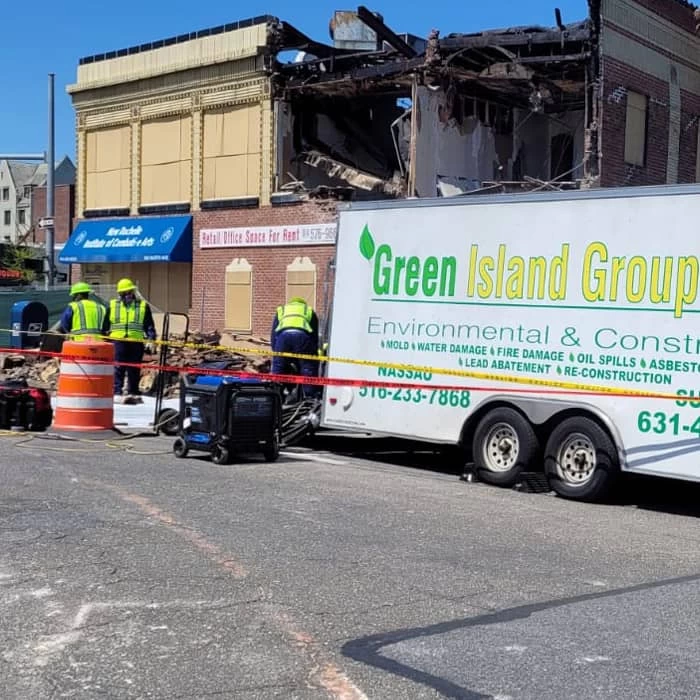
Once on-site, the priority is stabilization. That means boarding up compromised openings, extracting standing water from firefighting suppression, and assessing the full scope including areas that look fine but aren’t. Smoke travels, and a proper scope accounts for where it went, not just where the fire was. In North Great River homes built before 1980, that assessment also includes identifying asbestos-containing materials that may have been disturbed. Any structural work that touches those materials requires NYSDOL-certified abatement before anything else moves forward and we hold that certification.
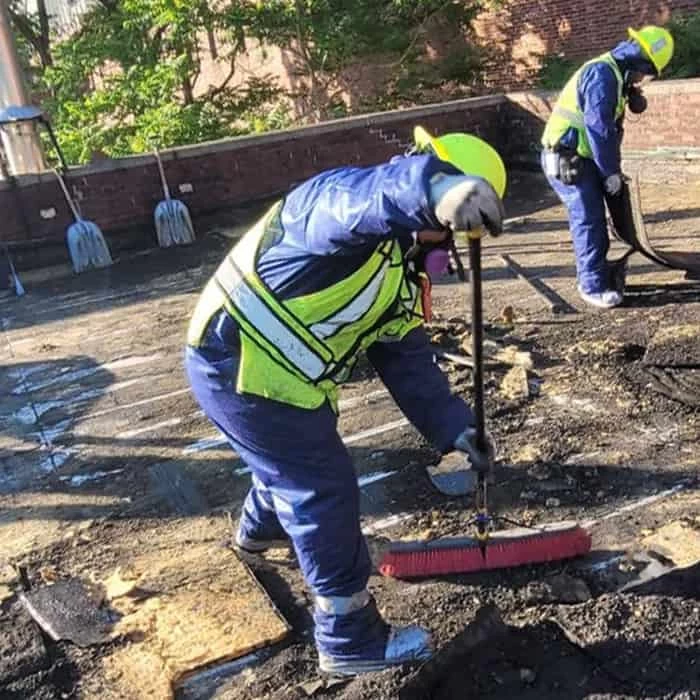
From there, the remediation phase addresses smoke, soot, odor, and moisture throughout the affected areas. Once the environment is clean and verified, reconstruction begins framing, drywall, electrical, plumbing, finishes. We also handle the Town of Islip permit process, coordinating with the Building Department so you’re not chasing paperwork while trying to recover. When the last finish is done and you’re satisfied, that’s when the job is closed.
Fire Damage Restoration Services, North Great River
Everything Covered, Nothing Handed Off to Someone Else
Fire restoration in North Great River isn’t a single service it’s a sequence of specialized work that has to happen in the right order, by people licensed to do each phase. We cover the full scope: emergency board-up and stabilization, smoke and soot remediation, water extraction and drying, odor elimination, air quality restoration, asbestos abatement for pre-1980 homes, mold prevention and remediation, and complete structural reconstruction through final finishes.
The insurance piece matters as much as the physical work. Most North Great River homeowners haven’t filed a major claim before, and insurance adjusters work for the carrier not for you. We assist with damage documentation, work within Xactimate-aligned estimating, and coordinate directly with adjusters to make sure the scope of work is properly funded. With home values in this area averaging well above $600,000, an underpaid claim isn’t a minor inconvenience it’s a significant financial gap that comes out of your pocket.
For properties near the Connetquot River State Park Preserve especially those with outbuildings, horse barns, or larger lots the scope often extends beyond the main structure. We assess and address the full property, not just the interior rooms. Every job is handled by the same local team, start to finish, with no handoffs and no subcontracted strangers walking through your home.
Does fire damage in North Great River homes usually involve asbestos concerns?
It depends on when your home was built but in North Great River, where most of the residential development happened between the 1950s and 1970s, the honest answer is: frequently, yes. Asbestos was commonly used in insulation, floor tiles, ceiling tiles, pipe wrapping, and roofing materials throughout that era. When a fire damages these structures, the heat and physical disruption can release asbestos fibers that would otherwise stay contained.
This matters because any contractor performing structural repairs in a home with asbestos-containing materials must be certified by the New York State Department of Labor to perform abatement legally. A general contractor or fire-cleanup company that isn’t certified cannot legally touch those materials which means your restoration either stalls or gets done improperly. We hold the required environmental remediation certifications, so the abatement, remediation, and reconstruction can happen under one roof without the project grinding to a halt while you search for a separate licensed abatement contractor.
How quickly does smoke damage become permanent after a house fire?
Faster than most people expect. Soot begins chemically bonding to walls, ceilings, and surfaces within 24 to 72 hours of a fire. Once that bond sets, the damage is significantly harder and more expensive to reverse. Smoke odor embedded in drywall, wood framing, and insulation can persist for years if the remediation doesn’t address the material itself, not just the surface.
Beyond the visible soot, smoke travels through HVAC systems and wall cavities, reaching rooms that had no direct fire exposure. In older North Great River homes with original duct systems, this spread can be extensive. The practical implication is that response time isn’t just a convenience it directly affects how much of your home can be saved versus how much needs to be replaced. Our documented sub-hour response time exists specifically because those early hours are when the most damage can be prevented.
Will my homeowner's insurance cover the full cost of fire damage restoration in Suffolk County?
Your policy likely covers fire damage restoration, but “covered” and “fully funded” aren’t always the same thing. Insurance adjusters work on behalf of the carrier, and their initial scope of work doesn’t always capture the full extent of the damage especially the damage that isn’t immediately visible, like smoke penetration in wall cavities, moisture from suppression water in subfloors, or the environmental remediation required in older homes.
In Suffolk County, where home values have risen significantly over the past decade, the gap between what an adjuster initially approves and what a proper restoration actually costs can be substantial. We work alongside homeowners during the claims process helping document damage thoroughly, aligning estimates with industry-standard Xactimate pricing, and communicating directly with adjusters to make sure nothing falls through the cracks. The goal is to make sure your claim reflects the actual scope of the loss, so you’re not covering the difference out of pocket on a home worth $600,000 or more.
Can I stay in my home during fire damage restoration in North Great River?
It depends on which areas were affected and what the remediation scope involves. If the fire was contained to one area a kitchen, a garage and the rest of the home has been cleared for air quality, it may be possible to remain in unaffected parts of the house during portions of the restoration. But if the remediation involves asbestos abatement, significant structural work, or widespread smoke and air quality issues, temporary relocation is typically necessary for your safety.
Your homeowner’s insurance policy likely includes Additional Living Expenses (ALE) coverage, which pays for temporary housing while your home is being restored. This is worth confirming with your adjuster early in the process. We can help you understand what the remediation scope means for your day-to-day living situation and coordinate the project timeline to minimize displacement as much as possible. The goal is always to get you back in your home as quickly as the work can be done correctly not just quickly.
How long does fire damage restoration typically take for a home in the Town of Islip?
The honest answer is that it varies significantly based on the scope of damage, and anyone who gives you a firm timeline before assessing the property is guessing. A contained kitchen fire with limited smoke spread might be fully restored in three to six weeks. A fire with significant structural damage, widespread smoke penetration, water damage from suppression, and environmental remediation requirements which is common in North Great River’s older housing stock can take several months from emergency response to final finishes.
One factor that affects timelines specifically in the Town of Islip is the permitting process. Any structural repairs require a building permit from the Town of Islip Building Department, and electrical and plumbing work require separate permits and inspections. If asbestos abatement is involved, there’s a required notification process with the New York State Department of Labor before work can begin. We manage the permit applications and inspection scheduling as part of the project, which keeps things moving rather than stalling while you navigate town bureaucracy during an already difficult time.
What's the difference between fire cleanup and actual fire damage restoration?
Fire cleanup typically means removing debris, wiping surfaces, and making the space look presentable. Fire damage restoration means returning the structure to its pre-loss condition or better addressing every layer of damage, including what’s inside the walls, under the floors, in the ductwork, and in the air. They’re not the same thing, and in a community like North Great River where homes carry significant value and have been in families for years, the difference matters enormously.
A cleanup company can remove the visible char and wipe down the soot. What they can’t do is remediate asbestos in a 1960s home, eliminate smoke odor that’s embedded in wood framing, address mold that started growing in a wet subfloor three days after the fire, or rebuild the structure to code with the proper Town of Islip permits in place. Restoration is the complete process emergency response, environmental remediation, structural rebuild, finishes, and insurance coordination handled by one licensed team from start to finish. That’s what we do, and it’s why the distinction between a cleanup crew and a restoration company is worth understanding before you make a call.