When Your North Hempstead Home Needs More Than a Cleanup Crew
One licensed company handles everything — smoke, soot, water, asbestos, mold, and full reconstruction — so you’re not managing three contractors while displaced from your home.
I needed a professional consultation explanation of procedure for safe removal of Asbestos in my apartment complex. Without having an account yet, I was very impressed with the caring, knowledgeable and generous advice offered by Jessica, and will look forward to doing business in the future. Thank you so much! I feel much more informed about a sometimes scary endeavor. Peace. Nancy Silva Mineola, NY.
Mia Munoz
Used this company to clean up some water flood in my house. They were fast and easy to work with.very professional, Would recommend to anyone!
Nini Valle
Great company, had a flood and they responded quickly and efficiently. Billed my insurance company directly. I highly recommend this company!
joe colapietro, jr
I had pipe freeze in my basement right before a snow storm and they made to within an hour to help start the clean up process. They we by our side throughout the entire process and even helped with the insurance company. They did such a great job with the cleanup, repair, remidiation, I contracted them to perform the repairs and finishes in the basement. They came with enough manpower and material to get the job done. Leo and Jessica were nothing but a pleasure to deal with!!
Cristian Arredondo c
I had some water damage in my home and Green Island was able to take care of my issue quickly and effectively. I am very pleased with the work they did. They responded quickly and were very professional.
Michael M
Outstanding service! From the office to the field crew everyone was friendly, helpful and responsive. I highly recommend Green Island Group.
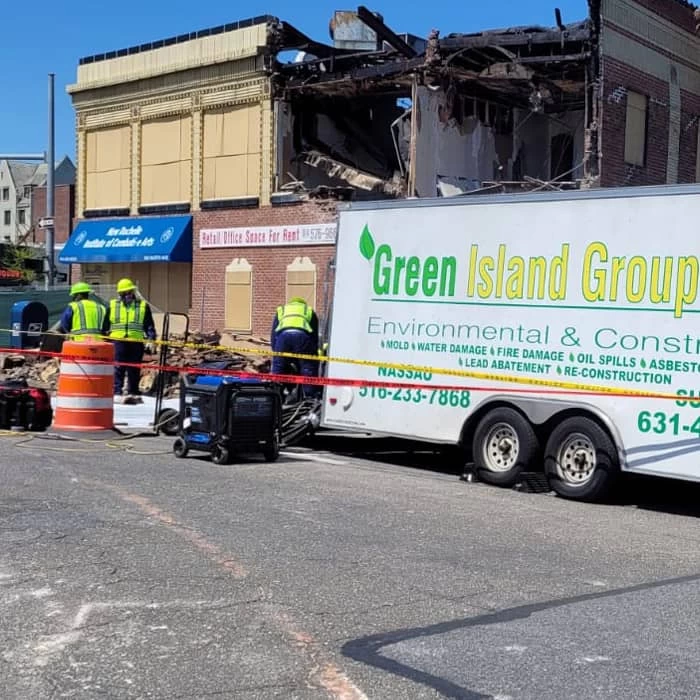
A fire doesn’t just burn. It soaks your floors with suppression water, pushes soot into your HVAC system, and — in a home built before 1980 — can disturb asbestos in floor tiles or pipe insulation that nobody knew was there. In North Hempstead, where a large portion of the housing stock in communities like Herricks, New Hyde Park, and Albertson dates back to the post-war building boom, that’s a real possibility that shows up on our job sites regularly.
When fire damage restoration is handled completely — not just surface-cleaned — you get your home back in the condition it deserves. Soot is fully extracted before it bonds permanently to your walls and finishes. Water from the fire department’s hoses is dried out before mold takes hold, which can start within 24 to 48 hours. Smoke odor is eliminated at the source, including inside your ductwork, not just masked at the surface level.
For homeowners across North Hempstead’s villages — whether you’re in a Great Neck colonial, a Port Washington waterfront home, or a split-level in Williston Park — the difference between a complete restoration and a partial one shows up months later. It shows up in a smell that keeps coming back. In a mold problem that surfaces behind drywall. In an insurance claim that gets disputed because the documentation wasn’t thorough enough. Getting it right the first time isn’t a luxury. At this property value, it’s the only approach that makes financial sense.
We are a locally owned and operated restoration company based on Long Island, serving North Hempstead and Nassau County communities — including every corner of North Hempstead, from Kings Point to Mineola. With over 5,000 completed restoration projects across New York State, we hold a Nassau County General Contractor license, IICRC certification for fire, smoke, and water damage restoration, NYS DOL licenses for both asbestos abatement and mold remediation, and USEPA Lead/RRP certification.
That combination matters here. North Hempstead’s 30 incorporated villages each carry their own zoning authority, layered on top of Nassau County and New York State requirements. A contractor who doesn’t know the difference between pulling a permit in Sands Point versus navigating Nassau County’s general process can create costly delays for a family already displaced. We’ve worked in this regulatory environment long enough to know how to move efficiently through it.
We also bill insurance directly, respond on-site within one hour, and operate 24 hours a day, every day of the year. When something goes wrong at 2 a.m. in Manhasset, someone answers.
From the Night of the Fire to the Day You Move Back In
The first call triggers an emergency response. A technician arrives on-site within one hour to assess the damage, secure the property — board-up, tarping, whatever the structure needs — and begin the documentation process that your insurance claim depends on. Nothing gets skipped in that first visit because what gets documented on night one is what drives the claim through the adjuster’s review.
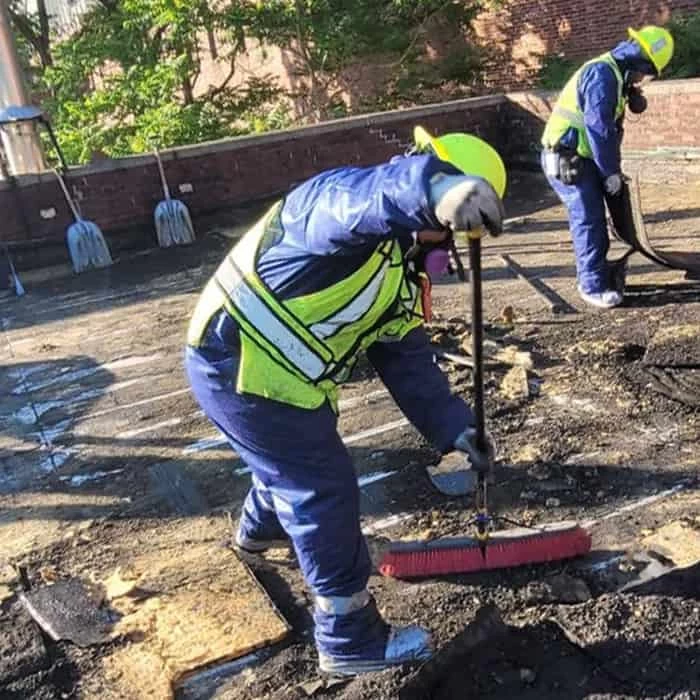
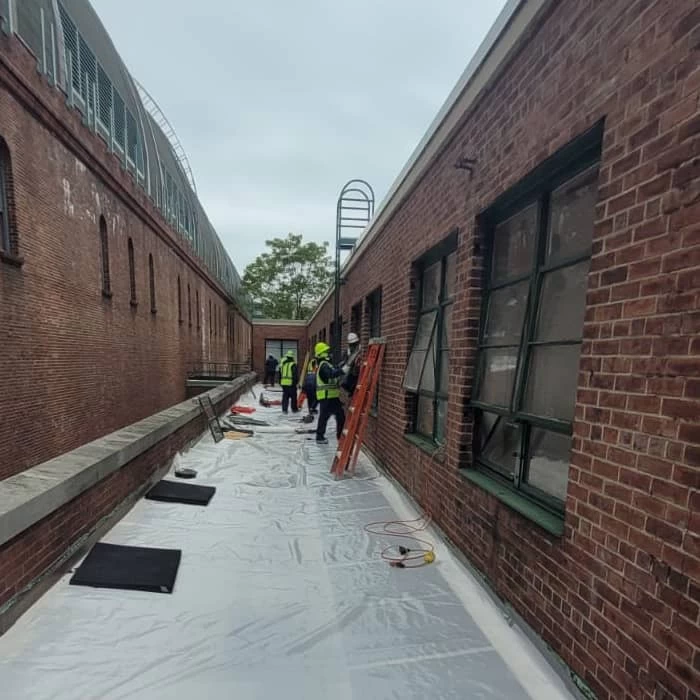
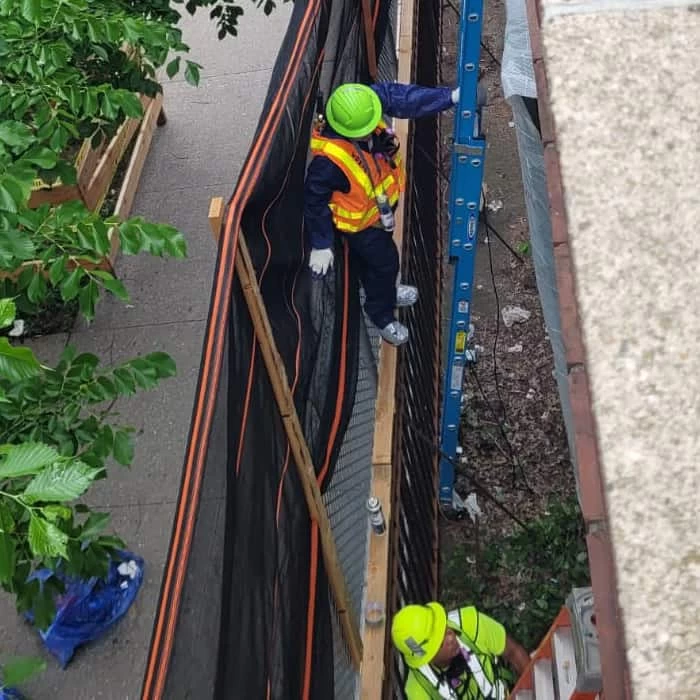
From there, the remediation phase begins. Water from fire suppression gets extracted and dried using industrial equipment before mold has a chance to establish. Soot and smoke residue are removed from surfaces, contents, and HVAC ductwork using IICRC-certified methods — not general cleaning products that push residue around. If the assessment identifies asbestos or lead-containing materials disturbed by the fire, our NYS DOL-licensed team handles that abatement legally and completely, without the homeowner needing to find a separate licensed contractor. In North Hempstead’s older housing stock, this step comes up more often than most people expect.
Once remediation is complete, reconstruction begins under our Nassau County General Contractor license. Permits are pulled, inspections are scheduled, and the rebuild moves forward — in compliance with the specific requirements of your village, whether that’s Roslyn, East Hills, or anywhere else within the town’s 30 incorporated communities. The goal is a finished home, not a handed-off job site.
Fire damage restoration with us covers the complete arc of recovery. Emergency response and property securing come first. Then comes water extraction and structural drying, smoke and soot removal, odor elimination, NADCA-certified HVAC duct cleaning, asbestos and lead abatement where required, mold remediation, structural cleaning, and full reconstruction. Every phase is handled in-house, under one set of licenses, with one point of contact throughout.
The HVAC piece is worth calling out specifically. In North Hempstead homes — particularly the larger colonials and multi-story properties common in Great Neck, Manhasset, and Port Washington — smoke travels through ductwork and deposits throughout the entire system. Homeowners who skip this step often discover the problem weeks later when the smell returns every time the heat or air conditioning runs. NADCA-certified duct cleaning eliminates that problem at the source.
Oil burner puff-backs are also a high-frequency service call across Nassau County, especially in the colder months. If your furnace misfired and pushed oily soot through your home without an actual fire, the cleanup process is essentially the same — and most homeowner’s policies cover it. We handle puff-back cleanup with the same IICRC-certified process used for fire restoration, and bill your insurance directly so you’re not fronting the cost out of pocket while waiting for reimbursement.
Does fire damage restoration in North Hempstead require permits or village approvals?
Yes, and this is one of the more complicated aspects of restoration work in North Hempstead specifically. The town contains 30 incorporated villages, each with its own zoning authority — meaning permit requirements in Kings Point are not the same as those in Williston Park or Flower Hill. Reconstruction work must comply with the specific building regulations of the village where the property sits, in addition to Nassau County and New York State codes.
Town of North Hempstead municipal code also imposes real deadlines on fire-damaged properties. If demolition is required, the owner must secure a demolition permit within 60 days of the fire, and the site must be cleared within 30 days of permit issuance. As of March 2026, the town also transitioned all new permits and licensing applications to a new digital platform called OpenGov — a system that contractors unfamiliar with the process can stumble on. Working with a Nassau County-licensed contractor who operates regularly in this environment eliminates that friction and keeps your timeline moving.
How quickly does smoke and soot damage become permanent after a house fire?
Faster than most people realize. Acidic soot can begin bonding permanently to surfaces within hours of a fire. Porous materials — stone countertops, hardwood floors, grout, unfinished wood — are especially vulnerable. Metal fixtures can start to corrode. Glass can etch. The longer soot sits, the more it locks into the material, and the harder it becomes to remove without causing additional damage to the surface itself.
This is why the one-hour response window matters. It’s not a marketing number — it reflects the reality that every hour of delay increases the total scope of the restoration. In a North Hempstead home where custom cabinetry, designer finishes, or high-end stone surfaces are involved, the cost difference between acting immediately and waiting even 12 hours can be significant. We stage equipment and personnel to serve North Hempstead and surrounding Nassau County communities around the clock, specifically because this window is real and the consequences of missing it are measurable.
My older North Hempstead home might have asbestos — does that affect the restoration process?
It does, and it’s important to know this upfront. Homes built before 1980 — which describes a large share of the housing stock in North Hempstead communities like Herricks, New Hyde Park, North New Hyde Park, Searingtown, and Albertson — commonly contain asbestos in floor tiles, pipe insulation, ceiling tiles, and joint compound. Homes built before 1978 may also contain lead paint. When fire damages these materials, New York State law requires a licensed asbestos contractor — credentialed by the NYS Department of Labor — to handle any abatement. An unlicensed contractor cannot legally touch it.
We hold the NYS DOL Asbestos license, the NYS DOL Mold Remediation license, and USEPA Lead/RRP certification. That means if the assessment turns up any of these materials, the same company that responded to your fire handles the abatement legally and completely — without you having to locate a separate licensed hazmat contractor while your family is already displaced. It’s a detail that most homeowners don’t think about until they’re in the middle of it, and it’s one of the clearest reasons to verify credentials before you hire anyone.
Will my homeowner's insurance cover fire damage restoration, and how does the claim process work?
Standard homeowner’s insurance policies in New York cover fire damage restoration, including smoke and soot cleanup, water damage from fire suppression, and structural repairs. The coverage is generally broad — but the claim outcome depends heavily on how well the damage is documented and communicated to the adjuster. High-value properties in North Hempstead, where median home values approach $944,000, tend to generate larger claims that receive closer scrutiny from insurers.
We bill insurance companies directly and handle the documentation process with the thoroughness that insurance-standard claims require. That means detailed photo and written records of every phase, communication in the language adjusters recognize, and a process that’s designed to maximize what your policy actually covers — not just what’s easiest to document. You won’t be submitting paperwork and waiting for reimbursement. We work directly with your insurer from the start, which removes one of the most stressful parts of the recovery process at a time when you have more than enough to manage.
What is an oil burner puff-back, and is cleanup covered by insurance in Nassau County?
A puff-back happens when an oil burner furnace misfires and expels unburned fuel and soot back through the heating system and into your home. Long Island has one of the highest concentrations of oil-heated homes in the country, and Nassau County — including the older housing stock throughout North Hempstead — is no exception. The soot produced by a puff-back is oily and adhesive, which makes it far more difficult to remove than dry fire soot. It smears on contact, embeds in porous surfaces, and carries a persistent odor that regular cleaning products cannot eliminate.
Most standard homeowner’s insurance policies in New York cover puff-back damage, which means the cleanup process — and it is a full remediation process, not a wipe-down — should be covered under your existing policy. We handle puff-back cleanup using the same IICRC-certified methods used for fire and smoke restoration, including HVAC duct cleaning to address the soot deposited inside the system itself. We bill your insurer directly, so you’re not paying out of pocket and waiting for reimbursement while your home smells like a furnace fire.
How long does fire damage restoration typically take for a home in North Hempstead?
The honest answer is that it depends on the scope — and in North Hempstead, the scope can vary significantly based on where your property sits and what’s in it. A contained kitchen fire in a New Hyde Park ranch might be fully remediated and reconstructed in two to four weeks. A more extensive fire in a Great Neck colonial with custom finishes, a multi-zone HVAC system, and pre-1980 construction materials requiring asbestos abatement could run eight to twelve weeks or longer, depending on permit timelines and the specific village’s inspection process.
What we can tell you on the first visit is a realistic estimate based on what we actually find — not a number designed to get you to sign. The permit process in North Hempstead adds a layer of timeline consideration that doesn’t exist in simpler jurisdictions, particularly if your property sits within one of the town’s 30 incorporated villages with its own approval process. The more completely the restoration is scoped upfront, the fewer surprises extend the timeline later. That’s why the initial assessment is thorough and documented — it sets the foundation for everything that follows.