North Patchogue Homes Deserve More Than a Quick Cleanup
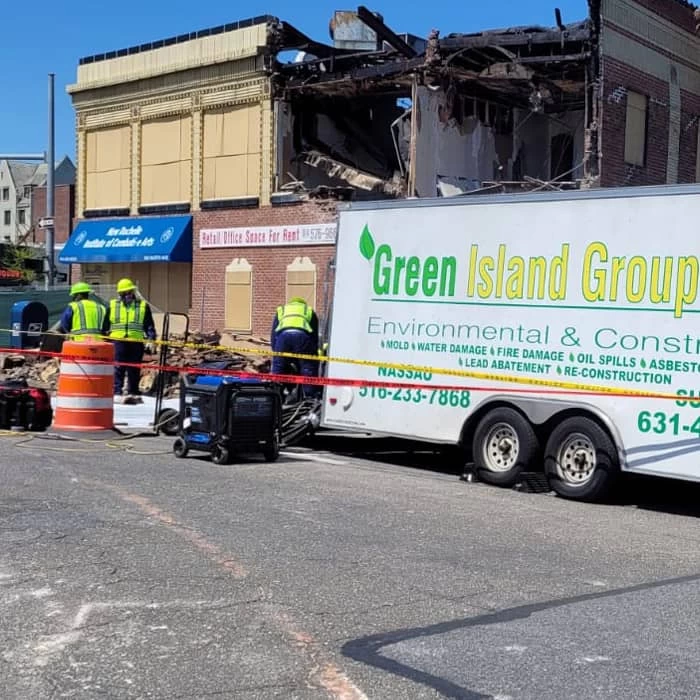
When a fire hits a 1960s Cape Cod or lakeside bungalow in North Patchogue, the damage runs deeper than what you can see and you need fire damage restoration that actually goes the distance.
I needed a professional consultation explanation of procedure for safe removal of Asbestos in my apartment complex. Without having an account yet, I was very impressed with the caring, knowledgeable and generous advice offered by Jessica, and will look forward to doing business in the future. Thank you so much! I feel much more informed about a sometimes scary endeavor. Peace. Nancy Silva Mineola, NY.
Mia Munoz
Used this company to clean up some water flood in my house. They were fast and easy to work with.very professional, Would recommend to anyone!
Nini Valle
Great company, had a flood and they responded quickly and efficiently. Billed my insurance company directly. I highly recommend this company!
joe colapietro, jr
I had pipe freeze in my basement right before a snow storm and they made to within an hour to help start the clean up process. They we by our side throughout the entire process and even helped with the insurance company. They did such a great job with the cleanup, repair, remidiation, I contracted them to perform the repairs and finishes in the basement. They came with enough manpower and material to get the job done. Leo and Jessica were nothing but a pleasure to deal with!!
Cristian Arredondo c
I had some water damage in my home and Green Island was able to take care of my issue quickly and effectively. I am very pleased with the work they did. They responded quickly and were very professional.
Michael M
Outstanding service! From the office to the field crew everyone was friendly, helpful and responsive. I highly recommend Green Island Group.
A fire doesn’t just burn what it touches. In North Patchogue’s older housing stock most of it built before 1978, much of it original construction from the 1940s through the 1960s smoke finds its way into wall cavities, original wood framing, and ductwork before the fire department even clears the scene. What smells like a contained kitchen fire today can saturate an entire house by tomorrow morning.
The water that puts the fire out creates its own problem. Fire hoses push hundreds of gallons into a structure in minutes, and near Canaan Lake, where ambient humidity is already elevated, that moisture can trigger mold growth within 24 to 48 hours. Soot begins permanently staining and etching surfaces within the same window. Every hour that passes without professional intervention is an hour that makes the restoration harder, more expensive, and more complicated to document for your insurance claim.
What you get on the other side of this process is a home that’s genuinely safe not just visually cleaned up. No smoke odor masked with fragrance. No hidden mold left behind a freshly painted wall. No asbestos-containing materials disturbed and left unaddressed in a pre-1978 home. The goal is that you walk back through your front door and it feels like yours again.
Local Accountability on Every Job, Start to Finish
We’re a locally owned restoration company serving Long Island not a franchise, not a call center that dispatches whoever’s available. When you call us, you reach a real team with real accountability to this community. Our staff members have been named by name in customer reviews specifically for their guidance through the insurance process that’s not something that happens at a national chain.
North Patchogue sits within the Town of Brookhaven, and the restoration work we do here comes with specific requirements: building permits through the Town of Brookhaven Building Division, New York State certification for asbestos abatement in the pre-1978 homes that make up the majority of this community, and compliance with local fire prevention codes. We carry the credentials to handle all of it not just the visible fire damage, but everything underneath it.
Our satisfaction guarantee is straightforward: the work isn’t done until you’re satisfied with it. That’s a commitment most restoration companies won’t put in writing.
Fire Damage Restoration Process in North Patchogue
What Happens After the Fire Trucks Leave Your Street
The first step is getting eyes on the damage quickly. We respond fast North Patchogue’s location near the interchange of Sunrise Highway and Medford Avenue makes rapid on-site arrival realistic, not just a talking point. Our initial assessment documents everything: the fire damage, the smoke migration, the water intrusion from suppression, and any environmental hazards like disturbed asbestos or lead paint in older homes around Canaan Lake and throughout the hamlet. That documentation isn’t just for your records it’s the foundation of your insurance claim.
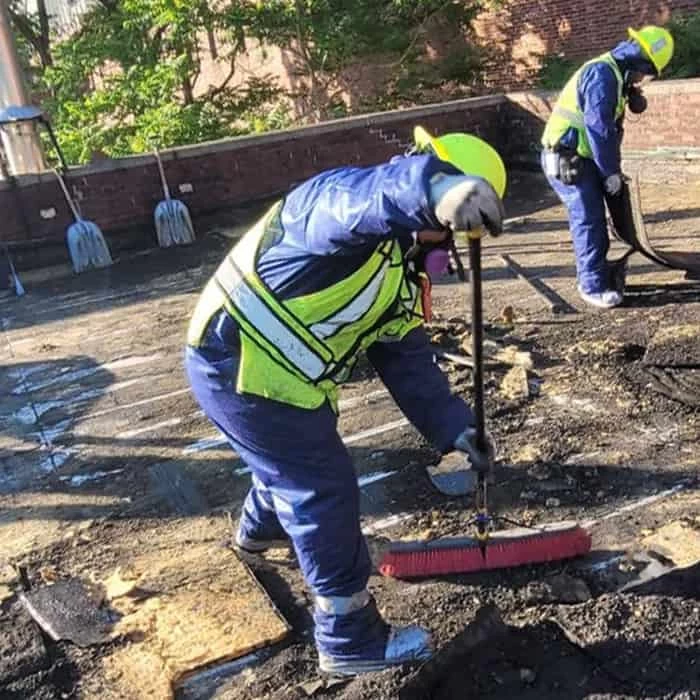
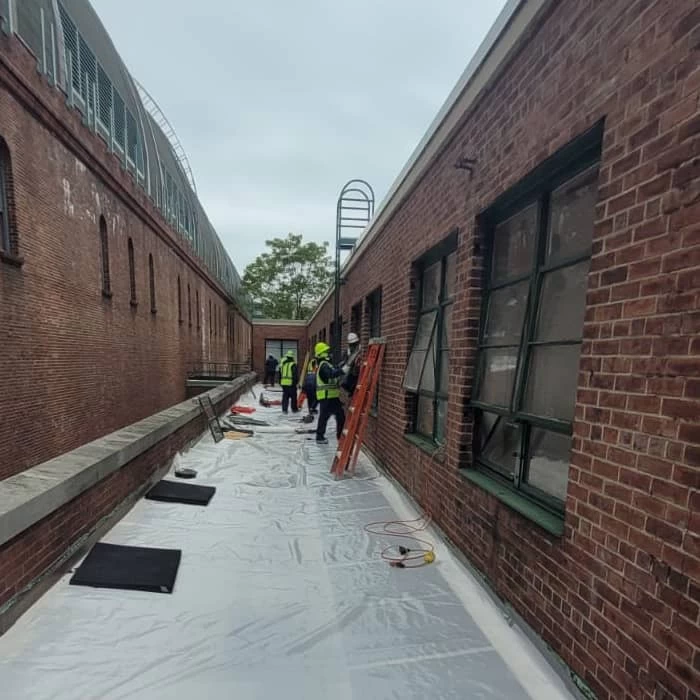
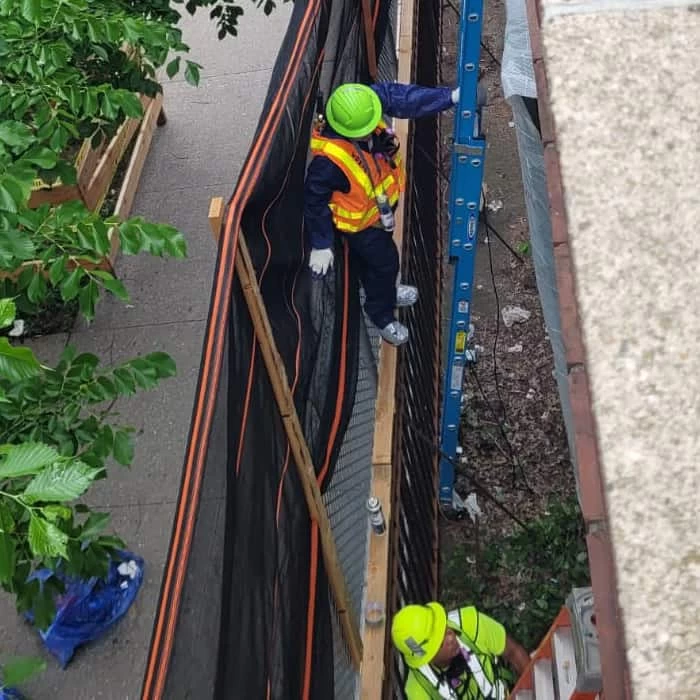
From there, the work moves in a logical sequence. We handle emergency stabilization and board-up first to secure the structure. Then water extraction and structural drying to stop the mold clock. Smoke and soot remediation follows using methods that eliminate odor at the source, not cover it. If your home requires asbestos abatement or lead paint management, that happens before any reconstruction begins, as New York State law requires.
The final phase is full reconstruction, handled by the same team that started the job. You’re not handing your home off to a second contractor mid-stream and hoping the scope of work transfers cleanly. One team, one timeline, one clear point of contact from the first call to the final walkthrough.
Fire and Smoke Damage Services, North Patchogue NY
Every Layer of Damage Addressed Not Just the Obvious Ones
Fire damage restoration in North Patchogue isn’t a single-service job. The homes here most of them detached single-family structures built between the 1940s and 1970s carry layers of complexity that a fire exposes all at once. We cover emergency board-up and structural stabilization, smoke and soot remediation throughout the full structure including HVAC systems, water extraction and drying from firefighting suppression, odor elimination using thermal fogging and hydroxyl technology, and full reconstruction down to finishes.
For homes built before 1978 which is the majority of North Patchogue’s housing stock asbestos abatement and lead paint management are frequently part of the job, not an edge case. New York State requires licensed contractors for this work, and it has to happen before reconstruction begins. We hold the credentials the state requires, which means your project doesn’t stall waiting for a separate abatement company to be brought in.
The insurance piece is built into our process from day one. We document damage in the format adjusters use, write the scope of work to reflect the actual extent of the loss, and remain available to work alongside your adjuster when questions come up. For a North Patchogue homeowner looking at a major claim on a home worth around $550,000, having a restoration company that knows how to navigate that process isn’t a bonus it’s the difference between a fair settlement and a shortfall.
What should I do immediately after a house fire in North Patchogue?
The first thing to do is make sure the fire department has cleared the property as safe to re-enter don’t go back in until they’ve given that clearance. Once they have, call a restoration company before you call anyone else. The clock on soot etching and mold growth starts the moment the fire is out, and waiting even a day to begin mitigation can meaningfully expand the scope of the damage.
While you’re waiting for the restoration team to arrive, take photos of everything you can see from a safe position exterior damage, any visible interior damage through windows or open doorways. Don’t move or discard anything. Your insurance adjuster will need to see the damage as it was, and anything removed or altered before documentation can complicate your claim. In North Patchogue’s older homes, it’s also worth noting that fire and demolition activity can disturb asbestos-containing materials in floors, ceilings, and insulation another reason to let a credentialed restoration team assess the property before any work begins.
Does homeowners insurance cover fire damage restoration costs in North Patchogue, NY?
In most cases, yes standard homeowners insurance policies cover fire damage restoration, including smoke and soot remediation, water damage from firefighting suppression, and structural repairs. What varies is how thoroughly the damage gets documented and whether the scope of work submitted to the insurer actually reflects the full extent of the loss. That’s where the process either works for you or against you.
For North Patchogue homeowners, the stakes on this are real. With median home values around $550,000, a significant fire can generate a claim well into six figures. If the initial damage assessment misses smoke migration into the HVAC system, or doesn’t account for the asbestos abatement required in a pre-1978 home, that gap comes out of your pocket not the insurer’s. We document damage in the format adjusters work with, which means the scope submitted is defensible and complete from the start.
How long does fire damage restoration typically take for a North Patchogue home?
The honest answer is that it depends heavily on the extent of the damage and what the home contains. A contained kitchen fire in a newer home might be fully remediated and reconstructed in two to four weeks. A more significant fire in one of North Patchogue’s older bungalows or Cape Cods where smoke has migrated through the structure, water damage is extensive, and asbestos abatement is required before reconstruction can begin can take two to four months or longer.
The Town of Brookhaven’s permit process is a real factor in the timeline. Restoration work that affects the structure of the home requires building permits from the Town of Brookhaven Building Division, and permit review takes time. A restoration company that knows this process and submits complete, accurate permit applications from the start avoids the delays that come from back-and-forth with the Building Division. Our familiarity with Brookhaven’s requirements is part of what keeps projects on a realistic, predictable schedule.
Will smoke odor fully go away, or will my house always smell like fire?
It will fully go away but only if the remediation goes deep enough. Smoke odor that lingers for weeks or months after a fire is almost always the result of surface-level treatment that didn’t address the source. Smoke molecules penetrate porous materials: original wood framing, plaster walls, insulation, carpet, and ductwork. Cleaning the surfaces you can see doesn’t remove the odor embedded in the materials behind them.
Professional odor elimination uses thermal fogging and hydroxyl generators to reach the same spaces smoke reached during the fire. These methods neutralize odor molecules rather than covering them. In North Patchogue’s older homes, where original wood framing and plaster construction absorb smoke more deeply than modern drywall, this step matters more than it does in newer builds. When the process is done correctly, the smell is gone not reduced, not masked. Your family should be able to come home without any trace of it.
Can a fire in one room cause smoke damage throughout my entire North Patchogue home?
Yes, and it happens faster than most people expect. Smoke travels through HVAC ductwork, wall penetrations, and ceiling cavities within minutes of a fire starting. In the ranch-style homes, Cape Cods, and bungalows that make up most of North Patchogue’s housing stock, the ductwork often runs through areas directly adjacent to where fires commonly start kitchens, utility rooms, attached garages. A fire that appears contained to one room can push smoke odor and soot particles into every room in the house through the ventilation system alone.
This is why a proper assessment after a fire looks at the entire structure, not just the room of origin. If the HVAC system isn’t inspected and cleaned as part of the remediation, smoke odor will continue circulating through the home every time the heat or air conditioning runs. A restoration scope that misses this step isn’t complete and it’s one of the more common ways that homeowners end up with a lingering odor problem long after they thought the job was finished.
Does fire damage in older North Patchogue homes create asbestos or lead paint hazards?
It can, and in North Patchogue specifically, it’s a question worth taking seriously. The hamlet’s median construction year is 1962, and nearly 12% of homes predate 1950. Asbestos was commonly used in floor tiles, ceiling tiles, pipe insulation, roofing materials, and joint compound in homes built through the late 1970s. Lead-based paint was standard in residential construction before 1978. When fire damages these materials through heat, structural collapse, or the demolition that restoration requires it can release hazardous particles that require licensed abatement before any reconstruction begins.
New York State requires specific certifications for asbestos abatement and lead paint remediation work. A restoration company that doesn’t hold those credentials can’t legally complete the full scope of work in a pre-1978 home, which means the project either stalls or gets handed off to a separate abatement contractor adding time, cost, and coordination complexity. We hold the environmental remediation capabilities to cover both, which means your project moves forward without that interruption. For homeowners in the streets around Canaan Lake and throughout the older sections of North Patchogue, this isn’t a rare scenario it’s a routine part of what complete fire restoration looks like here.