Fire Damage Restoration in North Valley Stream, NY
Your 1940s Home Deserves More Than a Surface Cleanup
Most North Valley Stream homes were built decades before modern building codes — and a fire in one of them doesn’t just burn what’s visible. We handle fire damage restoration from emergency response all the way through full reconstruction, including the hazards hiding inside your walls.
I needed a professional consultation explanation of procedure for safe removal of Asbestos in my apartment complex. Without having an account yet, I was very impressed with the caring, knowledgeable and generous advice offered by Jessica, and will look forward to doing business in the future. Thank you so much! I feel much more informed about a sometimes scary endeavor. Peace. Nancy Silva Mineola, NY.
Mia Munoz
Used this company to clean up some water flood in my house. They were fast and easy to work with.very professional, Would recommend to anyone!
Nini Valle
Great company, had a flood and they responded quickly and efficiently. Billed my insurance company directly. I highly recommend this company!
joe colapietro, jr
I had pipe freeze in my basement right before a snow storm and they made to within an hour to help start the clean up process. They we by our side throughout the entire process and even helped with the insurance company. They did such a great job with the cleanup, repair, remidiation, I contracted them to perform the repairs and finishes in the basement. They came with enough manpower and material to get the job done. Leo and Jessica were nothing but a pleasure to deal with!!
Cristian Arredondo c
I had some water damage in my home and Green Island was able to take care of my issue quickly and effectively. I am very pleased with the work they did. They responded quickly and were very professional.
Michael M
Outstanding service! From the office to the field crew everyone was friendly, helpful and responsive. I highly recommend Green Island Group.
When fire hits a home in North Valley Stream, the damage rarely stops where the flames did. Smoke travels through wall cavities and HVAC ductwork. Firefighting water soaks into floors, insulation, and framing. Soot starts bonding to surfaces within hours. The longer it sits, the more it costs to fix — and the harder it becomes to get your family back home.
Here’s what changes when restoration is handled correctly from the start: the secondary damage gets stopped before it compounds. That means no mold discovery six weeks later because the structural drying was skipped. No surprise asbestos issue mid-project because the contractor wasn’t licensed to handle it. In a community where most homes were built in the 1940s and 1950s, asbestos in floor tiles, pipe insulation, and ceiling materials isn’t a remote possibility — it’s the likely reality. A restoration company that can’t legally handle that has to stop and call someone else, and you’re the one waiting.
The other thing that changes is the insurance process. Most homeowners in North Valley Stream have never filed a major claim. We document everything to insurance-standard specifications, bill carriers directly, and have guided hundreds of Long Island families through the process without leaving them to fight adjusters on their own.
We’re a locally owned and operated restoration company based on Long Island, holding General Contractor licenses in Nassau County, Suffolk County, and New York City. That matters in North Valley Stream because it’s an unincorporated hamlet — post-fire reconstruction permits run through the Town of Hempstead, not a village government, and you need a Nassau County-licensed contractor to pull them legally and get the work done right.
Beyond the GC license, we carry NYS DOL licensing for asbestos abatement and mold remediation, plus USEPA Lead/RRP certification. In a neighborhood where the housing stock is predominantly pre-1978 construction, those aren’t optional credentials — they’re the difference between a legal restoration and a liability. Add IICRC certification, which Nassau County insurance carriers specifically recognize when reviewing claims, and you have a company that’s built to handle exactly what North Valley Stream homes actually contain.
Over 5,000 completed restoration projects across New York State. One team, start to finish.
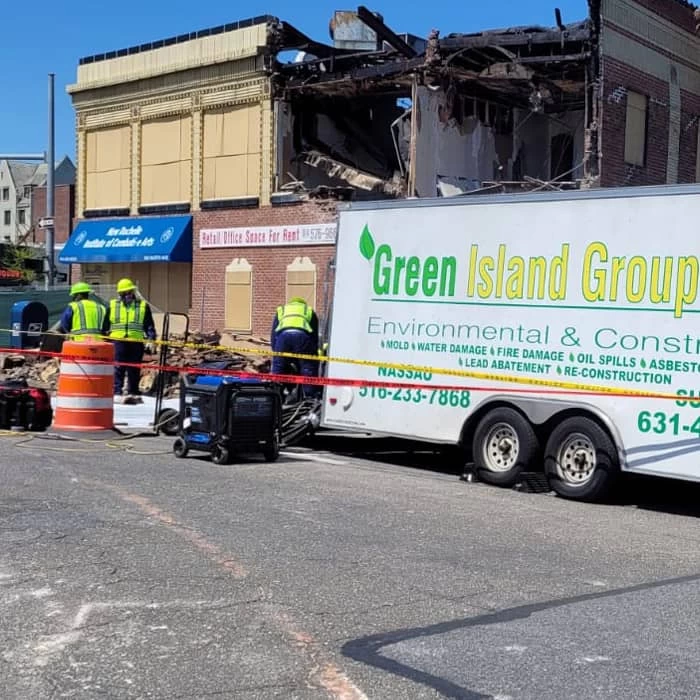
It starts with a phone call, and we answer around the clock. Once on-site — typically within an hour — the first priority is stopping the damage that’s still actively spreading. That means water extraction from firefighting efforts, emergency board-up or tarping to secure the structure, and an immediate assessment of what’s affected beyond the visible burn area. In North Valley Stream’s tightly packed residential streets, where homes sit close together on small lots, that assessment matters more than most people expect.
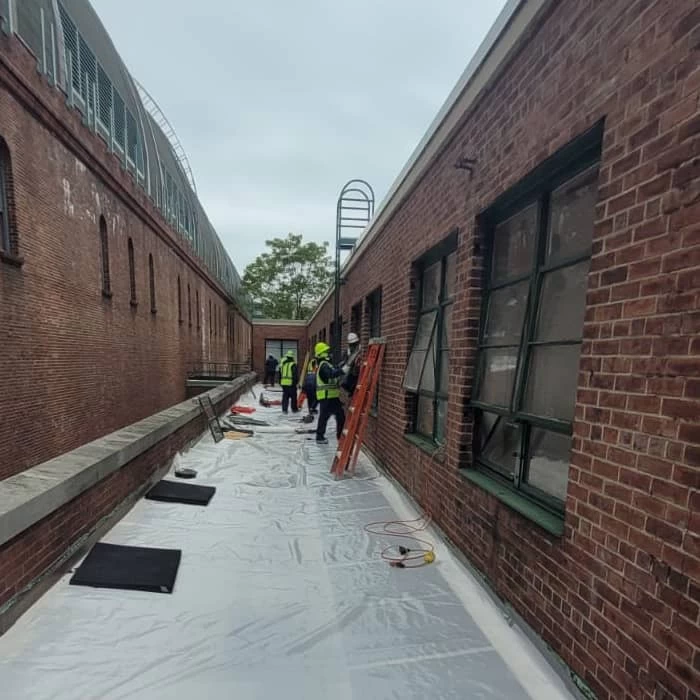
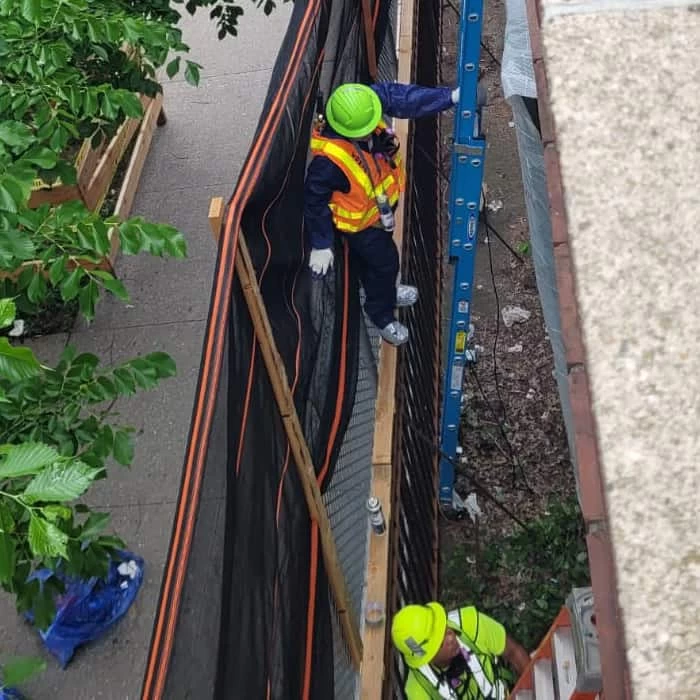
From there, the remediation phase begins. Soot and smoke residue are removed from surfaces, structural materials, and HVAC systems using air scrubbers, thermal fogging, and hydroxyl generators — not just surface wiping. If asbestos or lead-containing materials were disturbed by the fire, those are handled by licensed abatement professionals on our team, not a subcontractor you’ve never met. Mold prevention protocols run simultaneously with structural drying, because the water left behind by fire departments creates its own timeline.
Once remediation is complete, reconstruction begins under the same roof. We pull the necessary permits through the Town of Hempstead Building Department, manage the rebuild, and keep you informed at every stage. The goal is simple: get your home back to the condition it was in before — or better — without you having to manage five different contractors to get there.
Fire Restoration Damage Services, Nassau County NY
Everything Your Home Needs — Handled Under One Roof
Fire damage restoration in North Valley Stream covers more ground than most homeowners realize going in. The visible burn damage is the starting point, but what follows — smoke odor embedded in porous materials, soot corrosion on metal fixtures, water damage from suppression efforts, and the very real possibility of disturbed asbestos or lead paint in a pre-1978 home — requires a company that’s licensed and equipped for all of it.
Our scope of work includes emergency response and board-up, full water extraction and structural drying, smoke and soot removal, HVAC cleaning, asbestos abatement, mold remediation, lead-safe renovation practices, and complete structural reconstruction. For North Valley Stream homeowners dealing with oil heat systems — common in the older Cape Cods and ranch homes throughout the 11580 ZIP code — puff-back soot remediation is also a covered service. A furnace misfire can coat an entire home’s interior in fine black soot without a single visible flame, and it’s a covered insurance event that most homeowners don’t know to claim.
Every phase is documented to IICRC standards, which directly supports your insurance claim and reduces the likelihood of disputes with your adjuster. We bill insurance carriers directly, so you’re not fronting costs and waiting for reimbursement while you’re displaced from your home.
Does homeowners insurance actually cover fire damage restoration in North Valley Stream?
In most cases, yes — standard homeowners insurance policies cover fire damage, including smoke and soot cleanup, water damage from firefighting, and structural repairs. What varies is how well the claim is documented and how thoroughly the damage is scoped. Insurance carriers don’t automatically pay for everything that needs to be done; they pay for what’s documented and substantiated.
That’s where the process matters. We document every phase of the restoration to IICRC standards, which Nassau County insurance carriers specifically recognize. That documentation makes a measurable difference in how quickly claims are approved and how much pushback you get from adjusters. We also bill insurance directly, meaning you’re not managing reimbursements or fronting large out-of-pocket costs while you’re already displaced. If your home is in North Valley Stream and was built before 1978 — which describes most of the housing stock — the presence of asbestos or lead paint can also be covered under the claim if properly documented from the start.
How quickly does fire damage need to be addressed before it gets significantly worse?
The short answer is: faster than most people expect. Soot begins permanently bonding to walls, ceilings, and surfaces within hours of a fire. The acidic compounds in smoke actively corrode metal fixtures, electronics, and finishes — that process doesn’t pause while you figure out next steps. Firefighting water, meanwhile, creates mold risk within 24 to 48 hours if structural drying isn’t started promptly.
In a densely settled community like North Valley Stream, where homes sit close together on small lots, there’s also the question of whether smoke and water have migrated into adjacent spaces or neighboring structures. The sooner a professional assessment happens, the sooner you know the true scope — and the sooner you can stop the damage from compounding. We answer emergency calls 24/7 and typically arrive on-site within an hour because waiting until morning is rarely the right call.
My North Valley Stream home was built in the 1940s — does that change the restoration process?
It does, and significantly. Homes built in the 1940s and 1950s — which make up the majority of North Valley Stream’s housing stock — were constructed during an era when asbestos was standard in floor tiles, pipe insulation, ceiling materials, and joint compound. Lead paint was applied to virtually every surface before 1978. When fire damages one of these homes, it almost certainly disturbs materials that require licensed abatement to handle legally.
A contractor without NYS DOL asbestos licensing and USEPA Lead/RRP certification cannot legally perform remediation work in a home where those materials are present. That means they have to stop, bring in a separate abatement company, and restart — adding time, cost, and disruption to an already stressful situation. We hold all three of those credentials, which means the abatement work is handled by our own team doing the restoration. No stopping, no subcontracting, no gaps in the process. For a pre-war Cape Cod or ranch home in the 11580 ZIP code, that’s not a minor detail — it’s the difference between a smooth restoration and a months-long ordeal.
What is a puff-back, and is it covered by insurance in Nassau County?
A puff-back happens when an oil burner misfires and expels a cloud of soot and combustion byproducts back through the heating system and into the home. It can coat walls, ceilings, furniture, clothing, and HVAC ductwork in fine black soot — throughout the entire house — without a single visible flame. Many homeowners don’t realize it happened until they notice black residue on surfaces hours later.
It’s a common issue in older Long Island homes, and North Valley Stream has a high concentration of exactly that housing stock: pre-1960 construction with oil heating systems. The good news is that puff-back damage is typically covered under standard homeowners insurance policies as a sudden and accidental event. The key is having it properly documented and remediated by a contractor who understands the full scope — including HVAC duct cleaning, which is where the soot originated and where it will continue to circulate if not addressed. We handle puff-back soot cleanup and NADCA-certified HVAC cleaning as part of the same restoration process, and document it for your insurance claim from the start.
Who handles fire damage restoration permits in North Valley Stream, and how does that work?
North Valley Stream is an unincorporated hamlet within the Town of Hempstead — it doesn’t have its own village government or village building department. That means all permits for post-fire reconstruction are issued through the Town of Hempstead Building Department, not a local village hall. For homeowners who haven’t navigated this before, it’s an important distinction that affects timelines and the paperwork involved.
Only a licensed general contractor can legally pull those permits and perform the structural reconstruction work. We hold a General Contractor license specifically in Nassau County, which covers Town of Hempstead jurisdiction. That means we can manage the entire permitting process on your behalf — filing applications, coordinating inspections, and ensuring the reconstruction meets current Town of Hempstead code requirements. You don’t need to figure out which department to call or which forms to file while you’re also dealing with insurance, temporary housing, and everything else that comes with a fire loss. That part of the process is handled.
How do I choose a fire restoration company in North Valley Stream when I've never done this before?
Most people searching for a fire restoration company in North Valley Stream are doing it for the first time, under significant stress, and often within hours of the fire. The decision gets made fast, and it matters a lot. Here’s what actually separates capable companies from the rest in this market.
First, verify licensing — not just general contractor registration, but NYS DOL asbestos and mold licenses, and USEPA Lead/RRP certification. Given the age of most homes in North Valley Stream, you need a company that can legally handle what your home likely contains. Second, check for IICRC certification, which is the industry standard that Nassau County insurance carriers recognize. Third, ask directly whether they bill insurance companies or whether you’ll be managing reimbursements yourself. And fourth, ask whether they handle reconstruction in-house or hand it off to a separate contractor. A company that stops at remediation and transfers you to someone else means starting the vetting process over again mid-crisis. We handle every phase — emergency response through full rebuild — under one license, one team, and one point of contact.