I needed a professional consultation explanation of procedure for safe removal of Asbestos in my apartment complex. Without having an account yet, I was very impressed with the caring, knowledgeable and generous advice offered by Jessica, and will look forward to doing business in the future. Thank you so much! I feel much more informed about a sometimes scary endeavor. Peace. Nancy Silva Mineola, NY.
Mia Munoz
Used this company to clean up some water flood in my house. They were fast and easy to work with.very professional, Would recommend to anyone!
Nini Valle
Great company, had a flood and they responded quickly and efficiently. Billed my insurance company directly. I highly recommend this company!
joe colapietro, jr
I had pipe freeze in my basement right before a snow storm and they made to within an hour to help start the clean up process. They we by our side throughout the entire process and even helped with the insurance company. They did such a great job with the cleanup, repair, remidiation, I contracted them to perform the repairs and finishes in the basement. They came with enough manpower and material to get the job done. Leo and Jessica were nothing but a pleasure to deal with!!
Cristian Arredondo c
I had some water damage in my home and Green Island was able to take care of my issue quickly and effectively. I am very pleased with the work they did. They responded quickly and were very professional.
Michael M
Outstanding service! From the office to the field crew everyone was friendly, helpful and responsive. I highly recommend Green Island Group.
What Your Home Looks Like When the Job Is Actually Done
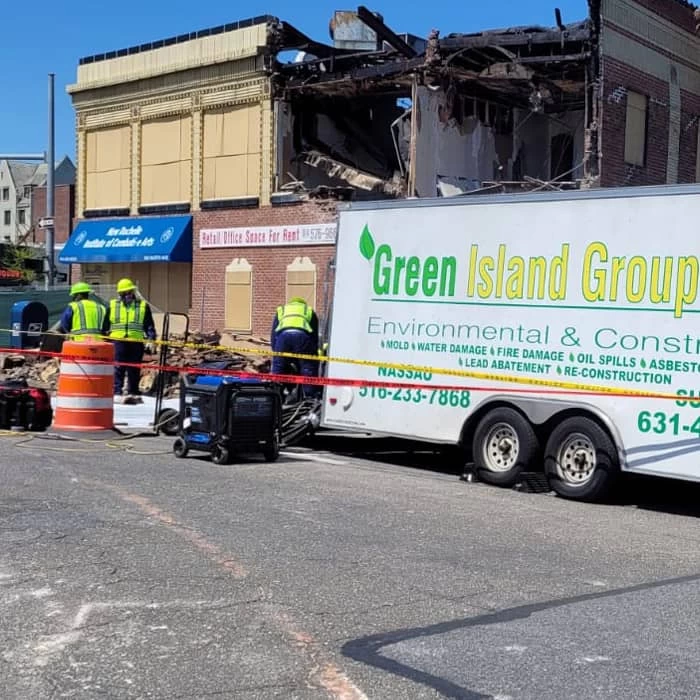
After a fire, the visible damage is only part of the story. Smoke moves fast into wall cavities, through your HVAC system, deep into the materials that make up your home and soot starts permanently etching surfaces within 24 to 72 hours. If the response is slow or the scope is incomplete, you’re not just dealing with a damaged room. You’re dealing with a home that smells, feels, and tests as compromised long after the fire is out.
For Noyack homeowners, the stakes are higher than most. With median home values sitting above $1.5 million and many properties featuring custom finishes and high-end materials, there’s no acceptable version of “mostly restored.” The coastal humidity off Noyack Bay also accelerates mold growth after the water used in fire suppression soaks into your walls and floors and in a home that may sit vacant through the off-season, that damage can compound for weeks before anyone notices.
When the work is done right, your home doesn’t just look clean it’s structurally sound, odor-free, environmentally cleared, and rebuilt to match what was there before. That’s what you should expect, and that’s what you should hold any restoration company accountable to delivering.
We’re a locally owned and operated restoration company based on Long Island, serving Suffolk County, Nassau County, Queens, and the broader New York metro area. We’re not a national franchise with a call center somewhere else we’re a Long Island team that understands the Noyack market, knows Southampton Town permitting, and has worked with homeowners across the South Fork who expect a high standard of work.
What sets us apart isn’t a slogan it’s the way we operate. We handle everything from emergency stabilization through full reconstruction, and we stay with the insurance process alongside you, not just hand you a bill and leave. Customers regularly call out Leo and Jessica by name in their reviews not the company brand, but the actual people who showed up, communicated clearly, and saw the job through.
For Noyack homeowners whether you’re here year-round or managing a property near Jessup Neck from the city that kind of accountability matters. Our satisfaction guarantee isn’t a footnote. It’s how we close every job.
No Guesswork Here's Exactly How We Restore Your Noyack Home
The first step is emergency stabilization securing the structure, boarding up openings, and stopping any active water intrusion from fire suppression. Fire hoses push roughly 250 gallons of water per minute, so water damage is almost always part of the picture, not an afterthought. We extract that water immediately to cut off the mold risk that Noyack’s coastal humidity makes especially real.
From there, we conduct a full damage assessment walls, ceilings, structural materials, HVAC, and any older building components that may have been disturbed by heat. In Noyack, where the housing stock includes historic and pre-1978 properties, that assessment includes checking for asbestos-containing materials and lead paint. If those are present, we handle them under proper New York State certifications before any reconstruction begins not skipped, not worked around.
Once the environment is cleared and documented, reconstruction starts. We work directly with your insurance carrier throughout this phase, helping ensure the scope of work is properly covered and the claim reflects the actual damage. All work in Noyack requires active contractor licensing and building permits through the Town of Southampton’s Building and Zoning Division we handle that process without putting it on your plate. The job isn’t considered done until your home is back to pre-damage condition and you’ve signed off on it.
Everything the Job Requires Nothing Left for Someone Else
Fire damage restoration isn’t one service it’s a sequence of connected services that have to work together or the outcome falls short. Our scope covers emergency response and structural stabilization, smoke and soot removal, water extraction and drying, odor elimination using thermal fogging and hydroxyl treatment, environmental remediation including asbestos abatement and lead paint compliance, mold prevention and remediation, contents restoration, and full structural reconstruction through finished surfaces.
For Noyack properties specifically, the environmental piece is not optional. Many homes in this area predate modern construction standards, and a fire that disturbs older insulation or wall materials creates hazards that a cleanup-only company cannot legally or safely address. We hold the New York State Department of Labor certifications required for asbestos abatement which means we can complete the full scope of work without handing off to a third party and creating gaps in your timeline or your insurance documentation.
The insurance navigation support runs parallel to the physical work the entire time. Every phase is documented in a format that supports your claim, and we communicate directly with your adjuster so you’re not translating between the contractor and the insurance company. For seasonal homeowners managing a Noyack property remotely or year-round residents dealing with a high-value claim for the first time that direct involvement is often what makes the difference between a fully covered restoration and a shortfall you didn’t see coming.
What should I do immediately after a fire at my Noyack property?
The most important thing you can do in the first hour is make two calls one to your insurance carrier to report the loss, and one to a restoration company that can respond immediately. Do not re-enter the structure until it has been assessed for safety. Smoke-damaged air is toxic, and structural integrity after a fire is not something you can evaluate visually.
Once our team is on-site, we handle emergency board-up, water extraction from suppression efforts, and initial air quality assessment. In Noyack, where many properties sit vacant during the off-season and the North Sea Fire Department serves the area as a volunteer department, getting a professional restoration team on the ground quickly is especially important the sooner active damage is stopped, the smaller the total scope and the lower the final cost.
How does smoke damage affect parts of my home that didn't catch fire?
Smoke doesn’t stay in the room where the fire started. It moves through HVAC systems, penetrates drywall, settles into insulation, and embeds in soft goods, flooring, and structural wood often in rooms that look completely untouched. The smell that returns weeks after a surface cleaning is almost always smoke that was never fully removed from the materials themselves, not just the surfaces.
This is one of the most common points of failure in fire restoration a company cleans what’s visible, declares the job done, and the homeowner is left with an odor problem and potential air quality issues that persist. In a Noyack home with high-end finishes and premium materials, that’s not a minor inconvenience. Proper smoke remediation means tracing the path of smoke through the structure and addressing every affected area, including the HVAC system, before the home is considered restored.
Will my homeowners insurance cover the full cost of fire damage restoration in Noyack?
Most standard homeowners insurance policies cover fire damage restoration, including cleanup, remediation, and reconstruction but the coverage you receive depends heavily on how the damage is documented and presented to your adjuster. Insurers work from their own assessments, and those assessments don’t always capture the full scope of damage, particularly hidden damage like smoke in wall cavities or water intrusion behind finished surfaces.
In Noyack, where replacement costs are high and custom finishes can be expensive to match, the gap between what an insurer initially offers and what full restoration actually costs can be significant. Having a restoration company that documents every phase thoroughly and communicates directly with your adjuster throughout the process makes a real difference in the final outcome of your claim. We have a documented track record of helping homeowners navigate this process, and it’s one of the most consistently cited reasons customers come back and refer others.
My Noyack home is older does that change what's involved in fire restoration?
It can, and it’s important to know before work begins. Homes built before 1980 and Noyack has a meaningful number of them, including historic properties like the William Cauldwell House and older bay-area residences may contain asbestos-containing materials in insulation, floor tiles, ceiling texture, and pipe wrapping. A fire that reaches those materials can disturb and aerosolize asbestos, creating a hazard that requires certified remediation before any reconstruction can legally proceed.
Similarly, homes built before 1978 may have lead-based paint, which requires EPA RRP Rule compliance during any renovation or restoration work. These aren’t technicalities they’re health and legal requirements. A contractor without the proper New York State Department of Labor certifications cannot legally complete the full scope of work in an older Noyack home. We hold the required certifications and handle environmental remediation as part of the restoration process, not as a separate referral.
How long does fire damage restoration typically take for a Noyack home?
The honest answer is that timeline depends on scope, and scope in Noyack tends to run larger than in many other markets. A kitchen fire in a modest home and a fire that spreads through multiple rooms of a $2 million waterfront property are completely different jobs. A straightforward fire with contained damage and no environmental hazards can often be stabilized within 24 to 48 hours, with full restoration taking anywhere from a few weeks to a few months depending on the reconstruction required.
What extends timelines in Noyack specifically are a few things: environmental testing and abatement if older materials were disturbed, permitting through the Town of Southampton’s Building and Zoning Division (which adds time if a contractor isn’t already familiar with Southampton Town’s process), and the complexity of matching high-end finishes and custom materials during reconstruction. Working with a company that handles all of these phases in-house rather than subcontracting pieces of the job typically produces the shortest realistic timeline.
Can fire damage restoration be managed remotely for a seasonal Noyack property?
Yes and we handle this regularly, given how many Noyack properties are seasonal or second homes owned by people who live and work in New York City most of the year. When fire or water damage occurs at a property you’re not currently occupying, the response process is the same, but the communication structure matters more. You need a team that will document everything thoroughly, keep you informed at each phase, and act as your on-the-ground representative until you can get there.
The specific risk with seasonal properties in Noyack is delayed discovery. A fire or water event that goes undetected for days or weeks not uncommon in a home that’s been closed up since fall means soot has had time to permanently etch surfaces, mold has had time to establish behind walls, and secondary damage has compounded significantly. The sooner our team is on-site, the better the outcome. If you have a neighbor, property manager, or caretaker who can make the initial call, that head start makes a meaningful difference in both the scope of damage and the final restoration cost.