When Your Building Has More Layers Than Just the Fire
In NYC’s older housing stock pre-war brownstones, aging multi-unit buildings, decades-old apartment complexes fire damage rarely stops at the flames. We handle fire damage restoration in New York City with the environmental credentials and local regulatory knowledge this city actually demands.
I needed a professional consultation explanation of procedure for safe removal of Asbestos in my apartment complex. Without having an account yet, I was very impressed with the caring, knowledgeable and generous advice offered by Jessica, and will look forward to doing business in the future. Thank you so much! I feel much more informed about a sometimes scary endeavor. Peace. Nancy Silva Mineola, NY.
Mia Munoz
Used this company to clean up some water flood in my house. They were fast and easy to work with.very professional, Would recommend to anyone!
Nini Valle
Great company, had a flood and they responded quickly and efficiently. Billed my insurance company directly. I highly recommend this company!
joe colapietro, jr
I had pipe freeze in my basement right before a snow storm and they made to within an hour to help start the clean up process. They we by our side throughout the entire process and even helped with the insurance company. They did such a great job with the cleanup, repair, remidiation, I contracted them to perform the repairs and finishes in the basement. They came with enough manpower and material to get the job done. Leo and Jessica were nothing but a pleasure to deal with!!
Cristian Arredondo c
I had some water damage in my home and Green Island was able to take care of my issue quickly and effectively. I am very pleased with the work they did. They responded quickly and were very professional.
Michael M
Outstanding service! From the office to the field crew everyone was friendly, helpful and responsive. I highly recommend Green Island Group.
The fire is out. The FDNY has cleared the scene. And now you’re standing in a hallway that smells like smoke three floors above where it started because that’s exactly how fires behave in NYC apartment buildings. Smoke travels through shared ductwork, elevator shafts, and stairwells. What looks like a contained unit fire can leave soot and odor across an entire building within hours.
Then there’s the water. Firefighting operations can push thousands of gallons into walls, subfloors, and shared structural cavities. In NYC’s humid climate, mold can begin forming in those soaked materials within 24 to 48 hours. Every hour you wait expands the scope and the cost.
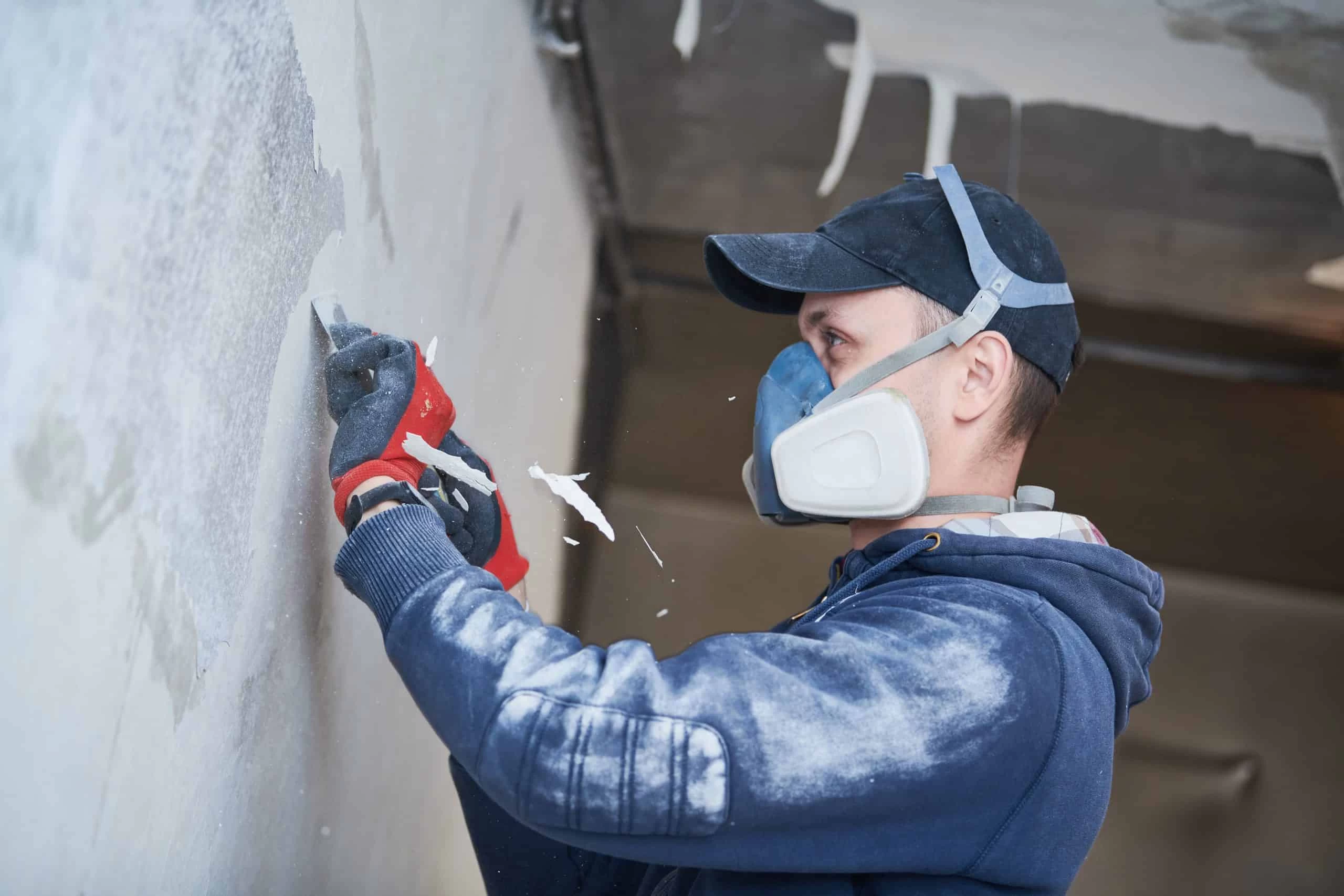
For buildings constructed before 1980 which describes a large portion of the Bronx, Brooklyn, and Manhattan’s housing stock a fire doesn’t just damage the structure. It can disturb asbestos in pipe insulation, ceiling plaster, and floor tiles. It can expose lead paint that’s been sealed under layers of renovation work for decades. That’s not a standard cleanup job. That’s a licensed environmental remediation event, and it has to be handled correctly before any restoration work begins.
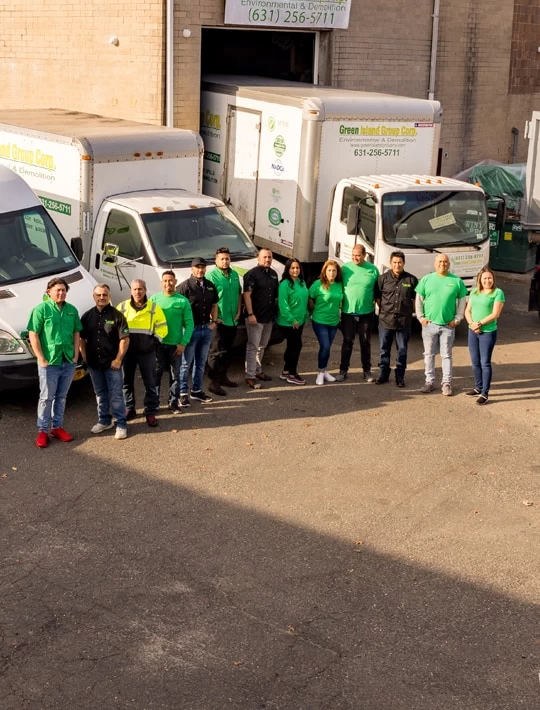
We are a locally owned and operated environmental remediation, restoration, and demolition company serving New York State including all five boroughs of New York City. That combination matters here more than it would almost anywhere else.
In a city where a fire in a Fordham Road apartment building can trigger asbestos abatement requirements, DOB permit filings, mold prevention protocols, and structural repairs all under the same roof, you need a contractor who holds the right credentials for every layer not one who handles the cleanup and hands you a referral list for the rest. We operate under NYS, NYC, and USEPA regulatory compliance, which means we can legally and safely handle the environmental side of a fire restoration job that most contractors simply cannot touch.
We also bill insurance directly and coordinate with adjusters something that matters enormously in a city where nearly 70% of residents are renters navigating the landlord-tenant-insurance triangle for the first time after a fire.
From the First Call to the Final Inspection No Gaps
It starts with a call any hour, any day. We respond 24/7, and that’s not a marketing line. Real customers have specifically noted that we always pick up the phone. In a city where the first credible contractor to arrive and assess the damage holds a significant advantage, that accessibility matters immediately.
Once on-site, our team conducts a full assessment not just of the fire-affected unit, but of every space where smoke, soot, or water may have traveled. In NYC’s multi-story buildings, that often means evaluating common areas, adjacent units, and shared mechanical systems. If the building predates 1980, materials are assessed for asbestos and lead before any demolition or cleaning work begins. This step is not optional under NYC DEP and NYS DEC regulations and skipping it creates serious legal exposure for property owners.
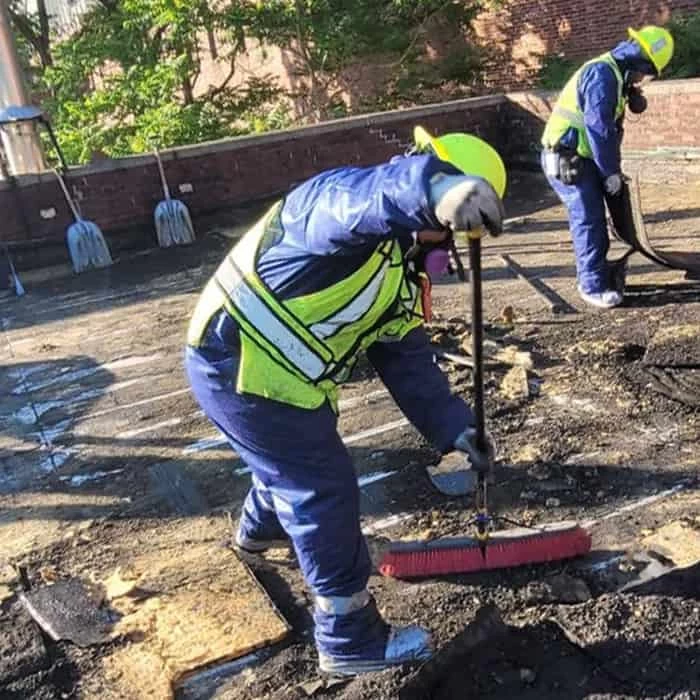
From there, the process moves through emergency stabilization (board-up, tarping, water extraction), hazardous materials abatement if required, smoke and soot removal, odor elimination using thermal fogging and HEPA air scrubbing, structural repairs, and full reconstruction. Any work requiring a NYC Department of Buildings permit is handled with proper DOB NOW filings the right permit category, filed correctly, so the restoration doesn’t stall in the middle of the job. When the work is done, the goal is simple: the property looks and functions like the fire never happened.
Built for NYC's Building Stock, Not a Generic Checklist
Fire damage restoration in New York City isn’t a single-scope job. It’s a layered response that has to account for the specific realities of this city and our service reflects that.
For residential buildings across the five boroughs, our scope typically includes emergency board-up and structural stabilization, full smoke and soot removal from affected units and any smoke-infiltrated common areas, water extraction and drying from firefighting operations, mold prevention treatment applied within the critical 24–48 hour window, and complete odor elimination not masking, but molecular-level removal using thermal fogging and hydroxyl generators. For buildings where asbestos or lead paint has been disturbed, we handle licensed abatement in-house before any restoration work proceeds, keeping the project on a single timeline under a single contractor.
For NYC property owners dealing with e-bike or lithium-ion battery fires a fire type that has become increasingly common in apartment buildings across the Bronx, Brooklyn, and Queens we adapt the cleaning and deodorization approach to the specific residue profile those fires produce, which differs from a standard kitchen or electrical fire.
Insurance documentation is produced throughout the process in a format that adjusters recognize and accept. For building owners, landlords, and co-op or condo managers navigating DOB compliance after a fire, our familiarity with NYC permit requirements means the project moves forward not sideways.
Who is responsible for fire damage repairs in a NYC rental apartment?
This is one of the most common points of confusion after an apartment fire in New York City, and it matters because the answer affects who hires the restoration contractor and who pays. Generally, the building owner or landlord is responsible for repairing the structure walls, floors, ceilings, electrical systems, plumbing, and common areas. The tenant is responsible for their personal belongings, which is where renters insurance comes in.
That said, the lines can blur. If a tenant caused the fire through negligence, the building owner’s insurance carrier may pursue reimbursement. If the building owner’s negligence contributed faulty wiring, a non-compliant boiler, inadequate fire suppression that changes the picture entirely. In NYC’s rent-stabilized housing market, tenants also have specific rights around habitability and displacement that affect how quickly the building owner must act. A restoration contractor experienced in NYC’s multi-party dynamic can help coordinate between all parties so the project doesn’t stall while everyone waits for someone else to make the first move.
How long does fire damage restoration take in a New York City apartment building?
The honest answer is that it depends heavily on the scope and in NYC, the scope is almost always more complex than it looks on day one. A contained kitchen fire in a single unit with no hazardous materials involvement might be fully restored in two to three weeks. A fire that affected multiple floors, triggered asbestos abatement requirements, and requires structural repairs under a DOB permit could take several months.
The NYC Department of Buildings permit process adds a layer that doesn’t exist in most other markets. Minor alterations under an ALT-3 permit typically take two to four weeks for approval. Moderate structural work under an ALT-2 can take four to eight weeks. Major alterations requiring an ALT-1 filing the kind involved in significant structural fire damage can take eight to sixteen weeks just for permit approval, before construction even begins. Working with a contractor who files correctly the first time, in the right permit category, is one of the most important factors in keeping a NYC restoration on schedule.
Does fire damage restoration in older NYC buildings require asbestos testing?
Yes and this is not optional. Under NYC DEP and NYS DEC regulations, any demolition or disturbance of materials in a building where asbestos-containing materials may be present requires testing before work begins. In New York City, that threshold applies to a very large portion of the housing stock. Buildings constructed before 1980 may contain asbestos in pipe insulation, floor and ceiling tiles, joint compound, and plaster. Pre-war buildings which make up a significant share of Manhattan, the Bronx, and parts of Brooklyn are especially likely to have multiple asbestos-containing materials present.
If testing confirms asbestos is present, licensed abatement must be completed before any restoration or reconstruction work can proceed. Skipping this step doesn’t just create health risk it creates serious legal liability for the property owner and can result in stop-work orders from the DOB or enforcement action from the DEP. We hold the environmental remediation credentials to perform asbestos abatement in-house, which keeps the project on a single timeline rather than requiring a separate contractor and a separate scheduling process.
What should I do in the first 24 hours after a fire in my NYC apartment or building?
The first priority is safety don’t re-enter the building until the FDNY has cleared it. Once it’s safe to return, the clock starts on secondary damage. In NYC’s climate, water from firefighting operations can begin promoting mold growth in wet structural materials within 24 to 48 hours. Soot and smoke residue contain acids that start permanently etching metal fixtures, glass surfaces, and finishes within hours of the fire being extinguished. Every hour of delay increases the restoration scope and the cost.
Contact a licensed restoration contractor as soon as the building is cleared not after you’ve spoken to your insurance company, not after you’ve waited to see how bad it is. Notify your insurance carrier, but don’t wait for an adjuster to arrive before starting emergency stabilization. In NYC, emergency board-up, water extraction, and initial containment can and should begin immediately. Document everything with photos before any cleaning or removal work starts. If you’re a renter, notify your landlord in writing and keep a record of all communications this protects your rights under NYC’s housing regulations throughout the restoration process.
Can smoke odor from a fire spread to other units in my NYC apartment building?
Yes, and it happens faster and more extensively than most people expect. In NYC’s multi-unit residential buildings whether a six-story walk-up in Washington Heights or a high-rise co-op in Forest Hills smoke travels through shared ductwork, elevator shafts, stairwells, and the gaps in aging building envelopes. A fire on one floor can deposit detectable smoke odor several floors away within hours.
Standard cleaning and airing-out won’t eliminate it. Smoke odor molecules bind to porous surfaces drywall, carpeting, wood framing, upholstered furniture, clothing and they off-gas over time, meaning the smell comes back weeks after a surface-level cleaning. Effective odor elimination requires thermal fogging, hydroxyl generators, or ozone treatment applied throughout the affected areas, including common spaces, not just the unit where the fire occurred. For building owners and managers responsible for the habitability of multiple units, this isn’t a cosmetic issue it’s a tenant retention and legal compliance issue that has to be addressed completely, not partially.
How much does fire damage restoration typically cost in New York City?
Nationally, the average cost for fire damage restoration following a major residential fire runs approximately $46,000 but in New York City, that number is typically higher. NYC labor rates, DOB permit fees, the potential for asbestos or lead paint abatement in older buildings, and the complexity of working in multi-unit residential structures all push costs upward compared to suburban or rural markets.
For a contained single-unit fire with no hazardous materials involvement, you might be looking at $15,000 to $35,000 depending on the extent of smoke, soot, and water damage. For a fire that affected multiple units, required environmental abatement, and involves structural repairs under a DOB permit, costs can reach $70,000 or more. The most important thing to understand is that insurance documentation quality directly affects what you recover. A contractor who produces detailed, adjuster-ready documentation from day one covering every phase of work, every material removed, every repair completed gives your claim the best chance of being paid fully and without dispute. That documentation process is built into how we work, not treated as an afterthought at the end of the job.