When a Fire Hits an Old Brookville Estate, the Cleanup Can't Be Ordinary
Old Brookville homes aren’t typical — and fire damage restoration here can’t be either. We respond 24/7 with the certifications, licenses, and hands-on experience to handle the full scope of what a fire leaves behind in a large, complex property. The estates throughout Old Brookville demand restoration that understands their age, their materials, and their value.
I needed a professional consultation explanation of procedure for safe removal of Asbestos in my apartment complex. Without having an account yet, I was very impressed with the caring, knowledgeable and generous advice offered by Jessica, and will look forward to doing business in the future. Thank you so much! I feel much more informed about a sometimes scary endeavor. Peace. Nancy Silva Mineola, NY.
Mia Munoz
Used this company to clean up some water flood in my house. They were fast and easy to work with.very professional, Would recommend to anyone!
Nini Valle
Great company, had a flood and they responded quickly and efficiently. Billed my insurance company directly. I highly recommend this company!
joe colapietro, jr
I had pipe freeze in my basement right before a snow storm and they made to within an hour to help start the clean up process. They we by our side throughout the entire process and even helped with the insurance company. They did such a great job with the cleanup, repair, remidiation, I contracted them to perform the repairs and finishes in the basement. They came with enough manpower and material to get the job done. Leo and Jessica were nothing but a pleasure to deal with!!
Cristian Arredondo c
I had some water damage in my home and Green Island was able to take care of my issue quickly and effectively. I am very pleased with the work they did. They responded quickly and were very professional.
Michael M
Outstanding service! From the office to the field crew everyone was friendly, helpful and responsive. I highly recommend Green Island Group.
What Gets Handled Right in Old Brookville — and What Doesn't If You Wait
The fire may be out, but the damage keeps moving. Smoke travels through wall cavities, ductwork, and HVAC systems long after the flames are gone — and in a home with 8,000 or 10,000 square feet, that means contamination can spread far beyond the room where it started. Soot begins bonding to surfaces within hours. Firefighting water creates a mold window that opens in as little as 24 to 48 hours. Every hour you wait, the scope of the problem grows.
Old Brookville’s housing stock makes this more complicated than most. A significant portion of homes here were built before 1965 — many before 1950 — which means fire almost always disturbs materials that require licensed handling. Asbestos insulation, lead paint, old pipe wrapping — these aren’t hypothetical concerns in an Old Brookville North Shore estate. They’re common. A restoration company without the proper New York State credentials can’t legally complete the job. That’s not a small detail.
What proper restoration actually delivers is this: a home that’s structurally sound, genuinely free of smoke odor, tested and cleared for hazardous materials, and documented to the standard your insurance company requires. Not a surface clean. Not a coat of paint over the smell. A complete recovery — from the first emergency call to the day you walk back through the front door.
Certified Fire Restoration Company, Nassau County NY
Every License This Job Legally Requires — Under One Roof
Green Island Group is a Long Island-based restoration and reconstruction firm that holds the full stack of credentials required to handle fire damage in Nassau County — including older, high-value estate properties like those throughout Old Brookville. That means IICRC certification for fire and smoke restoration, NYS DOL licensure for asbestos abatement, USEPA Lead/RRP certification, and a Nassau County General Contractor license that allows us to take a project from emergency response all the way through complete structural reconstruction.
Most restoration companies handle cleanup and hand off the rebuild to someone else. We don’t. One company, one point of contact, from the first call to the final walkthrough. We bill insurance directly, document everything to adjuster-standard specifications, and have the licensing to navigate Old Brookville’s village permit process — including the nonconforming structure provisions in the village code that can affect post-fire rebuild decisions on older properties.
We’ve completed over 5,000 restoration projects across New York State. We know what fire damage looks like in a 1950s Old Brookville estate, and we know exactly what it takes to bring one back.
Fire Damage Restoration Process, Old Brookville NY
From Emergency Call to Move-Back-In Day — Here's the Sequence
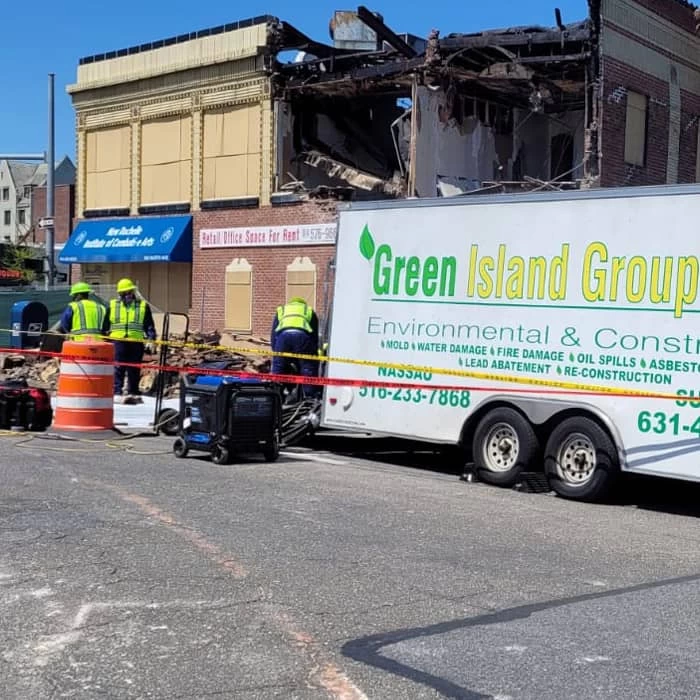
It starts the moment you call. We operate 24 hours a day, 365 days a year, and our target is on-site within one hour. The first priority is stabilizing the property — boarding up openings, tarping the roof if needed, and beginning water extraction from firefighting suppression before mold has a chance to take hold. In Old Brookville, where the Glenwood Landing Fire Department’s volunteer crews may lay over a thousand feet of hose just to reach a home set far back on a two-acre lot, suppression water volume can be significant. We treat that water damage as urgently as the fire damage itself.
From there, we conduct a full assessment — not just the visible burn zone, but the HVAC system, wall cavities, attic space, and every room smoke may have traveled through. If the home was built before 1978, we test for asbestos and lead before any demolition begins. This isn’t optional in New York State — it’s the law, and it protects you from liability down the line.
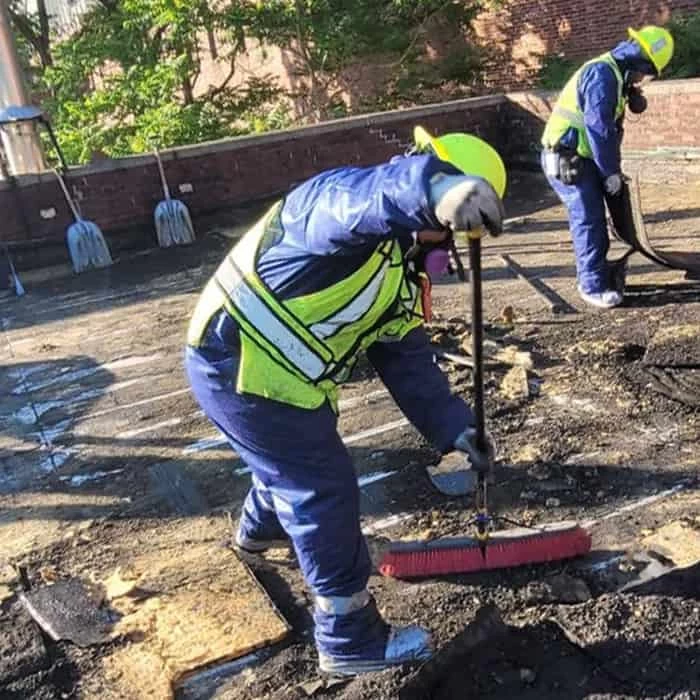
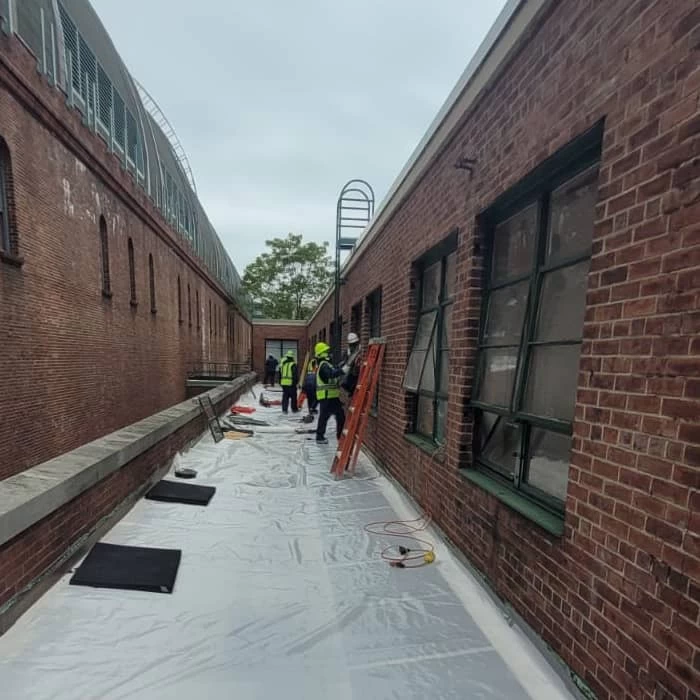
Once the scope is confirmed, we handle abatement, structural drying, soot and smoke remediation, odor elimination, and reconstruction under our Nassau County General Contractor license. We pull the permits, coordinate with Old Brookville’s village building process, and keep you informed at every stage. You don’t have to manage multiple contractors or chase down paperwork. That’s our job.
Fire Smoke and Soot Restoration Services, Old Brookville
What's Actually Included When the Scope Is This Complex
Fire damage restoration in an Old Brookville estate isn’t a single service — it’s a sequence of specialized work that has to happen in the right order by people who are licensed to do it. We cover the full sequence: emergency stabilization, water extraction and structural drying, asbestos and lead testing and abatement where required, soot and smoke remediation across all affected surfaces and systems, HVAC decontamination, smoke odor elimination using professional-grade air scrubbers and thermal fogging, and complete structural reconstruction.
Smoke odor is worth addressing specifically, because it’s the thing homeowners underestimate most. In a large home with extensive woodwork, porous stone, and custom millwork — the kind of finishes common throughout Old Brookville — smoke embeds deeply and doesn’t respond to surface cleaning. We use ozone treatment, thermal fogging, and NADCA-standard duct cleaning to eliminate it at the source, not just mask it temporarily.
Oil heat is also a factor throughout the North Shore. If your home runs on an oil-fired boiler and you’ve experienced a puff-back — that backfire event that coats every room in oily black soot without an actual fire — we handle that too. Puff-back soot is chemically different from dry fire soot and smears if treated with the wrong technique. Our technicians know the difference. We also work directly with your insurance company, document every phase to adjuster-standard specifications, and have helped Nassau County homeowners navigate complex claims on high-value properties with custom finishes that require real replacement cost documentation — not a generic line item.
Does fire damage restoration in Old Brookville require special permits or village approvals?
Yes — and this is an area where working with an unlicensed contractor can create serious problems. Old Brookville has its own village building and zoning process, separate from Nassau County and the Town of Oyster Bay. Any structural reconstruction following fire damage requires permits issued through the village, and the work must comply with Old Brookville’s specific zoning regulations, including setback requirements and architectural guidelines that are enforced strictly to preserve the village’s character.
There’s also a provision in Old Brookville’s village code that affects older or nonconforming structures: if the cost of post-fire reconstruction exceeds 50% of the assessed value of the building, the rebuild may be required to conform to current zoning standards rather than the original footprint. This can have real implications for historic estate properties. We hold a Nassau County General Contractor license and are familiar with Old Brookville’s village permit process — we handle the permitting, coordinate with the village, and make sure your rebuild is fully compliant from the start.
How do I know if my older Old Brookville home has asbestos or lead that fire disturbed?
If your home was built before 1978 — and a significant portion of Old Brookville’s housing stock was, with many homes dating to the 1940s and 1950s — you should assume that asbestos-containing materials and lead paint are present until testing proves otherwise. Fire almost always disturbs these materials: pipe insulation, floor tiles, ceiling tiles, joint compound, roofing materials, and older drywall all commonly contained asbestos in homes built before federal restrictions took effect. Lead paint was standard in residential construction until 1978.
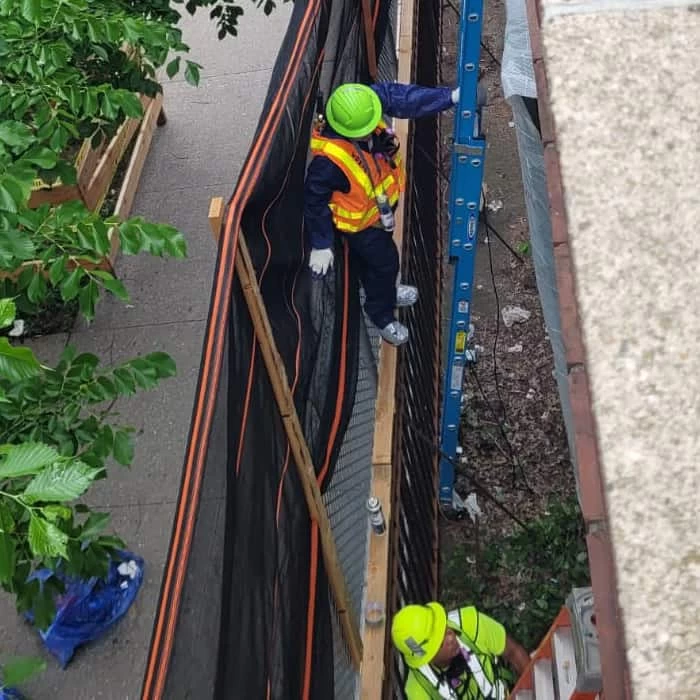
Under New York State law, any contractor performing remediation that disturbs these materials must hold a NYS DOL Asbestos License and USEPA Lead/RRP certification. We hold both. We test before any demolition begins, handle abatement under the proper credentials, and document everything — which protects you legally and ensures your insurance claim reflects the full scope of the hazardous material work that was legally required. Many restoration companies operating in Nassau County do not hold these credentials. That’s worth verifying before you sign anything.
How long does fire damage restoration typically take for a large Old Brookville home?
The honest answer is that it depends heavily on scope, and in Old Brookville, scope tends to be larger than average. A contained kitchen fire in a 4,000-square-foot home with no structural damage and no hazardous materials might take two to four weeks from start to finish. A fire that spreads through an attached garage into the main residence of a 10,000-square-foot Old Brookville estate can take several months, particularly when asbestos abatement, structural reconstruction, and custom finish restoration are all part of the scope.
The factors that extend timelines most are hazardous material testing and abatement, the permitting process through Old Brookville’s village building department, and the lead time for sourcing custom or period-appropriate materials to match original finishes. We give you a realistic timeline at the assessment stage — not an optimistic number designed to win the job. And we keep you updated throughout, so you’re never guessing about where things stand or when you can move back in.
Will my homeowners insurance cover the full cost of fire damage restoration?
Most standard homeowners insurance policies cover fire damage restoration, but the gap between what your policy pays and what your restoration actually costs can be significant — especially in a home with custom millwork, imported stone, antique architectural details, or other finishes that don’t have a standard replacement cost. Insurance adjusters work from line items. If your documentation doesn’t capture the true replacement value of what was lost, you may be underpaid without realizing it until the rebuild is underway.
We bill insurance directly and document every phase of the restoration process to the standard that insurance adjusters require. We’ve helped Nassau County homeowners navigate complex claims on high-value properties, and we understand the difference between a generic replacement and a like-kind replacement that reflects what was actually in your home. If you’re unsure whether your current policy limits are adequate for a full estate restoration, that’s a conversation worth having with your agent before you need it — not after.
What's the difference between smoke damage cleanup and actual smoke odor elimination?
Surface cleaning removes visible soot and residue, but smoke odor is a different problem entirely. Smoke particles are microscopic — they penetrate drywall, embed in wood framing, settle into insulation, saturate upholstery, and travel through HVAC ductwork into rooms that had no visible fire or soot damage at all. In a large Old Brookville estate with multiple HVAC zones, extensive custom woodwork, and porous stone surfaces, smoke contamination can spread across tens of thousands of square feet from a single contained fire.
If you’ve had a previous restoration attempt and the smell keeps returning, it’s because the source was never fully addressed — only masked. Eliminating smoke odor properly requires a combination of professional-grade air scrubbers, ozone treatment, thermal fogging, and NADCA-certified HVAC cleaning that reaches the embedded particles rather than covering them. We use all of these methods and treat HVAC decontamination as a standard part of fire restoration — not an add-on. When the job is done, the odor is gone, not temporarily suppressed.
What should I do immediately after a fire in my Old Brookville home before help arrives?
The most important thing you can do is stay out of the structure until it’s been cleared as safe to enter. After a fire, the air inside a home contains carbon monoxide, particulate matter, and potentially disturbed asbestos or lead — especially in an older Old Brookville property. The Old Brookville Police Department can help coordinate access and safety clearance before you re-enter.
Once you’re safely outside, call your insurance company to report the loss and then call a certified restoration company immediately. Do not attempt to clean soot yourself — oily soot from fire or a puff-back smears when handled incorrectly and can permanently damage surfaces that would otherwise be salvageable. Do not run your HVAC system, which will spread contaminated air throughout the home. Document everything you can see from a safe distance with photos or video before any work begins — this supports your insurance claim. We can be on-site within one hour of your call, and the faster we begin stabilizing the property, the more of it we can save.