Estate-Scale Fire Damage Handled From First Call to Final Walk-Through
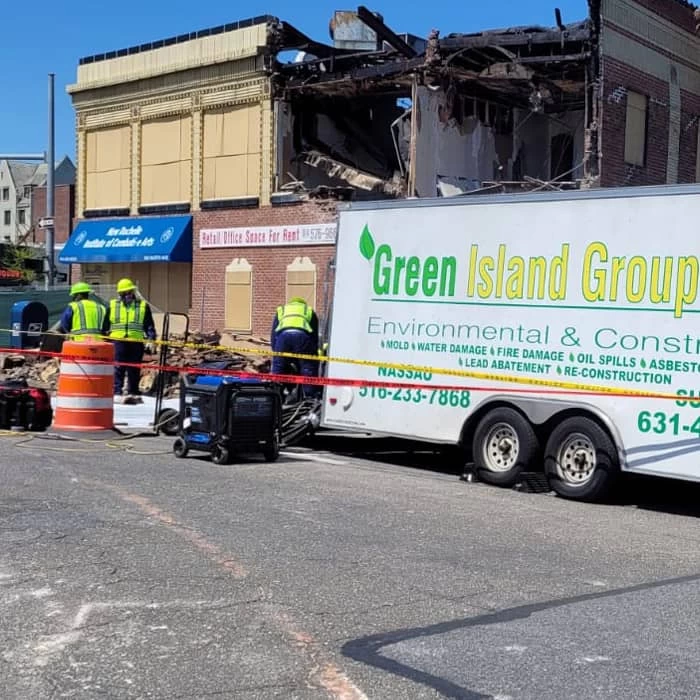
When a fire hits a property in Oyster Bay Cove, the damage doesn’t stop when the flames do. We respond 24/7 — handling smoke, soot, water, and full reconstruction under one roof so nothing falls through the cracks.
I needed a professional consultation explanation of procedure for safe removal of Asbestos in my apartment complex. Without having an account yet, I was very impressed with the caring, knowledgeable and generous advice offered by Jessica, and will look forward to doing business in the future. Thank you so much! I feel much more informed about a sometimes scary endeavor. Peace. Nancy Silva Mineola, NY.
Mia Munoz
Used this company to clean up some water flood in my house. They were fast and easy to work with.very professional, Would recommend to anyone!
Nini Valle
Great company, had a flood and they responded quickly and efficiently. Billed my insurance company directly. I highly recommend this company!
joe colapietro, jr
I had pipe freeze in my basement right before a snow storm and they made to within an hour to help start the clean up process. They we by our side throughout the entire process and even helped with the insurance company. They did such a great job with the cleanup, repair, remidiation, I contracted them to perform the repairs and finishes in the basement. They came with enough manpower and material to get the job done. Leo and Jessica were nothing but a pleasure to deal with!!
Cristian Arredondo c
I had some water damage in my home and Green Island was able to take care of my issue quickly and effectively. I am very pleased with the work they did. They responded quickly and were very professional.
Michael M
Outstanding service! From the office to the field crew everyone was friendly, helpful and responsive. I highly recommend Green Island Group.
Fire Smoke Damage Restoration near Oyster Bay Cove
What Getting Your Oyster Bay Cove Property Back Actually Looks Like
A fire leaves more behind than visible damage. Smoke travels through every room, soot bonds to surfaces within hours, and the water used to put the fire out creates a mold window that opens fast — especially in Oyster Bay Cove, where humidity off the harbor doesn’t give you much buffer. If those secondary issues aren’t addressed immediately alongside the fire damage itself, you’re looking at a much bigger problem two weeks later.
Most homes in Oyster Bay Cove were built between the 1950s and 1970s. That means there’s a real chance your property has asbestos-containing materials in the floor tiles, pipe insulation, or joint compound — materials that a fire disturbs and the law requires to be handled by a licensed abatement contractor. Skipping that step isn’t just risky, it’s illegal, and it can complicate your insurance claim significantly.
When the job is done right, you’re not just getting the visible damage cleaned up. You’re getting a property that’s structurally sound, properly documented for your insurance carrier, and cleared of every hidden hazard that the fire uncovered — so you can move back in with confidence, not questions.
Fire Damage Restoration Service near Oyster Bay Cove
One Licensed Team, Every Step of the Job
We’re a Long Island-based, IICRC-certified restoration company that holds a Nassau County General Contractor license — which means we can legally take your property from emergency response all the way through finished reconstruction without handing you off to someone else. That matters when you’re dealing with a home in Oyster Bay Cove, an incorporated village where the building department has its own permit requirements, current NYS code compliance is mandatory for any reconstruction, and the zoning rules that apply today may differ from when your home was originally built.
We’ve completed over 5,000 restoration projects across New York State, hold NYS DOL Asbestos and Mold licenses, USEPA Lead/RRP certification, and bill insurance carriers directly. We’ve worked through the full range of fire damage scenarios that Long Island’s North Shore produces — from kitchen fires in large estate-style homes to oil burner puff-backs that coat an entire house in soot before anyone realizes what happened. Our experience with Oyster Bay Cove properties specifically means we understand the village’s building code requirements, the prevalence of oil heat systems in the area, and the coastal humidity challenges that accelerate mold growth.
Emergency Fire Restoration Process near Oyster Bay Cove
No Handoffs, No Guesswork — Here's the Actual Process
The first call triggers a 24/7 emergency response. A crew arrives on-site within an hour to assess the damage, secure the property, and start the clock on soot and water mitigation — because both get worse the longer they sit. In a home with a central HVAC system, which is common in Oyster Bay Cove’s larger properties, smoke contamination can spread through every room quickly. That assessment determines the full scope before anything is touched.
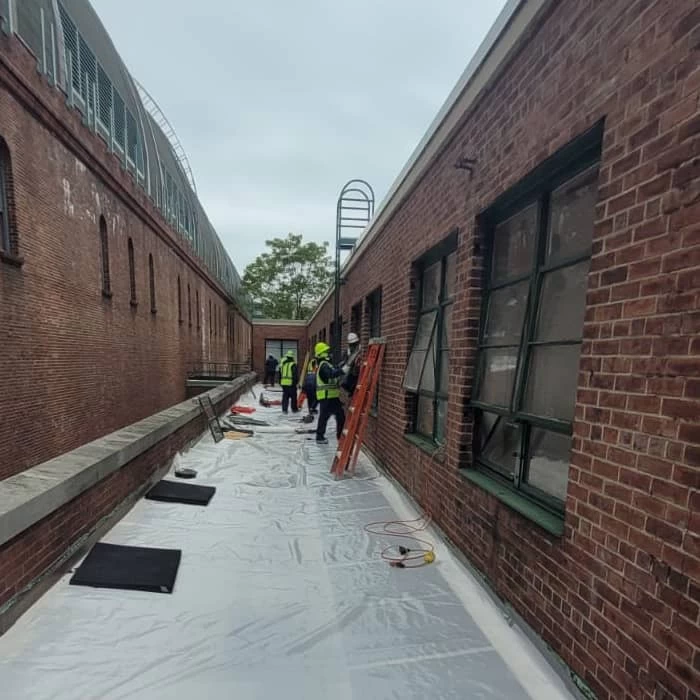
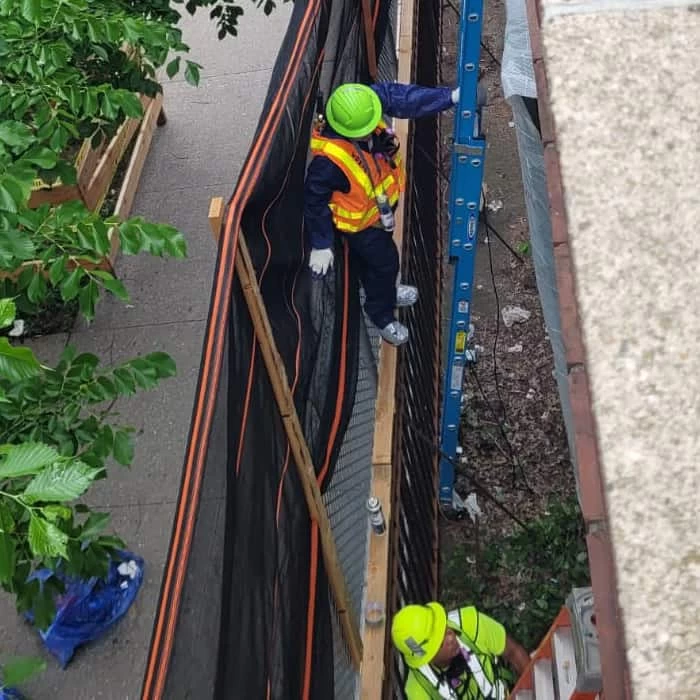
From there, the remediation phase begins: soot removal, smoke odor treatment, water extraction from firefighting suppression, structural drying, and HVAC cleaning. If the fire disturbed any pre-1980 building materials — and in a home built before 1978, that’s a real possibility — we handle licensed asbestos or lead abatement in-house before any reconstruction begins. This isn’t a step that gets outsourced or skipped to move faster.
Once the property is clean, safe, and fully documented, reconstruction starts. Every phase is photographed and logged for your insurance claim. We work directly with your carrier throughout the process, which means you’re not translating between a restoration crew and an adjuster on your own. You stay informed, and the job moves forward.
Fire Damage Repair and Smoke Remediation near Oyster Bay Cove
What's Included When Your Oyster Bay Cove Property Needs the Full Scope
Fire damage restoration near Oyster Bay Cove isn’t a single-service job — it’s a sequence of licensed work that has to happen in the right order. We cover the full sequence: emergency board-up and property securing, soot and smoke remediation, water extraction and structural drying, NADCA-certified HVAC cleaning, asbestos and lead abatement where required, mold prevention and remediation, and complete structural reconstruction. Everything is performed under our Nassau County GC license, which is a legal requirement for reconstruction work in this jurisdiction — not every restoration company holds it.
One service worth understanding if you have oil heat — which most homes in this area do — is puff-back cleanup. When an oil burner malfunctions and backfires, it can push a cloud of fine black soot through your entire duct system in seconds, coating walls, ceilings, and contents throughout the house. It’s not a fire, but it requires the same professional remediation. It’s one of the most common soot-damage calls on Long Island’s North Shore, and we handle it fully under our fire and smoke restoration service.
Throughout every phase, the work is documented to insurance-carrier standards. We handle direct billing and advocate for your claim from start to finish — including material selection for reconstruction, so replacement value is protected, not minimized.
Does fire damage restoration in Oyster Bay Cove require a building permit?
Yes — any reconstruction work following fire damage in Oyster Bay Cove requires a building permit from the Village Building Department. The village adopted the 2020 Codes of New York State, and all repair, alteration, or reconstruction work must comply with current standards, which may differ from the codes that were in place when your home was originally built. Permit applications must include the name and address of the owner, builder, and in many cases a registered architect.
This is one of the reasons working with a Nassau County-licensed general contractor matters. A contractor without that license cannot legally pull permits or perform reconstruction in Oyster Bay Cove. We hold the required Nassau County GC license and have navigated the permit and inspection process for properties in incorporated Nassau County villages — so you’re not figuring out the building department on your own while you’re displaced from your home.
My home was built in the 1960s — does fire damage create an asbestos risk?
It can, and it’s worth taking seriously. Homes built before 1980 commonly contain asbestos in floor tiles, pipe insulation, joint compound, ceiling tiles, and HVAC ductwork — all materials that were standard in construction during that era on Long Island. When fire or smoke damage occurs, those materials can be disturbed and become a regulated hazard. New York State law requires a licensed asbestos contractor to handle any abatement work, and that applies regardless of whether the damage looks minor.
The same applies to lead paint. Homes built before 1978 are subject to USEPA Lead/RRP regulations for any renovation, repair, or painting work — which is exactly what fire restoration involves. We hold both the NYS DOL Asbestos License and USEPA Lead/RRP Certification, so these steps are handled in-house and in the correct order. Skipping them doesn’t just create a health risk — it can void your insurance coverage or create liability if the property is later sold.
How quickly does mold become a problem after a fire in Oyster Bay Cove?
Faster than most people expect. Mold can begin growing within 24 to 48 hours of water exposure, and that clock starts the moment firefighting water hits your floors, walls, and structural materials. In Oyster Bay Cove specifically, the coastal humidity from Oyster Bay Harbor and Long Island Sound means ambient moisture levels are already elevated — which compresses that timeline even further compared to an inland property.
This is why water extraction and structural drying aren’t secondary concerns in a fire restoration job — they’re immediate priorities that run parallel to smoke and soot remediation. We hold a NYS DOL Mold License and address water damage and mold risk at the same time as the fire damage, not as a separate follow-up engagement. Waiting to see if mold develops before acting almost always results in a larger, more expensive remediation scope.
Will my homeowner's insurance cover fire damage restoration costs in Oyster Bay Cove?
In most cases, yes — standard homeowner’s insurance policies cover fire damage restoration, including smoke remediation, water extraction from firefighting suppression, and structural reconstruction up to your policy’s replacement cost value. The key word is “properly documented.” Insurance carriers will scrutinize large claims, and for a property in Oyster Bay Cove where home values regularly exceed $2 million, the difference between a well-documented claim and a poorly documented one can be substantial.
We bill insurance carriers directly and document every phase of the restoration process to the standards that adjusters require. Our IICRC certification is specifically recognized by insurance companies when reviewing restoration documentation. We also accompany clients through material selection for reconstruction, which protects your right to fair replacement value rather than a lowest-cost substitute. You don’t need to navigate the claim process alone — that advocacy is part of our service.
What is an oil burner puff-back and do I need professional cleanup in Oyster Bay Cove?
A puff-back happens when an oil-fired furnace malfunctions and backfires, pushing a cloud of fine black soot and oil residue through the burner and into your home’s duct system. It can coat walls, ceilings, furniture, and every porous surface throughout the house in a matter of seconds — and because oil heat is the norm in Oyster Bay Cove and across Long Island’s North Shore, it’s one of the most common soot-damage calls in this area, particularly during heating season from October through April.
Yes, professional cleanup is necessary. The soot from a puff-back is oily and acidic, which means it bonds to surfaces quickly and causes permanent staining if not treated correctly. Standard cleaning methods spread it rather than remove it. We are NADCA-certified for HVAC cleaning, which is essential after a puff-back because the duct system is typically the primary contamination pathway. A full puff-back remediation includes air scrubbing, duct cleaning, surface decontamination, and odor elimination throughout the affected areas.
How long does fire damage restoration typically take for a large home in Oyster Bay Cove?
The timeline depends on the scope of damage, but for a larger property — and most homes in Oyster Bay Cove are substantial, many exceeding 5,000 square feet — a full fire restoration can range from several weeks to a few months when reconstruction is involved. A contained kitchen fire with smoke spread through the HVAC system might be resolved in two to four weeks. A fire with significant structural damage, asbestos abatement requirements, and full room reconstruction will take longer, and that’s not something to rush.
What affects the timeline most in Oyster Bay Cove specifically is the permitting process. The Village Building Department requires permits for reconstruction work, and getting those approved adds time to the schedule — but it’s a non-negotiable step. We initiate the permit process early, work directly with the village’s requirements, and keep the job moving without cutting corners that would create problems during the final inspection or when the property is eventually sold.