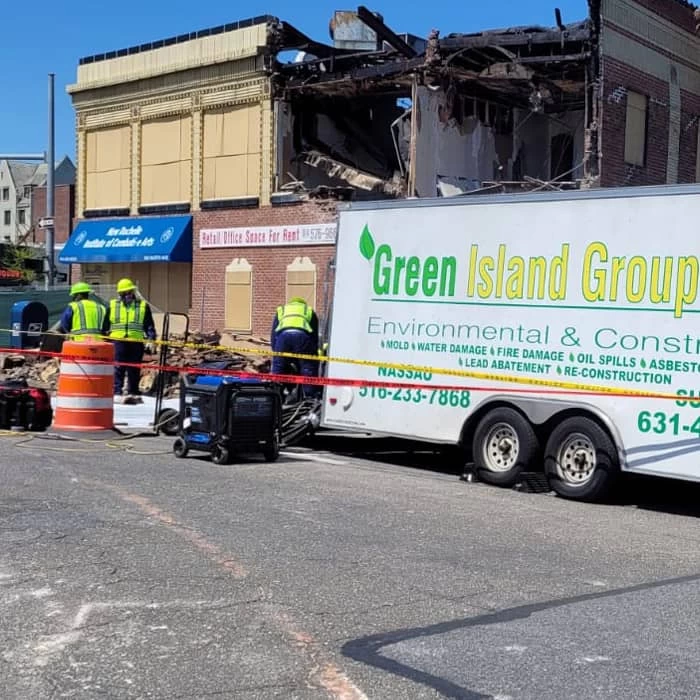
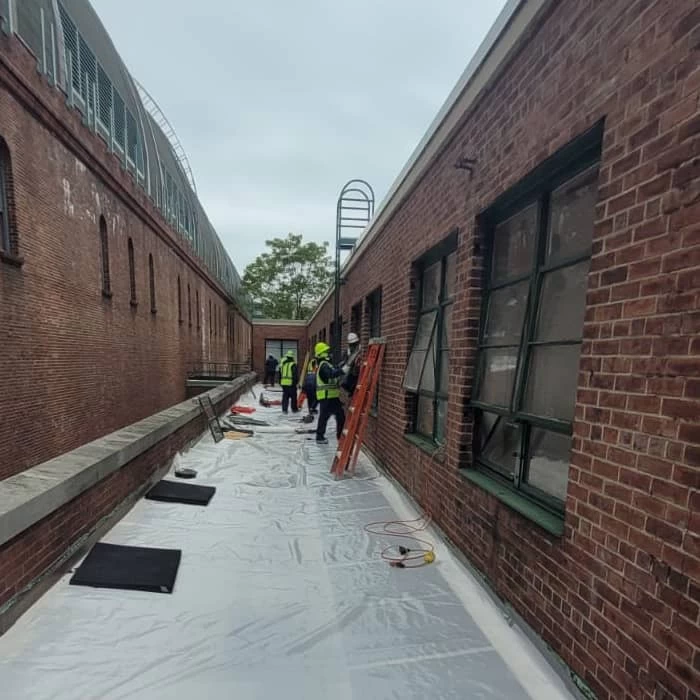
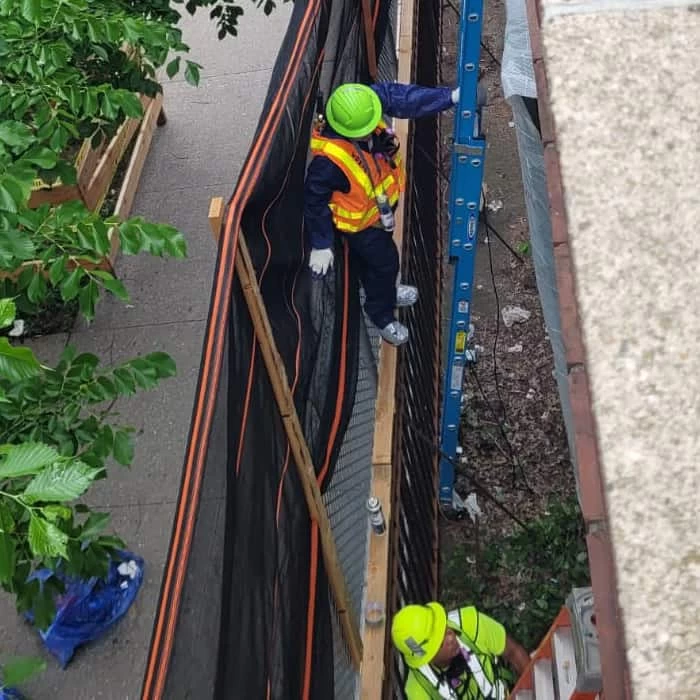
I needed a professional consultation explanation of procedure for safe removal of Asbestos in my apartment complex. Without having an account yet, I was very impressed with the caring, knowledgeable and generous advice offered by Jessica, and will look forward to doing business in the future. Thank you so much! I feel much more informed about a sometimes scary endeavor. Peace. Nancy Silva Mineola, NY.
Mia Munoz
Used this company to clean up some water flood in my house. They were fast and easy to work with.very professional, Would recommend to anyone!
Nini Valle
Great company, had a flood and they responded quickly and efficiently. Billed my insurance company directly. I highly recommend this company!
joe colapietro, jr
I had pipe freeze in my basement right before a snow storm and they made to within an hour to help start the clean up process. They we by our side throughout the entire process and even helped with the insurance company. They did such a great job with the cleanup, repair, remidiation, I contracted them to perform the repairs and finishes in the basement. They came with enough manpower and material to get the job done. Leo and Jessica were nothing but a pleasure to deal with!!
Cristian Arredondo c
I had some water damage in my home and Green Island was able to take care of my issue quickly and effectively. I am very pleased with the work they did. They responded quickly and were very professional.
Michael M
Outstanding service! From the office to the field crew everyone was friendly, helpful and responsive. I highly recommend Green Island Group.
Your Home Back — Not Just Cleaned, Actually Restored
When fire hits a home on Long Island’s North Shore, the damage rarely stays where the flames did. Smoke travels through ductwork, seeps into wall cavities, and embeds itself in every porous surface it can reach. By the time the fire department leaves your Oyster Bay property, the clock is already running on soot bonding, odor setting, and water from suppression efforts quietly building toward mold.
What you need isn’t just someone to wipe down the walls. You need a company that can assess the full scope, start drying and cleaning immediately, and carry the job all the way through reconstruction — without handing you off to someone else halfway through. That’s exactly how we work.
Oyster Bay’s housing stock adds another layer that most restoration companies aren’t equipped to handle. A significant number of homes here — especially in and around the hamlet, Oyster Bay Cove, and Cove Neck — were built well before 1980. That means fire in these structures doesn’t just damage the building. It can disturb asbestos in floor tiles, pipe insulation, or joint compound. It can expose lead paint on original trim and windows. Handling that correctly isn’t optional — it’s legally required in New York State. We hold the NYS DOL licenses for both asbestos and mold remediation, so nothing stops mid-job waiting on a subcontractor who may or may not show up.
One License Covers the Cleanup. Another Covers the Rebuild.
We’re a Long Island-based restoration and environmental services company with over 5,000 completed projects across New York State. We hold General Contractor licenses in Nassau County, Suffolk County, and New York City — which means we’re not stopping at remediation and leaving you to find someone else for the rebuild. That full-service capability is rare in this industry, and in a community like Oyster Bay, where homes carry real architectural and financial value, it matters.
Our team is IICRC-certified for fire and water damage restoration — the credential insurance carriers recognize when processing claims. We also carry NYS DOL Asbestos Licensure, NYS DOL Mold Licensure, and USEPA Lead/RRP Certification. For homeowners in the hamlet and surrounding villages like Mill Neck and Laurel Hollow, where older construction is the norm, those credentials aren’t background noise. They’re what make a complete, legal, and safe restoration actually possible.
We bill insurance directly, document every phase of the job, and have walked hundreds of Long Island families through the claims process from start to finish.
No Guesswork — Here's Exactly What Happens After You Call
The first thing we do is show up — within one hour, any time of day or night. On arrival, our team assesses the full scope of damage: fire and char, smoke and soot penetration, water from suppression, and any structural concerns. If your Oyster Bay home was built before 1980, that initial assessment includes identifying potential asbestos or lead-containing materials that may have been disturbed — because in Nassau County, that determination has to happen before any demolition or debris removal begins.
From there, water extraction and structural drying start immediately. Soot and smoke residue are addressed using IICRC-standard cleaning methods across all affected surfaces, including HVAC ductwork, which carries smoke far beyond the room where the fire started. Odor elimination follows — not just masking it, but neutralizing it with ozone treatment, thermal fogging, and air scrubbing. If your oil burner was involved or if a puff-back contributed to the damage, that system gets cleaned and cleared as part of the process, not as an add-on.
Once remediation is complete, reconstruction begins under our Nassau County General Contractor License. Permits through the Town of Oyster Bay Building Department are handled as part of the job. If your property sits within one of the incorporated villages — Oyster Bay Cove, Cove Neck, or Mill Neck — the permitting process routes through that village’s building department instead, and we know the difference. The rebuild is done to match your home’s pre-loss condition, not just close the walls and call it done.
Smoke and Fire Restoration Services, Oyster Bay NY
What's Actually Included When the Whole Job Is Yours
Fire damage restoration with us covers the full range — emergency board-up and tarping to secure the property, water extraction and structural drying from suppression efforts, soot and smoke cleaning on all affected surfaces, odor elimination through ozone and thermal fogging, NADCA-certified HVAC duct cleaning, and complete reconstruction under a Nassau County GC license. There’s no point where the job gets handed off and you’re left managing two separate contractors.
For Oyster Bay homeowners specifically, the hazardous materials piece is often the part that catches people off guard. Homes in the hamlet and the surrounding Gold Coast villages frequently contain asbestos-containing materials and lead paint — materials that are regulated by New York State law and cannot legally be disturbed without a licensed contractor on-site. Our NYS DOL Asbestos and Mold licenses mean that part of the job gets handled in-house, on schedule, without the delays that come from trying to coordinate a separate abatement company after the fact.
Insurance documentation is built into every step. We photograph and report damage in the format insurance carriers expect, bill directly, and stay in contact with your adjuster so you’re not the one translating between your contractor and your insurance company. For homeowners in a community where property values run well above the Nassau County average, having that claims process handled correctly — not just quickly — is worth a lot.
How quickly does fire damage restoration need to start in Oyster Bay?
The short answer is: as fast as possible, and not just because it sounds urgent. Soot is acidic. Within hours of a fire, it begins permanently bonding to walls, ceilings, metal fixtures, and porous materials throughout your home. The longer it sits, the more surface damage compounds — and the more expensive the restoration becomes. Smoke odor also sets deeper the longer it’s left untreated.
There’s a second clock running at the same time. The water used to extinguish the fire soaks into flooring, drywall, insulation, and structural framing. In Oyster Bay’s coastal climate, where ambient humidity is already elevated year-round, mold can begin developing within 24 to 48 hours of that water exposure. Getting a restoration team on-site immediately isn’t about being dramatic — it’s about limiting total damage and total cost. We operate 24/7 and target on-site arrival within one hour of your call, specifically because those first hours are when the most damage control is possible.
Will my homeowner's insurance cover fire damage restoration costs?
In most cases, yes — fire damage is a covered peril under standard homeowner’s insurance policies, and that coverage typically extends to smoke damage, water damage from firefighting efforts, and the cost of temporary housing if your home is uninhabitable. That said, the specifics depend on your policy, your carrier, and how the claim is documented.
This is where the restoration company you choose makes a real financial difference. Insurance carriers pay based on documentation. A company that photographs thoroughly, scopes damage accurately, and submits reports in the format adjusters expect will get you a more complete settlement than one that doesn’t. We bill insurance directly and have guided hundreds of Long Island homeowners through this process. For Oyster Bay residents with high-value properties — where a single fire claim can easily reach six figures — having someone in your corner who knows how to document and communicate with your carrier is a meaningful financial advantage.
Does fire damage in an older Oyster Bay home require asbestos testing?
If your home was built before 1980, the answer is almost certainly yes — and New York State law backs that up. Homes of that era commonly contain asbestos in floor tiles, pipe insulation, ceiling tiles, textured ceilings, and joint compound. When fire occurs in those structures, the heat and physical disturbance can release asbestos fibers into the air. Before any demolition or debris removal can legally begin, a licensed asbestos inspector needs to assess the affected areas.
In Oyster Bay, this applies to a significant portion of the housing stock — including many of the homes in the hamlet itself, as well as properties in Oyster Bay Cove, Cove Neck, and Mill Neck, where pre-war and early 20th-century construction is common. A restoration company without NYS DOL Asbestos Licensure cannot legally perform that abatement work. They have to stop, bring in a separate licensed contractor, and wait — which costs time and creates coordination gaps. We hold that license in-house, which means the assessment, abatement, and restoration stay on one timeline, under one team.
What's the difference between fire damage cleanup and full fire damage restoration?
Cleanup is removing what’s obviously damaged — debris, charred materials, surface soot. Restoration is returning your home to its pre-loss condition, which includes structural repairs, rebuilding damaged rooms, replacing systems, and addressing everything that fire, smoke, and suppression water affected — including what’s inside the walls and above the ceilings.
Most restoration companies handle the cleanup side and stop there. They’re not licensed general contractors, so they can’t legally or practically manage the rebuild. That means you’re left finding a separate GC, managing two separate contracts, and trying to coordinate timelines between them while you’re displaced from your home. We hold a Nassau County General Contractor License, which means we carry the job from emergency response through finished reconstruction. For a homeowner in Oyster Bay dealing with a significant fire loss on a property that may have original architectural details, period millwork, or historic character worth preserving, having one team manage the entire scope — and do it correctly — is a different outcome than cleanup plus a handoff.
Can smoke damage spread beyond the room where the fire started?
Yes — and it often spreads much further than homeowners expect. Smoke doesn’t stay in the room where the fire burned. It travels through HVAC ductwork, wall cavities, and any gap in the building envelope, embedding microscopic particles and odor compounds in insulation, drywall, carpet, furniture, and every porous surface it reaches. A kitchen fire can result in smoke contamination in bedrooms on the opposite side of the house.
This is especially relevant in older Oyster Bay homes, where HVAC systems and ductwork may be original or have never been professionally cleaned. Smoke moves faster and penetrates deeper through aging duct systems with gaps and loose connections. Surface cleaning alone won’t resolve it — the ductwork has to be addressed, or the odor will persist and continue circulating through the home every time the system runs. We include NADCA-certified HVAC duct cleaning as part of the fire and smoke restoration process, not as a separate upsell, because skipping it means the job isn’t actually finished.
Does Green Island Group handle oil burner puff-back damage in Oyster Bay homes?
Yes, and it’s one of the more common calls we get from Nassau County’s North Shore. Long Island runs heavily on oil heat, and Oyster Bay’s older housing stock means a lot of aging oil burners that haven’t been serviced recently. When one of those burners misfires, it sends a pulse of oily, black soot through the heating system and into the living spaces — coating walls, ceilings, furniture, and everything else in the path of the ductwork. There’s no open flame, but the damage looks and behaves like fire damage and requires the same professional response.
Puff-back soot is particularly stubborn because of its oily composition — it smears if you try to wipe it without the right products and technique, and it embeds in porous surfaces quickly. We handle puff-back cleanup using the same IICRC-certified soot removal process we apply to fire restoration, including HVAC cleaning to clear the duct system that distributed the soot in the first place. If your home is heated with oil and you’re dealing with the aftermath of a puff-back, the process and the team are the same as a fire loss — because to your walls and ceilings, the difference doesn’t matter.