Historic Buildings Here Don't Forgive a Rushed Restoration
When fire hits a 19th-century building in the South Street Seaport Historic District, you need more than a cleanup crew you need fire damage restoration done right the first time, with zero shortcuts.
I needed a professional consultation explanation of procedure for safe removal of Asbestos in my apartment complex. Without having an account yet, I was very impressed with the caring, knowledgeable and generous advice offered by Jessica, and will look forward to doing business in the future. Thank you so much! I feel much more informed about a sometimes scary endeavor. Peace. Nancy Silva Mineola, NY.
Mia Munoz
Used this company to clean up some water flood in my house. They were fast and easy to work with.very professional, Would recommend to anyone!
Nini Valle
Great company, had a flood and they responded quickly and efficiently. Billed my insurance company directly. I highly recommend this company!
joe colapietro, jr
I had pipe freeze in my basement right before a snow storm and they made to within an hour to help start the clean up process. They we by our side throughout the entire process and even helped with the insurance company. They did such a great job with the cleanup, repair, remidiation, I contracted them to perform the repairs and finishes in the basement. They came with enough manpower and material to get the job done. Leo and Jessica were nothing but a pleasure to deal with!!
Cristian Arredondo c
I had some water damage in my home and Green Island was able to take care of my issue quickly and effectively. I am very pleased with the work they did. They responded quickly and were very professional.
Michael M
Outstanding service! From the office to the field crew everyone was friendly, helpful and responsive. I highly recommend Green Island Group.
The fire is out. Now the real pressure starts. Smoke is still moving through your HVAC system, soot is etching into surfaces by the hour, and the water the FDNY used to put out the fire is soaking into walls that were built before the Civil War. Every hour that passes without professional intervention makes the damage worse and in a building like yours, more expensive to fix.
Living in Peck Slip means your home isn’t just valuable on paper. The wide-plank floors, the original brick, the cast-iron details these aren’t things you can order from a catalog. When fire smoke damage restoration is handled correctly here, you get those things back. When it isn’t, you lose them permanently. The difference almost always comes down to who you called and how fast they moved.
There’s also the layer most contractors don’t mention upfront: buildings in this part of Lower Manhattan were constructed well before 1978, which means lead paint is almost certainly present. Pre-1980 construction often contains asbestos in pipe insulation, floor tiles, and fireproofing. A fire disturbs all of it. You need a team licensed to handle hazardous materials as part of the restoration not a separate contractor you have to track down while you’re already displaced.
One Company Handles Everything No Handoffs, No Gaps
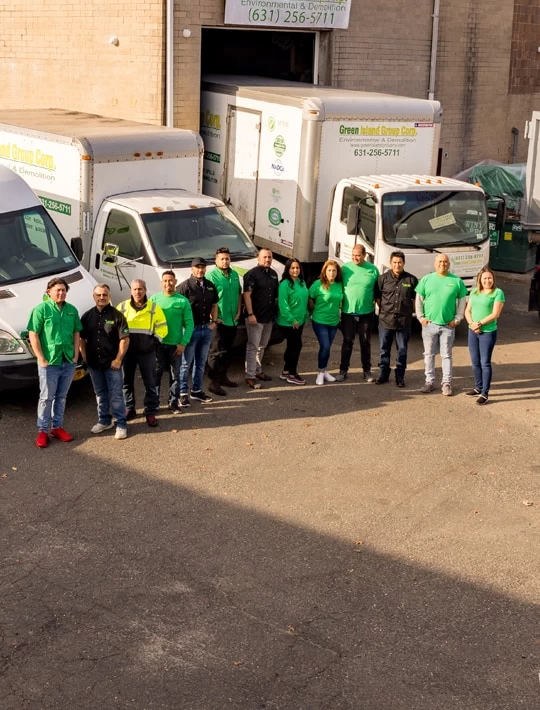
We’re a licensed environmental remediation and restoration contractor serving New York City and the surrounding metro area. We’re not a national franchise with a local phone number we’re a team that works in this city every day, understands its building stock, and knows what it takes to move a restoration project through NYC’s permitting and regulatory process without stalling.
For property owners along Peck Slip and throughout the South Street Seaport Historic District, that matters more than it might anywhere else. Exterior restoration work on a contributing building here requires NYC Landmarks Preservation Commission review. We operate within NYS, NYC, and USEPA regulatory frameworks as a standard part of how we work not as an afterthought.
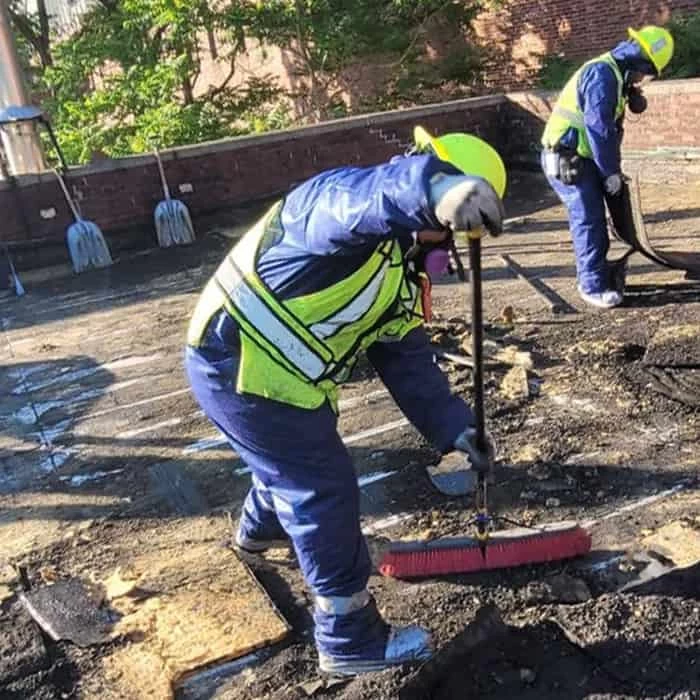
We handle fire restoration, water damage, mold remediation, asbestos abatement, lead abatement, and full structural reconstruction under one license. That means one point of contact from the first emergency call to the final walkthrough and no moment where the project falls into a gap between contractors.
From Emergency Call to Finished Restoration Here's the Sequence
The first call triggers immediate response. We’re available 24/7, and in a dense multi-unit building like most of those along Front Street or the Peck Slip block, speed matters smoke migrates through shared ductwork and utility chases fast, and neighboring units can sustain serious damage from a fire that never touched their walls. Emergency board-up and structural stabilization happen first, followed immediately by moisture extraction, since firefighting water left in original masonry and timber framing creates a mold risk that can activate within 24 to 48 hours.
Once the site is stabilized, the full assessment begins. That includes testing for asbestos and lead disturbance standard procedure in any pre-1980 building in this area and a building-wide smoke and soot evaluation, not just the unit of origin. In the South Street Seaport Historic District, any exterior work that follows also requires coordination with the NYC Landmarks Preservation Commission, and we handle that process as part of the project scope.
From there, remediation, abatement, and reconstruction proceed under one team. You’re kept informed throughout, and the project doesn’t close until the work meets both your standards and the applicable regulatory requirements including LPC sign-off where required.
Everything the Job Actually Requires All Under One Roof
Fire damage restoration in Peck Slip isn’t a single-service job. The scope almost always includes smoke and soot removal, odor neutralization at the molecular level, water extraction and structural drying, mold prevention, hazardous material abatement, and reconstruction and in this neighborhood, it frequently includes LPC compliance work on top of all of that. We cover every one of those categories in-house, which means the project moves faster, the documentation is cleaner, and your insurance claim has one clear paper trail instead of four.
Speaking of insurance we bill your carrier directly. That’s not a minor convenience. When you’re dealing with a high-value property in a Manhattan historic district and a claim that could run $40,000 to $70,000 or more, having a contractor who knows how to document the work in a way that supports full recovery is genuinely significant. We’ve done this before. We know what adjusters need.
The buildings along Peck Slip, Water Street, and the Front Street rowhouse block present specific challenges that most restoration contractors aren’t equipped for: original timber framing, 19th-century masonry, cast-iron structural elements, and the East River humidity that accelerates both corrosion and mold growth after water intrusion. Our team is built for exactly this kind of work not adapted from a suburban restoration template, but designed from the ground up for the New York City environment.
Does fire damage restoration in a Peck Slip historic building require special permits?
Yes and this is one of the most important things to understand before you hire anyone. Peck Slip sits within the South Street Seaport Historic District, designated by the NYC Landmarks Preservation Commission in 1977. Any restoration work that affects the exterior of a contributing building including window replacement, facade repair, masonry work, or structural reconstruction requires LPC review and approval before permanent repairs can be made.
Emergency stabilization work like board-up and tarping can proceed without prior LPC approval, but the moment you move into actual repair and reconstruction, the LPC process applies. Contractors who aren’t familiar with this layer can inadvertently use non-approved materials or methods, which triggers stop-work orders, mandatory removal of non-compliant work, and fines. That adds months and significant cost to a project that’s already stressful enough. Working with a contractor who handles LPC coordination as a standard part of their process not something they figure out mid-project is the only way to avoid that outcome.
My building was built in the 1800s is there asbestos or lead to worry about after a fire?
Almost certainly, yes. Buildings constructed before 1978 very likely contain lead-based paint, and buildings built before 1980 frequently contain asbestos in pipe insulation, floor tiles, ceiling materials, and original fireproofing. In the South Street Seaport Historic District, where the majority of residential buildings date to the early-to-mid 1800s, both are standard considerations not edge cases.
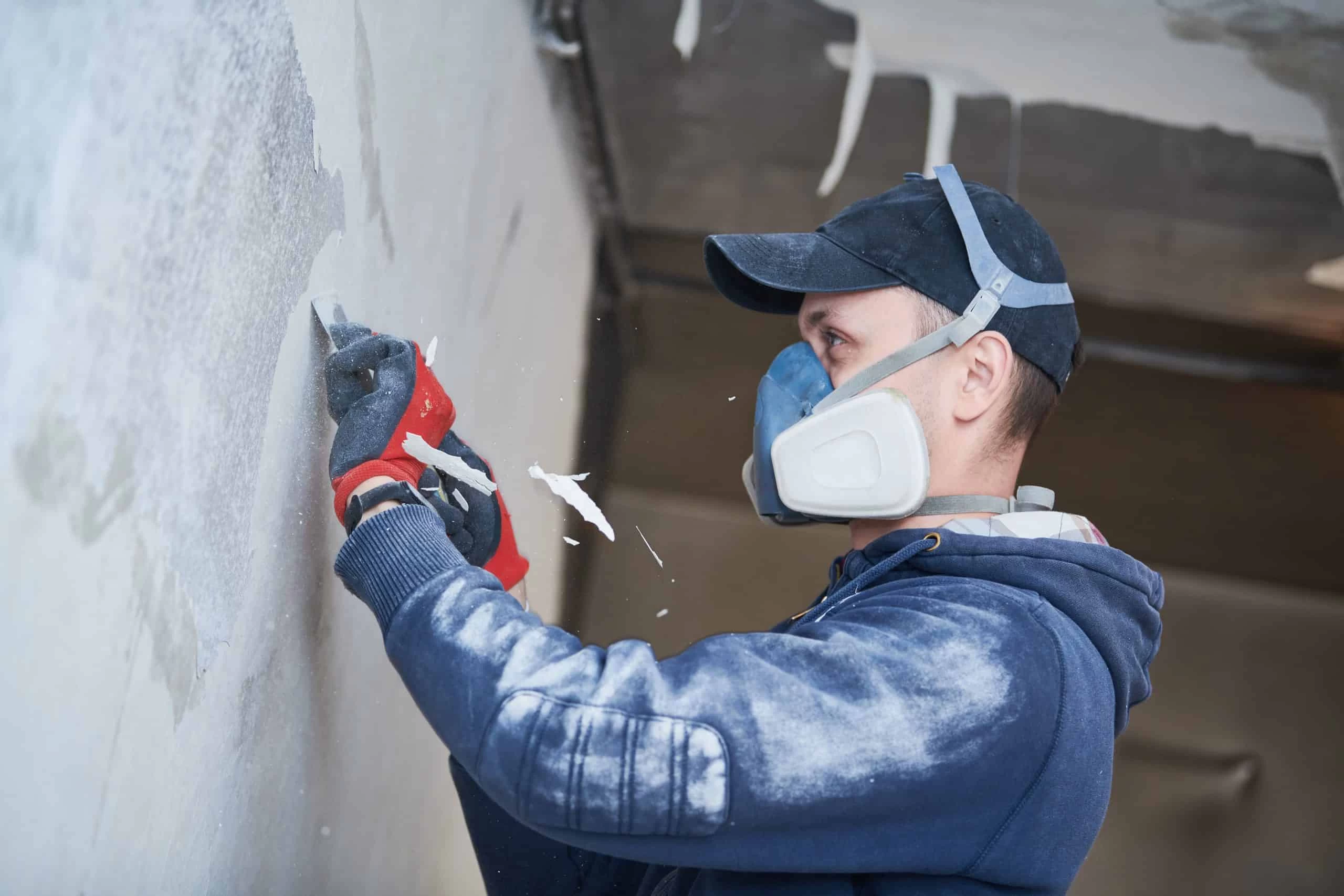
When a fire occurs, it disturbs these materials. Asbestos fibers and lead dust become airborne and create serious health risks for occupants, neighbors, and anyone working in the building. Under New York State and USEPA regulations, this work must be handled by a licensed abatement contractor it cannot legally be done by a general restoration crew. We hold NYS licenses for both asbestos abatement and lead abatement, which means we can address these hazards within the same project scope as your fire restoration, without you having to locate and coordinate a separate environmental contractor while you’re already dealing with displacement.
How quickly does mold become a problem after a fire in Lower Manhattan?
The standard industry window is 24 to 48 hours after water intrusion but in a building along the East River waterfront near Peck Slip, that timeline can compress. Lower Manhattan’s ambient humidity and the salt air off the water create conditions that accelerate mold growth in soaked structural materials, particularly in the original brick masonry and timber framing common to Seaport-area buildings. If the FDNY deployed significant water to suppress a structural fire, those materials are saturated in ways that standard drywall construction simply isn’t.
This is why moisture extraction and structural drying need to begin as part of the emergency response not after the smoke assessment, not after the insurance adjuster visits, but immediately. Mold remediation is significantly more expensive and disruptive than mold prevention. The goal is to get ahead of it during the first 24 hours, which is why 24/7 availability and rapid deployment aren’t just marketing language for a property in this area they’re operationally critical.
Will my insurance cover fire damage restoration, and how does the claims process work?
Standard homeowners and condo insurance policies typically cover fire damage restoration, including smoke damage, soot removal, water damage from firefighting efforts, and structural repairs. In Manhattan, where property values are high and restoration costs in a pre-war or historic building can run significant figures depending on scope, getting the claim documented correctly from the beginning makes a real financial difference.
We bill insurance carriers directly and produce the documentation adjusters need to process claims accurately. That includes itemized scope of work, before-and-after documentation, hazardous material testing results, and LPC compliance records where applicable. If your building has a HOA or management company involved common in the Seaport’s converted historic buildings and newer towers alike we interface with those entities directly as well. The goal is to keep you out of the middle of a process that has a lot of moving parts, so you can focus on getting your household back to normal.
Can smoke damage from a fire in one unit affect my apartment in Peck Slip?
Yes, and it’s more common than most people expect. In the dense, multi-unit buildings along Peck Slip, Front Street, and the surrounding Seaport blocks, smoke and fine soot particles travel through shared HVAC ductwork, elevator shafts, stairwells, and utility chases reaching units on multiple floors that never saw flames or direct smoke. Fine soot particles contain carcinogens and heavy metals that pose long-term respiratory risks when disturbed, and the smell alone can make a unit uninhabitable.
If there’s been a fire in your building even in a unit far from yours it’s worth having a professional assessment done on your space. A thorough fire smoke damage restoration evaluation covers the full building, not just the unit of origin. Our assessment process accounts for smoke migration patterns in multi-unit structures, which is exactly the kind of building stock that defines this neighborhood. If contamination is found in your unit, remediation can be scoped and documented separately for insurance purposes.
How long does fire damage restoration typically take for a Peck Slip property?
The honest answer is that it depends heavily on scope and in Peck Slip, scope tends to be more complex than in a typical residential restoration project. A single-unit fire with contained smoke damage and no hazardous material involvement might be resolved in two to three weeks. A more significant structural fire in a landmarked building, with asbestos abatement, LPC permit coordination, and full reconstruction, can take several months.
The factors that most commonly extend timelines in this area are hazardous material testing and abatement, LPC review for exterior work, and the complexity of working with original historic materials that require skilled craftsmanship rather than standard replacement. NYC Buildings Department permits add time as well. What we can control is how efficiently the project moves through each phase and because we handle every element in-house, there’s no waiting on a subcontractor to finish before the next phase can begin. We’ll give you a realistic timeline at the assessment stage so you can make informed decisions about temporary housing and insurance coverage for displacement costs.