When Your North Fork Home Needs More Than a Cleanup
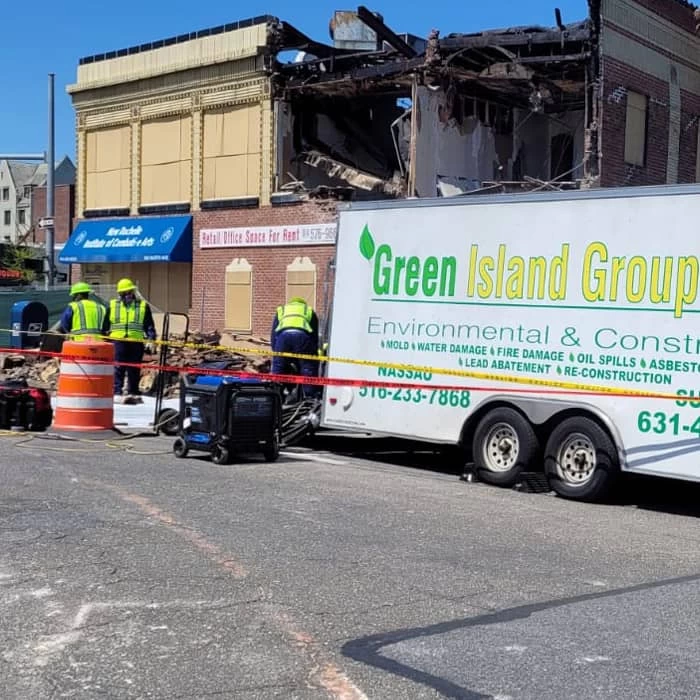
Fire damage in a Peconic home doesn’t stop at the burn marks. Smoke travels, water lingers, and the clock starts the moment the fire is out. We respond fast and handle everything from emergency stabilization to full restoration.
I needed a professional consultation explanation of procedure for safe removal of Asbestos in my apartment complex. Without having an account yet, I was very impressed with the caring, knowledgeable and generous advice offered by Jessica, and will look forward to doing business in the future. Thank you so much! I feel much more informed about a sometimes scary endeavor. Peace. Nancy Silva Mineola, NY.
Mia Munoz
Used this company to clean up some water flood in my house. They were fast and easy to work with.very professional, Would recommend to anyone!
Nini Valle
Great company, had a flood and they responded quickly and efficiently. Billed my insurance company directly. I highly recommend this company!
joe colapietro, jr
I had pipe freeze in my basement right before a snow storm and they made to within an hour to help start the clean up process. They we by our side throughout the entire process and even helped with the insurance company. They did such a great job with the cleanup, repair, remidiation, I contracted them to perform the repairs and finishes in the basement. They came with enough manpower and material to get the job done. Leo and Jessica were nothing but a pleasure to deal with!!
Cristian Arredondo c
I had some water damage in my home and Green Island was able to take care of my issue quickly and effectively. I am very pleased with the work they did. They responded quickly and were very professional.
Michael M
Outstanding service! From the office to the field crew everyone was friendly, helpful and responsive. I highly recommend Green Island Group.
The visible damage is only part of the story. Smoke moves through HVAC systems and wall cavities within minutes of a fire, reaching rooms that never saw a flame. In older Peconic homes many built well before 1978, with plaster walls, original woodwork, and aging ductwork that invisible damage can be far more extensive than what you can see standing in the room.
Then there’s the water. Firefighting suppression delivers water at a rate that saturates floors, walls, and structural framing fast. Peconic sits between Peconic Bay to the south and Long Island Sound to the north, and that dual-waterfront geography means ambient humidity stays high year-round. In that environment, mold doesn’t wait it can begin growing within 24 to 48 hours of water intrusion. If the structure isn’t dried properly and quickly, you’re looking at a second problem layered on top of the first.
What changes when fire damage restoration is done right is that you get your home back not a version of it that smells like smoke six months later or hides mold behind freshly painted drywall. You get a property that’s been assessed thoroughly, treated at the source, and restored to the standard it deserves. For a Peconic home, that standard is high. And that’s exactly what we hold ourselves to.
We’re a locally owned Long Island restoration company not a franchise, not a call center, not a crew dispatched from somewhere that has never seen a North Fork property. When you call us, you reach people who know Suffolk County, understand the character of homes in Southold Town and Peconic, and have our name and reputation attached to every job we take on.
Customers consistently mention Leo and Jessica by name in their reviews. That’s not an accident it’s how we work. You get a real point of contact who knows your project from the first call to the final walkthrough. For Peconic homeowners managing a high-value property, sometimes from a distance, that kind of direct accountability matters more than any marketing claim we could make.
We’ve helped homeowners across Nassau and Suffolk Counties navigate fire damage, insurance claims, and full restoration and we don’t consider the job finished until you walk through your restored home and agree that it’s right.
What Happens From the First Call to the Final Walkthrough
The first thing we do is stabilize the property. That means emergency board-up, securing any structural vulnerabilities, and making sure the building is safe to enter and assess. If you’re not on-site and many Peconic property owners aren’t when damage first occurs, especially on seasonal or second-home properties we document everything thoroughly so you have a clear picture of what happened and what needs to happen next.
From there, we move into assessment and remediation planning. In Peconic, that often means accounting for factors that don’t come up in newer suburban construction: the possibility of asbestos-containing materials in pre-1978 homes, the accelerated mold risk from coastal humidity, and smoke that’s traveled deep into original plaster and wood framing. Before any restoration work begins, we know what we’re dealing with and we build the scope around the actual damage, not a generic checklist.
Then we get to work. Soot and smoke remediation, water extraction and structural drying, odor elimination using thermal fogging and hydroxyl treatment, environmental abatement if needed, and full reconstruction through to finished rooms. Throughout the process, we coordinate directly with your insurance carrier, document every phase, and keep you informed. Southold Town building permits are handled as part of the reconstruction phase, and we know what the Town requires. You don’t have to figure that out on your own.
Everything the Damage Requires, Handled Under One Roof
Fire damage restoration in Peconic isn’t a single-trade job. It’s emergency response, environmental remediation, water mitigation, structural drying, odor elimination, and reconstruction all of which need to happen in the right sequence, by people who know what they’re doing at each stage. We handle the full scope, which means you’re not coordinating between a cleanup crew, a mold company, an abatement contractor, and a general contractor while your home sits open.
For properties in Peconic and the broader Town of Southold, that full-scope capability matters in specific ways. Many homes here were built before asbestos-containing materials were phased out, and fire disturbs those materials in ways that require New York State-certified abatement not just cleanup. Our environmental remediation credentials cover that work legally and safely, in-house, without subcontracting to an unknown third party. We also carry the mold remediation capability to address what Peconic’s coastal humidity can accelerate once water enters a structure.
On the reconstruction side, we work within Southold Town’s permitting process and bring the property back to finished condition not just structurally sound, but livable. Smoke odor is treated at the molecular level, not masked. Surfaces are restored, not just painted over. And if your property is a seasonal or investment home, we communicate throughout the process so you stay fully informed regardless of where you are.
What should I do immediately after a house fire in Peconic, NY?
The most important thing you can do in the first hour is call a restoration company not wait for the insurance adjuster. The fire marshal will clear the property when it’s safe to enter, but once that clearance comes, damage starts compounding fast. Soot begins permanently etching surfaces within 24 to 72 hours. In Peconic’s coastal humidity, water from fire suppression can trigger mold growth in less than 48 hours. Every hour you wait narrows the window for preventing secondary damage.
While you’re waiting for clearance, document what you can from a safe distance photos, video, anything that captures the extent of the damage before anything is moved or disturbed. Then call your insurance carrier to open a claim, and call us so we can be ready to respond the moment the property is accessible. We’ll handle the assessment, the documentation, and the coordination from there. You shouldn’t have to manage all of that alone while dealing with the aftermath of a fire.
Does homeowners insurance typically cover fire damage restoration costs?
In most cases, yes standard homeowners insurance policies cover fire damage restoration, including smoke remediation, water extraction from firefighting suppression, and structural repairs. But what the policy covers and what the adjuster initially approves aren’t always the same thing. Insurance companies use estimating software called Xactimate to price restoration work, and adjusters sometimes scope the damage conservatively on the first pass missing hidden smoke damage, underestimating drying requirements, or leaving environmental remediation out of the initial estimate entirely.
That’s where having a restoration company that knows how to work with insurers makes a real difference. We document damage thoroughly, communicate directly with your adjuster, and push back when the scope doesn’t reflect the actual work required. For high-value Peconic properties where the gap between a conservative estimate and a thorough one can be significant, that advocacy matters. We’ve helped homeowners across Suffolk County get claims handled properly and we’ll do the same for you.
How does Peconic's coastal environment affect fire damage and mold risk?
Peconic’s position between Peconic Bay to the south and Long Island Sound to the north creates a persistently humid coastal microclimate. That ambient humidity is one of the most important environmental factors in fire damage restoration here, because the water used to suppress a fire doesn’t just drain away it saturates framing, insulation, subfloors, and wall cavities, and in a high-humidity environment, mold can begin colonizing those materials within 24 to 48 hours.
This is why structural drying isn’t optional it’s one of the most time-sensitive phases of the entire restoration. Industrial dehumidifiers, air movers, and moisture monitoring equipment are deployed immediately after water extraction to bring the structure’s moisture levels down before mold takes hold. If that window is missed, you’re looking at a mold remediation project layered on top of fire and smoke remediation, which adds both cost and timeline to the restoration. Getting a restoration team on-site fast and one that has mold remediation capability is especially important for any property in the Peconic area.
Does fire damage in older Peconic homes require asbestos testing before restoration begins?
If your home was built before 1978, asbestos testing should be part of the initial assessment full stop. Asbestos-containing materials were standard in insulation, floor tiles, roofing materials, and pipe wrap during that era, and many of Peconic’s residential properties, including historic farmhouses and mid-century homes along the North Fork, fall into that category. When fire damages those materials, it can disturb and release asbestos fibers creating a health hazard that requires New York State-certified abatement before any other restoration work can proceed.
This is not something a general restoration company can legally handle without the appropriate environmental credentials. We hold the certifications required for asbestos abatement under New York State Department of Labor regulations, which means we can identify the hazard, contain it, and remediate it in-house without bringing in a separate abatement contractor and adding another layer of coordination to an already complex project. If you’re not sure whether your Peconic property contains asbestos, we’ll assess it as part of the initial inspection.
How long does fire damage restoration take for a home in Peconic?
The honest answer is that it depends on the scope of the damage and in Peconic, several factors can affect that scope in ways that aren’t always obvious upfront. A contained kitchen fire with limited smoke spread and no structural damage might be fully remediated and restored in two to three weeks. A fire that traveled through an older home’s HVAC system, saturated the framing with firefighting water, and disturbed environmental hazards in a pre-1978 structure could take significantly longer sometimes two to three months for full reconstruction.
What we can tell you is that the timeline is directly affected by how quickly restoration begins. The faster soot is addressed, water is extracted, and structural drying starts, the less secondary damage accumulates and the shorter the overall project timeline. For seasonal or second-home properties in Peconic that may sit unoccupied for part of the year, delayed discovery of fire damage can add weeks to the restoration timeline before work even begins. We’ll give you an honest assessment of what to expect after the initial inspection, and we’ll keep you updated throughout every phase.
Can smoke damage spread to parts of my Peconic home that weren't near the fire?
Yes and this is one of the most commonly underestimated aspects of fire damage. Smoke doesn’t stay in the room where the fire burned. It moves through HVAC ductwork, travels through wall cavities, and infiltrates porous materials throughout the structure within minutes of a fire event. In a home with forced-air heating which is common across Peconic and the North Fork, where oil-fired systems and propane heat are standard smoke can be distributed to every room in the house before the fire is even out.
In older Peconic homes with original plaster walls, hardwood floors, and antique woodwork, smoke penetrates deeply into those porous surfaces and leaves behind both residue and odor that surface cleaning cannot reach. Professional smoke remediation addresses this at the source through HEPA air scrubbing, duct cleaning, thermal fogging, and hydroxyl treatment that neutralizes odor molecules embedded in the materials themselves. If a restoration company only cleans what’s visibly damaged and skips the HVAC system and wall cavities, you’ll notice the smell coming back within weeks. That’s not a restoration it’s a temporary fix.