When Your Plainedge Home Takes a Hit, One Call Covers Everything
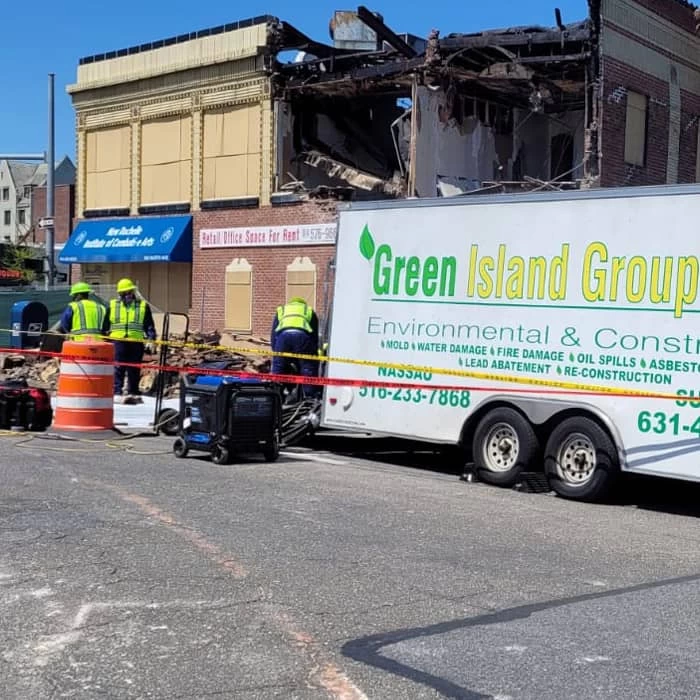
Fire damage moves fast — and so does the window to stop it from getting worse. We respond 24/7 to fire damage restoration calls across Plainedge, handling everything from smoke and soot cleanup to full reconstruction under one Nassau County-licensed roof.
I needed a professional consultation explanation of procedure for safe removal of Asbestos in my apartment complex. Without having an account yet, I was very impressed with the caring, knowledgeable and generous advice offered by Jessica, and will look forward to doing business in the future. Thank you so much! I feel much more informed about a sometimes scary endeavor. Peace. Nancy Silva Mineola, NY.
Mia Munoz
Used this company to clean up some water flood in my house. They were fast and easy to work with.very professional, Would recommend to anyone!
Nini Valle
Great company, had a flood and they responded quickly and efficiently. Billed my insurance company directly. I highly recommend this company!
joe colapietro, jr
I had pipe freeze in my basement right before a snow storm and they made to within an hour to help start the clean up process. They we by our side throughout the entire process and even helped with the insurance company. They did such a great job with the cleanup, repair, remidiation, I contracted them to perform the repairs and finishes in the basement. They came with enough manpower and material to get the job done. Leo and Jessica were nothing but a pleasure to deal with!!
Cristian Arredondo c
I had some water damage in my home and Green Island was able to take care of my issue quickly and effectively. I am very pleased with the work they did. They responded quickly and were very professional.
Michael M
Outstanding service! From the office to the field crew everyone was friendly, helpful and responsive. I highly recommend Green Island Group.
What Gets Saved When the Right Team Shows Up First
Most of the damage after a house fire isn’t from the flames — it’s from what comes next. Acidic soot starts bonding to walls and ceilings within hours. The water firefighters used to put out the fire begins soaking into subfloors and wall cavities. And in a Plainedge home built in the 1950s or 1960s — which describes most of the housing stock here — that moisture doesn’t just create mold risk. It disturbs asbestos floor tiles, lead paint, and older insulation that require licensed handling before any real restoration work can begin.
That’s the reality of fire damage in a mid-century Plainedge home, and it’s why the first contractor you call matters more than most people realize. When you have a $735,000 to $743,000 home on the line — which is roughly where Plainedge median sale prices sit right now — a restoration company that can only handle part of the job isn’t a solution. It’s a delay.
We hold the NYS DOL Asbestos License, USEPA Lead/RRP Certification, IICRC Fire and Smoke Restoration Certification, and a Nassau County General Contractor license. That combination means we can legally and professionally handle every layer of your fire damage — hazardous materials included — without stopping to refer you somewhere else. One company. One call. No gaps in the process.
5,000+ Jobs Done. Every License Plainedge and Nassau County Require.
We’re a Long Island-based restoration company headquartered in Bohemia, NY, with more than 5,000 completed projects across New York State. We’ve worked in homes throughout Plainedge and the surrounding Nassau County neighborhoods — including the older, oil-heated communities that make up the Plainedge and North Massapequa corridor — and we understand exactly what mid-century construction means when fire is involved.
We hold every credential the Nassau County Fire Prevention Ordinance requires of restoration contractors: IICRC FSRT and WRT certifications, NYS DOL Asbestos and Mold Licensing, USEPA Lead/RRP Certification, and a Nassau County General Contractor license that lets us pull Town of Oyster Bay building permits and see the job through to full reconstruction. We’re also NYS and NYC M/WBE certified — a government-verified credential that matters in a market where post-disaster contractor fraud is a real and documented problem.
We’re not a franchise. No call center, no corporate script, no third-party dispatch. When you call us, you reach a locally owned Long Island company whose team is personally accountable for every job we take on.
From Emergency Call to Move-Back-In Day — Here's Exactly What Happens
It starts with a call — any time of day or night. We operate 24/7, and our response to Plainedge is direct via Route 135, the Seaford–Oyster Bay Expressway, which connects straight into the heart of the community. Our goal is to be on-site within an hour, because that first hour determines how much of your home can be saved versus how much will need to be replaced.
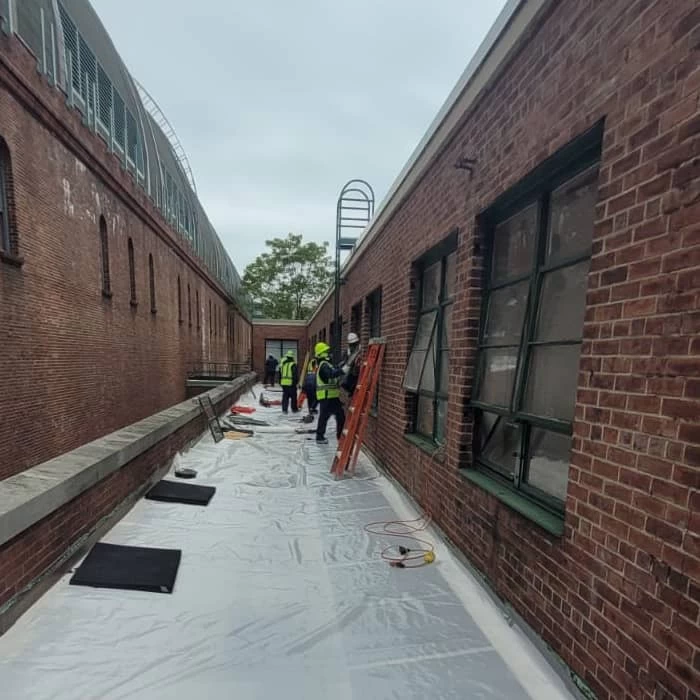
Once on-site, our team does a full assessment before touching anything. In a Plainedge home built before 1970, that assessment includes identifying whether asbestos-containing materials or lead paint have been disturbed by the fire — a legally required step in Nassau County before any demolition or cleanup work begins. If those materials are present, we handle them with licensed technicians under NYS DOL protocols. Simultaneously, water extraction and structural drying begin to address the firefighting suppression water before mold has a chance to take hold.
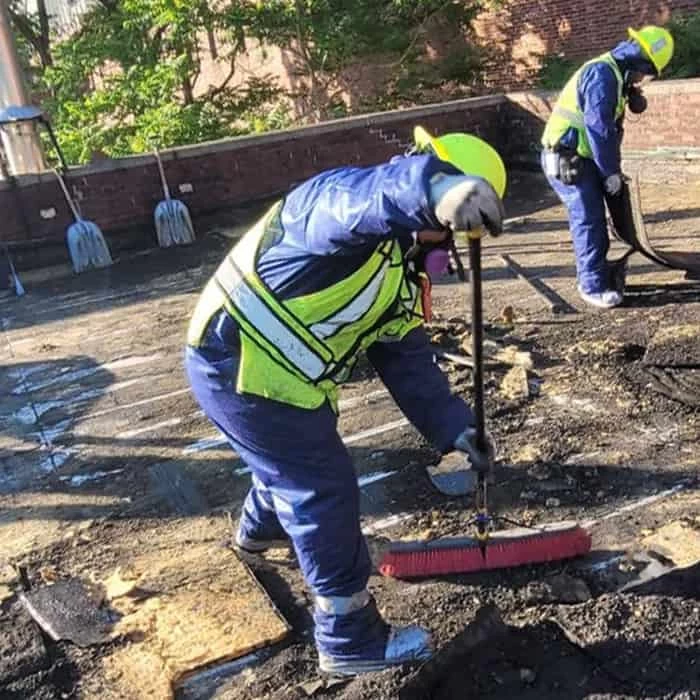
From there, smoke and soot remediation covers every affected surface — walls, ceilings, contents, and HVAC ductwork, which distributes soot throughout a home far beyond the visible burn zone. We document every stage for your insurance claim. If reconstruction is needed, we pull the required Town of Oyster Bay building permits and handle the rebuild directly. You don’t need to find a second contractor. You don’t need to manage the process yourself. That’s the point.
Built for What Plainedge Homes Actually Deal With After a Fire
Fire damage restoration in Plainedge isn’t a generic service. The community’s housing stock — predominantly built between 1940 and 1969 on what was once farmland converted to residential neighborhoods after World War II — creates a specific set of restoration challenges that not every contractor is equipped or licensed to handle.
Our fire damage restoration service covers emergency board-up and site securing, full smoke and soot remediation, NADCA-certified HVAC cleaning to remove soot from ductwork, water extraction and structural drying from firefighting suppression, asbestos and lead abatement where required, mold prevention and remediation, contents cleaning and odor elimination, and complete structural reconstruction with Nassau County-compliant permits. If your oil burner has had a puff-back — a furnace misfire that coats your entire interior in fine black soot — that’s a separate but equally serious service we handle regularly in Nassau County’s oil-heated neighborhoods.
We also manage the insurance side directly. We bill insurance companies, document every phase of the restoration to IICRC standards, and guide you through the claims process from scope-of-loss reporting through final settlement. For a high-value Plainedge property, that documentation isn’t optional — it’s what determines whether your claim gets paid fairly or gets pushed back.
Does Nassau County require fire damage restoration contractors to be licensed?
Yes — and most homeowners don’t know this until after they’ve already hired someone. A 2016 update to the Nassau County Fire Prevention Ordinance requires that restoration contractors operating in Nassau County be licensed with the Nassau County Fire Marshal. To qualify, contractors must hold specific certifications: for fire damage work, that means IICRC FSRT (Fire and Smoke Restoration Technician) certification or a minimum of 16 hours of documented training. For water damage work — which almost always accompanies fire damage — IICRC WRT (Water Restoration Technician) certification or 20+ hours of training is required. Valid lead and asbestos abatement licenses are also part of the requirement.
We meet every component of this ordinance. We hold IICRC FSRT and WRT certifications, NYS DOL Asbestos and Mold Licenses, and USEPA Lead/RRP Certification. Hiring a contractor who doesn’t meet Nassau County’s licensing standard isn’t just a risk to the quality of the work — it can affect the validity of your insurance claim and your legal standing as a property owner.
My Plainedge home was built in the 1950s — does fire damage mean asbestos problems?
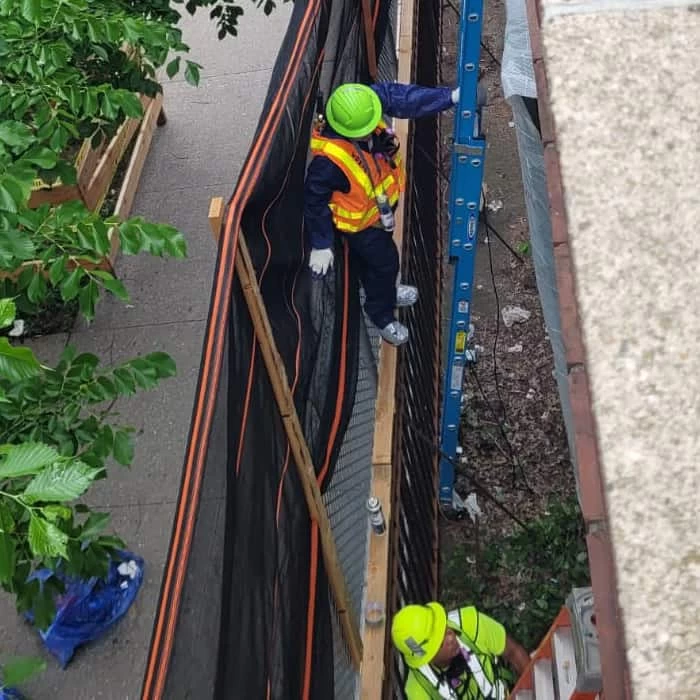
Potentially, yes — and it’s worth taking seriously. Homes built in Plainedge between the 1940s and 1960s commonly contain asbestos in floor tiles, pipe insulation, ceiling tiles, joint compound, and roofing materials. Under normal conditions, intact asbestos-containing materials aren’t an immediate hazard. But fire changes that. The heat, structural disturbance, and water from suppression efforts can all disturb these materials, releasing fibers that require licensed abatement before any restoration or demolition work can legally proceed in New York State.
This is one of the most important reasons to hire a restoration company that holds a NYS DOL Asbestos License — not just IICRC certification. An IICRC-certified contractor who lacks the asbestos license will have to stop work and bring in a separate abatement firm, adding days to your timeline and another contractor to coordinate. We hold both credentials, so we can identify, contain, and legally remediate asbestos-containing materials as part of the same restoration project — no handoffs, no delays.
How long does fire damage restoration typically take in a Nassau County home?
It depends on the scope, but here’s a realistic breakdown. Emergency stabilization — board-up, water extraction, initial soot containment — happens within the first 24 to 48 hours. Smoke and soot remediation, structural drying, and hazardous material handling (asbestos or lead, if present) typically take one to two weeks depending on the extent of damage and the age of the home. In Plainedge’s older housing stock, where mid-century construction means more layers to assess and more potential for hazardous materials, this phase often takes longer than it would in a newer home.
Reconstruction — drywall, flooring, painting, structural repairs — follows once remediation is complete and the Town of Oyster Bay building permits are in place. A moderate fire in a single room might be fully restored in three to four weeks. A more significant fire affecting multiple rooms or structural elements can take two to three months. We give you a realistic timeline upfront, not an optimistic one that shifts later.
What is an oil burner puff-back and do I need a restoration company for it?
A puff-back is what happens when an oil burner misfires and sends a backfire of combustion gases and soot back through the heating system and into the living space. It’s not a fire in the traditional sense — there’s no visible flame — but the damage it causes is real and widespread. Fine black soot coats walls, ceilings, furniture, and clothing. It travels through HVAC ductwork and distributes itself to every room connected to the heating system. The residue is oily, acidic, and difficult to remove without professional equipment and technique.
Puff-backs are one of the most common service calls in Nassau County’s older neighborhoods, including Plainedge, where oil heat is still the dominant residential system in homes built in the post-war era. A general cleaning company won’t cut it — the soot chemistry is the same as fire soot and requires the same IICRC-standard remediation approach, including NADCA-certified HVAC cleaning to remove soot from the ductwork itself. If you leave the ductwork untreated, the soot recirculates every time the heat runs. We handle puff-back remediation as a dedicated service throughout Nassau County.
Will my homeowner's insurance cover fire damage restoration in Plainedge, NY?
In most cases, yes — standard homeowner’s insurance policies cover fire damage, including smoke and soot remediation, water damage from firefighting suppression, and structural repairs. But coverage depends on proper documentation, and that’s where many homeowners run into problems. Insurance companies — especially on high-value claims involving Plainedge properties in the $700,000 to $800,000 range — scrutinize scope-of-loss reports carefully. If the damage isn’t documented to the standard the insurer expects, the claim gets pushed back, reduced, or denied.
We bill insurance companies directly and create IICRC-standard documentation at every phase of the restoration process. We’ve worked with Long Island’s major carriers on hundreds of Nassau County claims and understand what adjusters look for. Our representatives attend material selection appointments and stay actively involved through the claims process — not just at the beginning. That level of involvement on a high-value claim makes a measurable difference in the final settlement.
Can fire damage in one room spread smoke and soot throughout my whole Plainedge house?
Yes — and it happens more often than people expect. Smoke doesn’t stay in the room where the fire occurred. It travels through HVAC ductwork, wall cavities, ceiling spaces, and any gap in the structure, depositing soot and odor-causing particles throughout the home. In a Plainedge home built in the 1950s or 1960s, older duct systems and less airtight construction mean smoke can reach rooms that are completely removed from the visible burn zone. A kitchen fire can leave soot residue in bedrooms on the opposite side of the house.
This is why a proper fire damage assessment goes beyond what you can see. We inspect the full structure — not just the affected room — and use air quality testing and thermal imaging where needed to identify hidden soot migration. HVAC cleaning is included when the ductwork has been compromised, because leaving contaminated ducts in place means every time the system runs, it redistributes soot and odor through the home. Treating only the visible damage and skipping the ductwork is one of the most common reasons homeowners end up with persistent smoke smell months after a restoration is supposedly finished.