Your 1930s Home Deserves More Than a Generic Restoration Crew
Most of the homes in Plandome Heights were built before World War II. That means fire damage here isn’t a standard cleanup — it’s a licensed, regulated, multi-layer process. We handle all of it, from the first call to the final inspection.
I needed a professional consultation explanation of procedure for safe removal of Asbestos in my apartment complex. Without having an account yet, I was very impressed with the caring, knowledgeable and generous advice offered by Jessica, and will look forward to doing business in the future. Thank you so much! I feel much more informed about a sometimes scary endeavor. Peace. Nancy Silva Mineola, NY.
Mia Munoz
Used this company to clean up some water flood in my house. They were fast and easy to work with.very professional, Would recommend to anyone!
Nini Valle
Great company, had a flood and they responded quickly and efficiently. Billed my insurance company directly. I highly recommend this company!
joe colapietro, jr
I had pipe freeze in my basement right before a snow storm and they made to within an hour to help start the clean up process. They we by our side throughout the entire process and even helped with the insurance company. They did such a great job with the cleanup, repair, remidiation, I contracted them to perform the repairs and finishes in the basement. They came with enough manpower and material to get the job done. Leo and Jessica were nothing but a pleasure to deal with!!
Cristian Arredondo c
I had some water damage in my home and Green Island was able to take care of my issue quickly and effectively. I am very pleased with the work they did. They responded quickly and were very professional.
Michael M
Outstanding service! From the office to the field crew everyone was friendly, helpful and responsive. I highly recommend Green Island Group.
What Getting Your Home Back Actually Looks Like in Plandome Heights
When a fire happens in a Plandome Heights home, the visible damage is usually the smallest part of the problem. Smoke moves through wall cavities, original plaster, and HVAC ductwork — embedding itself in materials that were built to last a century. If that contamination isn’t pulled out completely, you’re left with odor, air quality issues, and surface damage that shows up weeks later.
The older construction in Plandome Heights creates a specific challenge that most restoration companies aren’t equipped for. Roughly 71% of homes in this village were built before 1950, which means fire damage almost always disturbs asbestos-containing materials — floor tiles, pipe insulation, joint compound — and lead paint on original woodwork and walls. In New York State, that work requires specific licenses to perform legally. A company without them can’t finish the job. You’d be left coordinating a second contractor mid-restoration, which adds time, cost, and real liability exposure.
When the process is handled right, you get back a home that’s structurally sound, clean at the air quality level, and restored to the character it had before — not patched together with modern substitutes that don’t match a 1930s Spanish-style build. That’s what complete fire damage restoration actually means for a home in Plandome Heights.
Licensed Fire Restoration Service Plandome Heights
Every License the Job Requires — Under One Roof
We’re a Long Island-based restoration company that holds a Nassau County General Contractor license, NYS DOL Asbestos and Mold licenses, USEPA Lead/RRP certification, and IICRC certification for fire and smoke damage restoration. That combination matters in Plandome Heights because this North Shore community sits squarely in a category where the housing stock demands all of it.
We’ve completed more than 5,000 restoration projects across New York State, and we actively serve Plandome Heights, Plandome, Plandome Manor, Flower Hill, and Munsey Park. We bill insurance directly, we document everything to insurance-standard, and we pull the building permits required by the Village of Plandome Heights ourselves. You don’t have to manage any of that.
We respond 24 hours a day, seven days a week. When the Manhasset-Lakeville Fire Department’s Company #2 clears the scene, we can be on-site within the hour — because we’re not routing calls through a national dispatch center. We’re a Long Island company, and Plandome Heights is our backyard.
From Emergency Call to Finished Home — No Handoffs, No Gaps
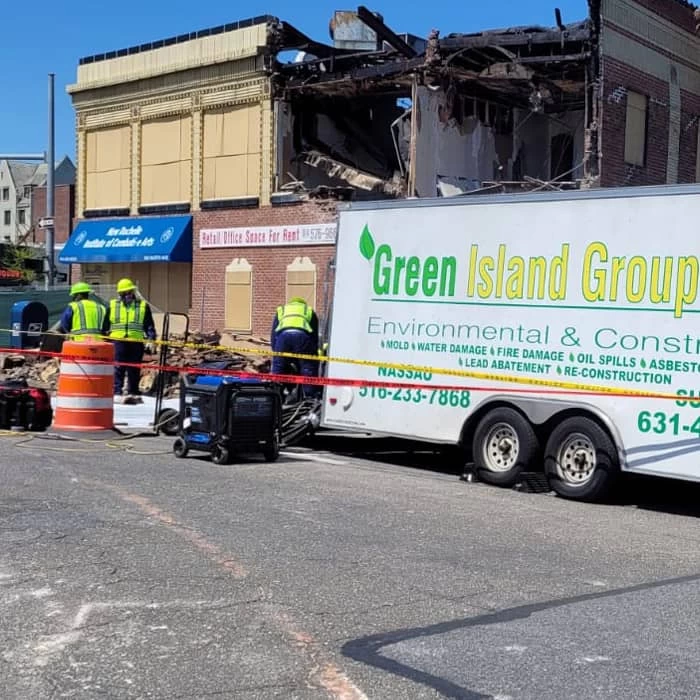
The first thing we do when we arrive is assess the full scope — not just the burn zone, but everywhere smoke traveled. In a pre-war Plandome Heights home, that often means tracing soot through original plaster walls, wood framing, and HVAC systems that may have been distributing contaminated air throughout the entire house before anyone noticed. We document everything photographically and in writing before a single item is moved, which is exactly what your insurance carrier needs to process the claim properly.
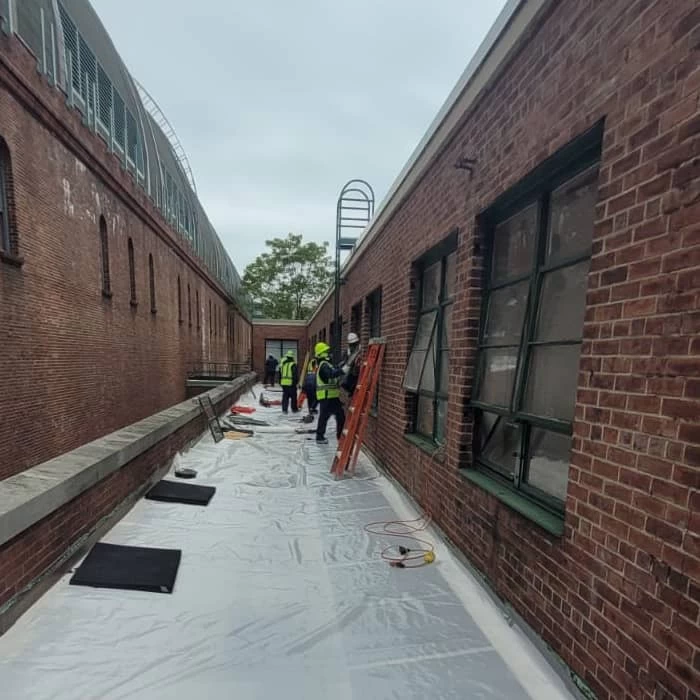
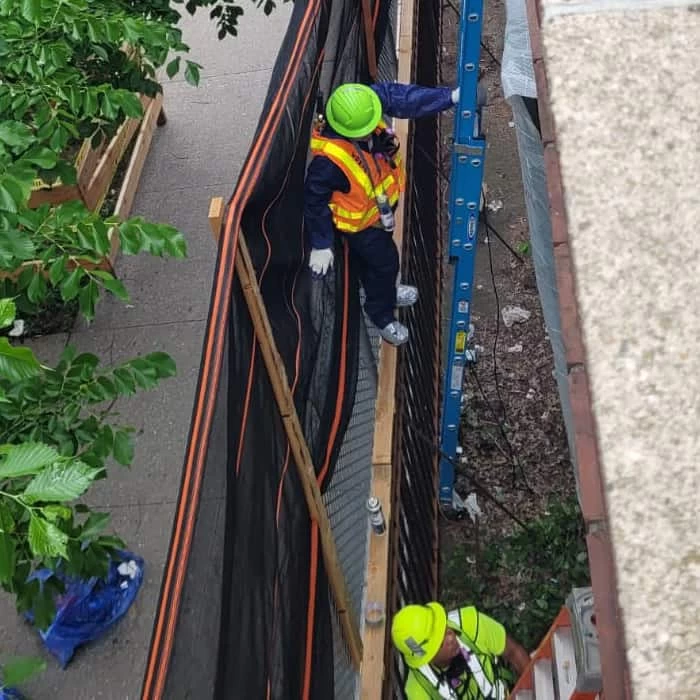
From there, we handle emergency board-up and structural stabilization if needed, then move into controlled demolition of damaged materials. In homes where asbestos or lead is present — which in this village is most of them — that phase requires NYS DOL-licensed abatement performed under compliance with Industrial Code Rule 56. We handle that in-house. We also apply for the building permits required by the Village of Plandome Heights directly, so the reconstruction phase isn’t delayed waiting on a separate licensed contractor.
Once the structure is clean and safe, we rebuild. That means matching original materials where possible — the right plaster formulations, period-appropriate finishes, and sourced replacements for architectural details that can’t simply be swapped for modern equivalents. The final step is air quality verification and odor elimination, including full HVAC cleaning through our NADCA-certified process. You get a home that’s genuinely restored, not just repaired on the surface.
Fire and Smoke Damage Restoration North Shore Long Island
What's Included When Your Home Has History Behind the Walls
Fire damage restoration in Plandome Heights covers more ground than it does in a newer suburb. Because virtually every home here predates 1978 — and most predate 1940 — the scope of a proper restoration includes hazardous material handling that is legally required, not optional. Our team assesses for asbestos-containing materials before any demolition begins, performs licensed abatement where needed, and documents lead paint compliance throughout the project. These aren’t add-ons. They’re part of doing this work correctly in a village where the housing stock demands it.
On the smoke and soot side, we use HEPA-rated equipment, chemical sponges, and thermal fogging to address contamination in the materials that make older homes unique — original hardwood floors, hand-plaster walls, brick, and natural stone. If your home runs on oil heat, which is common throughout the North Shore, and you’ve experienced a furnace puff-back rather than a direct fire, the same process applies. Oily soot from a puff-back coats every surface the air system touches, and it requires the same professional remediation as fire soot — including full NADCA-certified HVAC cleaning.
We also handle the insurance side directly. We’ve worked with carriers on high-value pre-war Nassau County properties before, and we know how to document a claim that accounts for the real cost of restoring historic materials — not just replacing them with whatever’s cheapest.
Does fire damage restoration in Plandome Heights require a building permit?
Yes — any structural repairs, reconstruction, or demolition work following a fire in Plandome Heights requires a building permit issued by the Village of Plandome Heights directly. Because Plandome Heights is an incorporated village, permits are handled through Village Hall at 37 Orchard Street, not through the Town of North Hempstead. That distinction matters when you’re trying to move quickly after a fire.
The contractor you hire must hold a Nassau County General Contractor license to pull those permits legally. We hold that license, which means we handle the permit application as part of the project — you don’t have to track that down separately or wait on a second contractor to get cleared. In a village where the building stock is this old, having someone who knows the local permit process isn’t a minor convenience. It’s what keeps your restoration timeline from stalling.
My Plandome Heights home was built in the 1930s — does that change what's involved in fire restoration?
It changes quite a bit, yes. Homes built before 1940 — which accounts for the majority of properties in Plandome Heights — almost universally contain asbestos-containing materials and lead-based paint. When fire or smoke damages these homes, those materials get disturbed. In New York State, asbestos abatement must be performed by a contractor licensed through the NYS Department of Labor under Industrial Code Rule 56. Lead paint work in pre-1978 homes requires EPA RRP certification. These are legal requirements, not preferences.
If your restoration company doesn’t hold those licenses, they can’t legally complete the full scope of work in your home. That means you’d need to bring in a second licensed contractor mid-project — which creates delays, coordination headaches, and gaps in accountability. We hold both the NYS DOL Asbestos License and EPA Lead/RRP certification, along with our Nassau County GC license. One team handles everything, start to finish, without the handoff.
How quickly does smoke damage need to be addressed after a fire?
The window is shorter than most people expect. Soot starts bonding permanently to surfaces — walls, ceilings, fixtures, original woodwork — within hours of a fire. The longer it sits, the deeper it penetrates, and the more difficult and expensive it becomes to remove. In the older construction typical of Plandome Heights, where original plaster and hardwood are porous and absorptive, that bonding process happens faster than it would in a home built with modern synthetic materials.
Water from firefighting suppression adds a second clock. Mold can begin developing within 24 to 48 hours of water exposure. In a coastal watershed environment like the Manhasset Bay area — where ambient humidity runs high during warmer months — that window can be even tighter. The reason we respond 24/7 and target a sub-one-hour arrival isn’t a sales point. It’s because the damage compounds in real time, and faster response genuinely changes the outcome and the cost of the restoration.
Will my homeowners insurance cover fire damage restoration in Plandome Heights, NY?
Standard homeowners insurance policies generally cover fire damage, including smoke and soot remediation, water damage from firefighting suppression, and structural repairs. But the claims process for a large pre-war home in Plandome Heights — especially one with historic materials, potential asbestos abatement, and architectural details that can’t be replaced with off-the-shelf substitutes — is more involved than a standard post-war ranch claim. Insurance carriers will often push for the lowest-cost replacement, which doesn’t always account for what it actually costs to restore original plaster, period millwork, or Spanish-style architectural details properly.
We bill insurance directly and document every phase of the restoration to insurance-standard. We’ve helped Nassau County homeowners navigate claims on exactly these kinds of properties — attending material selection appointments, advocating for accurate scope documentation, and making sure the settlement reflects the real cost of doing the job right. You shouldn’t have to fight your insurance company alone while also managing a major home restoration.
What is a furnace puff-back, and does it require the same restoration as a fire?
A puff-back happens when an oil burner malfunctions and backfires, sending a cloud of oily soot through your home’s HVAC system and into every room the air system reaches. There’s no flame involved, but the contamination can be just as widespread as a fire — and in some ways more difficult to clean, because oil-based soot smears when you wipe it with the wrong technique, unlike dry fire soot.
Puff-backs are a common service call throughout Nassau County’s North Shore, where oil heat is prevalent, and Plandome Heights is no exception. The remediation process mirrors what we do for fire damage: HEPA equipment, chemical sponges for soot removal, thermal fogging for odor, and full NADCA-certified HVAC cleaning to clear the ductwork where the contamination originated. Most homeowners’ insurance policies cover puff-back damage, and we handle the documentation and direct billing the same way we do for fire claims. If you’ve had a puff-back and you’re not sure whether it warrants a professional call, it almost always does — the soot doesn’t stay where you can see it.
How do I know if a fire restoration company is actually licensed to work in Plandome Heights?
This is one of the most important questions you can ask, and it’s worth verifying before you sign anything. In New York State, contractor licensing is public record. You can look up a Nassau County General Contractor license through Nassau County’s licensing portal, verify a NYS DOL Asbestos Contractor license through the Department of Labor’s online database, and confirm EPA Lead/RRP certification through the EPA’s contractor search tool. These take about five minutes and tell you immediately whether the company you’re considering is legally authorized to do the work in your home.
The reason this matters specifically in Plandome Heights is the age of the housing stock. If a restoration company starts demolition in a pre-1940 home without a licensed asbestos abatement team, they’re not just cutting corners — they’re exposing your family to a health hazard and creating legal liability for you as the property owner. Post-disaster contractor fraud is also a real pattern after fire events, with unlicensed operators showing up quickly and offering low bids. Checking the licenses before work begins is the single most protective thing you can do. Our credentials are verifiable through every one of those channels.