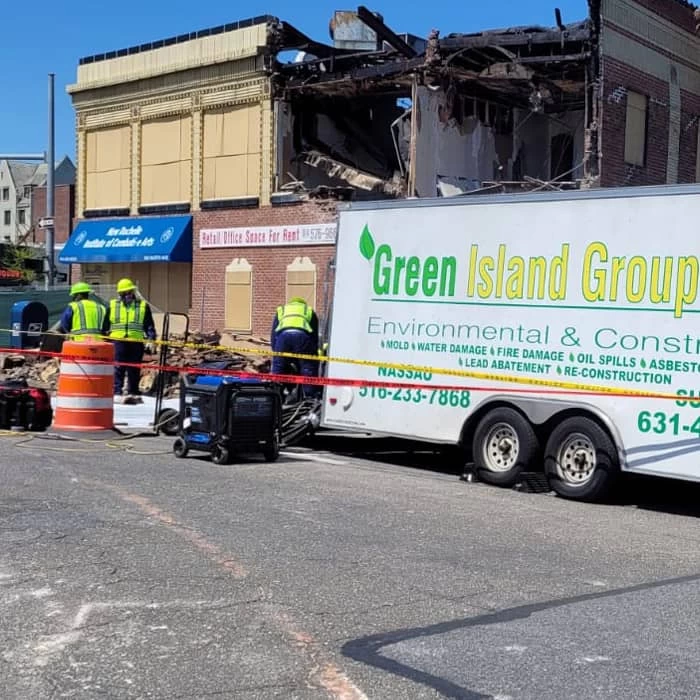
When fire hits a Point Lookout home, every hour counts — and getting the right team through that single stretch of Lido Boulevard matters more than most people realize. We handle fire damage restoration from emergency response to full rebuild, so you’re not piecing together three different contractors while you’re already dealing with enough.
I needed a professional consultation explanation of procedure for safe removal of Asbestos in my apartment complex. Without having an account yet, I was very impressed with the caring, knowledgeable and generous advice offered by Jessica, and will look forward to doing business in the future. Thank you so much! I feel much more informed about a sometimes scary endeavor. Peace. Nancy Silva Mineola, NY.
Mia Munoz
Used this company to clean up some water flood in my house. They were fast and easy to work with.very professional, Would recommend to anyone!
Nini Valle
Great company, had a flood and they responded quickly and efficiently. Billed my insurance company directly. I highly recommend this company!
joe colapietro, jr
I had pipe freeze in my basement right before a snow storm and they made to within an hour to help start the clean up process. They we by our side throughout the entire process and even helped with the insurance company. They did such a great job with the cleanup, repair, remidiation, I contracted them to perform the repairs and finishes in the basement. They came with enough manpower and material to get the job done. Leo and Jessica were nothing but a pleasure to deal with!!
Cristian Arredondo c
I had some water damage in my home and Green Island was able to take care of my issue quickly and effectively. I am very pleased with the work they did. They responded quickly and were very professional.
Michael M
Outstanding service! From the office to the field crew everyone was friendly, helpful and responsive. I highly recommend Green Island Group.
Soot doesn’t wait. Within hours of a fire, acidic residue starts bonding to walls, ceilings, metal fixtures, and everything in between. In a barrier island environment like Point Lookout — where salt air and Atlantic humidity are constants — that process moves faster than it would in an inland home. What might stabilize in a dry Nassau County suburb keeps reacting here, which is exactly why the window for effective intervention is shorter than most homeowners expect.
The water that put out your fire is its own problem. It soaks into older wood-frame construction — the kind that makes up the majority of Point Lookout’s housing stock, much of it built before 1940 — and mold can establish itself within 24 to 48 hours. Addressing fire damage and water damage at the same time, under one roof, is the difference between a contained restoration and a months-long ordeal.
When the work is done right, you get your home back. Not a version of it — your home. Structurally sound, cleared of smoke odor, cleaned down to the ductwork, and documented thoroughly enough that your insurance company can’t shortchange you. That’s the outcome this process is designed to deliver.
We’re a Long Island-based restoration company with over 5,000 completed projects across New York State. We hold a Nassau County General Contractor license, IICRC certification for fire and water damage restoration, NYS DOL licenses for asbestos and mold abatement, and a USEPA Lead/RRP certification — every credential that matters when you’re working on pre-war construction in a coastal community.
Point Lookout isn’t a place you can serve well from a call center in New Jersey. The access logistics alone — one way in via Lido Boulevard, tidal considerations, seasonal occupancy patterns — require someone who actually knows the South Shore. We operate 24/7 and stage equipment on Long Island specifically to reach barrier island communities fast when it counts.
We’re not a national franchise. We’re a Nassau and Suffolk County contractor with verifiable licenses, real project history, and the kind of local accountability that travels fast in a community as tightly networked as Point Lookout.
From the First Call to Move-Back-In — Here's the Reality
The first step is stabilization. That means emergency board-up, tarping, and securing the structure so the Atlantic weather can’t compound what the fire already started. In Point Lookout, where a storm off the ocean or a tidal surge through Reynolds Channel can turn a bad situation worse overnight, this step isn’t optional — it’s urgent.
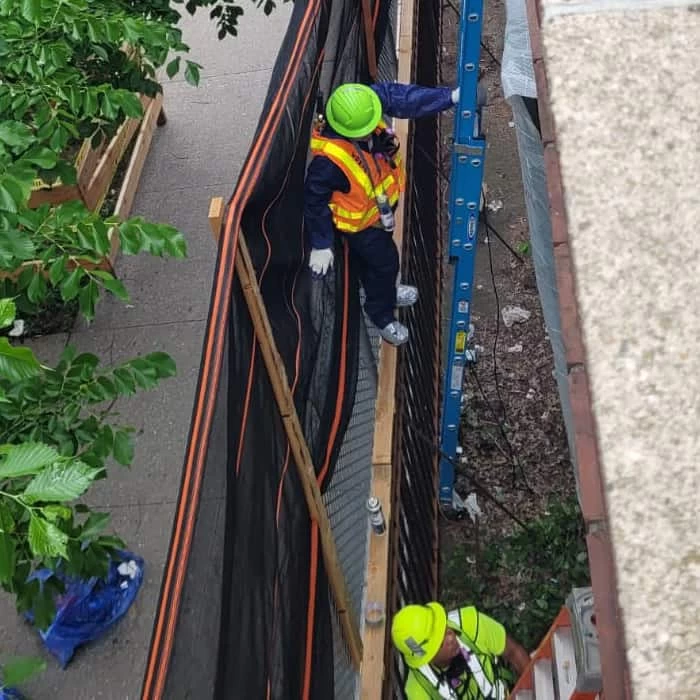
Once the structure is secured, the assessment begins. Given that over 70% of Point Lookout homes were built before 1950, asbestos testing is treated as a standard part of this phase — not an afterthought. If asbestos-containing materials were disturbed by the fire, NYS law requires a licensed abatement contractor before any demolition or cleanup proceeds. We hold that license, so there’s no pause in the process while you track down a separate vendor.
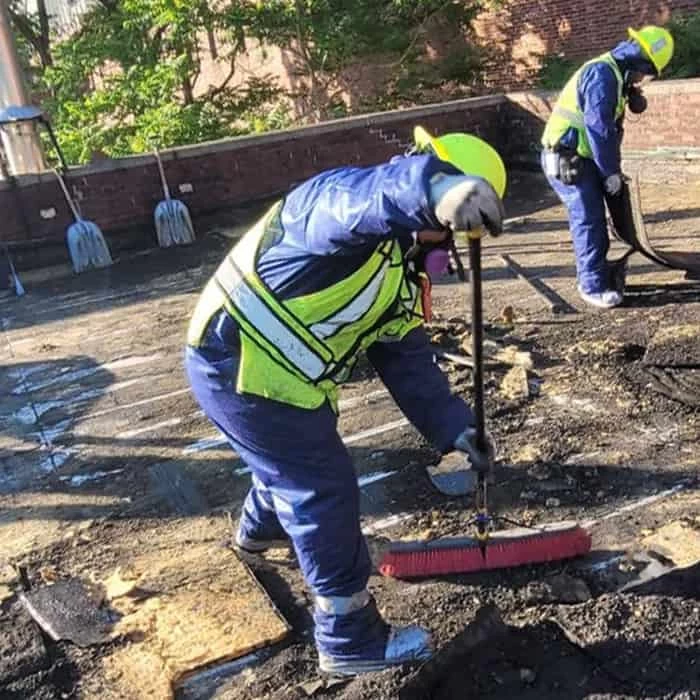
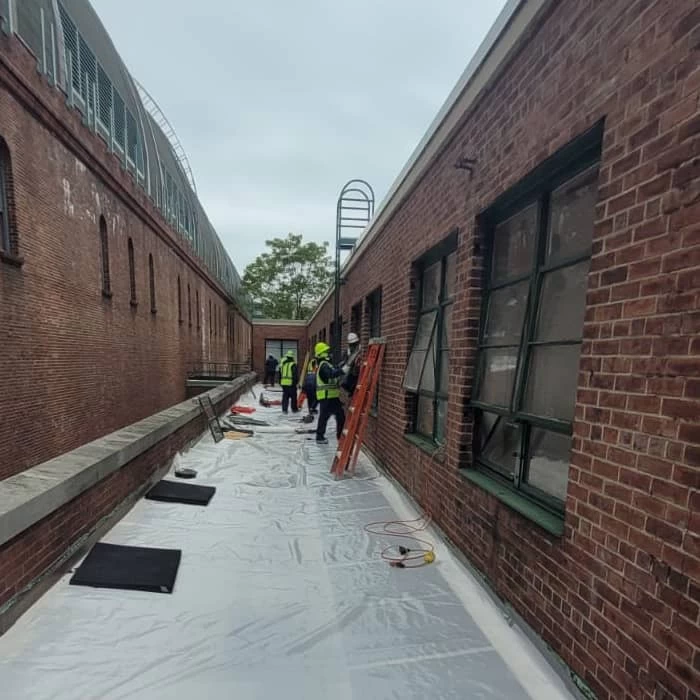
From there, the work moves through water extraction, structural drying, soot and smoke removal, odor elimination, HVAC cleaning, and — where needed — full reconstruction. Town of Hempstead building permits are pulled by us directly, since we hold the Nassau County GC license required to do so. Throughout every phase, your insurance company is being documented and billed directly, so you’re not left managing paperwork on top of everything else.
Fire Restoration Services, Nassau County South Shore
Every Phase Covered — Including What Most Companies Skip
Most restoration companies stop at cleanup. They remediate the visible damage, hand you a report, and leave you to find a general contractor for the rebuild. We don’t work that way. We carry Nassau County GC licensure alongside our restoration credentials, which means the same team that responds to your emergency is the same team that can take your home all the way back to finished.
For Point Lookout specifically, that full-service capability matters more than it would in most places. Pre-war bungalows converted to year-round use, oil-heated homes with aging furnaces, properties that may have gone unoccupied for weeks before a fire was discovered — these are common scenarios here, and each one requires a different combination of services. Fire and smoke damage cleanup, soot removal, puff-back remediation, water extraction, mold abatement, asbestos removal, lead-safe demolition, HVAC cleaning, structural repairs, and complete interior reconstruction are all within scope.
If you’re a seasonal homeowner managing this remotely, we handle the insurance billing directly, communicate proactively throughout every phase, and can manage the full process without requiring you to be on-site. For a community where a significant number of properties are owned by people who aren’t there year-round, that level of independent project management isn’t a luxury — it’s exactly what the situation calls for.
Does fire damage in a Point Lookout home cost more to restore than inland?
It can, and there are a few honest reasons why. First, the access factor — Point Lookout has one road in and one road out via Lido Boulevard. Equipment staging, crew mobilization, and material delivery all have to account for that single corridor, which adds logistical complexity compared to a property in Oceanside or Wantagh with multiple access routes.
Second, the housing stock. When more than 70% of homes in a community predate 1950, the likelihood of encountering asbestos-containing materials or lead paint during a fire restoration project is genuinely high. Licensed abatement work — required by New York State law before any demolition can proceed — adds cost that wouldn’t apply to a newer home. That’s not a markup, it’s a legal and safety requirement. A contractor who doesn’t mention it upfront is either unaware or cutting corners. The total restoration cost for a fire-damaged Point Lookout home can range from roughly $15,000 for a contained smoke event to well over $100,000 for structural loss — and we document everything in a way that supports a full insurance claim.
How quickly can a fire restoration company reach Point Lookout, NY?
We operate 24/7 and stage equipment on Long Island to honor a sub-one-hour response target. For Point Lookout, that means we’re routing via the Loop Parkway and Lido Boulevard — the same access corridor every contractor uses to reach the barrier island. Local knowledge of that route, and awareness of tidal or weather-related access conditions, is part of why a Long Island-based company responds more reliably than a national franchise dispatching from outside the region.
Speed matters here more than in most places. Soot begins permanently bonding to surfaces within hours of a fire. Firefighting water creates mold risk within 24 to 48 hours — and in Point Lookout’s coastal humidity environment, that window may be even tighter than the national average. Every hour between the fire and the arrival of a professional restoration team is an hour of compounding damage. Getting someone there fast, and getting the right someone, are both part of the same decision.
My Point Lookout home is a pre-1940 bungalow — what happens with asbestos after a fire?
This is one of the most important questions a Point Lookout homeowner can ask, and most people don’t ask it until they’re already mid-project. When fire damages or destroys materials in a pre-1940 home — floor tiles, pipe insulation, ceiling tiles, joint compound, roofing materials — there’s a real probability those materials contain asbestos. Once disturbed, they can release airborne fibers that are a serious health hazard.
New York State law requires a licensed abatement contractor to handle any asbestos-containing materials before demolition or cleanup proceeds. That license is issued by the NYS Department of Labor and is not the same as a general contractor license or a restoration certification. We hold the NYS DOL Asbestos License, which means we can legally perform this work in-house without stopping the project to bring in a separate subcontractor. If you’re working with a restoration company that doesn’t hold this license and they discover asbestos mid-job, your options become limited and expensive fast. It’s worth confirming this credential before anyone starts work on an older Point Lookout property.
Will my homeowners insurance cover fire damage restoration in Nassau County?
Standard homeowners insurance policies generally cover fire damage, including the cost of cleanup, smoke and soot removal, water extraction from firefighting suppression, and structural repairs. What varies is how much your insurer is willing to pay — and that’s almost entirely determined by the quality of the documentation submitted with your claim.
Insurance companies work off written scope reports, photographs, and line-item estimates. When those documents are thorough and produced by an IICRC-certified contractor, claims move faster and settle more completely. When they’re vague or incomplete, adjusters have room to reduce the payout. We bill insurance companies directly and produce the documentation that adjusters are trained to accept. For a Point Lookout property worth $1.5 million or more, the difference between a well-documented claim and a poorly documented one can be tens of thousands of dollars. One thing worth noting: if your home is in a FEMA coastal flood zone — which most Point Lookout properties are — any reconstruction following fire damage must also comply with current flood zone elevation requirements, which adds a layer of permitting complexity that your contractor needs to understand.
What is a puff-back, and is it common in Point Lookout homes?
A puff-back happens when an oil burner misfires and sends a blast of soot and oily residue through your home’s HVAC system. It doesn’t involve an open flame, but the result is soot contamination across ceilings, walls, ductwork, furniture, and clothing throughout the entire home — sometimes in rooms that are far from the furnace itself. It’s one of the most disruptive and misunderstood service calls in residential restoration.
It’s also extremely common on Long Island’s South Shore. Point Lookout and the surrounding communities — Lido Beach, Long Beach — have historically high rates of oil-heated homes, and many of those heating systems are in older properties that haven’t had full equipment updates. An aging oil burner in a converted bungalow is a puff-back waiting to happen, especially at the start of heating season when the system fires up for the first time after months of inactivity. We handle puff-back remediation as a distinct service — soot removal, HVAC cleaning, odor elimination, and surface restoration — and we’re familiar with the specific pattern this type of event creates in the older construction common to this part of Nassau County.
My Point Lookout home sits vacant most of the year — what if fire damage goes undetected?
This is a real and underappreciated risk for seasonal homeowners in Point Lookout. A fire or smoke event in an unoccupied property — whether from an electrical fault in aging wiring, a gas appliance malfunction, or a space heater left running — can go undetected for hours or days. By the time anyone knows, soot has had extended time to bond permanently to surfaces, firefighting water has created active mold growth, and structural deterioration has progressed well beyond what an immediately discovered fire would have caused.
The restoration process for a delayed-discovery fire is more involved, and the documentation burden for your insurance claim is higher. We handle both. We provide transparent, proactive communication throughout every phase, which means you can manage the process remotely without being on-site in Point Lookout. We handle insurance billing directly, document the full scope of damage thoroughly, and manage the project from emergency stabilization through final reconstruction — without requiring you to coordinate from a distance. For seasonal homeowners who spend winters off the island, that kind of independent project management is often the deciding factor in who they call.