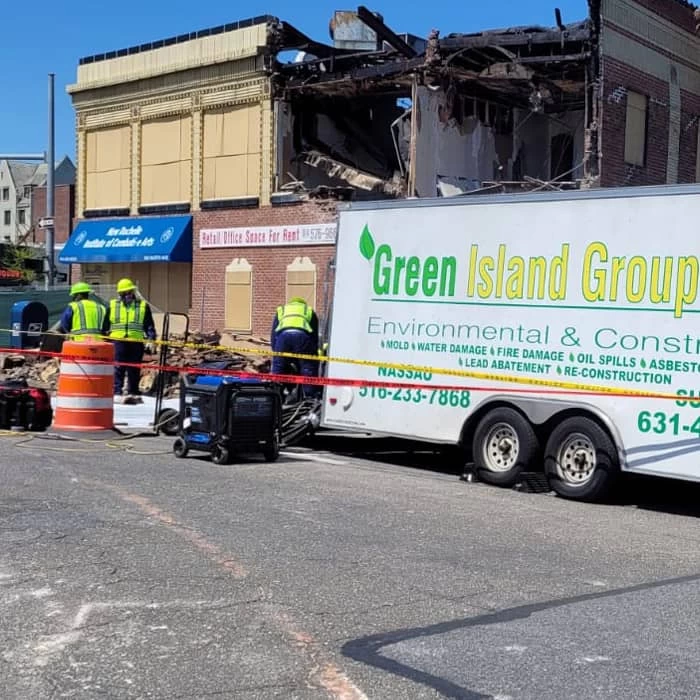
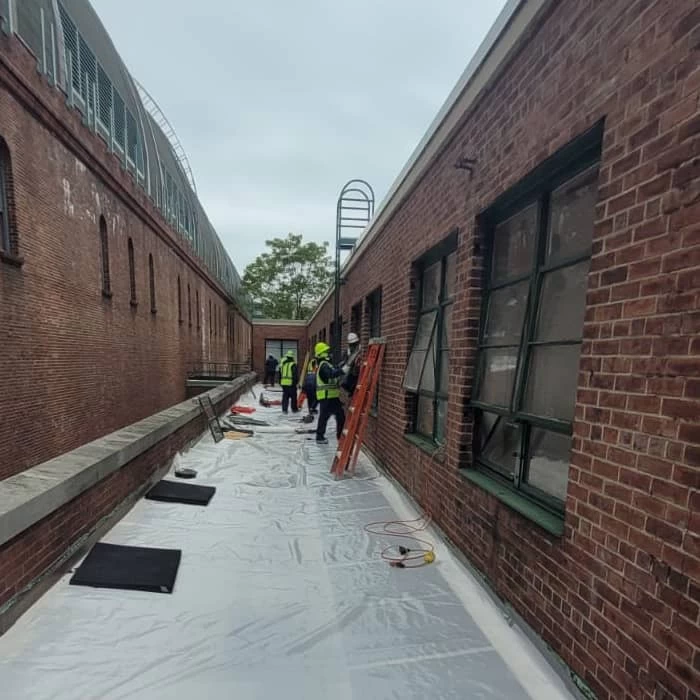
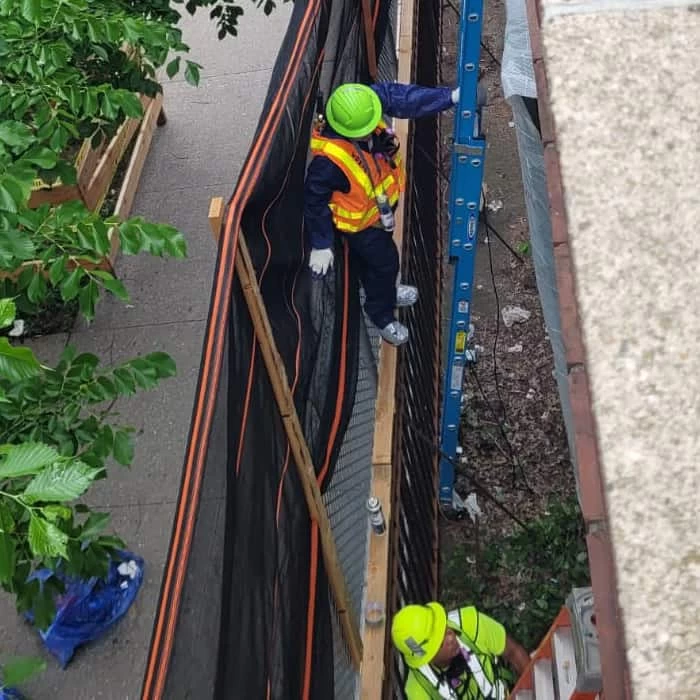
Fire Damage Restoration in Port Washington North, NY
When a Port Washington North Home Burns, Every Hour Counts
Soot doesn’t wait. Smoke doesn’t stop at the burn zone. If your Port Washington North home has been through a fire, the clock on permanent damage is already running — and we’re on call 24/7 to stop it.
I needed a professional consultation explanation of procedure for safe removal of Asbestos in my apartment complex. Without having an account yet, I was very impressed with the caring, knowledgeable and generous advice offered by Jessica, and will look forward to doing business in the future. Thank you so much! I feel much more informed about a sometimes scary endeavor. Peace. Nancy Silva Mineola, NY.
Mia Munoz
Used this company to clean up some water flood in my house. They were fast and easy to work with.very professional, Would recommend to anyone!
Nini Valle
Great company, had a flood and they responded quickly and efficiently. Billed my insurance company directly. I highly recommend this company!
joe colapietro, jr
I had pipe freeze in my basement right before a snow storm and they made to within an hour to help start the clean up process. They we by our side throughout the entire process and even helped with the insurance company. They did such a great job with the cleanup, repair, remidiation, I contracted them to perform the repairs and finishes in the basement. They came with enough manpower and material to get the job done. Leo and Jessica were nothing but a pleasure to deal with!!
Cristian Arredondo c
I had some water damage in my home and Green Island was able to take care of my issue quickly and effectively. I am very pleased with the work they did. They responded quickly and were very professional.
Michael M
Outstanding service! From the office to the field crew everyone was friendly, helpful and responsive. I highly recommend Green Island Group.
Your Port Washington North Home Restored — Not Just Cleaned Up
A fire changes everything fast. What most people don’t realize is that the visible burn damage is often the smaller part of the problem. Smoke travels — through your HVAC system, into wall cavities, behind baseboards — and soot begins bonding to surfaces within hours. By the time the fire trucks leave Port Washington North, the clock on hidden damage has already started.
Port Washington North’s coastal location on the Cow Neck Peninsula adds another layer most restoration companies don’t talk about. The humidity off Manhasset Bay accelerates mold growth from firefighting water — sometimes within 24 hours. If water extraction and structural drying aren’t addressed immediately alongside the fire damage, you’re not just dealing with smoke. You’re dealing with mold.
And then there’s the housing stock. Many homes in Port Washington North were built in the 1940s, ’50s, and ’60s — decades when asbestos and lead paint were standard. A fire in one of these homes doesn’t just cause fire damage. It disturbs materials that require licensed abatement, not just a cleanup crew. We hold the NYS DOL Asbestos License, NYS DOL Mold License, and USEPA Lead/RRP Certification to handle exactly that — legally and safely, under one contract, from day one.
One Company, One Contract, Full Accountability for Port Washington North
We’re a locally owned restoration company serving Nassau County, Suffolk County, and New York City — not a franchise, not a call center. When you call, you’re reaching a Long Island-based team that knows Port Washington North, knows the village’s permit process, and has completed over 5,000 restoration projects across New York State.
For Port Washington North specifically, that matters. This is an incorporated village with its own building department at 3 Pleasant Ave. Restoration work here requires permits pulled through the village — not the town. We know the difference, and we handle it. From the first emergency call through final reconstruction, there’s one point of contact and one company responsible for the outcome.
The credentials aren’t just listed on a website — they’re verifiable. IICRC-certified for fire and smoke restoration. Nassau County General Contractor licensed. NYS DOL licensed for asbestos and mold. USEPA Lead/RRP certified. Insurance companies recognize these credentials, and so should you.
Fire Damage Restoration Process Port Washington North
From Emergency Call to Move-Back-In Day — Here's What We Do
The first call triggers an emergency response. We operate 24/7, and for Port Washington North, that means our team is on-site within an hour — ready to assess, secure the property, and stop active damage from spreading. If the structure needs boarding up or tarping, that happens immediately. The goal in the first hours is simple: prevent what’s already happened from getting worse.
Once the property is secured, the real assessment begins. Every room is evaluated — not just the burn zone. Smoke travels, and so does water from firefighting suppression. In a coastal village like Port Washington North, where ambient humidity off Manhasset Bay is consistently elevated, that water has to be extracted and the structure dried aggressively before mold gets a foothold. If the assessment turns up asbestos-containing materials — common in homes built before 1980, which describes a significant portion of Port Washington North’s housing stock — licensed abatement is handled in-house, not subcontracted out.
From there, the process moves through soot and odor removal, structural repair, and full reconstruction if needed. We hold a Nassau County General Contractor license, so we can legally take the job all the way to finished — walls, floors, ceilings, everything. Throughout the entire process, we document every step in the format insurance companies require, bill your carrier directly, and keep you informed so you’re not chasing paperwork while displaced from your home.
Fire Smoke Damage Restoration Service Port Washington NY
What's Actually Included When You Call Us
Fire damage restoration isn’t one thing — it’s a sequence of interconnected services that have to happen in the right order. Our scope covers the full sequence: emergency board-up and property securing, soot and smoke removal, odor elimination, water extraction from firefighting suppression, hazardous materials remediation, structural demolition where needed, and complete reconstruction. For Port Washington North homeowners, the hazardous materials piece is especially relevant. Homes in the village that predate 1980 commonly contain asbestos in floor tiles, pipe insulation, and joint compound — and pre-1978 homes frequently have lead paint. When a fire disturbs those materials, a restoration contractor without the right licenses cannot legally complete the job. We can.
One specific scenario worth knowing about if you heat with oil: puff-back damage. When an oil burner backfires, it releases greasy black soot throughout the home without an open flame — no fire department, no dramatic emergency, but extensive contamination that requires the same professional cleanup as fire smoke. It’s common on Nassau County’s North Shore, it’s typically covered by homeowners’ insurance, and we handle it regularly.
Insurance coordination is built into our process, not added on. We bill your carrier directly, document damage in the format adjusters require, and advocate for a complete scope of work — not a minimum settlement. For Port Washington North homeowners with high-value policies on properties worth over a million dollars, that advocacy is not a small thing.
Does fire damage restoration in Port Washington North require a village building permit?
Yes — and this is one of the details that catches homeowners off guard. Port Washington North is an incorporated village with its own building department, separate from Nassau County and the Town of North Hempstead. Any structural restoration or reconstruction work requires permits issued through the Village of Port Washington North at 3 Pleasant Ave. Office hours are Monday through Friday, 9 AM to 3 PM, and the number is 516-883-5900.
This matters because not every restoration contractor knows the difference between a village permit and a town permit — and pulling the wrong one, or skipping the process entirely, can create legal and insurance complications down the road. We’re familiar with Port Washington North’s permit requirements and handle that coordination as part of the restoration process. You don’t have to navigate the village building department on your own while you’re already dealing with a displaced household.
Will my homeowners' insurance cover the full cost of fire damage restoration?
In most cases, yes — but the amount you recover depends heavily on how well the damage is documented and how thoroughly the scope of work is presented to your adjuster. Standard homeowners’ insurance policies in New York cover fire damage restoration, including smoke and soot cleanup, water damage from firefighting suppression, and structural reconstruction. For Port Washington North homeowners with high-value properties, those policies often carry significant coverage limits — but that doesn’t mean the insurance company will automatically offer the full amount.
Adjusters are experienced at protecting the insurer’s interests, and a vague or incomplete damage assessment gives them room to minimize the payout. We document every phase of the restoration in the format insurance companies require, bill your carrier directly, and have guided hundreds of Long Island homeowners through the claims process. If your adjuster pushes back on the scope of work, you want a restoration company that knows how to respond — not one that accepts the first offer.
My house is older — should I be worried about asbestos after a fire in Port Washington North?
If your home was built before 1980, it’s a legitimate concern — not a reason to panic, but something that needs to be addressed by a licensed contractor before cleanup proceeds. Asbestos-containing materials were standard in mid-century construction: floor tiles, pipe insulation, ceiling tiles, joint compound, and roofing materials. A fire disturbs those materials, and once disturbed, they have to be handled under New York State Department of Labor regulations — not by a general cleanup crew.
The same applies to lead paint in homes built before 1978. Port Washington North has a significant amount of housing stock from the 1940s, ’50s, and ’60s, which means this isn’t a hypothetical scenario — it’s a high-probability reality for many homes in the village. We hold both the NYS DOL Asbestos License and the USEPA Lead/RRP Certification, so if these materials are found during the assessment, abatement is handled in-house, legally, without stopping the job and bringing in a separate subcontractor. That continuity matters — both for the timeline and for your insurance documentation.
How quickly can mold develop after a house fire, and why does it matter in a coastal village?
Mold can begin colonizing within 24 to 48 hours of water exposure — and after a house fire, there’s always water. Firefighting suppression soaks walls, floors, subfloors, and structural cavities. In a typical inland home, that’s already a serious secondary risk. In Port Washington North, the coastal location on the Cow Neck Peninsula makes it worse. The humidity off Manhasset Bay and Hempstead Harbor is consistently elevated compared to inland Nassau County communities, and that ambient moisture accelerates mold growth significantly.
This is why water extraction and structural drying have to happen immediately — not after the soot is cleaned up, not after the insurance adjuster visits, but as part of the initial emergency response. We address both simultaneously. We hold the NYS DOL Mold License and carry the equipment to extract water and dry structural assemblies aggressively, even in a high-humidity coastal environment. A fire cleanup that skips this step in a waterfront village like Port Washington North is an incomplete job — and it will produce a mold remediation bill within weeks.
What is puff-back damage, and is it covered by insurance for Nassau County homeowners?
A puff-back happens when an oil burner backfires — instead of igniting cleanly, the furnace releases a burst of pressure that sends a cloud of greasy, black soot through the heating system and into the living space. There’s no open flame, no fire department response, and no dramatic emergency. But the damage is real and extensive. Soot coats walls, ceilings, HVAC ductwork, furniture, clothing, and personal belongings — and oily soot from a puff-back is significantly harder to remove than the dry soot from a paper or wood fire.
Oil heat is common throughout Nassau County’s North Shore, including Port Washington North, and puff-backs are a frequent occurrence — especially in older heating systems or when fuel oil quality is inconsistent. The good news is that puff-back damage is typically covered under standard homeowners’ insurance policies in New York. The key is having it cleaned correctly. Oily soot smears when improperly handled, spreading contamination rather than removing it. Our IICRC-certified technicians know the difference between soot types and use the correct methods for each — and we’ll document the damage for your insurance claim from the start.
How do I know if a fire restoration company is actually qualified to work in Port Washington North?
The credentials to ask for are specific, and they’re all verifiable. First, IICRC certification for Fire and Smoke Restoration — this is the only ANSI-accredited certification in the restoration industry, and it’s searchable in a public directory. Second, a Nassau County General Contractor license — without it, a company cannot legally perform structural reconstruction in the county, meaning they’ll hand off the rebuild to a second contractor and you lose continuity. Third, NYS DOL licenses for asbestos and mold remediation — required by New York State law for any contractor performing that work, and non-negotiable in a village with older housing stock like Port Washington North. Fourth, USEPA Lead/RRP Certification for work in pre-1978 homes.
Beyond credentials, ask whether the company pulls permits through the Village of Port Washington North directly — because as an incorporated village, Port Washington North has its own building department and its own permit process, separate from the town. A contractor who doesn’t know that is a contractor who hasn’t worked here before. We hold all of the above credentials and are familiar with Port Washington North’s specific requirements — not because it’s on a checklist, but because we’ve done this work across Nassau County and know what each municipality requires.