When the Bay's at Your Back, You Can't Afford to Wait
In a bayfront hamlet like Quiogue, fire damage doesn’t stop when the flames do moisture moves fast, and every hour counts. We respond quickly, handle the full scope, and stand with you through the insurance process from first call to finished room.
I needed a professional consultation explanation of procedure for safe removal of Asbestos in my apartment complex. Without having an account yet, I was very impressed with the caring, knowledgeable and generous advice offered by Jessica, and will look forward to doing business in the future. Thank you so much! I feel much more informed about a sometimes scary endeavor. Peace. Nancy Silva Mineola, NY.
Mia Munoz
Used this company to clean up some water flood in my house. They were fast and easy to work with.very professional, Would recommend to anyone!
Nini Valle
Great company, had a flood and they responded quickly and efficiently. Billed my insurance company directly. I highly recommend this company!
joe colapietro, jr
I had pipe freeze in my basement right before a snow storm and they made to within an hour to help start the clean up process. They we by our side throughout the entire process and even helped with the insurance company. They did such a great job with the cleanup, repair, remidiation, I contracted them to perform the repairs and finishes in the basement. They came with enough manpower and material to get the job done. Leo and Jessica were nothing but a pleasure to deal with!!
Cristian Arredondo c
I had some water damage in my home and Green Island was able to take care of my issue quickly and effectively. I am very pleased with the work they did. They responded quickly and were very professional.
Michael M
Outstanding service! From the office to the field crew everyone was friendly, helpful and responsive. I highly recommend Green Island Group.
The moment a fire is out, a different kind of damage begins. Soot starts etching surfaces within hours. Smoke works its way into wall cavities, insulation, and flooring and in Quiogue, where Quantuck Bay sits at your southern edge and Aspatuck Creek runs through the hamlet, the ambient coastal humidity accelerates everything. Suppression water that would dry slowly in an inland home lingers here. Mold doesn’t wait for an invitation.
What changes when a qualified team arrives fast is the total scope of what you’re dealing with. Surfaces that would have been permanently stained get cleaned in time. Flooring that would have buckled gets extracted and dried before the damage compounds. The difference between a one-day response and a next-day response in Quiogue’s coastal environment isn’t minor it can represent tens of thousands of dollars in preventable secondary damage on a property worth what Quiogue properties are worth.
Beyond the immediate response, you also need someone who understands what a fire can uncover in this hamlet. Quiogue’s housing stock includes genuinely old structures the kind built long before modern materials and a fire that burns through walls in a pre-1980 home can disturb asbestos-containing materials that require certified handling, not just cleanup. We’re equipped for all of it: fire, smoke, water, mold, and the environmental hazards that older construction brings to the surface.
We’re a locally owned, independently operated restoration company serving Suffolk County and the East End of Long Island. There’s no franchise overhead, no call-center dispatch, and no rotating anonymous crews. When customers call, real people answer and the same team that starts the job finishes it.
That matters in a community like Quiogue. This is a small, close-knit hamlet of about a thousand people tucked between Westhampton Beach and the Village of Quogue, and residents here talk to each other. We’ve built our reputation in this area by showing up fast, communicating clearly, and not walking away until the work is done right. Customers don’t just mention the quality of the work in their reviews; they name the people by name.
We’re also familiar with the Town of Southampton’s regulatory environment the contractor licensing requirements, the building permit process, and the additional review that Quiogue’s Hamlet Heritage Area designation triggers for older structures. That’s not something every restoration company coming in from the outside is prepared for.
From Emergency Call to Finished Room Here's the Sequence
It starts with the call. Our documented response time is under an hour not a marketing claim, but something customers have cited directly in their own words. When you call after a fire in Quiogue, you’re not waiting on hold for a national call center to dispatch someone from a franchise database. You’re talking to someone who knows this area and can be moving toward you immediately.
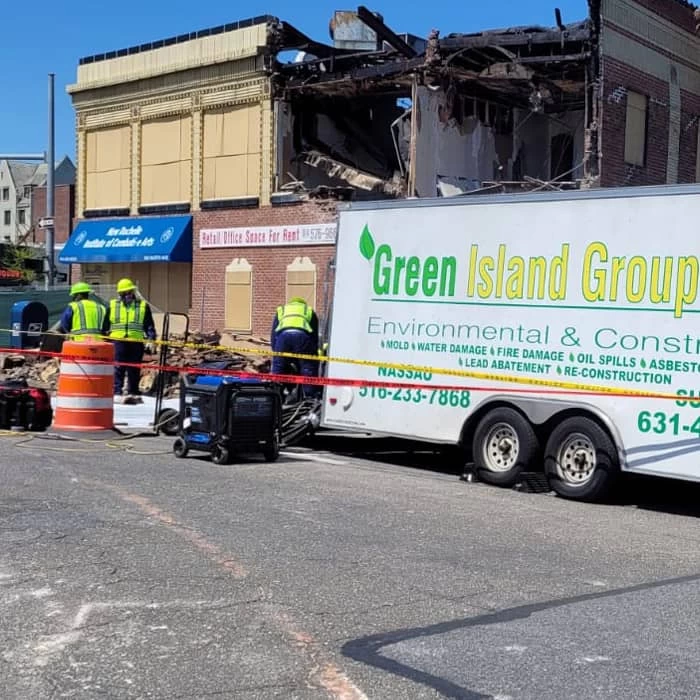
Once on-site, the first priority is stabilization. That means emergency board-up if the structure is exposed, assessment of the full damage scope fire, smoke, and water from suppression and immediate water extraction if needed. In Quiogue’s coastal environment, that last step isn’t optional. The humidity along Quantuck Bay means standing water and saturated materials become a mold problem faster here than in most of Long Island’s inland communities. Drying equipment goes in early, and it stays until moisture readings confirm the structure is clear.
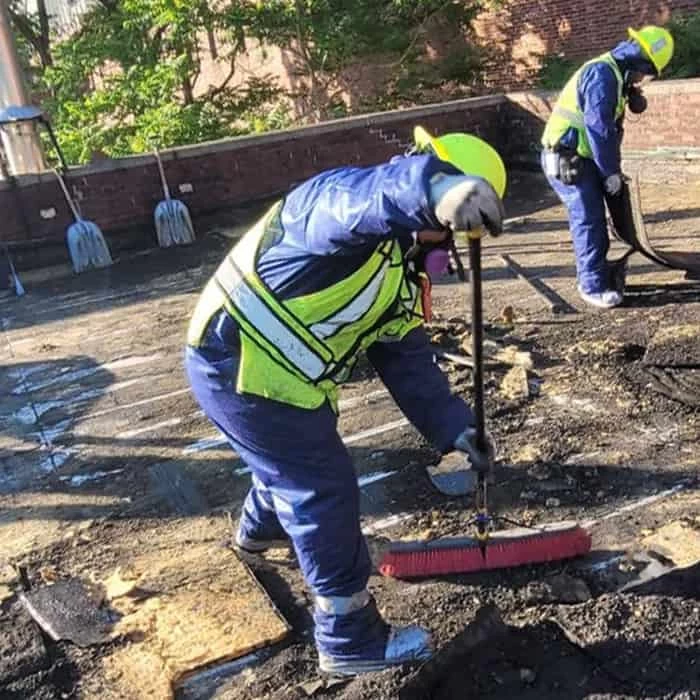
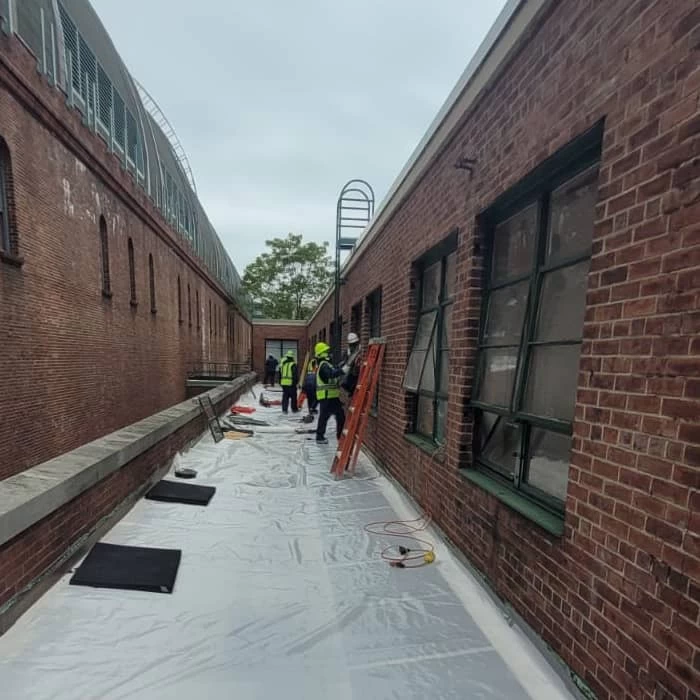
From there, the work moves through soot and smoke remediation, odor neutralization, environmental testing and abatement if the structure’s age warrants it, and full reconstruction. If your home is older and the fire disturbed materials that require asbestos handling, we hold the certifications to manage that legally and safely under New York State requirements no subcontracting that piece to an unknown third party. And throughout the entire process, we’re working alongside you on the insurance claim, documenting damage in the format adjusters recognize and making sure the scope of work reflects what actually needs to be done.
Full Scope Restoration Built for What Quiogue Homes Actually Face
Fire damage restoration in Quiogue isn’t a single-service job. The hamlet’s coastal position, its older housing stock, its Hamlet Heritage Area designation, and the seasonal nature of many of its properties create a damage profile that goes well beyond what a general contractor or cleanup crew is equipped to handle. Our service covers the full arc from the first hour of emergency response through the final stage of reconstruction.
On the environmental side, that means asbestos abatement and mold remediation handled in-house by a team with the New York State certifications required to do that work legally. For properties in Quiogue that predate 1980 and there are many this isn’t a hypothetical add-on. It’s a near-certain part of the job. The Town of Southampton’s building code also requires permits for structural reconstruction work, and we navigate that process as part of the project, not as an afterthought that slows things down after the fact.
For seasonal property owners and Quiogue has a significant number of homes that sit partially unoccupied through the winter or are used primarily in summer we manage the entire recovery process with the kind of communication and documentation that lets you stay informed from wherever you are. Every step is photographed, recorded, and presented to your insurance carrier in a format that supports a full and fair settlement. The satisfaction guarantee is explicit: the work isn’t finished until you say it is.
Does fire damage restoration in Quiogue require a permit from the Town of Southampton?
It depends on the scope of the work. Routine non-structural cleaning, smoke remediation, and cosmetic repairs generally don’t require a building permit. But if the fire caused structural damage anything that goes down to the sheathing, affects load-bearing elements, or requires reconstruction of walls, ceilings, or flooring then yes, a permit from the Town of Southampton Building and Zoning Department is required before that work begins.
What makes Quiogue specifically worth noting here is the hamlet’s Hamlet Heritage Area designation. The Town of Southampton requires additional review for alterations and restoration work on buildings built prior to 1941 in designated Heritage Areas and Quiogue holds that designation. If your home is older, that review process is part of the permitting timeline, and a contractor who isn’t familiar with Southampton Town’s requirements can inadvertently create compliance delays that slow your project and complicate your insurance claim. Working with us means that process gets handled as part of the job, not discovered as a problem halfway through it.
How quickly does smoke damage become permanent after a fire in my home?
Faster than most people expect. Soot begins etching and staining porous surfaces walls, ceilings, grout, wood trim within 24 to 72 hours of a fire. Smoke molecules penetrate drywall, insulation, and upholstery and become significantly harder to neutralize after 48 hours. The longer the gap between the fire and professional remediation, the more of those surfaces move from “restorable” to “replace entirely.”
In Quiogue specifically, the coastal humidity along Quantuck Bay compounds this timeline. Any suppression water left in walls, flooring, or subfloor materials has less time before mold begins developing than it would in a drier inland environment. What might be a 48-hour window elsewhere can compress here. The practical takeaway is simple: the sooner a qualified team is on-site, the smaller the total scope of damage and the lower the final cost of restoration.
Can a fire in an older Quiogue home disturb asbestos, and how is that handled?
Yes, and it’s more common than most homeowners realize. Asbestos-containing materials were used extensively in construction through the late 1970s in insulation, floor tiles, ceiling tiles, drywall joint compound, pipe wrap, and roofing materials. Quiogue’s housing stock includes genuinely old structures, some with histories going back generations. A fire that burns through walls or ceilings in a pre-1980 home has a real probability of disturbing those materials.
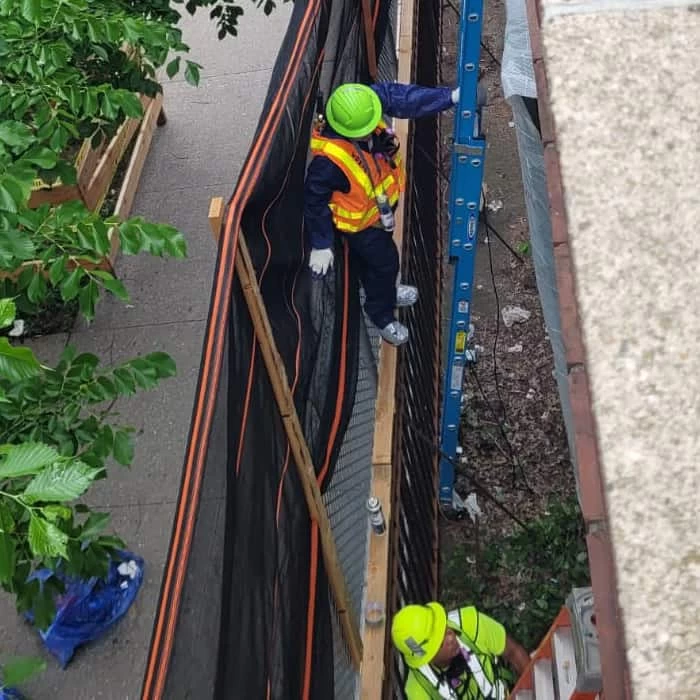
When that happens, the work can’t legally proceed as standard fire restoration. New York State requires NYSDOL certification for asbestos abatement, and the affected area needs to be properly contained, tested, and cleared before reconstruction begins. This is exactly the kind of scenario where hiring a fire-only cleanup company or a general contractor without environmental credentials creates a serious problem either the hazard gets missed entirely, or the job stalls when the issue surfaces mid-project. We hold the environmental certifications to handle asbestos abatement in-house, which means the project keeps moving under one team rather than getting handed off to a third party mid-stream.
What does fire damage restoration typically cost on Long Island, and does insurance cover it?
The cost of fire damage restoration varies significantly depending on the scope a contained kitchen fire with smoke damage to adjacent rooms is a very different job than a fire that compromised structural elements and triggered secondary water and mold damage. On Long Island, professional fire restoration for a moderate scope typically runs from several thousand dollars into the mid-five figures. For larger or more complex properties and Quiogue has no shortage of high-value waterfront homes full restoration including reconstruction can run considerably higher.
Most standard homeowner’s insurance policies do cover fire damage restoration, including smoke remediation, water damage from suppression, and structural repairs. The critical variable is how the damage is documented and presented to the adjuster. Insurance carriers work from itemized estimates, and the difference between a well-documented claim and a vague one can be significant in terms of what gets approved. We work directly with your insurance carrier throughout the process documenting damage thoroughly, using the pricing formats adjusters recognize, and making sure the approved scope reflects what the property actually needs. For homeowners in Quiogue dealing with high-value property claims, that advocacy is often the most financially meaningful part of the entire engagement.
My Quiogue home is a seasonal property what should I do if a fire happens when I'm not there?
This is one of the more common situations for properties in the Hamptons corridor, and Quiogue is no exception. A meaningful number of homes in this hamlet are seasonal or part-time residences used primarily in summer, left partially unoccupied through the winter, or managed by a caretaker when the owner isn’t on the East End. When a fire or smoke event occurs in an unoccupied property, the damage window before a professional team arrives is often longer, which is exactly why having a restoration company you can reach immediately and trust to act in your interest without supervision matters so much.
We manage the full recovery process with consistent communication every step is documented and reported, so you stay informed regardless of where you are. Emergency board-up and stabilization happen first to secure the structure. From there, we work through the full restoration scope and keep you in the loop on every decision that requires your input. We also handle the insurance documentation and adjuster communication on your behalf, which is especially practical when you’re managing the process remotely. For seasonal property owners in Quiogue, that combination of fast response and hands-on insurance advocacy is exactly what the situation calls for.
How do I know if a fire restoration company is actually licensed to work in Quiogue and Southampton Town?
This is worth asking directly before you hire anyone. Working in the Town of Southampton requires a town-specific Home Improvement Contractor license separate from the Suffolk County HIC license that most Long Island contractors carry. A company licensed to work in Nassau County or western Suffolk doesn’t automatically have the credentials to take on jobs in Southampton Town. It’s a non-trivial distinction, and it’s one that homeowners in Quiogue are in a position to verify before signing anything.
Beyond the licensing question, it’s also worth asking whether the contractor has experience with Southampton Town’s permitting process and, for older properties, the Heritage Area review requirements that apply to Quiogue. A contractor who learns about these requirements mid-project creates delays and potential compliance issues that fall on you as the property owner. Ask for proof of licensing, ask specifically about their experience working in Southampton Town, and ask whether they handle environmental remediation in-house or subcontract it. Those three questions will tell you a lot about whether the company you’re talking to is actually equipped for what your property needs or just willing to take the job.