When a Quogue Property Burns, Every Hour Costs More
Smoke doesn’t wait. Soot starts etching surfaces within 24 hours, and water from firefighting soaks into walls long before anyone calls a contractor. If you’re dealing with fire damage in Quogue whether you’re standing in the driveway or managing this from the city we handle everything from the emergency call to the finished room.
I needed a professional consultation explanation of procedure for safe removal of Asbestos in my apartment complex. Without having an account yet, I was very impressed with the caring, knowledgeable and generous advice offered by Jessica, and will look forward to doing business in the future. Thank you so much! I feel much more informed about a sometimes scary endeavor. Peace. Nancy Silva Mineola, NY.
Mia Munoz
Used this company to clean up some water flood in my house. They were fast and easy to work with.very professional, Would recommend to anyone!
Nini Valle
Great company, had a flood and they responded quickly and efficiently. Billed my insurance company directly. I highly recommend this company!
joe colapietro, jr
I had pipe freeze in my basement right before a snow storm and they made to within an hour to help start the clean up process. They we by our side throughout the entire process and even helped with the insurance company. They did such a great job with the cleanup, repair, remidiation, I contracted them to perform the repairs and finishes in the basement. They came with enough manpower and material to get the job done. Leo and Jessica were nothing but a pleasure to deal with!!
Cristian Arredondo c
I had some water damage in my home and Green Island was able to take care of my issue quickly and effectively. I am very pleased with the work they did. They responded quickly and were very professional.
Michael M
Outstanding service! From the office to the field crew everyone was friendly, helpful and responsive. I highly recommend Green Island Group.
A fire in Quogue isn’t just a cleanup job. The homes along Quogue Street and within the Historic District were built in the late 1800s original plaster walls, old-growth timber framing, materials that absorb smoke differently than modern construction. When smoke moves through a structure like that, it doesn’t stay in the room where the fire started. It travels through the HVAC system, settles into wall cavities, and embeds itself in porous surfaces throughout the entire home. Real recovery means addressing all of it, not just what’s visible.
For second-home owners and a large share of Quogue’s properties sit vacant outside of summer the gap between when a fire happens and when someone discovers it can stretch into days. That delay compounds the damage significantly. Soot etches. Moisture from suppression water breeds mold. What might have been a contained restoration becomes a full structural job. Getting a crew on-site fast, even when you’re not there, is the single most important variable in controlling the final scope and cost.
The result you should expect isn’t just a structurally sound house. It’s a home that smells clean, tests clean, and passes inspection with every permit filed, every hazardous material handled properly, and your insurance claim documented in a way that holds up.
We’re a locally owned restoration company serving Nassau and Suffolk Counties not a national franchise with a call center routing your job to whoever’s available. When you call, you reach people who know Long Island’s housing stock, understand the coastal conditions along the South Shore, and have worked in Quogue and similar communities before. There’s no corporate layer between you and the people doing the work.
That matters in a place like Quogue. The village’s older homes, the Historic District’s preservation considerations, the seasonal occupancy patterns that leave properties unmonitored for months these aren’t abstract challenges for us. They’re the specific conditions we account for on every job in this area. Our clients consistently point to team members like Jessica and Leo by name in their reviews, not because of a script, but because the same people stay with your project from the first call to the final walkthrough.
Our satisfaction guarantee isn’t a tagline. It reflects how a locally accountable company has to operate because in a community this size, your reputation is everything.
The first step is emergency response and stabilization. That means board-up, tarping, and securing the structure so no additional damage occurs while the full assessment is underway. For Quogue properties on or near Dune Road, that also means accounting for coastal exposure an unsecured structure after a fire is especially vulnerable to weather, and the barrier beach environment doesn’t give you a grace period.
From there, the scope is documented thoroughly not just for your peace of mind, but for your insurance carrier. We work directly with adjusters, prepare documentation in the formats insurers require, and help you understand what’s covered and where to push back if the initial estimate falls short. For high-value properties in Quogue, where a claim can easily reach six figures, that level of insurance coordination isn’t optional.
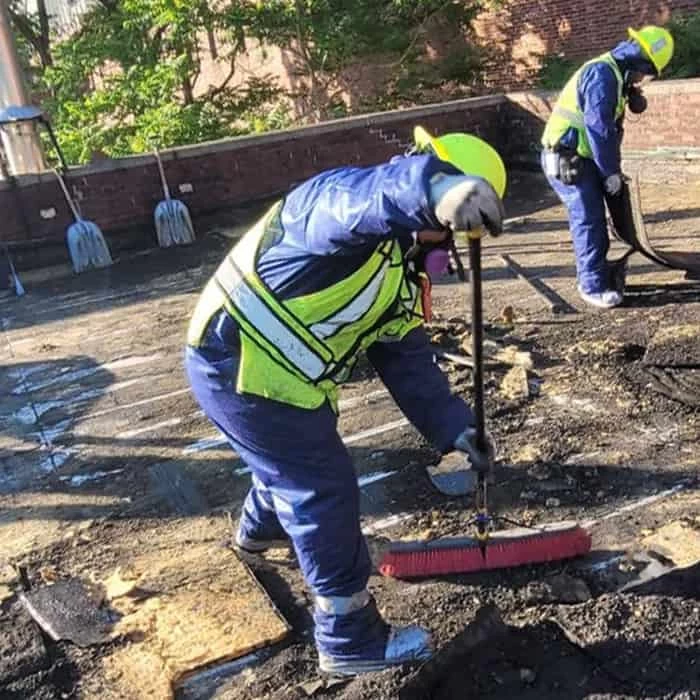
Remediation follows: smoke and soot removal, water extraction from firefighting suppression, odor elimination using thermal fogging or hydroxyl treatment not masking agents and environmental testing for asbestos or mold in homes where the age of the structure makes that a real concern. In Quogue’s Victorian-era and early-20th-century homes, asbestos in insulation, floor tiles, or pipe wrap is a legitimate possibility that requires state-certified handling. Once the structure is clean, tested, and cleared, reconstruction begins and we handle that too, through finished rooms, with all required Village permits pulled and inspections completed.
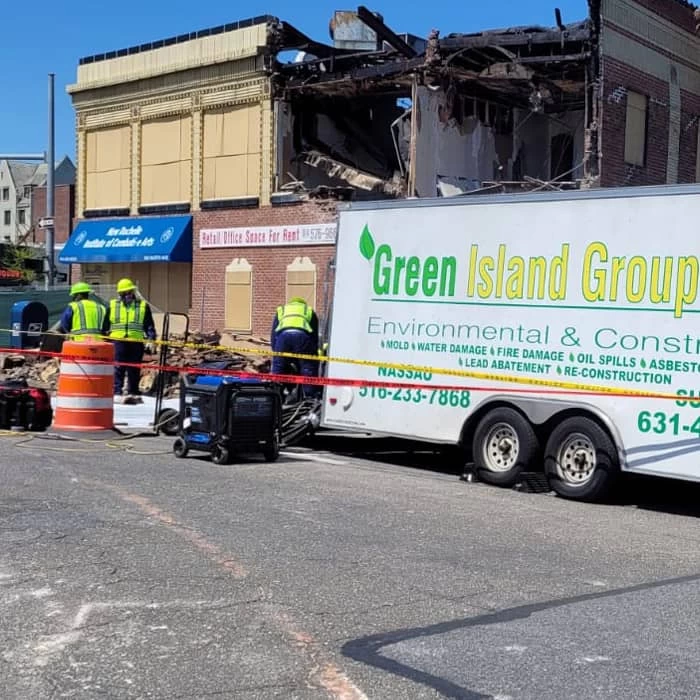
Fire damage restoration in Quogue involves more than most homeowners expect when they first make the call. The fire itself is only the beginning. Suppression water saturates floors and walls. Smoke infiltrates every room that shares an HVAC system with the origin point. Soot coats surfaces in rooms that never saw a flame. And in a home built before 1980 which describes a significant portion of Quogue’s housing stock the fire and demolition process can disturb asbestos-containing materials that require certified abatement before any reconstruction can begin.
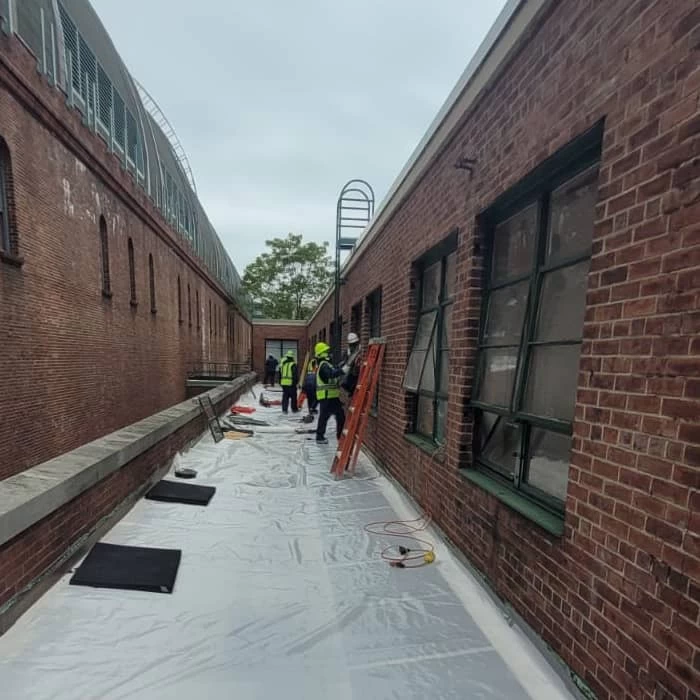
Our full service scope covers emergency response and board-up, complete smoke and soot remediation, water extraction and structural drying, mold assessment and remediation, asbestos testing and abatement where applicable, professional odor elimination, and full reconstruction through finished rooms. For properties in Quogue’s coastal hazard zones including Dune Road and bay-front areas near Quantuck Bay the restoration scope also accounts for compliance with Village Code chapters governing coastal erosion, flood damage prevention, and wetlands, all of which apply to reconstruction work in those areas.
There are no handoffs to subcontractors mid-project. The same company that responds on day one is the company that completes the final inspection. For absentee owners managing a Quogue property from New York City, that continuity isn’t just convenient it’s the only arrangement that actually works.
Does fire damage restoration in Quogue require building permits from the Village?
Yes, and the permit requirements in Quogue can be more layered than in a standard municipality. Any structural repairs, electrical work, or plumbing that’s part of the restoration scope requires building permits and inspections under Village Code Chapter 73, which governs building construction and fire prevention. If the damaged property is in a coastal hazard area which includes much of the Dune Road corridor and bay-front properties near Quantuck Bay Chapter 80 and Chapter 95 also apply, adding coastal erosion and flood damage prevention requirements to the reconstruction scope.
For homes within or adjacent to the Quogue Historic District, there are additional preservation considerations that affect what materials and methods can be used in the restoration. We manage the full permitting process as part of the job, so you’re not left navigating Village Code on your own while also dealing with an insurance claim. Every required permit gets pulled, every inspection gets scheduled, and the work is completed to code from start to finish.
How quickly does smoke damage spread through a home after a fire?
Faster than most people realize. Smoke begins moving through a structure the moment the fire starts, traveling through HVAC ductwork, penetrating wall cavities, and settling into porous materials in rooms that may be far from the origin point. Within 24 to 72 hours, soot starts permanently etching and staining surfaces. Within the same window, moisture from firefighting suppression water creates conditions for mold growth.
For Quogue properties that are seasonal or minimally occupied which is a large share of the village’s housing stock this timeline is especially critical. A fire that occurs in a vacant home in January may not be discovered for days, giving smoke and moisture a significant head start. The longer the delay between the fire and the start of professional remediation, the larger the total damage footprint and the higher the final restoration cost. Fast response is the most important variable in the entire recovery.
My Quogue home is older should I be worried about asbestos after a fire?
If your home was built before 1980, it’s a legitimate concern worth taking seriously. Asbestos-containing materials were commonly used in insulation, floor tiles, pipe wrap, ceiling texture, and joint compound in homes constructed during that era and Quogue’s Victorian-era and early-20th-century housing stock along Quogue Street and within the Historic District falls squarely in that range.
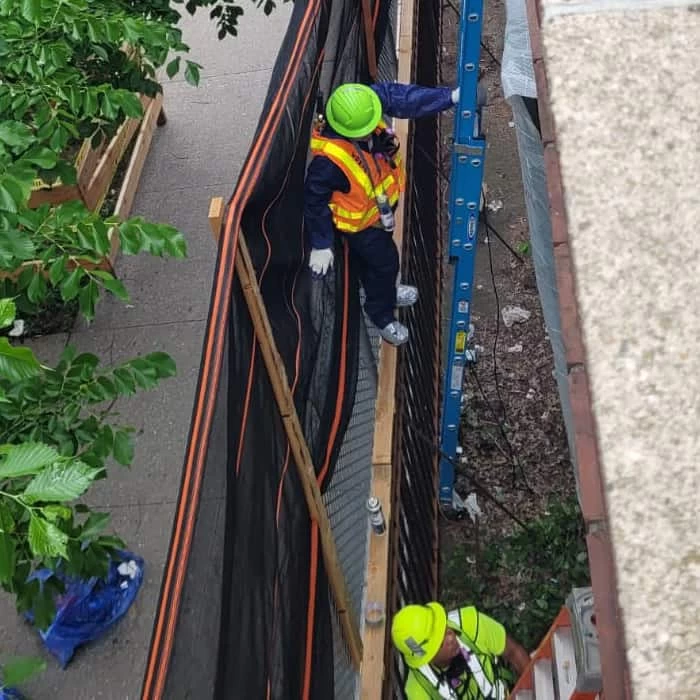
When a fire occurs, heat and subsequent demolition can disturb these materials, releasing asbestos fibers into the air. A standard restoration contractor is not licensed to handle this. Asbestos abatement in New York State requires specific certification from the New York State Department of Labor, and any company performing restoration work in an older Quogue home should be assessing for this before demolition begins. We hold the environmental remediation certifications required to test for, contain, and safely remove asbestos-containing materials meaning the full scope of your recovery can be handled by one company, without stopping mid-project to bring in a separate abatement firm.
Will my homeowner's insurance cover the full cost of fire damage restoration?
Most standard homeowner’s insurance policies do cover fire damage restoration, including smoke and soot remediation, water damage from firefighting suppression, and reconstruction but the amount you actually recover depends heavily on how the claim is documented and presented. Insurers work from detailed scope estimates, and if the documentation doesn’t fully capture the extent of the damage, the payout may not reflect the true cost of a complete recovery.
For properties in Quogue, where home values regularly exceed $1 million and a significant fire event can generate a claim well into six figures, this documentation gap can be very costly. We work directly with insurance adjusters, prepare documentation in the formats carriers require, and help you understand what the policy covers and where to push back if the initial estimate falls short. Multiple clients have specifically pointed to this insurance coordination as the part of the process they were most grateful for.
Can smoke odor really be fully eliminated from an older home's walls and floors?
Yes, but not with surface cleaning alone. Smoke odor embeds itself at a molecular level into porous materials old plaster walls, hardwood floors, structural timber, insulation, and soft goods. Wiping down surfaces or applying a deodorizing spray doesn’t reach what’s inside the material. The odor comes back, often within days.
Professional odor elimination requires thermal fogging, hydroxyl generation, or ozone treatment processes that break down the smoke molecules rather than covering them. For Quogue’s older homes, where original plaster walls and old-growth timber are common, this is especially relevant because those materials are more porous than modern drywall and hold odor more deeply. A thorough remediation addresses the HVAC system, the wall cavities, the subfloor, and any structural wood that absorbed smoke not just the surfaces you can see. When it’s done correctly, the home doesn’t smell like smoke and it doesn’t smell like chemicals either. It just smells clean.
How do I manage fire damage restoration on a Quogue property when I'm not local?
This is one of the most common situations we work with in Quogue. A significant portion of the village’s homeowners are based in New York City or nearby suburbs and aren’t on-site when a fire occurs. The call comes from a neighbor, a caretaker, or the fire department and suddenly you’re managing a major property emergency from a distance.
What makes that workable is having a single point of contact who knows your specific project and communicates consistently. We assign named team members to each job, so when you call for an update, you reach someone who can actually answer your question not a dispatcher reading from a file. The full scope of work, from emergency stabilization through final reconstruction, is managed by the same company, which means you’re not coordinating between a cleanup crew, a mold firm, an abatement contractor, and a general contractor across a months-long recovery. Progress is documented, insurance coordination happens on your behalf, and the work moves forward with or without you physically present. For a property in a place like Quogue where the home may have been closed for the season and the owner is hours away that kind of operational continuity is what actually gets the job done.