Roosevelt Homes Deserve More Than a Surface Cleanup
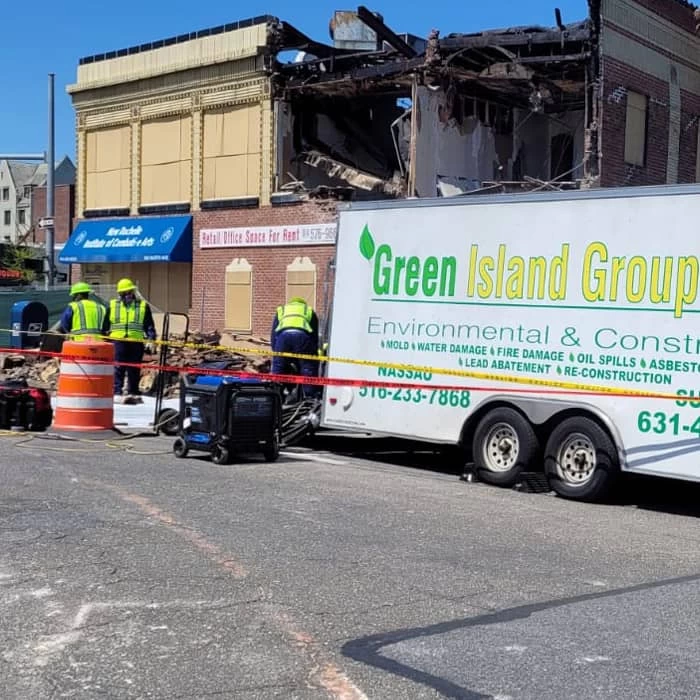
When fire hits a home in Roosevelt, the damage runs deeper than what you can see. We respond fast, handle your insurance, and see the job through — from emergency call to finished rebuild.
I needed a professional consultation explanation of procedure for safe removal of Asbestos in my apartment complex. Without having an account yet, I was very impressed with the caring, knowledgeable and generous advice offered by Jessica, and will look forward to doing business in the future. Thank you so much! I feel much more informed about a sometimes scary endeavor. Peace. Nancy Silva Mineola, NY.
Mia Munoz
Used this company to clean up some water flood in my house. They were fast and easy to work with.very professional, Would recommend to anyone!
Nini Valle
Great company, had a flood and they responded quickly and efficiently. Billed my insurance company directly. I highly recommend this company!
joe colapietro, jr
I had pipe freeze in my basement right before a snow storm and they made to within an hour to help start the clean up process. They we by our side throughout the entire process and even helped with the insurance company. They did such a great job with the cleanup, repair, remidiation, I contracted them to perform the repairs and finishes in the basement. They came with enough manpower and material to get the job done. Leo and Jessica were nothing but a pleasure to deal with!!
Cristian Arredondo c
I had some water damage in my home and Green Island was able to take care of my issue quickly and effectively. I am very pleased with the work they did. They responded quickly and were very professional.
Michael M
Outstanding service! From the office to the field crew everyone was friendly, helpful and responsive. I highly recommend Green Island Group.
The visible damage is just the starting point. Smoke travels through wall cavities, HVAC ducts, and insulation long before you can smell it in every room. Soot bonds to surfaces within hours. And the water firefighters used to save your home? That creates a mold risk that can show up within 24 to 48 hours — especially in a coastal South Shore environment like Roosevelt, where humidity levels accelerate the problem. If the full scope isn’t addressed quickly and correctly, a contained fire turns into a months-long remediation project.
Roosevelt’s housing stock adds another layer. Most homes here were built in the 1940s through the 1960s — and that means there’s a real chance fire disturbed asbestos-containing materials or lead paint somewhere in your walls, floors, or ceiling tiles. That’s not a minor detail. It’s a legally regulated situation that requires specific licensing to handle safely, and most general contractors simply don’t have it.
When the job is done right, you get your home back — not a version of it with lingering odor, hidden moisture, or unaddressed hazardous materials. You get a property that’s been fully cleaned, dried, tested, and rebuilt to the point where it’s safe to live in again. That’s the outcome worth focusing on.
Every License the Job Actually Requires — In One Company
Green Island Group is a locally owned restoration and reconstruction company based on Long Island, serving Roosevelt and the surrounding Nassau County communities including Freeport, Baldwin, Merrick, and Uniondale. With over 5,000 completed projects across New York State, we’ve handled fire damage in homes that look exactly like the ones lining Roosevelt’s residential streets — midcentury Cape Cods, split-levels, and ranches with oil heat, aging wiring, and older infrastructure.
What separates us from most restoration companies is the licensing. We hold a Nassau County General Contractor License, NYS DOL Asbestos Contractor License, USEPA Lead/RRP Certification, NYS DOL Mold Remediation License, and active IICRC certification for fire and smoke damage restoration. That combination isn’t common. It means one company can legally handle every phase of the job — including the hazardous materials that older Roosevelt homes are likely to contain — without subcontracting pieces of it out to someone else.
We also carry NYS and NYC M/WBE certification, which requires formal verification of business standing and accountability through state and city government. That’s not a marketing credential — it’s a verified one.
From the Night of the Fire to the Day You Move Back In
The first call triggers an immediate response. We operate 24/7, and for Roosevelt residents, the Southern State Parkway — which runs directly along the hamlet’s northern edge — gives our crew direct, uninterrupted access from Long Island without a single turn. That matters when every hour of delay means more soot bonding, more moisture spreading, and more risk.
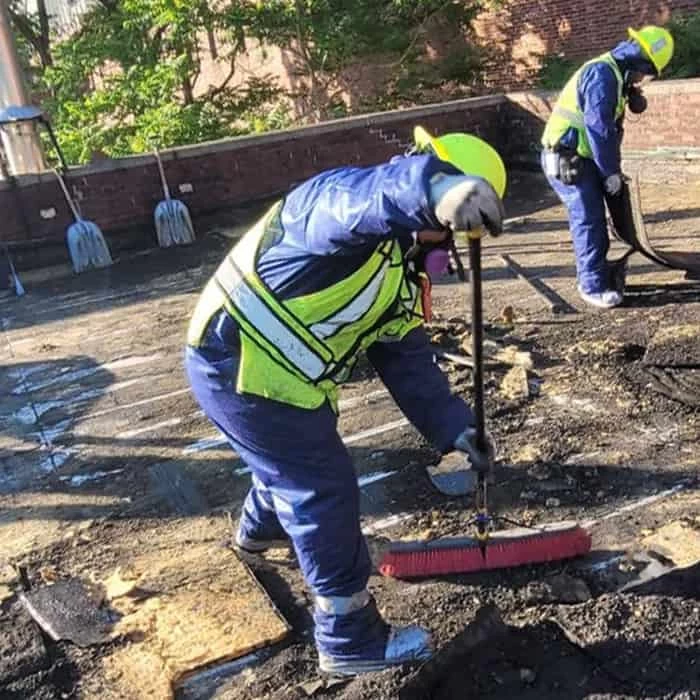
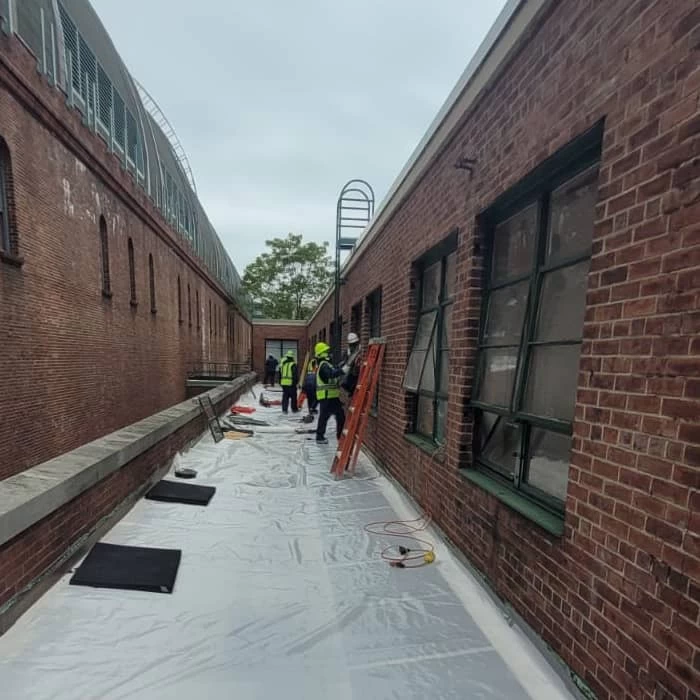
On arrival, we secure the property — board-up, tarping, and emergency stabilization — and begin a full damage assessment. That assessment documents everything: structural damage, smoke penetration, water saturation from firefighting, and any indicators of asbestos or lead-containing materials that fire may have disturbed. In Roosevelt’s older housing stock, that last part isn’t optional. It drives the entire remediation plan and determines what licensed procedures need to follow.
From there, the work moves through water extraction and structural drying, soot and smoke removal, NADCA-certified HVAC cleaning, air quality restoration using scrubbers and thermal fogging, and finally full reconstruction under the Nassau County General Contractor License. Permits are pulled through the Town of Hempstead Building Department — we handle that process directly. Throughout every phase, we document the work in insurance-standard format and communicate with your adjuster, so you’re not left managing that on your own.
Fire damage restoration in Roosevelt isn’t a single service — it’s a sequence of interconnected work that has to happen in the right order by people who are licensed to do each part. We cover the complete scope: emergency board-up and property securing, water extraction and structural drying, soot removal and smoke odor elimination, asbestos and lead testing and abatement where required, mold prevention and remediation, NADCA-certified HVAC and duct cleaning, and full structural reconstruction.
The HVAC piece matters more than most homeowners realize. In a midcentury Roosevelt home, smoke particles travel through ductwork and embed in insulation throughout the entire structure — not just the rooms near the fire. Without certified duct cleaning and air treatment, that smoke odor comes back. Air scrubbers, ozone treatment, and thermal fogging are used to restore indoor air quality, not just mask the smell. For households with children, elderly residents, or anyone with respiratory conditions, this step isn’t optional.
Because we hold the Nassau County GC license, we pull the required permits through the Town of Hempstead Building Department and handle reconstruction directly — no subcontractors, no handoffs, no gaps between the cleanup phase and the rebuild. And because we bill insurance companies directly, you’re not fronting costs or managing paperwork while you’re already dealing with displacement.
Does homeowners insurance cover fire damage restoration for Roosevelt, NY residents?
In most cases, yes — standard homeowners insurance covers fire damage restoration, including smoke and soot cleanup, water damage from firefighting, and structural repairs. What it covers specifically depends on your policy, your coverage limits, and how the damage is documented. This is where the claims process either works for you or against you.
We document every phase of the restoration using insurance-standard records and communicate directly with your adjuster throughout the job. That means the full scope of damage — including secondary damage like smoke penetration into HVAC systems or moisture in wall cavities — gets properly captured and submitted, not overlooked. For Roosevelt homeowners who may be navigating a major insurance claim for the first time, having the restoration company handle that process directly removes one of the most stressful parts of an already difficult situation. You focus on your family; we handle the paperwork.
How quickly does fire damage need to be addressed before it gets worse?
The window is shorter than most people expect. Soot begins bonding permanently to walls, ceilings, and surfaces within hours of a fire. Acidic smoke residue starts corroding metal fixtures and finishes within the first day or two. And the water used to suppress the fire — which soaks into subfloors, wall cavities, and insulation — creates active mold risk within 24 to 48 hours.
On Long Island’s South Shore, where Roosevelt sits, coastal humidity accelerates that mold timeline. A home that’s been soaked by firefighting water in a warm, humid environment isn’t just a fire cleanup — it’s a race against secondary damage. The longer the response is delayed, the more the scope expands and the more difficult full restoration becomes. That’s why we operate around the clock and can reach Roosevelt via the Southern State Parkway with a direct response, any time of day or night.
My Roosevelt home was built in the 1950s — does that change how fire restoration is handled?
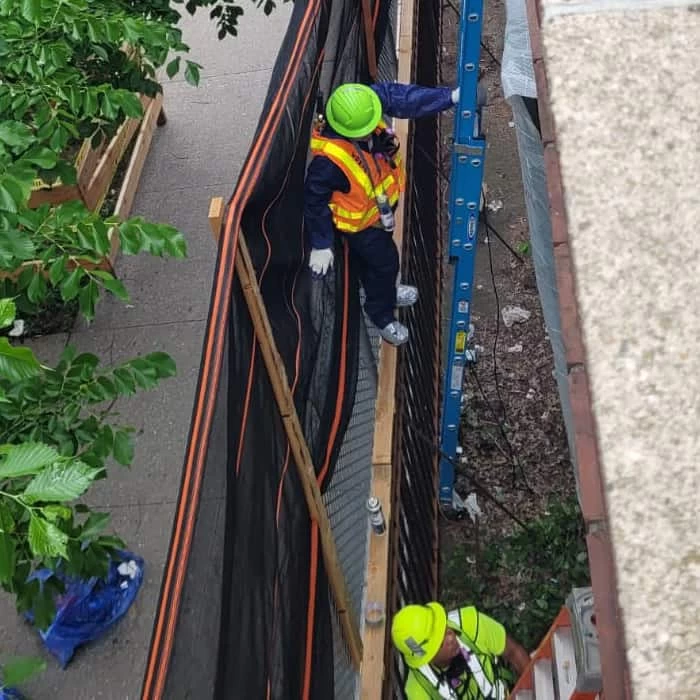
It does, and it’s an important question to ask before hiring anyone. Homes built before the late 1970s frequently contain asbestos in floor tiles, pipe insulation, ceiling tiles, joint compound, and roofing materials. Homes built before 1978 almost certainly have lead-based paint on walls, trim, and window frames. When fire burns through these materials, it disturbs them — and disturbed asbestos and lead are regulated hazardous substances under New York State and federal law.
New York State requires a NYS DOL Asbestos Contractor License to legally remove or disturb asbestos-containing materials. Federal law requires USEPA Lead/RRP Certification for renovation work in pre-1978 homes. We hold both credentials, along with a NYS DOL Mold Remediation License. A contractor who doesn’t hold these licenses isn’t legally permitted to do this work — and if they proceed anyway, the liability falls back on the homeowner. For the majority of Roosevelt’s housing stock, which was built in that exact era, verifying these credentials before signing anything is not optional.
What's the difference between smoke damage and fire damage — and why does it matter?
Fire damage refers to what the flames physically burned or destroyed — structural materials, finishes, fixtures. Smoke damage is a separate and often larger problem. Smoke is not contained to the room where the fire started. It travels through HVAC systems, wall cavities, attic spaces, and around door frames, depositing soot and embedding odor throughout the entire home — including rooms that never saw a flame.
There are also different types of smoke residue, and they require different treatment. Dry soot from fast-burning fires brushes off relatively cleanly. Oily soot from kitchen grease fires or slow-burning synthetic materials smears on contact and requires chemical treatment. Protein residue from cooking fires is nearly invisible but produces an extremely persistent odor. Treating all of them the same way doesn’t work. Our IICRC-certified technicians assess the type of smoke and soot present before determining the cleaning method — which is why the odor actually goes away instead of temporarily fading and coming back weeks later.
Can an oil burner puff-back cause the same kind of damage as a fire in a Roosevelt home?
Yes — and it’s one of the more common calls we receive from Long Island homeowners. A puff-back happens when an oil burner misfires and backfires, discharging a cloud of soot and oily smoke throughout the home. Long Island has one of the highest concentrations of oil-heated homes in the country, and Roosevelt’s midcentury housing stock is heavily oil-heated. Aging burners in homes that haven’t had recent heating system upgrades are particularly prone to this.
The cleanup after a puff-back is nearly identical to smoke damage restoration after a fire — soot removal from surfaces, walls, and ceilings; NADCA-certified HVAC and duct cleaning to clear the distribution system; air quality restoration using scrubbers and fogging; and content cleaning for furniture, clothing, and personal items affected by the discharge. Homeowners insurance typically covers puff-back damage, and we handle the documentation and billing process the same way we do for fire claims. If your oil burner has been acting up and you’re in an older Roosevelt home, it’s worth having the system inspected before a puff-back turns into a full remediation project.
How long does fire damage restoration typically take for a home in Roosevelt, NY?
The timeline depends on the extent of the damage, but here’s a realistic breakdown. Emergency stabilization — board-up, securing the property, initial water extraction — happens within the first 24 hours. Structural drying typically takes three to five days, depending on how much water was used in suppression and how deeply it penetrated. Soot removal, smoke odor treatment, and HVAC cleaning generally run another several days to a week. If hazardous materials like asbestos or lead are present — which is common in Roosevelt’s older homes — testing, abatement, and clearance add time to the front end of the process before reconstruction can begin.
Full reconstruction, which requires permits from the Town of Hempstead Building Department, varies based on the scope of structural damage. A moderate kitchen fire with contained damage might reach completion in three to six weeks. A more significant loss involving multiple rooms or structural components can take two to four months. We manage the permitting process directly and keep you informed at every stage — so you’re not left guessing where the job stands or when you can expect to be back home.