Your Home Was Built to Last. Let's Make Sure It Does.
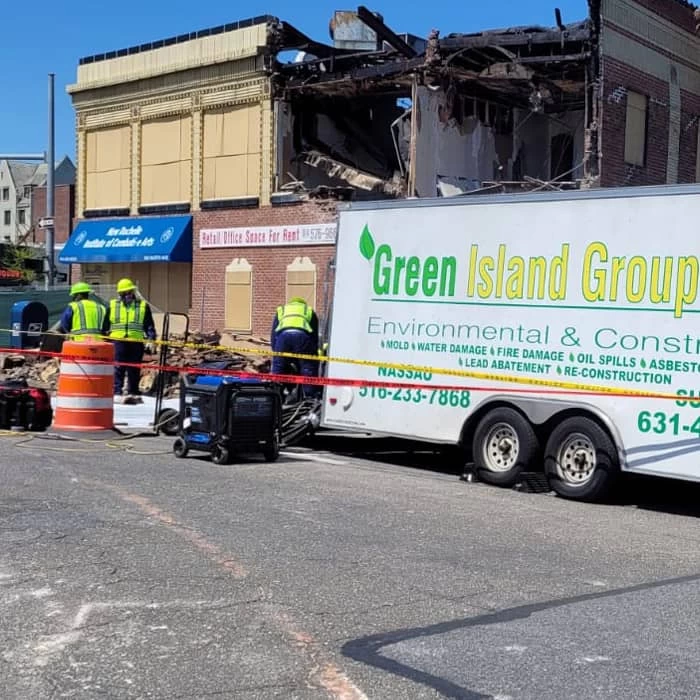
When fire hits a home in Roslyn Estates — whether it’s a mid-century split-level off The Birches or a Colonial near Northern Boulevard — the damage doesn’t wait. We arrive within one hour, handle everything from emergency board-up through full reconstruction, and bill your insurance directly.
I needed a professional consultation explanation of procedure for safe removal of Asbestos in my apartment complex. Without having an account yet, I was very impressed with the caring, knowledgeable and generous advice offered by Jessica, and will look forward to doing business in the future. Thank you so much! I feel much more informed about a sometimes scary endeavor. Peace. Nancy Silva Mineola, NY.
Mia Munoz
Used this company to clean up some water flood in my house. They were fast and easy to work with.very professional, Would recommend to anyone!
Nini Valle
Great company, had a flood and they responded quickly and efficiently. Billed my insurance company directly. I highly recommend this company!
joe colapietro, jr
I had pipe freeze in my basement right before a snow storm and they made to within an hour to help start the clean up process. They we by our side throughout the entire process and even helped with the insurance company. They did such a great job with the cleanup, repair, remidiation, I contracted them to perform the repairs and finishes in the basement. They came with enough manpower and material to get the job done. Leo and Jessica were nothing but a pleasure to deal with!!
Cristian Arredondo c
I had some water damage in my home and Green Island was able to take care of my issue quickly and effectively. I am very pleased with the work they did. They responded quickly and were very professional.
Michael M
Outstanding service! From the office to the field crew everyone was friendly, helpful and responsive. I highly recommend Green Island Group.
A fire in your Roslyn Estates home doesn’t just burn what it touches. Smoke moves through wall cavities, HVAC ducts, and finished spaces — often reaching rooms that never saw a single flame. In a 4,000-plus square foot home like many found throughout this village, that means the damage footprint is almost always larger than it looks on day one. Getting that fully assessed and addressed early is the difference between a contained restoration and a months-long ordeal.
The water used to put the fire out creates its own problem. Mold can begin growing within 24 to 48 hours of water exposure, and in the older homes throughout Roslyn Estates — many of which were built in the 1950s or earlier — enclosed wall cavities and original insulation hold moisture in ways that take professional drying equipment to catch. Skipping that step doesn’t save time. It adds cost.
For Roslyn Estates homeowners specifically, there’s another layer most contractors don’t bring up: homes built before 1980 commonly contain asbestos in floor tiles, pipe insulation, and joint compound. Fire disturbs those materials. Only a contractor licensed by the NYS Department of Labor for asbestos abatement can legally handle what gets uncovered. That’s not a detail to sort out later — it’s something that needs to be addressed from the first day on-site.
We are a Long Island-based restoration and reconstruction company that has completed over 5,000 projects across New York State. We hold a Nassau County General Contractor License, IICRC certification for fire and water damage restoration, NYS DOL licenses for asbestos and mold, and USEPA Lead/RRP certification. That combination matters in Roslyn Estates, where the housing stock spans over a century and the regulatory requirements for restoration work are specific and enforceable.
The Nassau County Fire Prevention Ordinance requires that any contractor performing restoration work in Roslyn Estates be licensed with the Nassau County Fire Marshall. We meet that standard in full — not because it’s a marketing point, but because working without it isn’t legal.
We serve communities across Nassau County’s North Shore, including Roslyn Estates and the surrounding Greater Roslyn area, and operate 24 hours a day, 365 days a year. When you call after a fire, you’re not reaching a national call center routing your job to an unfamiliar crew. You’re reaching a team that knows this area, knows these homes, and can be on-site within the hour.
From Emergency Call to Move-Back-In — Here's the Sequence
The first call triggers our response. We dispatch to Roslyn Estates within one hour — navigating the village’s winding, nature-named streets with the kind of local familiarity that matters when every minute of delay allows soot to bond deeper into surfaces and moisture to travel further into walls. On arrival, the priority is stabilization: board-up, tarping, and securing the structure so the damage stops spreading.
Once the property is stabilized, the full assessment begins. Every room gets documented — not just the visible burn zone, but the areas smoke reached through the ductwork and wall cavities. In Roslyn Estates’ older homes, that assessment also includes checking for disturbed asbestos-containing materials and lead paint, both of which require licensed abatement before any reconstruction work can start. This isn’t an upsell — it’s a legal requirement under Nassau County’s Environmental Hazard Remediation Contractor standard, and skipping it creates liability for you as the homeowner.
From there, the process moves through water extraction and structural drying, smoke and soot removal, odor elimination, HVAC cleaning, hazardous materials abatement if needed, and then full reconstruction — all under one contract, one crew, and one point of contact. We handle the insurance documentation throughout, working directly with your adjuster so the claim reflects the actual scope of damage, not a condensed version of it.
Fire damage restoration in Roslyn Estates covers more ground than most homeowners expect going in. It starts with emergency response — board-up, roof tarping, and water extraction from firefighting — and moves through structural drying, soot and smoke removal, odor treatment using thermal fogging and ozone technology, and NADCA-certified HVAC duct cleaning. That last piece is particularly relevant here, where many homes have oil heating systems. An oil burner puff-back — when a furnace misfires and sends soot throughout the heating system — creates the same kind of widespread contamination as a fire, and it’s a common call on the North Shore of Long Island.
For homes in Roslyn Estates with pre-1980 construction, the scope typically includes a formal asbestos and lead assessment before demolition or reconstruction begins. We hold the NYS DOL Asbestos License and USEPA Lead/RRP Certification required to handle both legally. That protects your family during the restoration and protects you from liability down the road.
Reconstruction is handled in-house under our Nassau County General Contractor License — custom millwork, material matching, structural repairs, mechanical systems — whatever your home needs to be brought back to its original condition or better. Contents restoration, pack-out, and climate-controlled storage are also available for high-value furnishings and personal property. Insurance is billed directly, and the documentation we provide is built to support the full scope of your claim.
Does Nassau County require a special license for fire restoration contractors in Roslyn Estates?
Yes, and it’s worth understanding before you hire anyone. The Nassau County Fire Prevention Ordinance requires that any contractor providing board-up or restoration services in Roslyn Estates be licensed with the Nassau County Fire Marshall. This isn’t a general contractor license or a state registration. It’s a county-specific requirement that includes documented training hours, IICRC certification for both fire and water damage restoration, and proof of valid asbestos and lead abatement licenses.
The practical implication is that a contractor who holds a standard home improvement license but doesn’t meet the full Environmental Hazard Remediation Contractor standard is not legally authorized to perform fire restoration work in your village. If you’re vetting companies, ask directly whether they hold the Nassau County Fire Marshall license and whether their IICRC certifications are current. We meet every component of that standard, which is verifiable — not something you have to take on faith.
How quickly does fire and smoke damage get worse if restoration is delayed?
Faster than most people expect. Within the first few hours after a fire, acidic soot residue begins corroding metal fixtures, tarnishing finishes, and embedding into porous surfaces like drywall, wood, and upholstery. Within 24 to 48 hours, the water used to suppress the fire creates conditions where mold can begin to establish — and in the older, larger homes common throughout Roslyn Estates, there are plenty of enclosed spaces where moisture hides and dries slowly without professional equipment.
By the time a week has passed without professional intervention, what started as a fire and smoke damage claim can expand into a combined fire, smoke, water, and mold remediation project. The cost difference is significant, and insurance adjusters will document the timeline. Getting a licensed restoration crew on-site within hours — not days — is the most direct way to keep the scope of damage, and the scope of the project, from growing.
My Roslyn Estates home was built in the 1950s — does that affect the restoration process?
It does, and it’s important to know this upfront. Homes built before 1978 are presumed to contain lead-based paint under federal law. Homes built before 1980 — which includes the mid-1950s ranch and split-level homes throughout Roslyn Estates — commonly contain asbestos in floor tiles, pipe insulation, ceiling tiles, and drywall joint compound. When a fire occurs, the heat and structural disturbance can release both asbestos fibers and lead dust into the air and throughout the structure.
Legally, only a contractor holding an NYS DOL Asbestos License and USEPA Lead/RRP Certification can address those materials. Any contractor who proceeds with demolition or reconstruction in a pre-1980 home without first conducting a proper hazardous materials assessment — and abating what’s found — is operating outside the law and creating a health and liability risk for your family. We hold both licenses and include this assessment as a standard part of the restoration process for homes of this age.
Will my homeowner's insurance cover the full cost of fire damage restoration in New York?
Most standard homeowner’s insurance policies in New York do cover fire damage restoration, including smoke damage, water damage from firefighting, and additional living expenses while you’re displaced. What they cover in practice, however, depends heavily on how thoroughly the damage is documented and how the claim is presented to the adjuster.
In Roslyn Estates, where homes regularly appraise above one million dollars and restoration projects in larger, architecturally complex properties can involve hazardous materials abatement, custom material matching, and full structural reconstruction, the gap between a well-documented claim and a poorly documented one can be substantial. We document every phase of the restoration — from the initial assessment through final reconstruction — and bill your insurance company directly. We’ve worked through this process across thousands of projects in New York State and know what adjusters need to see to approve the full scope of a legitimate claim.
What is a puff-back, and is it common in Roslyn Estates homes?
A puff-back happens when an oil-fired furnace misfires and sends a backblast of soot and oily residue through the heating system and into the home. The result is widespread soot contamination across ceilings, walls, HVAC ductwork, and contents — sometimes throughout the entire house — without any actual fire having occurred. It looks and smells like fire damage because the residue is chemically similar.
Long Island’s North Shore has one of the highest concentrations of oil-heated homes in the country, and Roslyn Estates is no exception. The village’s older housing stock — particularly the mid-century homes along the village’s winding interior streets — frequently still runs on original or aging oil heating systems that are prone to this kind of malfunction. Puff-back cleanup requires the same professional soot removal, odor elimination, and HVAC cleaning that a fire restoration requires. It’s not a job for a general cleaning service. We handle puff-back incidents with the same IICRC-certified process used for full fire damage events.
How long does fire damage restoration typically take for a home in Roslyn Estates?
The honest answer is that it depends on the scope, and the scope in Roslyn Estates tends to be broader than in many other communities — for a few specific reasons. The homes are large, often 3,000 to 6,000 square feet or more, which means more surface area for smoke to contaminate and more structural volume for moisture to penetrate. The age of the housing stock means hazardous materials testing and abatement are frequently part of the process, which adds time before reconstruction can begin. And the architectural complexity of many homes here — custom millwork, period-appropriate finishes, multi-story layouts — means reconstruction isn’t a quick swap of standard materials.
For a contained kitchen or single-room fire with limited smoke spread and no hazardous materials involvement, restoration can be completed in two to four weeks. For a larger fire with significant smoke migration, structural damage, and asbestos or lead abatement required, the realistic timeline is more often six to twelve weeks. We’ll give you a clear scope and timeline after the initial assessment — not a number pulled from thin air, but one based on what’s actually in front of us. That assessment also drives the insurance documentation, so the timeline and the claim are built on the same set of facts.