Levitt Homes Don't Leave Room for Guesswork After Fire
When fire or smoke hits a Levitt-era home in Salisbury, what’s behind the walls matters just as much as what burned. We handle fire damage restoration from the first call to the final walkthrough — licensed, certified, and insurance-ready.
I needed a professional consultation explanation of procedure for safe removal of Asbestos in my apartment complex. Without having an account yet, I was very impressed with the caring, knowledgeable and generous advice offered by Jessica, and will look forward to doing business in the future. Thank you so much! I feel much more informed about a sometimes scary endeavor. Peace. Nancy Silva Mineola, NY.
Mia Munoz
Used this company to clean up some water flood in my house. They were fast and easy to work with.very professional, Would recommend to anyone!
Nini Valle
Great company, had a flood and they responded quickly and efficiently. Billed my insurance company directly. I highly recommend this company!
joe colapietro, jr
I had pipe freeze in my basement right before a snow storm and they made to within an hour to help start the clean up process. They we by our side throughout the entire process and even helped with the insurance company. They did such a great job with the cleanup, repair, remidiation, I contracted them to perform the repairs and finishes in the basement. They came with enough manpower and material to get the job done. Leo and Jessica were nothing but a pleasure to deal with!!
Cristian Arredondo c
I had some water damage in my home and Green Island was able to take care of my issue quickly and effectively. I am very pleased with the work they did. They responded quickly and were very professional.
Michael M
Outstanding service! From the office to the field crew everyone was friendly, helpful and responsive. I highly recommend Green Island Group.
Fire damage doesn’t end when the flames do. Smoke travels through HVAC systems, wall cavities, and every gap it can find — and in Salisbury’s Levitt-built Cape Cods and ranches, those gaps are everywhere. The soot that settles into your walls, your ductwork, and your furniture starts bonding to surfaces within hours. The longer it sits, the harder it is to reverse.
What you actually need after a fire isn’t just cleanup — it’s someone who can tell you exactly what’s damaged, what’s hidden, and what has to happen in what order. That means proper air quality testing, surface decontamination, structural assessment, and a clear plan before a single wall gets touched. If your home was built before 1978 — and most Salisbury homes were — that plan also needs to account for asbestos and lead paint, because fire disturbs those materials and creates a hazard that can’t be ignored.
When the process is done right, you get your home back. Not just cleaned up — actually restored. Structurally sound, air-safe, and documented properly so your insurance claim reflects the full scope of what happened. That’s the outcome worth working toward.
We’re a locally owned restoration company based on Long Island, and Salisbury is squarely in our service area. We hold a Nassau County General Contractor license, IICRC certification for fire and smoke restoration, a NYS DOL Asbestos License, a NYS DOL Mold License, and USEPA Lead/RRP Certification. That combination is rare — and in a community where the majority of homes predate 1978, it matters more than most homeowners realize until they’re in the middle of a claim.
We’ve completed over 5,000 restoration projects across New York State. We bill insurance companies directly, we document everything to claims-standard, and we’ve helped hundreds of Long Island families navigate the process from emergency call to move-back-in day. When you call us, you’re not reaching a national dispatch center — you’re reaching a Long Island-based team that knows Nassau County permitting, knows the Town of Hempstead building department, and has worked in homes exactly like the ones throughout Salisbury.
No Guessing, No Handoffs — Here's the Full Picture
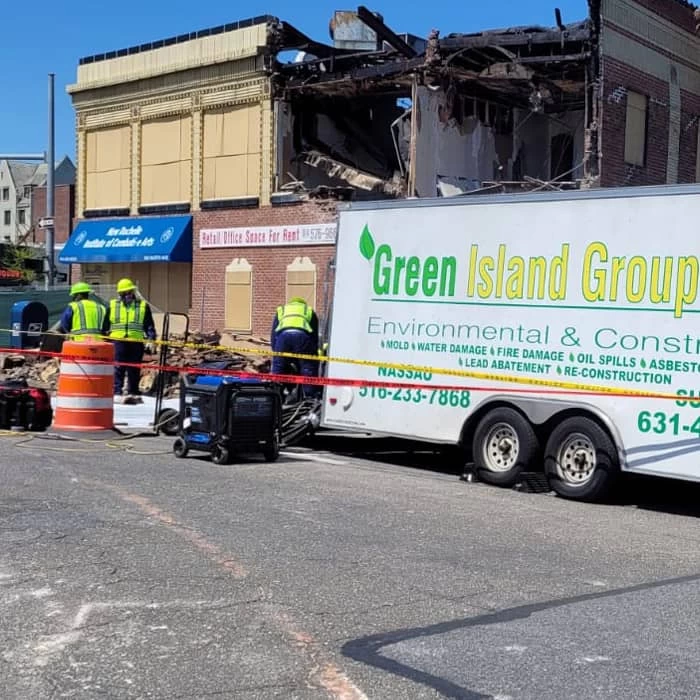
The first thing that happens when you call is an emergency response. We’re available 24 hours a day, every day of the year, and we commit to being on-site within one hour. When we arrive, the priority is securing the property — boarding up openings, stabilizing any structural concerns, and stopping additional exposure before the assessment begins.
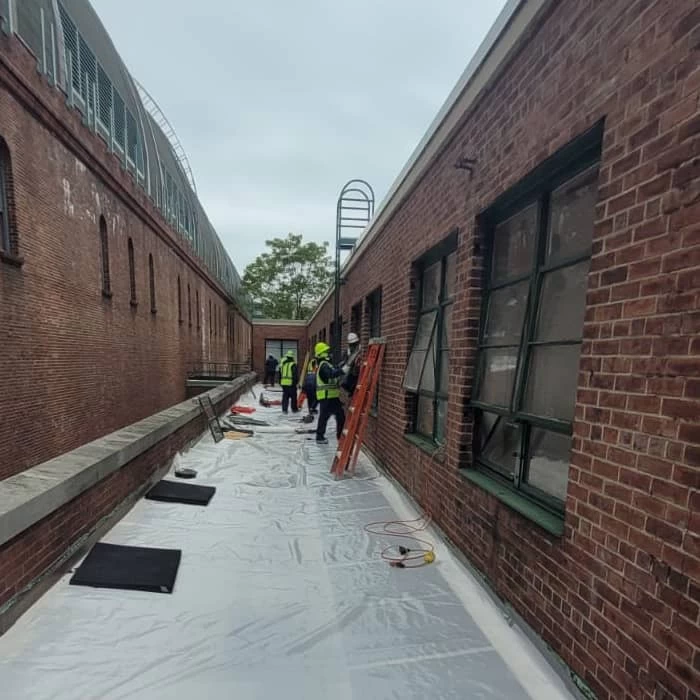
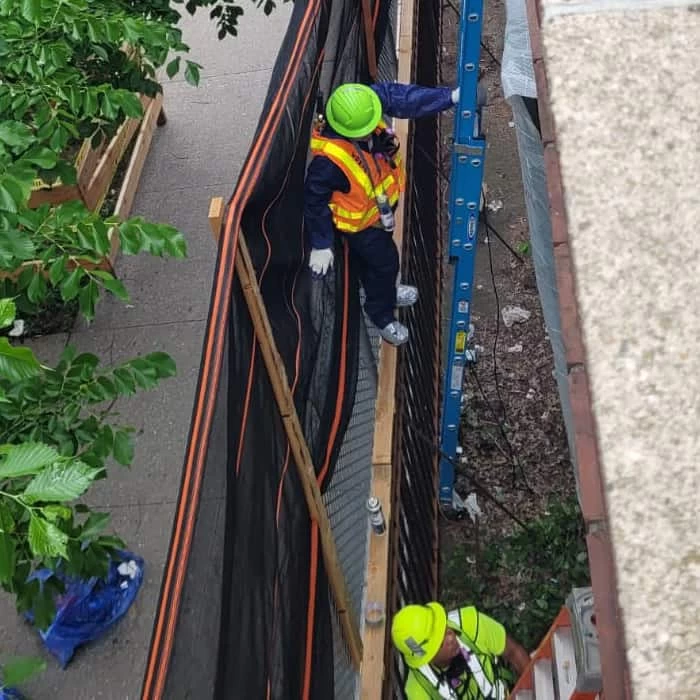
From there, we conduct a thorough inspection of the damage. That includes visible fire and smoke damage, but also what the fire may have disturbed inside the walls and ceiling — insulation, pipe wrap, floor tile adhesive, and other materials common in Salisbury’s postwar construction. If asbestos or lead-containing materials are present, we handle testing and abatement in-house under our NYS DOL license before any demolition or reconstruction begins. This isn’t a step most restoration companies can legally perform themselves, and skipping it creates both a health risk and a permit problem with the Town of Hempstead building department.
Once the hazardous materials phase is clear, remediation begins — smoke and soot removal, odor treatment, water extraction and structural drying if firefighting water is involved, and mold prevention. Then reconstruction. Because we hold a Nassau County GC license, we handle the rebuild ourselves. You don’t need to find a second contractor. The whole job runs through one company, one contact, and one documented scope that your insurance adjuster can work from start to finish.
A significant portion of what we handle in Salisbury isn’t dramatic structure fires — it’s oil burner puff-backs. When an oil-fired heating system misfires, it can blast fine black soot through an entire home without producing a single visible flame. It coats walls, ceilings, furniture, and every inch of ductwork. Most Salisbury homes run on oil heat, and puff-back incidents are one of the most common calls we get from this area. The cleanup process is identical to smoke damage remediation — air scrubbers, surface decontamination, NADCA-certified HVAC cleaning — and it needs to be done completely, not just wiped down.
For larger fire events, our scope covers everything: emergency board-up and securing, full structural assessment, asbestos and lead abatement where required, smoke and soot remediation, water extraction and drying, mold prevention, odor elimination, and complete structural reconstruction under our Nassau County GC license. Every phase is documented in real time for your insurance claim, and we bill your insurer directly so you’re not fronting costs and waiting for reimbursement.
If your home is in the Eisenhower Park corridor, near Carman Avenue, or anywhere in the 11590 zip code, the same full-scope service applies. Salisbury’s housing stock has specific characteristics — age, construction type, fuel source — and we work with all of it.
Is it safe to stay in my Salisbury home after a small fire?
It depends on what burned and where the smoke traveled — and the answer isn’t always obvious from a visual inspection. Smoke and soot contain carbon monoxide, formaldehyde, and particulates that are harmful to breathe even in low concentrations. In Salisbury’s Levitt-era homes, the open wall cavities and older HVAC systems mean smoke can migrate far beyond the room where the fire occurred. What looks like minor surface damage in a kitchen can mean contaminated air throughout the entire house.
The safest approach is to have a professional assess air quality before anyone stays in the home. If the fire involved any building materials — drywall, insulation, flooring, ceiling tiles — in a home built before 1980, there’s also the question of asbestos disturbance, which requires testing before you can confirm the space is safe. Don’t make that call based on how the house looks or smells. Get it tested first.
Will my homeowners insurance cover fire damage restoration in Nassau County?
Most standard homeowners insurance policies cover fire damage, including smoke and soot remediation, water damage from firefighting, and structural reconstruction. What gets disputed is scope — specifically, what’s included in the documented claim and whether the insurer’s initial assessment captures everything that needs to be restored.
In Nassau County, homes built before 1978 commonly contain asbestos and lead paint. When fire or demolition disturbs those materials, the abatement work required is a legitimate, covered cost — but only if it’s properly documented by a licensed contractor. If your restoration company can’t legally perform that work themselves, that line item may get missed entirely. We document every phase of the project to insurance-standard specifications and bill your insurer directly, which reduces the risk of scope gaps and disputed line items. If you’re unsure what your policy covers, we can walk through the documentation process with you before the claim is filed.
What is a puff-back and do I need professional cleanup in Salisbury?
A puff-back happens when an oil-fired heating system misfires and backfires soot into the living space. There’s no open flame, but the result is a fine black coating on walls, ceilings, furniture, and ductwork throughout the home. It looks like grease mixed with ash, and it spreads fast through forced-air systems.
In Salisbury, where oil heat is the standard fuel source in most Levitt-era homes, puff-backs are one of the most common restoration calls we receive — especially during the winter heating season when systems are running hard. The cleanup is not a DIY job. The soot from oil combustion contains hydrocarbons that bond to surfaces quickly, and wiping it down without the right products and technique just spreads the contamination. Professional remediation involves air scrubbers, surface decontamination with appropriate chemical agents, and NADCA-certified HVAC cleaning to clear the duct system. If the ductwork isn’t addressed, the soot recirculates every time the heat runs.
How long does fire damage restoration take for a home in Salisbury, NY?
Timeline depends on the scope of damage, but here’s a general framework. Emergency stabilization — board-up, securing the structure, initial assessment — happens within the first 24 hours. Smoke and soot remediation for a moderate event typically takes three to seven days. If water extraction and structural drying are needed from firefighting, add another three to five days for the drying phase before reconstruction can begin.
For homes in Salisbury that require asbestos or lead abatement prior to demolition — which applies to most homes built before 1978 — that phase adds time depending on the extent of the affected materials and the NYS DOL clearance process. Reconstruction timelines vary based on structural scope, but a full rebuild of a damaged room or section of a Levitt-era home typically runs two to six weeks. The Town of Hempstead building permit process is part of that timeline, and we handle the permit applications as part of our Nassau County GC scope. We give you a realistic schedule upfront — not an optimistic one that falls apart two weeks in.
Does smoke damage require the same restoration process as fire damage?
Yes — and in some ways, smoke damage is more complicated to fully resolve than visible fire damage. Smoke travels through every gap it can find: HVAC ducts, wall cavities, ceiling voids, and around electrical penetrations. It deposits a layer of acidic soot on every surface it touches, and that soot starts permanently bonding within hours of exposure. If it gets into your duct system, it recirculates every time your heating or cooling runs.
The restoration process for smoke damage involves the same core steps as fire damage: air quality assessment, surface decontamination, odor treatment using ozone or thermal fogging, and HVAC cleaning. In Salisbury’s older housing stock, smoke also has more places to hide — behind original plaster walls, inside duct systems that haven’t been cleaned in years, and within the insulation of oil-heated mechanical rooms. A surface-level cleanup that doesn’t address those areas will leave odor and contamination that comes back within weeks. The job isn’t done until the air tests clean and the ductwork is clear.
How do I find a licensed fire restoration contractor in Salisbury, NY?
Start with licenses, not reviews. In New York State, any contractor performing asbestos abatement must hold a NYS DOL Asbestos License. Any contractor performing mold remediation must hold a NYS DOL Mold License. Any contractor performing reconstruction in Nassau County must hold a Nassau County General Contractor license. These are publicly verifiable credentials — you can check them before you sign anything.
The reason this matters specifically in Salisbury is the age of the housing stock. Most homes here were built between 1940 and 1969, which means asbestos and lead-containing materials are a routine part of any significant restoration project — not an edge case. A restoration company that lacks those licenses legally cannot perform that work themselves, which means either they skip it (a health and permit violation) or they subcontract it to a third party (adding cost, time, and a coordination gap in your project). IICRC certification for fire and smoke restoration is the other credential worth verifying — it’s the industry’s only ANSI-accredited standard and the one Nassau County insurance adjusters recognize when reviewing claims documentation. We hold all of the above, and every credential is verifiable before you make a single commitment.