When a Sands Point Estate Burns, Every Hour Costs You More
Soot bonds to surfaces within hours. Firefighting water starts growing mold within days. We respond fast — and handle everything from emergency board-up to full rebuild under one Nassau County license.
I needed a professional consultation explanation of procedure for safe removal of Asbestos in my apartment complex. Without having an account yet, I was very impressed with the caring, knowledgeable and generous advice offered by Jessica, and will look forward to doing business in the future. Thank you so much! I feel much more informed about a sometimes scary endeavor. Peace. Nancy Silva Mineola, NY.
Mia Munoz
Used this company to clean up some water flood in my house. They were fast and easy to work with.very professional, Would recommend to anyone!
Nini Valle
Great company, had a flood and they responded quickly and efficiently. Billed my insurance company directly. I highly recommend this company!
joe colapietro, jr
I had pipe freeze in my basement right before a snow storm and they made to within an hour to help start the clean up process. They we by our side throughout the entire process and even helped with the insurance company. They did such a great job with the cleanup, repair, remidiation, I contracted them to perform the repairs and finishes in the basement. They came with enough manpower and material to get the job done. Leo and Jessica were nothing but a pleasure to deal with!!
Cristian Arredondo c
I had some water damage in my home and Green Island was able to take care of my issue quickly and effectively. I am very pleased with the work they did. They responded quickly and were very professional.
Michael M
Outstanding service! From the office to the field crew everyone was friendly, helpful and responsive. I highly recommend Green Island Group.
A fire doesn’t just damage the room it started in. In a home the size of most Sands Point properties — often exceeding 6,000 square feet across multiple floors — smoke moves through every HVAC zone, every wall cavity, and every inch of ductwork before you even realize the extent of it. If the restoration team that shows up isn’t equipped to trace it that far, you’ll be smelling it six months later.
The age of Sands Point’s housing stock adds another layer most homeowners don’t think about until it’s too late. With a median construction year of 1961 and over 20% of homes built before 1950, there’s a real chance your walls contain asbestos and your paint contains lead. A fire disturbs both. A contractor who isn’t licensed by the NYS Department of Labor to handle those materials legally cannot complete the job — and legally shouldn’t start it. That’s not a technicality. It’s your family’s safety.
What you actually get when this is handled correctly: a home that’s structurally sound, air-tested, code-compliant, and documented thoroughly enough that your insurance carrier can’t shortchange the claim. That last part matters more than most people expect going in. On a property valued near $3 million, the difference between a well-documented claim and a poorly documented one can run into six figures.
One Company Holds Every License This Job Actually Requires
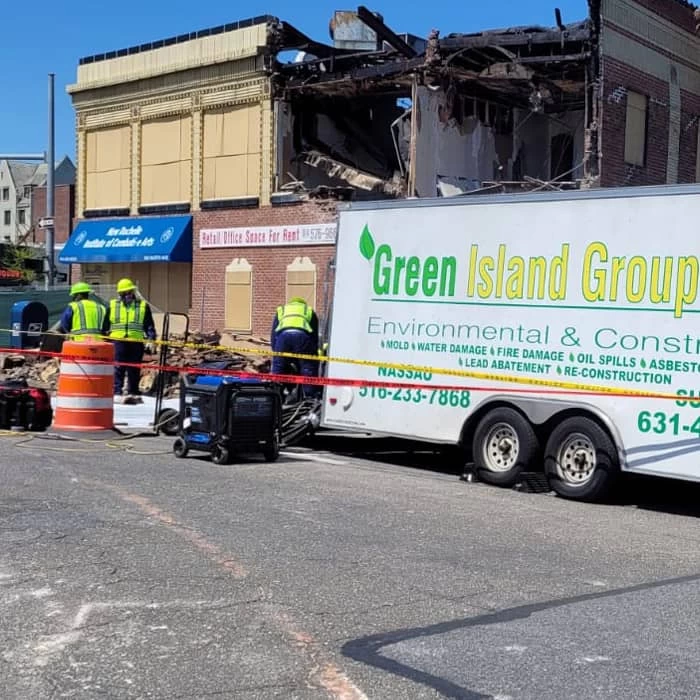
We’re a Long Island-based restoration company, licensed as a General Contractor in Nassau County, Suffolk County, and New York City. When a fire damages a home in Sands Point — whether it’s a kitchen fire off Middle Neck Road or a generator fire that runs up through two floors like the one documented at 30 Arden Lane — we don’t hand off the rebuild to someone else. We carry it through to the end.
We hold IICRC certification for both fire and smoke damage restoration and water damage restoration. We’re licensed by the NYS Department of Labor for asbestos abatement and mold remediation, and certified by the EPA for lead work. In a village where most homes predate 1980, those credentials aren’t optional — they’re the difference between a legal restoration and a liability.
Over 5,000 completed restoration projects across New York State. Not a franchise. Not a call center. A real Long Island company that shows up, does the work, and sees it through.
From the First Call to the Final Walkthrough — Here's the Reality
The first thing that happens when you call is a 24/7 emergency response. We get to you fast — and in Sands Point, that matters more than it does in most places. You’re at the tip of the Cow Neck Peninsula. Middle Neck Road and Cow Neck Road are the only ways in. A crew that isn’t already staged on Long Island isn’t getting to you in time to matter.
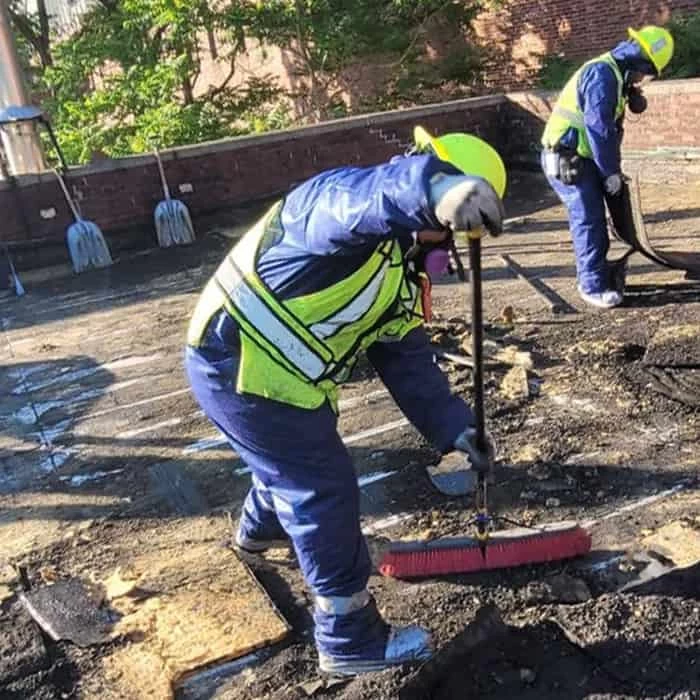
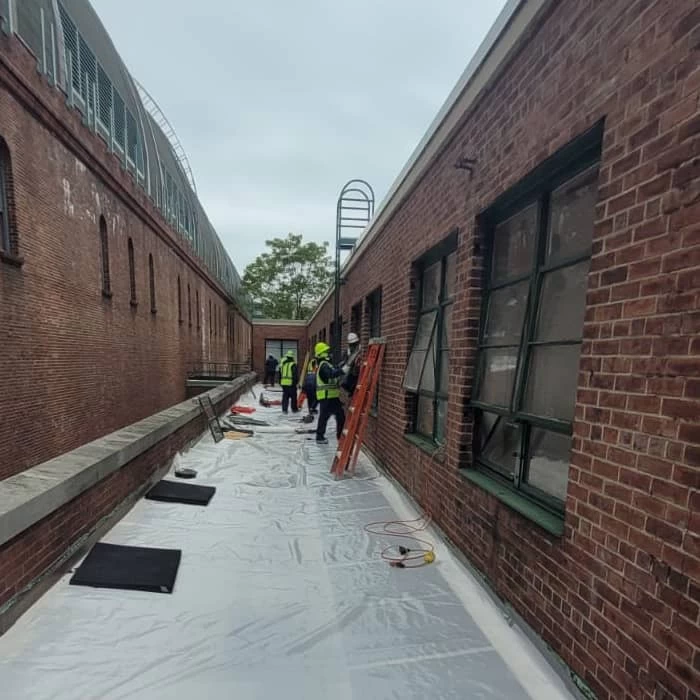
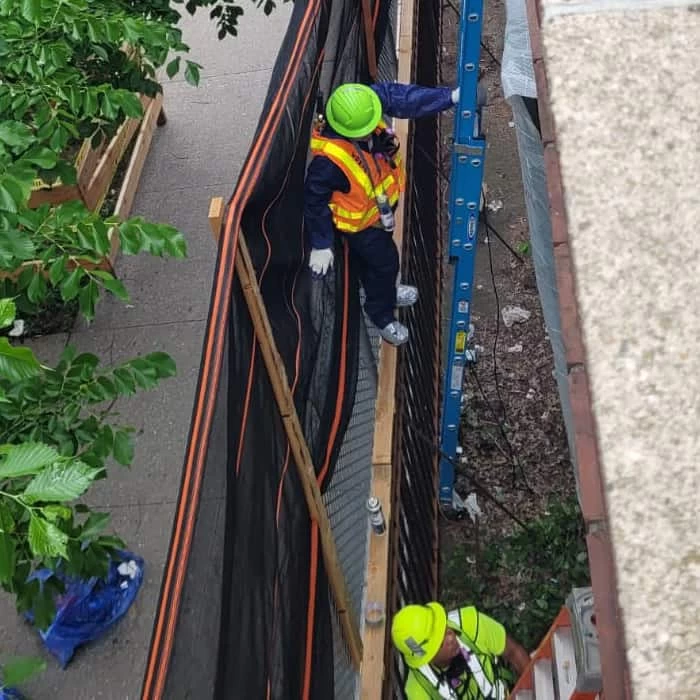
Once on-site, we assess the full scope — not just the burn zone. We use moisture-mapping equipment to trace where firefighting water has traveled, air sampling to identify what the smoke has contaminated, and material testing to determine whether asbestos or lead has been disturbed. In a pre-1980 Sands Point home, that step is almost always necessary. We don’t skip it to save time and create a bigger problem later.
From there, we move through emergency stabilization, hazardous materials remediation if needed, structural drying, smoke and odor elimination, and reconstruction. If your damage hits the threshold where Sands Point’s site plan review process kicks in — that’s any reconstruction covering 50% or more of your home’s gross floor area — we handle the permit documentation and coordinate with the village’s Building Commissioner. Your insurance carrier gets detailed, IICRC-standard documentation at every phase. You get one point of contact from start to finish.
Fire and Smoke Damage Restoration Service Sands Point
Built for Homes This Size, This Age, and This Much at Stake
Fire damage restoration in Sands Point isn’t a standard job, and we don’t treat it like one. Estate-scale properties with complex HVAC systems, finished basements, multi-zone heating, and custom finishes require a restoration scope that most companies aren’t licensed or equipped to complete on their own. We are.
What’s included in every fire restoration engagement starts with emergency response and board-up, moves through full structural assessment, water extraction and drying, asbestos and lead testing and abatement where required, smoke and soot remediation across every affected surface and air system, odor elimination using thermal fogging and air scrubbing, and ends with complete structural reconstruction under our Nassau County General Contractor license. We bill your insurance carrier directly, document every phase in the language adjusters recognize, and advocate for a settlement that actually reflects the scope of what was lost.
For Sands Point homeowners specifically — many of whom are heating with oil in homes built decades ago — puff-back damage is also something we handle regularly. An oil burner backfire can coat an entire home’s interior in fine soot without a single visible flame. The remediation process is the same level of thoroughness as a structural fire. If you’ve had a puff-back, a dryer fire, a kitchen fire, or a full structural event, the process starts the same way: a call, a fast response, and a complete assessment before anything else.
How quickly can fire damage restoration begin at a Sands Point home?
We operate 24 hours a day, seven days a week, and our response target is one hour from your call. For a Sands Point property, that means a crew already on Long Island — not a franchise dispatch routing someone from a regional hub. That distinction matters because soot begins permanently bonding to surfaces within the first few hours after a fire, and the firefighting water discharged to put it out starts creating mold risk within 24 to 48 hours.
Sands Point’s geography adds a real constraint here. The village sits at the tip of the Cow Neck Peninsula, and the only routes in are Middle Neck Road and Cow Neck Road. A contractor without genuine local presence isn’t getting to you fast enough to prevent secondary damage from compounding. Speed in this business isn’t a sales pitch — it’s the difference between a $50,000 job and a $200,000 one.
Does homeowners insurance cover fire damage restoration costs in Sands Point, NY?
In most cases, yes — standard homeowners insurance covers fire damage restoration, including structural repairs, smoke and soot remediation, content replacement, and additional living expenses if you’re displaced. But the quality of your outcome depends heavily on how the claim is documented. Insurance adjusters work from the documentation in front of them, and a vague or incomplete scope of loss is an easy reason to underpay.
On a Sands Point property valued near $3 million, that gap can be substantial. We document every phase of the restoration in insurance-standard language, submit directly to your carrier, and make sure the scope reflects the full extent of what was affected — including HVAC contamination, hazardous materials abatement, and reconstruction costs that match the quality of your original home. We’ve guided hundreds of Long Island homeowners through this process. The goal is always a settlement that covers what the policy should cover — nothing more, nothing less.
My Sands Point home was built in the 1950s — does that affect the restoration process?
Yes, and significantly. Homes built before 1980 frequently contain asbestos in floor tiles, pipe insulation, ceiling materials, and joint compound. Homes built before 1978 may contain lead-based paint. When fire occurs in a property of that age, it doesn’t just damage the structure — it disturbs materials that are legally classified as hazardous and require licensed contractors to handle. In Sands Point, where the median construction year is 1961 and over 20% of homes predate 1950, this is the rule, not the exception.
A contractor without NYS Department of Labor asbestos licensure and EPA lead certification cannot legally complete fire restoration in your home. They can clean the visible damage, but they cannot address the underlying hazard — which means your home isn’t actually safe to return to, even if it looks restored. We hold both licenses, which means we can handle the full scope legally and completely. We test before we touch, and we document everything for your records and your insurance carrier.
What does fire restoration actually involve beyond cleaning up the visible damage?
The visible damage is usually the smallest part of the job. After a fire, smoke particles travel through wall cavities, HVAC ductwork, and structural gaps far beyond the burn zone — especially in a large home with multiple heating zones and extensive ductwork. Soot embeds in drywall, insulation, and soft furnishings. Acidic smoke compounds begin corroding metal fixtures and etching glass within hours. And the water used to extinguish the fire creates a separate moisture problem that leads to mold if it isn’t extracted and dried properly.
A complete fire restoration covers all of it: structural assessment, water extraction and drying, hazardous materials testing and abatement, smoke and soot remediation on every affected surface, HVAC cleaning, odor elimination using thermal fogging and air scrubbing, and full reconstruction. For a Sands Point home — often a multi-story estate with complex systems — that scope is rarely small. The goal isn’t just to make it look like the fire didn’t happen. It’s to make it genuinely safe and structurally sound again.
Will fire restoration in Sands Point require building permits or village approval?
It depends on the extent of the damage. The Village of Sands Point enforces the NYS Uniform Fire Prevention and Building Code through its own Building Commissioner, and any reconstruction work requires compliance with those standards. More specifically, if the area being reconstructed equals or exceeds 50% of your home’s gross floor area at the time of the damage, the village’s site plan review process is triggered — which requires detailed documentation, permit applications, and formal approval before reconstruction can proceed.
That threshold is easier to hit than most people expect on a large estate property. If a fire runs through multiple floors or a significant portion of the structure, you’re likely in site plan review territory. We hold a Nassau County General Contractor license and are familiar with Sands Point’s permitting process. We handle the documentation, coordinate with the village’s Building Department, and make sure the reconstruction phase moves forward without unnecessary delays on the permit side.
How do oil heat and older heating systems in Sands Point homes affect fire risk?
Long Island has one of the highest concentrations of oil-heated homes in the country, and Sands Point is no exception. Oil burner puff-backs — where the burner backfires and discharges a cloud of soot and smoke through the heating system — are a recurring issue in older homes, particularly during the heavy-use winter months from October through March. A puff-back doesn’t involve an open flame, but it can coat an entire home’s interior in fine black soot, contaminate ductwork, and require the same level of remediation as a structural fire.
Beyond puff-backs, older heating systems in pre-1980 homes — oil boilers, aging electrical panels, and wood-burning fireplaces — are among the most common fire causes in North Shore communities like Sands Point. Real estate listings in the village consistently feature multiple fireplaces as selling points, and a chimney that hasn’t been serviced recently is a genuine fire risk. If your home has experienced a puff-back, a chimney fire, or any heating-related fire event, the remediation process starts with a full assessment — not just a surface clean. We’ve handled all of it across Nassau County, and we know what these older systems leave behind.