When Your Seaford Home Needs More Than a Cleanup Crew
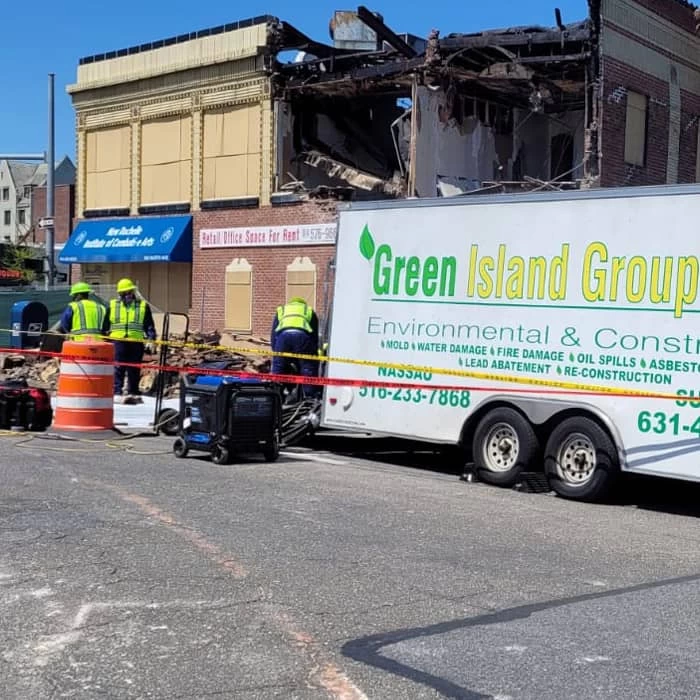
Fire damage in a 1950s South Shore home is rarely just smoke and soot. We handle fire damage restoration in Seaford, NY from the first emergency call to the day you move back in — one company, fully licensed, no handoffs.
I needed a professional consultation explanation of procedure for safe removal of Asbestos in my apartment complex. Without having an account yet, I was very impressed with the caring, knowledgeable and generous advice offered by Jessica, and will look forward to doing business in the future. Thank you so much! I feel much more informed about a sometimes scary endeavor. Peace. Nancy Silva Mineola, NY.
Mia Munoz
Used this company to clean up some water flood in my house. They were fast and easy to work with.very professional, Would recommend to anyone!
Nini Valle
Great company, had a flood and they responded quickly and efficiently. Billed my insurance company directly. I highly recommend this company!
joe colapietro, jr
I had pipe freeze in my basement right before a snow storm and they made to within an hour to help start the clean up process. They we by our side throughout the entire process and even helped with the insurance company. They did such a great job with the cleanup, repair, remidiation, I contracted them to perform the repairs and finishes in the basement. They came with enough manpower and material to get the job done. Leo and Jessica were nothing but a pleasure to deal with!!
Cristian Arredondo c
I had some water damage in my home and Green Island was able to take care of my issue quickly and effectively. I am very pleased with the work they did. They responded quickly and were very professional.
Michael M
Outstanding service! From the office to the field crew everyone was friendly, helpful and responsive. I highly recommend Green Island Group.
What Getting Your Seaford Home Back Actually Looks Like
A fire doesn’t end when the trucks leave. What follows — the soot embedded in your walls, the smoke odor locked into your HVAC system, the water the firefighters used soaking into your floors and framing — that’s where the real work begins. And in Seaford, that work is more complex than it is in most places.
The average home in this ZIP code is about 68 years old. That puts most of Seaford’s housing stock squarely in the era of asbestos pipe insulation, lead paint, and oil heating systems. When fire burns through those materials, it doesn’t just create visible damage — it creates a hazardous material situation that most restoration companies aren’t licensed to touch. We hold the NYS DOL Asbestos License and the USEPA Lead/RRP certification required to handle exactly that, without stopping the job to call in a separate abatement contractor.
Then there’s the water. Seaford’s canal neighborhoods sit at low elevation, and the ambient humidity along the South Shore is real. Firefighting water in a low-lying coastal home isn’t just a drying problem — it’s a mold problem that starts within 24 hours. Because we also hold the NYS DOL Mold License, we address both the fire and the water damage at the same time. When the job is done, your home isn’t just cleaned — it’s structurally restored, hazard-free, and rebuilt to code.
We’re a locally owned restoration and environmental services company based in Bohemia, NY — about 30 minutes east of Seaford on Sunrise Highway. We’ve completed over 5,000 restoration projects across New York State, with deep experience across Nassau County’s South Shore communities, including the older housing stock and coastal conditions that define Seaford and the surrounding area.
What sets us apart isn’t one credential — it’s the combination. General Contractor licenses in Nassau County, Suffolk County, and New York City. IICRC certification for fire, smoke, and water damage restoration. NYS DOL licenses for both asbestos and mold. USEPA Lead/RRP certification. NADCA certification for HVAC cleaning. Most restoration companies hold one or two of these. We hold all of them, which means we can take a Seaford fire job from emergency response all the way through permitted reconstruction without ever handing it off.
We’re not a franchise. There’s no national call center routing your emergency. When you call, you reach the people who will actually show up — a team that knows Nassau County’s building codes, knows what’s inside the walls of a mid-century Cape Cod, and knows how to work with your insurance company from day one.
From Emergency Call to Move-In Day — Here's Our Process
It starts with a call. We operate 24 hours a day, 365 days a year, and can be on-site at a Seaford property within an hour. The first priority is stabilization — boarding up openings, extracting standing water, and setting up air scrubbers and dehumidifiers to stop the damage from spreading while the full assessment begins.
From there, the scope gets documented thoroughly. Every surface, every affected system, every material that needs to be tested or removed. In a Seaford home built before 1978, that documentation includes identifying whether fire has disturbed asbestos-containing materials or lead paint — because the Town of Hempstead building permits and NYS regulations require that those hazards be addressed by licensed contractors before reconstruction begins. We handle that assessment and the abatement work in-house, which keeps the project moving instead of stalling while you wait for a separate contractor.
Once the structure is clean, stabilized, and cleared, the rebuild phase begins. We pull the necessary permits through the Town of Hempstead Building Department and perform the reconstruction under our Nassau County General Contractor License. Smoke odor treatment, HVAC cleaning, and contents restoration happen in parallel. Throughout the entire process, we work directly with your insurance carrier — documenting the damage, submitting the claim, and advocating for full coverage so you’re not left fighting that battle on your own.
Fire damage restoration in Seaford covers a lot of ground — more than most homeowners expect when they first make the call. The visible damage is the starting point, not the full picture. Soot travels through HVAC systems and embeds in wall cavities well beyond the burn zone. Smoke odor bonds to insulation, drywall, and wood framing. And in a home built in the 1950s, the materials themselves add a layer of complexity that requires specific licensing to address safely and legally.
Our fire restoration service includes emergency board-up and water extraction, full soot and smoke remediation, NADCA-certified HVAC duct cleaning, asbestos testing and abatement where required, lead-safe work practices under USEPA RRP guidelines, mold prevention and remediation, structural drying, and complete reconstruction under our Nassau County GC license. If your home has an oil heating system — which is common throughout Seaford and the surrounding South Shore — and the fire involved or affected the furnace, we also handle oil burner puff-back cleanup, which requires the same professional soot removal process as a fire event.
Insurance billing is handled directly. We communicate with your carrier, document every phase of the damage, and work to make sure the full scope of your claim is covered — including additional living expenses during displacement if your policy includes it. From Seamans Neck Road to the canal neighborhoods off Bayview Street, we’ve worked in homes like yours throughout this area and know what these jobs actually require.
Does homeowner's insurance cover fire damage restoration in Seaford, NY?
In most cases, yes — standard homeowner’s insurance policies cover fire damage, including structural repairs, smoke and soot remediation, contents damage, and additional living expenses if you’re displaced during the restoration. What varies is how thoroughly the damage gets documented and how aggressively the claim gets submitted.
The risk for Seaford homeowners specifically is that fire in a pre-1980 home often uncovers asbestos or lead paint, and the cost of licensed abatement can be significant. If that scope isn’t properly documented and submitted as part of the claim, it may not get covered. We document every phase of the job — including hazardous material findings — and bill your insurance company directly, so the full scope of what your home actually needs is what gets submitted, not a trimmed-down version that leaves you covering the difference.
How quickly does mold develop after a house fire in a Seaford home?
Mold can begin growing within 24 to 48 hours of water exposure under normal conditions. In Seaford’s canal neighborhoods and low-elevation waterfront areas, that timeline can be even shorter due to elevated ambient humidity and the proximity to tidal water. Firefighting water intrusion in these homes isn’t just a drying problem — it’s an active mold risk from the moment the hoses stop.
This is why the water extraction and drying process needs to start immediately, not after the fire investigation wraps up or after you’ve had time to call around. We deploy industrial dehumidifiers and air movers on the first visit and monitor moisture levels throughout the drying process. If mold is found or begins to develop, we hold the NYS DOL Mold License required to remediate it legally — so that discovery doesn’t stop the job or require you to bring in a separate contractor.
My Seaford home was built in the 1950s — does that affect the restoration process?
Yes, significantly. The average home in Seaford’s ZIP code is about 68 years old, which means it was almost certainly built with materials that are no longer used — asbestos pipe insulation, asbestos floor and ceiling tiles, lead paint, and in many cases, knob-and-tube or early aluminum wiring. When fire burns through those materials, it doesn’t just damage them — it disturbs them in ways that create a legal and health obligation to remediate properly.
In New York State, asbestos abatement requires a NYS DOL Asbestos License. Lead paint work in pre-1978 homes requires USEPA Lead/RRP certification. These aren’t optional — they’re legal requirements, and they affect what a contractor is actually authorized to do on your property. We hold both credentials, which means when the assessment turns up disturbed asbestos in the wall cavity or lead paint on the framing, the job doesn’t stop. We handle it in-house, keep the project on schedule, and document everything for your insurance claim.
Can I stay in my house during fire damage restoration?
It depends on the extent of the damage, but in most cases involving a working house fire, the answer is no — at least not during the initial remediation phase. Soot and smoke residue contain carbon monoxide byproducts, volatile organic compounds, and fine particulates that are genuinely harmful to breathe, even after the visible smoke clears. If asbestos or lead paint has been disturbed, the home is legally off-limits for occupancy until the abatement is complete and clearance testing passes.
For Seaford homeowners, this is where the additional living expenses (ALE) portion of your homeowner’s insurance policy becomes important. Most standard policies include ALE coverage that pays for temporary housing, meals, and related costs while your home is being restored. We help you understand what your policy covers and coordinate the timeline so you’re not displaced any longer than necessary. The goal is always to get you back into your home as quickly as the work — and the permits — allow.
What's the difference between fire damage restoration and fire damage cleanup?
Cleanup is one part of restoration — and usually the most visible part. It covers removing debris, wiping down soot, and addressing the immediate aftermath of the fire. Restoration is everything that comes after: structural drying, odor elimination, HVAC decontamination, hazardous material abatement, permitted reconstruction, and returning the home to its pre-loss condition or better.
In a Seaford home, the gap between cleanup and full restoration can be significant. A company that handles cleanup but doesn’t hold a General Contractor license can’t pull a Town of Hempstead building permit or legally perform structural repairs. A company without a NYS DOL Asbestos License can’t touch the pipe insulation or floor tiles that fire may have disturbed. What looks like a complete job on the surface can leave real problems behind the walls if the company doing the work isn’t licensed for the full scope. We’re licensed for every phase — which is why our jobs end at move-in day, not at the cleanup stage.
How much does fire damage restoration typically cost in Nassau County?
The range is wide because the scope varies so much from job to job. A contained kitchen fire with limited smoke spread might run $12,000 to $18,000. A more involved fire affecting multiple rooms, the HVAC system, and structural components can reach $27,000 or more — and in Seaford’s older homes, asbestos abatement and lead-safe work requirements can add meaningful cost on top of that if those materials are disturbed.
The more important number for most Seaford homeowners is what their insurance covers. With median home values in the $750,000 to $843,000 range and standard homeowner’s policies in place, most of the restoration cost should be covered — but only if the damage is documented properly and the claim is submitted with the full scope included. Our process is built around thorough documentation from the first day on-site, and we bill your insurance carrier directly. The goal is that your out-of-pocket exposure is limited to your deductible, not to whatever the adjuster decides to approve on a first pass.