Your Searingtown Home Deserves More Than a Cleanup Crew
When fire hits a home worth over a million dollars in the Herricks School District, the stakes are too high for anything less than fully licensed, start-to-finish fire damage restoration. In Searingtown, where most homes were built in the 1960s and 1970s, fire damage involves complications that generic restoration crews simply aren’t equipped to handle — asbestos-containing materials, lead paint, oil heating systems, and structural details specific to that era.
I needed a professional consultation explanation of procedure for safe removal of Asbestos in my apartment complex. Without having an account yet, I was very impressed with the caring, knowledgeable and generous advice offered by Jessica, and will look forward to doing business in the future. Thank you so much! I feel much more informed about a sometimes scary endeavor. Peace. Nancy Silva Mineola, NY.
Mia Munoz
Used this company to clean up some water flood in my house. They were fast and easy to work with.very professional, Would recommend to anyone!
Nini Valle
Great company, had a flood and they responded quickly and efficiently. Billed my insurance company directly. I highly recommend this company!
joe colapietro, jr
I had pipe freeze in my basement right before a snow storm and they made to within an hour to help start the clean up process. They we by our side throughout the entire process and even helped with the insurance company. They did such a great job with the cleanup, repair, remidiation, I contracted them to perform the repairs and finishes in the basement. They came with enough manpower and material to get the job done. Leo and Jessica were nothing but a pleasure to deal with!!
Cristian Arredondo c
I had some water damage in my home and Green Island was able to take care of my issue quickly and effectively. I am very pleased with the work they did. They responded quickly and were very professional.
Michael M
Outstanding service! From the office to the field crew everyone was friendly, helpful and responsive. I highly recommend Green Island Group.
The fire is out. The trucks are gone. And now you’re standing in your Searingtown home wondering what’s actually safe, what’s actually damaged, and who you’re supposed to call. That moment — right there — is where most of the real decisions get made, and most of the real mistakes happen.
Here’s what changes when the restoration is handled correctly from the start. Smoke doesn’t stay where the fire was. It moves through HVAC systems, wall cavities, and every gap in a 1970s colonial or split-level — which is exactly the type of home that makes up most of Searingtown’s housing stock. When that’s addressed properly, you don’t end up with odor that comes back six months later or soot that was never fully extracted from your ductwork.
The other thing most homeowners don’t realize until it’s too late: the water used to put out the fire doesn’t disappear. In a well-insulated older home, it saturates framing, subfloor, and insulation — and mold can start within 24 to 48 hours. Getting ahead of that isn’t optional. It’s the difference between a restoration and a restoration that turns into a second remediation project. For a home carrying the Herricks district premium, doing this right the first time isn’t just peace of mind — it’s financial protection.
Licensed for Everything Fire Uncovers in Your Searingtown Walls
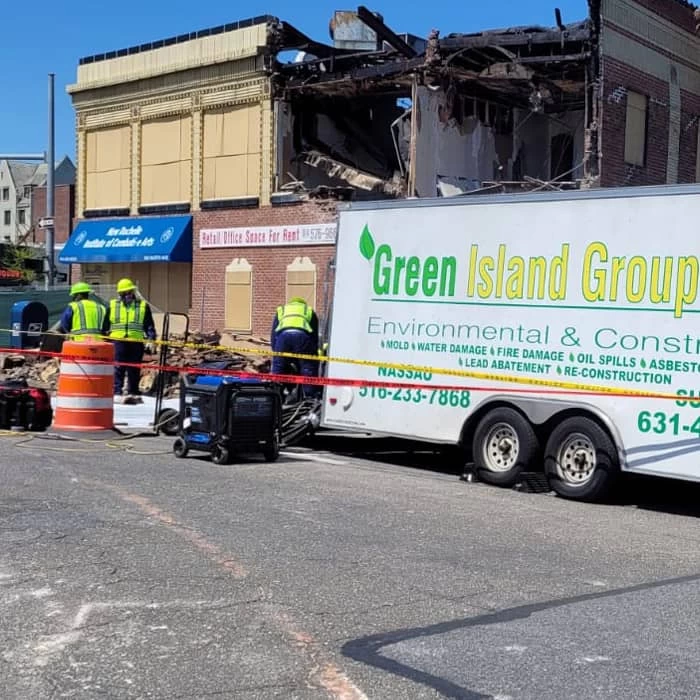
We’re a locally owned restoration company serving Nassau County, Suffolk County, Queens, and New York City — operating 24 hours a day, every day of the year. We hold a Nassau County General Contractor License, which means we can legally pull permits, complete structural repairs, and see your project through to full reconstruction under the Town of North Hempstead’s building codes. That’s not something every restoration company operating in this area can say.
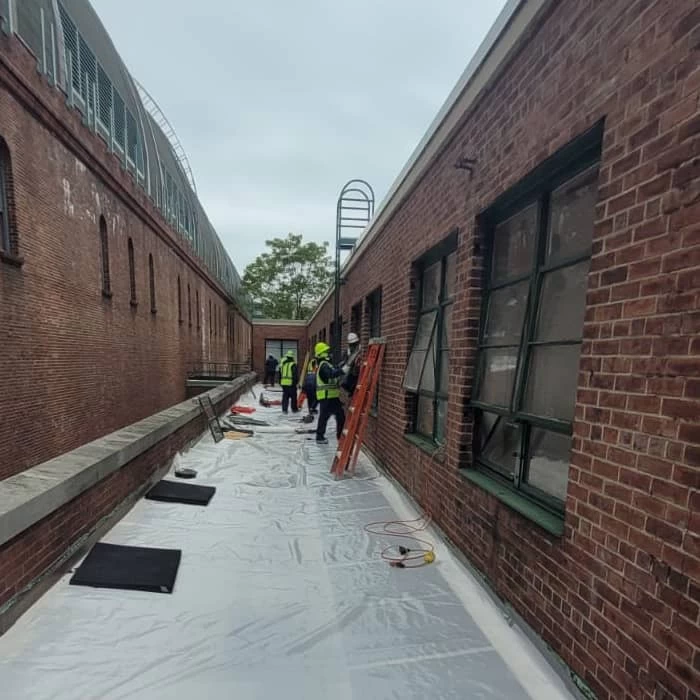
Beyond the GC license, we carry NYS DOL licensing for asbestos and mold, plus USEPA Lead/RRP certification. In a community like Searingtown — where the majority of homes were built between 1960 and 1980 — fire almost always disturbs materials that require licensed handling by law. We don’t subcontract that out or skip past it. We handle it under the same roof, with the same team, on the same timeline.
We’ve completed over 5,000 restoration projects across New York State. The families we’ve worked with in Nassau County’s North Shore communities aren’t a new market for us — we know the housing stock in Searingtown, we know the permitting process under North Hempstead’s jurisdiction, and we know what fire damage looks like in homes built the way yours was.
The first call triggers an emergency response. We commit to being on-site within one hour, any time of day or night. That first visit isn’t just a walkthrough — it’s a full damage assessment that documents everything your insurance adjuster will need. We handle that documentation ourselves, and we communicate directly with your carrier so you’re not stuck translating between a contractor and an insurance company while you’re already dealing with displacement.
From there, we move into stabilization: board-up, water extraction, and structural drying to stop secondary damage before it compounds. In Searingtown’s older homes, this phase also includes testing for asbestos-containing materials and lead paint — both of which are legally required to be addressed by licensed contractors before any reconstruction begins. We’re licensed to do that work in-house, which keeps your timeline intact instead of adding weeks waiting for a subcontractor.
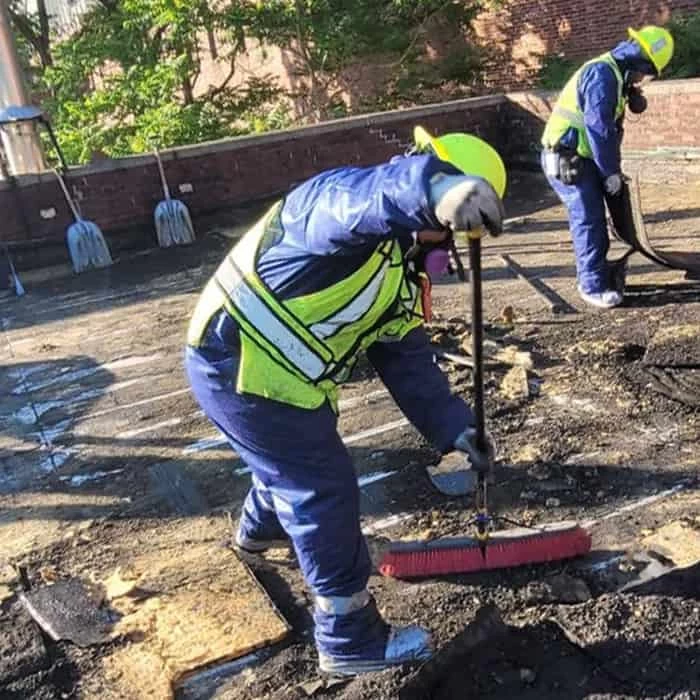
Once the structure is stabilized and hazardous materials are cleared, remediation begins — soot removal, smoke odor elimination using thermal fogging and hydroxyl treatment, HVAC cleaning, and full deodorization. After that comes reconstruction: framing, drywall, flooring, painting, and anything else needed to bring your home back to pre-loss condition. Because we hold a Nassau County GC license, we pull the permits, we schedule the inspections, and we close them out properly — which matters at resale in a market where North Hempstead enforces its building codes closely.
Built for Searingtown's Homes, Not a Generic Checklist
Fire damage restoration in a 1960s or 1970s Searingtown colonial isn’t the same job as it is in a newer build. The materials are different, the risks are different, and the legal requirements are different. Our service reflects that. Every project starts with a full structural and environmental assessment — not just for visible damage, but for what fire and suppression water do inside walls, under floors, and through heating systems. Nassau County’s older housing stock almost always has asbestos-containing materials somewhere in the building envelope, and we assess for that before anything gets disturbed.
For oil-heated homes — still common throughout Searingtown and the North Shore — we also address puff-back contamination as part of our fire and smoke restoration scope. A furnace misfire can coat an entire home’s interior in fine soot without a single flame, and it requires the same professional remediation as a structural fire job. We see this regularly in Nassau County and we treat it with the same thoroughness.
The full scope of what we deliver includes emergency stabilization and board-up, water extraction and structural drying, asbestos and lead assessment and abatement where required, mold prevention and remediation, complete soot and smoke odor removal, HVAC system cleaning, and full structural reconstruction under our Nassau County General Contractor License. Insurance billing is handled directly. You don’t receive a bill and then chase reimbursement — we work with your carrier from the first day to the last.
Is it safe to stay in my Searingtown home after a fire?
In most cases, no — at least not until a licensed contractor has assessed the structure. Even a fire that appears contained to one room can compromise structural integrity, leave carbon monoxide or combustion byproducts in the air, and distribute soot through your HVAC system to every room in the house. In Searingtown’s older homes, there’s an additional concern: fire and the water used to suppress it can disturb asbestos-containing materials that were standard in construction from the 1960s and 1970s. Once disturbed, those materials become an airborne health hazard that requires licensed abatement before the space is safe to occupy.
The honest answer is that you need a professional assessment before you make that call. We can be on-site within one hour of your call, and our first priority is always giving you a clear picture of what’s safe and what isn’t — not just starting work. That assessment also becomes part of your insurance documentation, which matters for your claim.
How does fire damage restoration work with my homeowners insurance?
Fire damage is covered under standard homeowners insurance policies, and the restoration process is designed to work alongside your claim — not after it. When you call us, we document the damage in detail from the first visit: photos, written assessments, scope of work, and material inventories. That documentation goes directly to your insurance adjuster, and we communicate with your carrier throughout the project so you’re not stuck in the middle.
We bill insurance directly, which means you’re not fronting tens of thousands of dollars and waiting for reimbursement. For Searingtown homeowners navigating a major insurance claim, we walk you through every step. We attend material selection appointments, explain what’s covered and what isn’t, and make sure the claim reflects the full scope of what your home actually needs, not just what’s easiest for the adjuster to approve.
What does fire damage restoration actually cost in Nassau County?
The range is wide because fire damage varies significantly in scope. Smoke damage restoration for a single room typically runs between $200 and $1,200. A full structural restoration — which is more common in Searingtown’s larger colonial and split-level homes — can reach $15,000 to $25,000 per affected area, with total project costs often falling between $12,900 and $27,000 for moderate damage. Severe fires or fires that trigger asbestos or mold abatement requirements will increase that range.
The most important thing to understand is that your homeowners insurance is designed to cover this. The out-of-pocket cost to you is typically your deductible, assuming the damage is documented correctly and the scope is fully captured in the claim. That’s exactly why documentation quality and direct insurer communication matter so much — an incomplete claim leaves money on the table that you’re legally entitled to. We make sure that doesn’t happen.
Does fire damage restoration require permits in Searingtown or North Hempstead?
Yes. Any structural repair or reconstruction following fire damage in Searingtown falls under the Town of North Hempstead’s building code requirements, and permits are required for that work. North Hempstead enforces its building codes closely, and unpermitted work creates real problems — not just fines, but complications when you sell. In a market where Searingtown homes are selling at or above $1.7 million, a permit that was never properly closed can delay or derail a transaction entirely.
We hold a Nassau County General Contractor License, which authorizes us to pull permits, perform structural repairs, and schedule inspections through North Hempstead’s Building Department. We handle the permitting process start to finish. You don’t need to manage that on top of everything else — it’s part of what we do. When the job is done, the permits are closed, and your home’s record is clean.
Can a fire in my Searingtown home expose asbestos or lead paint?
If your home was built before 1980 — which describes the majority of Searingtown’s housing stock — then yes, this is a real and specific concern. Asbestos-containing materials were standard in construction during the 1960s and 1970s: floor tiles, ceiling tiles, pipe insulation, joint compound, and roofing materials all commonly contained asbestos during that era. Lead-based paint was also standard in homes built before 1978. Fire, heat, and the water used in suppression can disturb these materials, making them airborne and creating a legally mandated hazardous materials situation.
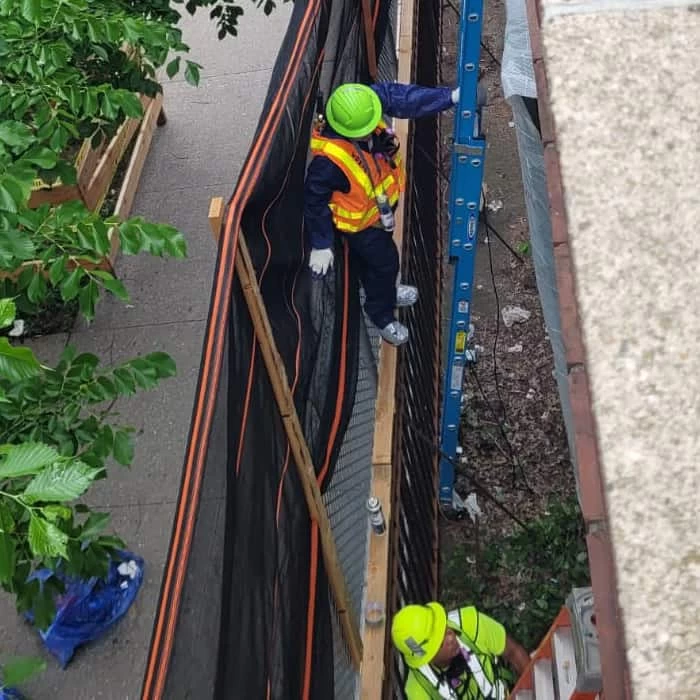
Under New York State law, asbestos abatement must be performed by a contractor holding a NYS DOL Asbestos License. Lead remediation in renovation work requires USEPA RRP certification. We hold both. We assess for these materials as part of our initial evaluation, handle abatement in-house, and document everything for your insurance claim and your home’s records. An unlicensed contractor who skips this step isn’t just cutting corners — they’re potentially creating a health hazard and a legal liability that follows your property.
What is an oil burner puff-back, and do you handle that in Searingtown?
A puff-back happens when an oil furnace misfires — instead of igniting cleanly, it sends a backblast of combustion byproducts and soot back through the heating system and into your home. The result is fine black soot coating walls, ceilings, furniture, and every surface connected to your ductwork, often throughout the entire house. There’s no flame, no structural fire — but the contamination is extensive and the cleanup requires the same professional approach as a smoke damage restoration job.
Puff-backs are common in Nassau County because of the high concentration of oil-heated homes, and Searingtown’s 1960s and 1970s housing stock means many homes in the area still rely on oil burners. We handle puff-back cleanup regularly throughout the North Shore — soot removal, surface decontamination, full HVAC cleaning, and odor elimination. If your furnace has already been converted to natural gas, that’s one less risk going forward, but if you’re still on oil heat and you’ve had a misfire, don’t wait on it. Soot embeds deeper into surfaces the longer it sits, and the scope of the job grows with every hour.