Smithtown Homes Built in the '60s Need More Than Surface Cleaning
When a fire hits a home built in the 1960s and most homes in Smithtown were the damage goes deeper than the burn marks. We handle fire damage restoration from the first call to the final walkthrough, so you’re not left managing three different contractors while your family is displaced.
I needed a professional consultation explanation of procedure for safe removal of Asbestos in my apartment complex. Without having an account yet, I was very impressed with the caring, knowledgeable and generous advice offered by Jessica, and will look forward to doing business in the future. Thank you so much! I feel much more informed about a sometimes scary endeavor. Peace. Nancy Silva Mineola, NY.
Mia Munoz
Used this company to clean up some water flood in my house. They were fast and easy to work with.very professional, Would recommend to anyone!
Nini Valle
Great company, had a flood and they responded quickly and efficiently. Billed my insurance company directly. I highly recommend this company!
joe colapietro, jr
I had pipe freeze in my basement right before a snow storm and they made to within an hour to help start the clean up process. They we by our side throughout the entire process and even helped with the insurance company. They did such a great job with the cleanup, repair, remidiation, I contracted them to perform the repairs and finishes in the basement. They came with enough manpower and material to get the job done. Leo and Jessica were nothing but a pleasure to deal with!!
Cristian Arredondo c
I had some water damage in my home and Green Island was able to take care of my issue quickly and effectively. I am very pleased with the work they did. They responded quickly and were very professional.
Michael M
Outstanding service! From the office to the field crew everyone was friendly, helpful and responsive. I highly recommend Green Island Group.
What Gets Fixed When You Call the Right Team First
The visible damage is never the whole story. Smoke travels through HVAC ductwork, soaks into plaster walls, and settles into insulation often in rooms that never saw a single flame. In Smithtown’s older housing stock, where plaster walls and aging duct systems are the norm rather than the exception, smoke contamination spreads fast and hides well. If it isn’t addressed completely, that smell comes back. So does the health risk.
Then there’s the water. When the Smithtown Fire Department responds sometimes with mutual aid from Nesconset, St. James, Hauppauge, and Kings Park fire hoses are delivering hundreds of gallons per minute into your home. That water soaks into floors, walls, and ceilings. Within 24 to 48 hours, mold can start. A restoration company that only handles fire and smoke cleanup leaves you exposed to a problem that surfaces weeks later.
What you actually need is someone who handles all of it: smoke, soot, water extraction, drying, and if your home was built before the late 1970s, environmental hazards like asbestos that a fire can disturb. Getting that from one company, with one consistent point of contact, is what makes recovery manageable instead of overwhelming.
Local Enough to Know What's Behind Your Smithtown Walls
We’re a Long Island-based, independently owned restoration company not a franchise, not a call center routing jobs to whoever’s available. When you call, you’re reaching a real team that knows Suffolk County, knows the housing stock in communities like Smithtown, Kings Park, and St. James, and knows what it actually takes to restore a home that was built in 1962.
That matters here more than most places. The majority of homes in Smithtown were built between 1940 and 1969. That means there’s a real chance your walls, floors, or ceiling tiles contain asbestos-containing materials which are harmless until a fire disturbs them. Most fire restoration companies can’t legally handle that. We can, because environmental remediation is part of what we do, not something we subcontract out or skip.
Customers consistently name Leo and Jessica by name in their reviews not as a brand, but as people who answered the phone, explained the insurance process, and stayed accountable from start to finish. That’s not a marketing angle. That’s just how a locally rooted team operates when their reputation lives in the same community they serve.
From Emergency Call to Move-Back-In Here's the Real Process
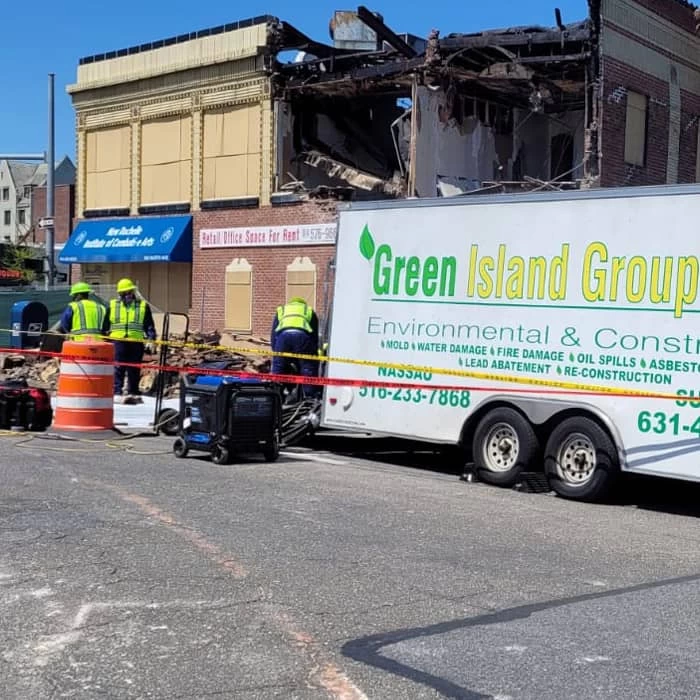
It starts the moment you call. We respond fast documented sub-hour arrival times in emergency situations because every hour after a fire is another hour of soot etching into surfaces and smoke embedding deeper into porous materials. The first priority is stabilizing the property: boarding up openings, assessing structural safety, and making sure the home is secure before any restoration work begins.
From there, we do a thorough damage assessment not just the burned areas, but the rooms connected through ductwork, the floors soaked by suppression water, and any materials that may have been compromised by heat or chemical exposure. In Smithtown homes built before 1978, that assessment includes checking for asbestos-containing materials before any demolition or removal work starts. This isn’t optional. It’s required by New York State, and it protects your family.
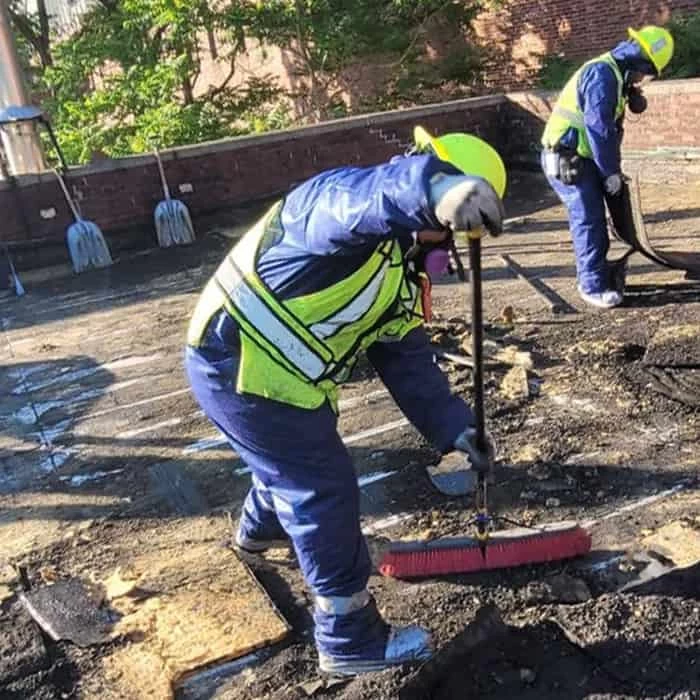
Then comes the actual restoration work: smoke and soot removal, water extraction and drying, environmental remediation if needed, demolition of unsalvageable materials, and full structural reconstruction. Throughout all of it, we work directly with your insurance company documenting damage, aligning with adjuster software, and making sure the scope of your claim reflects the full reality of what happened. The Town of Smithtown requires building permits for structural reconstruction, and we handle that process too, so you’re not chasing paperwork while trying to get your family back home.
Everything a Smithtown Fire Loss Actually Requires
Fire damage restoration in a town like Smithtown isn’t a single service it’s a sequence of interconnected ones, and gaps between them create problems. We cover the full scope: emergency board-up and stabilization, smoke and soot remediation, odor elimination that goes beyond surface treatment, water extraction and structural drying from firefighting suppression, mold prevention and remediation, asbestos abatement for pre-1978 construction, selective demolition, and complete structural reconstruction to pre-loss condition.
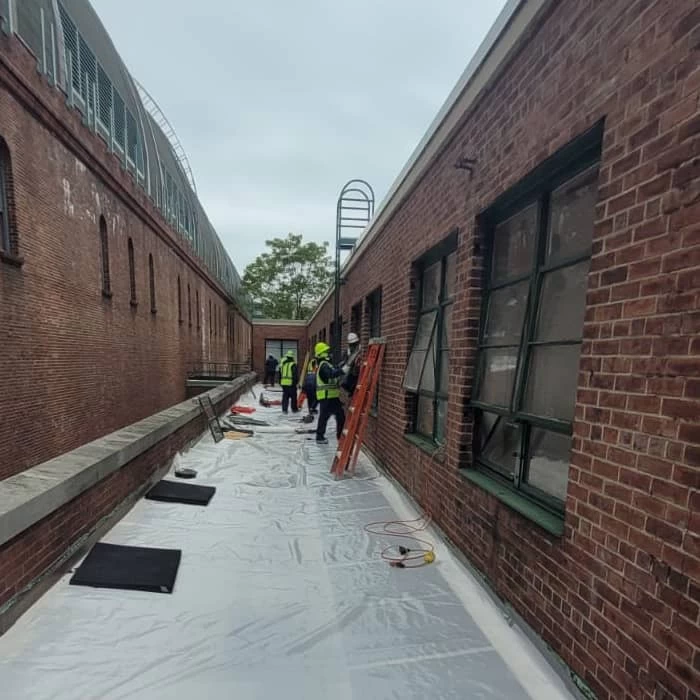
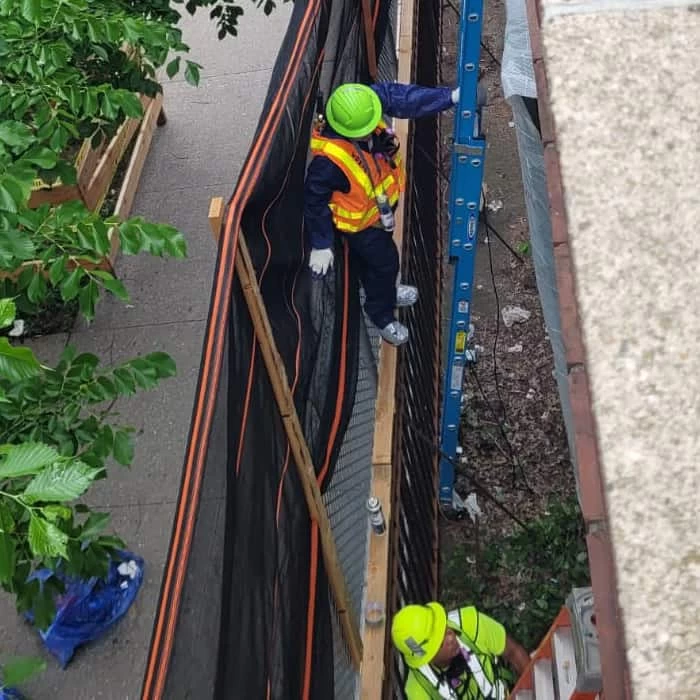
The asbestos piece is worth calling out specifically. With Smithtown’s median construction year sitting at 1967, a significant portion of homes in the area from the neighborhoods near Route 347 to the quieter streets off Sunken Meadow State Parkway contain asbestos in insulation, floor tiles, ceiling tiles, and joint compound. A fire that disturbs those materials creates a health hazard that has to be handled by a New York State-certified environmental contractor before any other work can proceed. We hold those certifications and perform that work in-house.
On the insurance side, we use Xactimate the same estimating software your insurance adjuster uses to document damage in a format that supports a complete, properly scoped claim. For a Smithtown homeowner with a home valued near $900,000, the difference between a well-documented claim and a poorly documented one can be significant. You shouldn’t have to fight for what you’re owed while you’re also trying to get your life back together.
Is it safe to stay in my Smithtown home after a fire?
In most cases, no at least not until the property has been professionally assessed. Even if the fire was contained to one room, smoke travels through HVAC systems and can contaminate the air throughout the entire house within minutes. Soot contains carbon particles and other byproducts that are genuinely harmful to breathe, especially for children or anyone with respiratory sensitivities.
In Smithtown specifically, there’s an additional concern. Homes built before the late 1970s which describes the majority of the housing stock here may contain asbestos in insulation, ceiling tiles, or floor materials. A fire that disturbs those materials can release fibers into the air that aren’t visible and aren’t detectable without professional testing. Until a certified assessment has been completed and the air quality has been verified, staying in the home puts your family at real risk. We can tell you quickly whether the property is safe to occupy or whether temporary relocation is the right call.
How long does fire damage restoration typically take in Smithtown, NY?
It depends on the scope of the damage, but most residential fire restorations in Smithtown fall somewhere between two weeks and several months. A contained kitchen fire with limited smoke spread might be resolved in two to three weeks. A fire that affected multiple rooms, involved significant water damage from suppression efforts, or requires asbestos abatement before reconstruction can begin will take longer sometimes two to four months for a complete rebuild.
One factor that’s specific to Smithtown is the building permit process. Any structural reconstruction requires permits from the Town of Smithtown’s Building Department, and permit timelines can affect the overall schedule. Working with a restoration company that handles the permitting process as part of their service rather than leaving it to you keeps the project moving and reduces the chance of delays caused by paperwork. We give you a realistic timeline upfront, not a vague estimate designed to manage your expectations in the short term.
Does homeowners insurance cover fire damage restoration in New York?
Yes, standard homeowners insurance policies in New York cover fire damage restoration, including smoke and soot cleanup, water damage from firefighting suppression, and structural reconstruction. What varies is how completely the damage gets documented and whether the claim scope reflects the full reality of what happened and that’s where a lot of homeowners run into problems.
Insurance adjusters work from damage estimates, and if the documentation doesn’t capture hidden smoke damage, water intrusion in secondary rooms, or the cost of required environmental remediation like asbestos abatement, the claim can be underpaid. For a Smithtown homeowner with a home valued near $900,000, that gap can be substantial. We use Xactimate the same estimating platform your adjuster uses and work directly with your insurance company to make sure the documented scope matches what actually needs to be done. You shouldn’t have to negotiate for coverage on damage that’s clearly there.
Will the smoke smell ever fully go away after a fire in an older Smithtown home?
Yes but only if the remediation goes deep enough. Surface cleaning alone won’t do it. Smoke molecules are extremely small and penetrate porous materials like wood framing, plaster walls, insulation, and upholstery. In Smithtown’s older homes, which were largely built with plaster walls and real wood framing rather than modern drywall, smoke has more material to absorb into and holds on longer.
Professional smoke odor elimination involves treating the source not just masking the smell. That means cleaning HVAC systems and ductwork, treating wall cavities and structural materials, and in some cases removing and replacing materials that have absorbed too much smoke to be effectively cleaned. Ozone treatment and thermal fogging are also used in certain situations to neutralize odor molecules that have embedded into surfaces. We’ve worked with enough Smithtown homes to know exactly how deeply a house built in the ’60s can hold onto smoke, and we adjust our approach accordingly.
What should I do immediately after a fire at my home in Smithtown?
The first call should be to your insurance company to report the loss and open a claim. The second call should be to us. Don’t wait on the second one the damage continues to develop after the fire is out. Soot starts permanently etching and staining surfaces within 24 to 72 hours. Water from firefighting suppression begins growing mold within 24 to 48 hours. Every hour of delay increases the total damage and the total cost of restoration.
While you’re waiting for our team to arrive, don’t try to clean anything yourself. Wiping soot with a dry cloth can actually push it deeper into surfaces and make it harder to remove professionally. Don’t run the HVAC system it will spread smoke contamination to rooms that weren’t affected. And don’t re-enter the home without being told it’s structurally safe to do so. The Smithtown Fire Department will typically clear the property before leaving the scene, but a professional assessment for air quality and structural integrity is a separate step that comes with our initial inspection.
Does fire damage restoration include water damage from the fire hoses?
It should and if a restoration company doesn’t offer water extraction and drying as part of their fire damage service, that’s a gap worth asking about directly. When the Smithtown Fire Department responds to a residential fire, particularly one that draws mutual aid from departments in Kings Park, Nesconset, St. James, or Hauppauge, the volume of water deployed can be substantial. That water soaks into flooring, subfloor, wall cavities, and ceiling materials and it doesn’t dry on its own fast enough to prevent mold.
We handle water extraction, structural drying, and mold remediation as part of the same restoration process, not as a separate engagement. This matters because the fire damage and the water damage are part of the same event, and treating them separately or leaving the water damage to a different company creates coordination problems and gaps in documentation that can affect your insurance claim. When you’re dealing with a loss this significant in a home this valuable, having one team accountable for the complete picture is the only approach that makes sense.