When a Historic Hamptons Home Burns, Every Hour Counts
Fire damage in Southampton doesn’t wait and neither should your restoration. We respond fast, handle everything from smoke cleanup to full rebuild, and help you navigate the insurance process from the first call.
I needed a professional consultation explanation of procedure for safe removal of Asbestos in my apartment complex. Without having an account yet, I was very impressed with the caring, knowledgeable and generous advice offered by Jessica, and will look forward to doing business in the future. Thank you so much! I feel much more informed about a sometimes scary endeavor. Peace. Nancy Silva Mineola, NY.
Mia Munoz
Used this company to clean up some water flood in my house. They were fast and easy to work with.very professional, Would recommend to anyone!
Nini Valle
Great company, had a flood and they responded quickly and efficiently. Billed my insurance company directly. I highly recommend this company!
joe colapietro, jr
I had pipe freeze in my basement right before a snow storm and they made to within an hour to help start the clean up process. They we by our side throughout the entire process and even helped with the insurance company. They did such a great job with the cleanup, repair, remidiation, I contracted them to perform the repairs and finishes in the basement. They came with enough manpower and material to get the job done. Leo and Jessica were nothing but a pleasure to deal with!!
Cristian Arredondo c
I had some water damage in my home and Green Island was able to take care of my issue quickly and effectively. I am very pleased with the work they did. They responded quickly and were very professional.
Michael M
Outstanding service! From the office to the field crew everyone was friendly, helpful and responsive. I highly recommend Green Island Group.
What Full Recovery Actually Looks Like in Southampton
After a fire, most homeowners focus on what burned. The real damage is almost always bigger than that. Smoke moves through wall cavities, ductwork, and original plaster the kind you find in Southampton’s older homes along North Sea Road or in the village’s historic core and it keeps doing damage long after the flames are out. Soot begins permanently etching surfaces within 24 to 72 hours. What looks like a contained kitchen fire can mean contamination throughout the entire house.
Then there’s the water. When the Southampton Fire Department suppresses a structure fire, firefighting hoses can deliver hundreds of gallons of water per minute into your home. That water soaks into floors, framing, and insulation and mold can begin growing within 24 to 48 hours of that intrusion. In Southampton’s older housing stock, where original materials are more porous and vapor barriers are often absent, that timeline is unforgiving.
When we finish a job, the smoke smell is gone, the structure is dry, the environmental hazards are addressed, and the home is rebuilt to the standard it deserves. You’re not left coordinating a second contractor for the mold, a third for the rebuild. One company, one point of contact, one finished result.
Local to Southampton and the East End, Accountable to You
Green Island Group is a locally owned and operated Long Island restoration company not a franchise, not a call center. When you call 631-613-8945, you reach the people who actually do the work. Clients consistently name specific staff members in their reviews because this is a company built on real relationships, not rotating crews dispatched through a corporate system.
Southampton sits at the end of the South Fork, more than 20 miles past where the Long Island Expressway ends. Every service provider has to earn their way out here. We’ve established service presence throughout the East End and know what it means to work in a community where properties range from century-old estate homes on Gin Lane to year-round family homes in Hampton Bays and North Sea.
The satisfaction guarantee is straightforward: the job isn’t done until you say it is. In a town where a poorly executed restoration on a historic or high-value property can cause permanent damage to something irreplaceable, that commitment means something.
From Emergency Call to Finished Room No Gaps in the Process
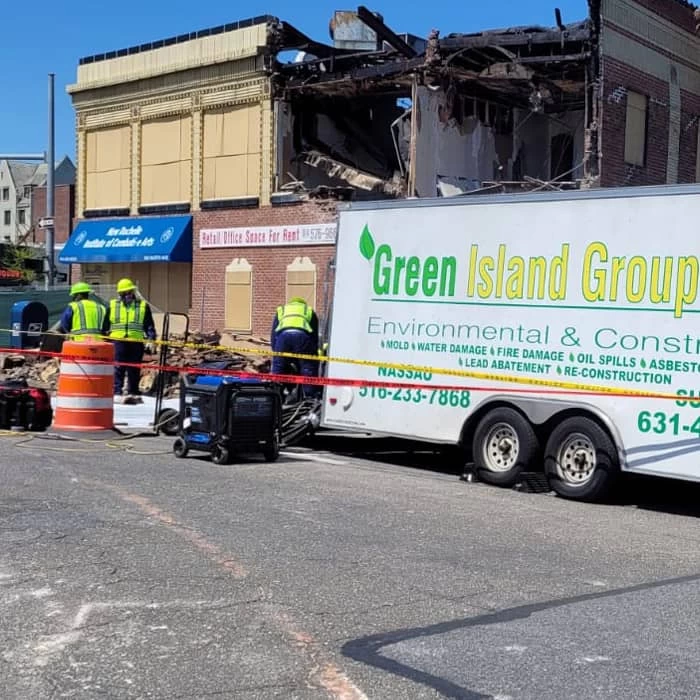
The process starts the moment you call. We respond to fire damage emergencies with the goal of being on-site fast because in fire restoration, the window between recoverable and permanently damaged closes quickly. The first priority is stabilizing the property: securing the structure, extracting standing water from firefighting suppression, and beginning the assessment of smoke and soot migration throughout the home.
From there, the remediation phase addresses what you can’t see as much as what you can. Smoke contamination in ductwork, wall cavities, and porous surfaces is treated systematically. If the property contains asbestos-containing materials a real probability in Southampton’s pre-1978 homes, which make up a significant portion of the town’s housing stock that environmental remediation is handled before any reconstruction begins. For properties in Southampton Village’s historic districts, we work within the Certificate of Appropriateness process required by the Landmarks and Historic Districts Board, so permitting doesn’t become a surprise that stalls your rebuild.
Once the structure is clean, dry, and cleared, reconstruction begins. Framing, drywall, finishes, whatever the fire took it gets rebuilt to match. You get one company managing the entire arc, which means no finger-pointing between contractors and no falling through the cracks between phases.
Fire damage restoration in Southampton involves more than most homeowners expect going in. Our scope covers emergency board-up and structural stabilization, soot and smoke remediation, water extraction and drying from firefighting suppression, odor elimination, asbestos and lead abatement where required, mold remediation, demolition of unsalvageable materials, and full reconstruction through final finishes. That’s not a list of upsells it’s the actual scope of what a fire event in an older or historic property typically requires.
Southampton’s housing stock makes this comprehensive approach necessary. Homes in the Estate Section near Lake Agawam, cottages in Tuckahoe, and older properties throughout North Sea and Shinnecock Hills all share one thing: age. Pre-1978 construction means lead paint is likely. Pre-1970s construction means asbestos in insulation, floor tiles, or pipe wrapping is a serious possibility. A fire that disturbs those materials creates an environmental remediation situation that a fire-only contractor can’t legally or safely handle. We can.
For seasonal and absentee property owners a large portion of Southampton’s homeowner base the ability to manage the entire project under one company, with clear communication and a named point of contact, is what makes the difference between a restoration that stays on track and one that drags for months while you’re trying to coordinate it from the city.
Does homeowners insurance actually cover fire damage restoration in Southampton, NY?
In most cases, yes standard homeowners insurance policies cover fire damage restoration, including smoke and soot cleanup, water damage from firefighting suppression, and structural repairs. What varies is how the claim is handled and whether the full scope of damage gets properly documented. Insurers don’t always account for smoke migration into areas beyond the burn zone, or for the environmental remediation that older Southampton properties often require.
We help you through that process. Multiple clients have specifically noted in reviews that our staff helped them communicate with their adjuster, document the full scope of damage, and avoid having parts of the claim underpaid or overlooked. If your property is in Southampton Village’s historic district and requires a Certificate of Appropriateness before reconstruction can begin, that timeline affects your claim too and it’s worth having a restoration company that understands how those regulatory steps interact with your insurance process.
How quickly does smoke damage become permanent after a fire?
Faster than most people expect. Soot begins permanently etching and staining porous surfaces stone, wood, plaster, grout within 24 to 72 hours of a fire. Smoke odor that isn’t treated early doesn’t just linger, it bonds to materials and becomes significantly harder to remove the longer it sits. In an unoccupied seasonal home, where a fire might not be discovered immediately, that window can close before anyone even makes a call.
This is a real concern in Southampton, where a large number of properties are second homes or seasonal residences that sit empty from fall through spring. If a fire or smoke event happens in an unoccupied property on the East End in January, the damage can compound for days before it’s discovered. That’s exactly why fast response matters and why the assessment needs to cover the full property, not just the room where the fire started.
Do I need a permit to restore a fire-damaged home in Southampton Village?
Yes, and depending on your property, you may need more than a standard building permit. Southampton Village’s Building Department administers the Board of Architectural Review and Historic Preservation, and properties within designated historic districts require a Certificate of Appropriateness a COA before any exterior alteration or reconstruction can proceed. This applies in addition to the standard permitting process under New York State’s Uniform Fire Prevention and Building Code.
If your property is in a coastal area, the Village also administers Floodplain regulations and Coastal Erosion Hazard Area rules, which can affect where and how reconstruction is permitted on oceanfront or near-shore properties. These aren’t obstacles that are unique to fire damage they apply to any significant exterior work in Southampton Village but they are steps that catch homeowners off guard when they’re already dealing with the stress of a fire event. Knowing that your restoration company understands this regulatory layer before the project starts saves time and prevents costly mistakes mid-project.
What's the difference between fire damage restoration and just cleaning up after a fire?
Cleanup is removing visible debris and soot. Restoration is returning the property to the condition it was in before the fire structurally, environmentally, and cosmetically. Those are two very different scopes of work, and confusing them is one of the most common mistakes homeowners make in the aftermath of a fire.
Real restoration means addressing smoke migration through HVAC systems and wall cavities, extracting water from firefighting suppression before mold sets in, testing for and removing any asbestos or lead-containing materials disturbed by the fire, and then rebuilding what was lost framing, drywall, flooring, trim, finishes. In Southampton’s older homes, where original materials like plaster walls, hardwood floors, and timber framing are common, restoration also means making decisions about what can be salvaged and what needs to be replaced in a way that respects the property’s character. A company that only does cleanup leaves you to figure out the rest on your own.
How long does fire damage restoration typically take for a home in the Hamptons?
It depends on the scope, but a realistic timeline for most residential fire damage restoration projects ranges from a few weeks for contained, single-room damage to several months for more extensive structural damage. The variables that extend timelines are almost always the ones that catch homeowners off guard: the extent of smoke migration beyond the visible burn area, the presence of asbestos or lead that requires environmental remediation before reconstruction can begin, and specific to Southampton Village the permit and COA approval process for properties in historic districts.
For absentee or seasonal property owners, project management communication matters as much as the timeline itself. If you’re coordinating from New York City while your Southampton property is being restored, you need a restoration company that keeps you informed at every phase and doesn’t require you to be on-site to keep the project moving. That’s a real part of how we operate consistent communication with a named point of contact throughout the project.
Does fire damage in older Southampton homes involve asbestos or lead paint concerns?
In many cases, yes and it’s something every homeowner with an older property should understand before any restoration work begins. Homes built before 1978 have a high probability of containing lead-based paint. Homes built before the mid-1970s have a meaningful probability of containing asbestos in insulation, floor tiles, ceiling tiles, pipe wrapping, or roofing materials. Southampton has a significant concentration of pre-war and even pre-WWII housing stock, particularly in the Estate Section, North Sea, and Tuckahoe.
When a fire disturbs those materials, the restoration scope immediately becomes an environmental remediation situation one that requires certified abatement professionals, not just general contractors. In New York State, asbestos abatement requires certification from the NYS Department of Labor. A restoration company that isn’t equipped to handle this legally and safely will either leave the hazard in place or require you to bring in a separate environmental contractor, which creates delays, gaps in accountability, and added cost. We handle asbestos abatement and lead remediation as part of our restoration scope, so that step doesn’t become a separate project you’re left to manage on your own.