When a Springs Home Burns, the Clock Starts Immediately
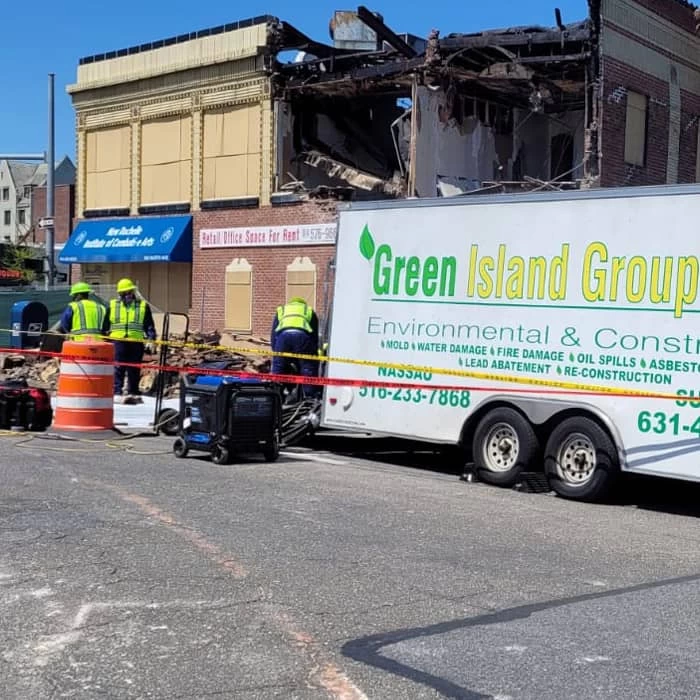
Soot settles. Smoke spreads. Water from the hoses soaks into everything. Fire damage restoration in Springs, NY moves fast and we move faster.
Green Island Group responds to fire emergencies across the East End, and we know Springs specifically: the older balloon-frame homes along Springs-Fireplace Road, the seasonal properties that sit vacant for months, the coastal humidity that accelerates water damage and mold growth. When your Springs home is damaged by fire, we’re the team that shows up first and stays through the final rebuild.
I needed a professional consultation explanation of procedure for safe removal of Asbestos in my apartment complex. Without having an account yet, I was very impressed with the caring, knowledgeable and generous advice offered by Jessica, and will look forward to doing business in the future. Thank you so much! I feel much more informed about a sometimes scary endeavor. Peace. Nancy Silva Mineola, NY.
Mia Munoz
Used this company to clean up some water flood in my house. They were fast and easy to work with.very professional, Would recommend to anyone!
Nini Valle
Great company, had a flood and they responded quickly and efficiently. Billed my insurance company directly. I highly recommend this company!
joe colapietro, jr
I had pipe freeze in my basement right before a snow storm and they made to within an hour to help start the clean up process. They we by our side throughout the entire process and even helped with the insurance company. They did such a great job with the cleanup, repair, remidiation, I contracted them to perform the repairs and finishes in the basement. They came with enough manpower and material to get the job done. Leo and Jessica were nothing but a pleasure to deal with!!
Cristian Arredondo c
I had some water damage in my home and Green Island was able to take care of my issue quickly and effectively. I am very pleased with the work they did. They responded quickly and were very professional.
Michael M
Outstanding service! From the office to the field crew everyone was friendly, helpful and responsive. I highly recommend Green Island Group.
What Changes When the Right Team Shows Up First in Springs
A fire doesn’t just burn what it touches. Smoke travels through every room, seeps into wall cavities, gets pulled into HVAC systems, and bonds to porous surfaces within hours. In Springs, where a significant share of the housing stock includes older balloon-frame construction homes where wall cavities run uninterrupted from foundation to roofline fire and smoke can travel into areas that show no visible damage at all. What looks like a contained kitchen fire can mean smoke contamination three rooms away and hidden charring inside the walls.
Then there’s the water. Firefighting suppression soaks floors, ceilings, and insulation. In a coastal, harbor-surrounded community like Springs, where humidity from Accabonac Harbor and Three Mile Harbor is a year-round reality, that moisture doesn’t just dry on its own. Mold can begin growing within 24 to 48 hours of water intrusion. If the home was unoccupied and with nearly a quarter of Springs properties seasonally vacant, that’s not a rare scenario the damage can compound significantly before anyone even realizes the full scope.
The outcome we deliver isn’t just a cleaned-up house. It’s a home that’s structurally sound, environmentally safe, and fully documented for your insurance claim. That’s what a complete fire restoration process actually delivers and it’s what separates real restoration from a surface-level cleanup.
One Team From the First Call to the Final Finish Springs Residents Know Us by Name
We’re a locally owned restoration company serving Suffolk County and the East End of Long Island, including the Town of East Hampton and the hamlet of Springs. This isn’t a franchise operation dispatching crews from central Suffolk. We already know Springs the roads, the housing stock, the permitting process through East Hampton Town’s Building Department, and the specific challenges that come with restoring older homes in a coastal, rural community.
What makes the difference in practice is that you’re working with real people named staff who carry your project from the emergency call through the final walk-through. Our customers have specifically called out Leo and Jessica by name across multiple independent reviews, not because it’s a talking point, but because that’s how the work actually gets done here. No handoffs to subcontractors mid-project. No gaps between phases.
We handle fire restoration, smoke and soot remediation, water extraction, asbestos abatement for older homes, mold prevention, and full reconstruction all under one roof. For Springs homeowners, that means one point of contact from crisis to completion.
From Emergency Call to Rebuilt Here's the Honest Walkthrough
The first step is emergency response and stabilization. That means securing the property board-up, tarping, temporary weatherproofing so that nothing gets worse while the assessment is underway. In Springs, where properties can sit unoccupied for months at a time and where nor’easters and coastal weather can move in quickly, getting the structure protected fast matters more than it might in a more sheltered inland community.
From there, the assessment phase documents the full scope of damage. This isn’t just what’s visible. In balloon-frame homes which are well-documented in Springs’ mid-century housing stock that means checking inside wall and roof cavities for concealed fire travel. It means testing for asbestos-containing materials before any demolition begins, because pre-1980 construction in Springs commonly includes ACMs in insulation, floor tiles, and joint compound. East Hampton Town requires permits for structural repairs and reconstruction, and we initiate that process here.
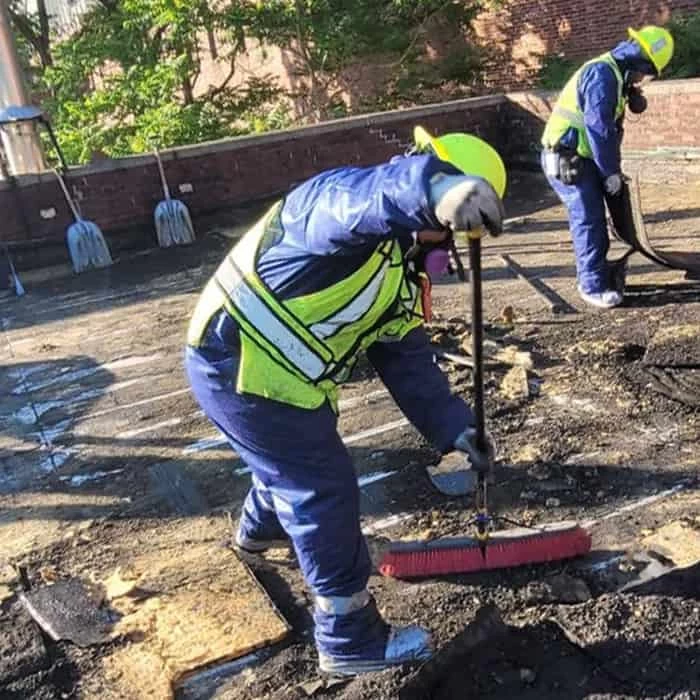
Once the scope is confirmed and documented which also forms the foundation of your insurance claim remediation begins. We treat soot and smoke at the molecular level, not just wipe things down. Water is extracted and the structure is dried completely. Any asbestos abatement is handled in-house. Then reconstruction begins, phase by phase, through final finishes. You get progress updates throughout, not silence until someone shows up at the door.
Everything the Job Actually Requires Handled In-House
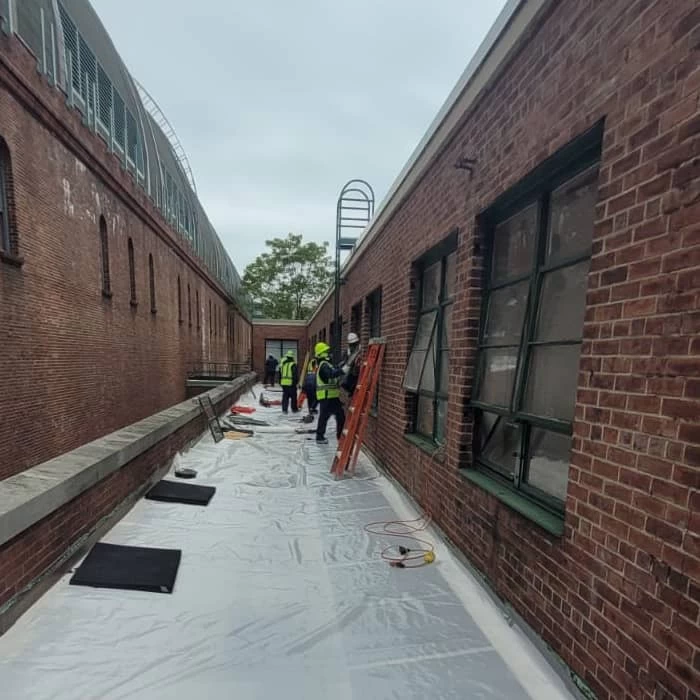
Fire damage restoration in Springs isn’t a single-trade job. It’s a construction and environmental project that moves through several distinct phases, and the quality of each one affects everything that comes after. Our scope covers the full arc: emergency stabilization, structural assessment, smoke and soot remediation, water extraction and drying, asbestos abatement where required, mold prevention, full reconstruction, and final finishes.
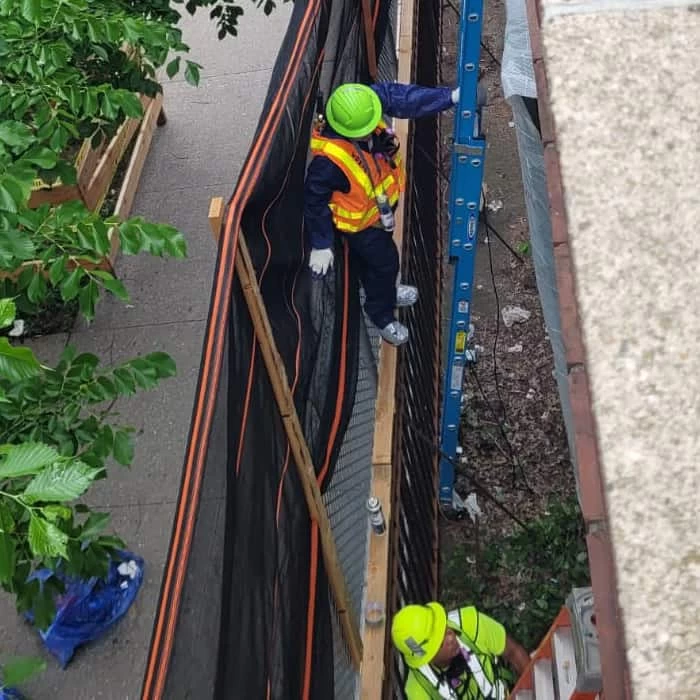
The asbestos piece is worth addressing directly. A meaningful portion of Springs’ housing stock was built before 1980, and many of those homes particularly the mid-century cottages and older structures throughout the Springs-Fireplace Road corridor contain asbestos-containing materials that can be disturbed during a fire and during subsequent demolition. Most fire-only contractors cannot legally handle asbestos abatement. We hold the New York State Department of Labor certification required to do this work, which means the environmental scope gets handled in the same engagement as the structural restoration no separate companies, no coordination gaps, no liability left open.
Insurance navigation is also built into our process. We work directly with adjusters, document scope thoroughly, and help ensure your claim reflects the actual extent of the damage not just what’s easiest to approve. For a Springs property, where real estate values are significant even for modest homes, that documentation process can be the difference between a full recovery and a shortfall that comes out of your pocket.
Does fire damage in a Springs home always require more than basic cleanup?
In most cases, yes and Springs specifically has a few factors that make this more likely than in other areas. The hamlet has a documented concentration of balloon-frame homes, particularly mid-century structures built in the 1940s through 1960s. In balloon-frame construction, wall cavities run continuously from the foundation to the roofline without fire stops, which means fire and smoke can travel far beyond the visible burn area. A fire that looks contained to one room may have moved through the wall structure into the attic or adjacent rooms.
Beyond the structural issue, older Springs homes frequently contain asbestos-containing materials insulation, floor tiles, ceiling tiles, joint compound that become a hazardous concern the moment a fire disturbs them. And then there’s the water from suppression, which in a humid coastal environment near Accabonac Harbor creates real mold risk within 24 to 48 hours. Basic cleanup addresses none of these things. A proper fire damage restoration process does.
How quickly does fire damage need to be addressed before it gets significantly worse?
The window is shorter than most people expect. Soot begins permanently etching and staining surfaces glass, countertops, metal fixtures, finished wood within 24 to 72 hours of a fire. Smoke odor bonds to porous materials like drywall, insulation, and hardwood flooring, and the longer it sits, the deeper it penetrates. In Springs’ coastal environment, where humidity from Three Mile Harbor and Accabonac Harbor is a consistent factor, that bonding process can accelerate.
Water from firefighting suppression creates a separate but equally urgent timeline. Mold can begin growing within 24 to 48 hours of water intrusion, and once mold establishes itself in a wall cavity or subfloor, the remediation scope expands considerably. The practical answer is that every hour between the fire and the start of professional restoration increases the total damage and the total cost. Rapid response isn’t a sales pitch; it’s a direct factor in how much of your home can actually be saved.
Will my homeowners insurance cover fire damage restoration in Springs, NY?
Standard homeowners insurance policies typically cover fire damage, including smoke damage, water damage from firefighting suppression, and the cost of restoration and reconstruction. But what the policy covers in theory and what an adjuster approves in practice can be two different things especially for a complex, multi-phase restoration project in a high-value market like Springs.
The key is documentation. Insurance adjusters work from documented scope, and if the full extent of damage isn’t captured concealed fire travel in balloon-frame walls, smoke contamination in HVAC systems, asbestos disturbance requiring abatement those costs can be left out of the claim. We work directly with adjusters and document the complete scope of damage from the initial assessment forward. For Springs properties, where a fire loss on even a modest home can represent a six-figure claim, that documentation process is not a secondary concern it’s central to your recovery.
What happens if my Springs home was unoccupied when the fire occurred?
This is a more common scenario in Springs than in most communities. With approximately 23 percent of housing units in Springs seasonally occupied, fires in vacant or minimally supervised properties are a documented reality including a 2023 incident on Springs-Fireplace Road where a home was fully involved by the time fire departments arrived, in part because no one was present to detect it early.
When a home has been unoccupied, the fire typically burns longer before being reported, which means greater structural damage, deeper smoke penetration, and more extensive water intrusion from suppression. The restoration scope is almost always broader in these cases. If you’re a seasonal property owner managing this situation remotely, we can respond, secure the property, conduct a full assessment, and begin the insurance documentation process without requiring you to be on-site. Clear communication throughout the project is part of how the work gets done not an afterthought.
Does smoke damage from a fire spread beyond the rooms that actually burned?
Yes, and this is one of the most commonly underestimated aspects of fire damage. Smoke is not confined to the area of the fire. It travels through HVAC systems, migrates through wall cavities, and settles on surfaces in rooms that never saw a flame. In older Springs homes with balloon-frame construction, smoke can move through uninterrupted wall and roof cavities to reach areas that appear completely undamaged from the outside.
The practical consequence is that a restoration scope based only on visible burn damage will miss a significant portion of the actual contamination. Smoke residue left behind in HVAC ducts will recirculate through the home every time the system runs. Smoke odor embedded in drywall, insulation, and wood framing will persist and intensify over time particularly in Springs’ humid coastal environment, where moisture helps smoke residue bond more deeply to porous materials. A thorough fire smoke damage restoration assessment accounts for the full travel path of smoke, not just the origin point.
Does Green Island Group handle the permits required by East Hampton Town for fire restoration work?
Yes. Any structural repairs or reconstruction following fire damage in Springs require permits through the Town of East Hampton’s Building Department, and we handle that process on your behalf. East Hampton Town’s permitting requirements apply to all structural work, and for properties in or near recognized historic areas including the Springs-Fireplace Road corridor near the Pollock-Krasner House there may be additional review considerations.
Beyond the building permit process, environmental work like asbestos abatement requires separate New York State Department of Labor certification, which we hold. This matters because the permit and compliance picture for a fire restoration project in Springs is more layered than a simple repair job and a contractor who isn’t familiar with East Hampton Town’s requirements can create delays, compliance gaps, or liability issues that slow your recovery and complicate your insurance claim. Having one team handle the full scope, including the permitting side, keeps the project moving without gaps.