Stewart Manor Homes Deserve More Than a Surface Cleanup
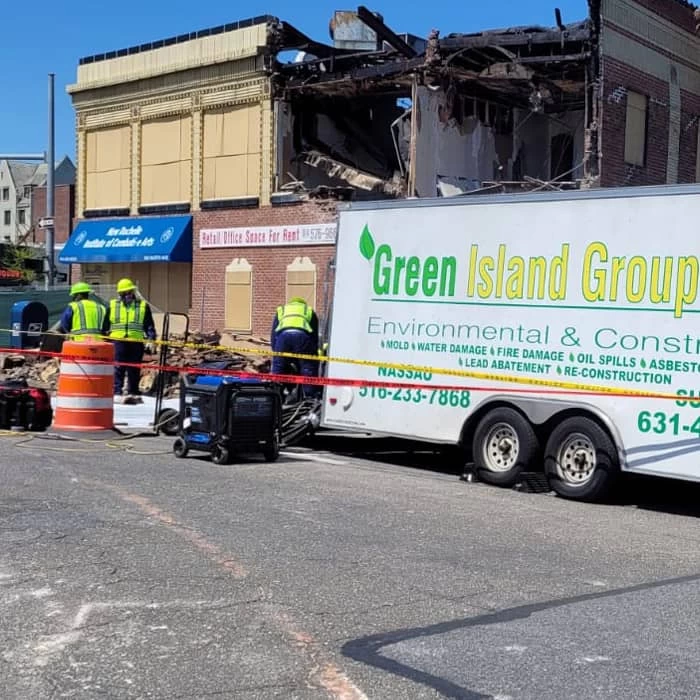
When fire hits a Stewart Manor home — built decades ago, full of history and equity — the damage runs deeper than what you can see. We handle fire damage restoration from the first emergency call through the final rebuild, so you’re not managing five different contractors while your family is displaced.
I needed a professional consultation explanation of procedure for safe removal of Asbestos in my apartment complex. Without having an account yet, I was very impressed with the caring, knowledgeable and generous advice offered by Jessica, and will look forward to doing business in the future. Thank you so much! I feel much more informed about a sometimes scary endeavor. Peace. Nancy Silva Mineola, NY.
Mia Munoz
Used this company to clean up some water flood in my house. They were fast and easy to work with.very professional, Would recommend to anyone!
Nini Valle
Great company, had a flood and they responded quickly and efficiently. Billed my insurance company directly. I highly recommend this company!
joe colapietro, jr
I had pipe freeze in my basement right before a snow storm and they made to within an hour to help start the clean up process. They we by our side throughout the entire process and even helped with the insurance company. They did such a great job with the cleanup, repair, remidiation, I contracted them to perform the repairs and finishes in the basement. They came with enough manpower and material to get the job done. Leo and Jessica were nothing but a pleasure to deal with!!
Cristian Arredondo c
I had some water damage in my home and Green Island was able to take care of my issue quickly and effectively. I am very pleased with the work they did. They responded quickly and were very professional.
Michael M
Outstanding service! From the office to the field crew everyone was friendly, helpful and responsive. I highly recommend Green Island Group.
What Full Restoration Actually Looks Like in Stewart Manor
Most of the homes in Stewart Manor were built between the 1920s and 1950s. That era of construction — plaster walls, original wood framing, oil heat systems — holds smoke differently than newer builds. Soot doesn’t just sit on surfaces. It moves through wall cavities, settles into HVAC ductwork, and absorbs into the materials behind what you can see. A cleanup that only addresses the visible burn zone leaves contamination behind, and you’ll smell it for months.
The other thing that’s specific to Stewart Manor: oil-heated homes. Western Nassau County has one of the highest concentrations of oil burners in the country, and puff-back events — where the burner misfires and forces soot back through your entire heating system — are a real and frequent problem in homes like yours. That’s not a fire in the traditional sense, but it coats every room in fine black soot and requires the same level of professional remediation.
When the work is done right, your home doesn’t just look clean. The air is clear, the odor is gone, the structure is sound, and your insurance claim reflects the full scope of what happened — not just what was easy to document. That’s what complete fire damage restoration actually delivers.
Licensed for Everything Your Older Stewart Manor Home May Require
We’re a locally owned restoration company serving Stewart Manor and all of Nassau County, with 24/7 emergency response and a one-hour on-site arrival commitment. With over 5,000 completed projects across New York State, this isn’t a company that figures things out on your property.
What makes the difference in a village like Stewart Manor — where homes are older, valuable, and often contain asbestos-containing materials or lead paint — is having a contractor who is legally authorized to handle all of it. We hold a Nassau County General Contractor License, NYS DOL Asbestos and Mold Licenses, and USEPA Lead/RRP Certification. Those aren’t marketing credentials. They’re the legal threshold for doing this work correctly in Nassau County.
Our team is also IICRC certified for fire and smoke damage restoration, which is specifically required under the Nassau County Fire Prevention Ordinance for any contractor performing restoration work in the county. You won’t have to stop mid-project because someone isn’t licensed for what they found inside your walls.
No Surprises — Here's Exactly What Happens After a Fire in Your Stewart Manor Home
The first call triggers an emergency response. A crew arrives on-site within an hour, assesses the full scope of damage, and begins protective measures immediately — board-up, tarping, water extraction if firefighting suppression soaked through your floors and walls. That secondary water damage is one of the most overlooked parts of a fire loss, and in Stewart Manor’s older homes with original wood framing, moisture left untreated becomes a mold problem within 24 to 48 hours.
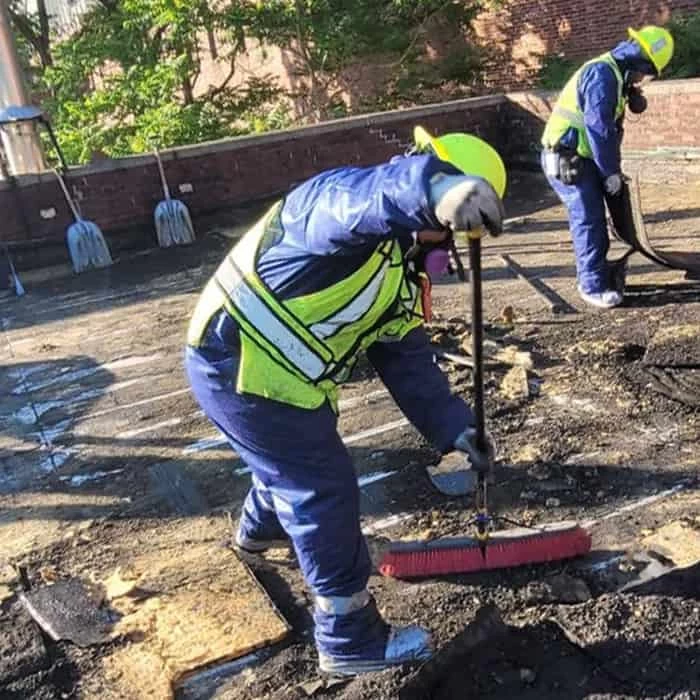
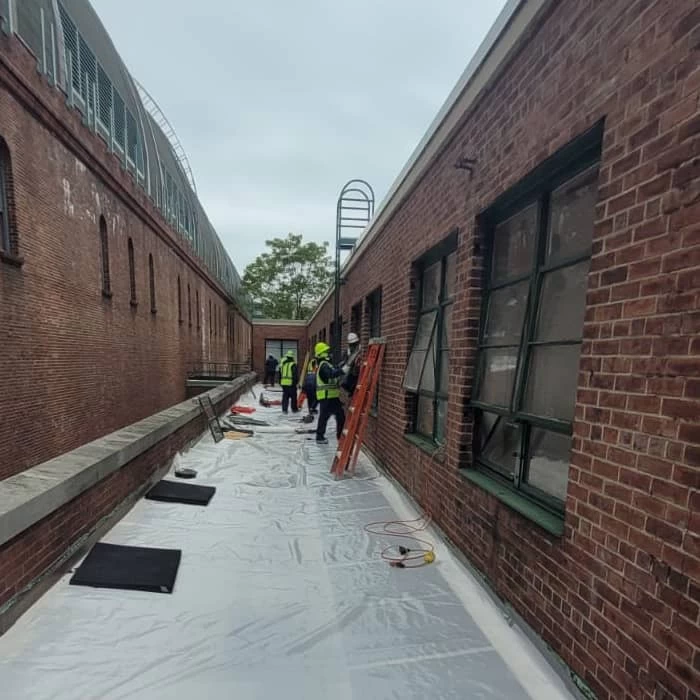
Once the structure is stabilized, the restoration phase begins. That means soot and smoke removal from every affected surface, HVAC cleaning to clear contamination from your ductwork, odor elimination using ozone treatment and thermal fogging, and hazardous material handling if asbestos or lead is present — which is common in homes built before 1980. Because Stewart Manor is an incorporated village, reconstruction work also requires permits through the Village Clerk’s Office at 120 Covert Avenue. We handle that process directly.
Throughout all of it, we document every phase in insurance-standard format and bill your insurer directly. You’re not chasing paperwork while trying to figure out where your family is staying. The goal is to get you back into your home — fully restored, not just patched.
Fire damage restoration in Stewart Manor isn’t a single service — it’s a sequence of interconnected work that has to be done in the right order by someone licensed to do all of it. We cover the full scope: emergency board-up and stabilization, water extraction and structural drying, soot and smoke removal, odor remediation, content restoration, asbestos and lead abatement where required, and complete reconstruction. Nothing gets handed off to a subcontractor you’ve never met.
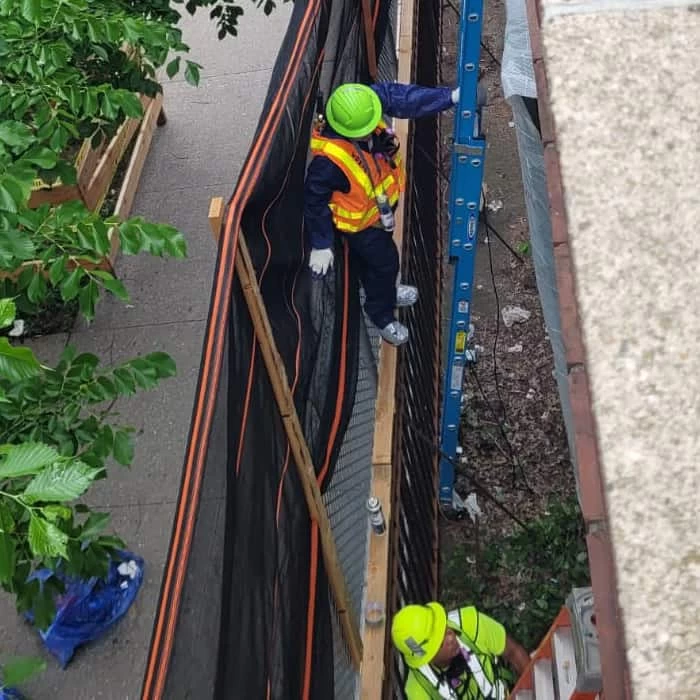
The asbestos and lead piece matters more here than it does in newer communities. Stewart Manor’s housing stock — predominantly built in the 1920s through the 1950s — commonly contains asbestos in floor tiles, pipe insulation, and joint compound, along with lead paint on original surfaces. When fire or firefighting water disturbs those materials, you’re legally in hazmat territory. A contractor without a NYS DOL Asbestos License cannot complete the job. We hold that license, along with USEPA Lead/RRP certification, so the work doesn’t stop when something unexpected turns up inside your walls.
Because homes in Stewart Manor are worth $800,000 or more, the insurance documentation piece is just as important as the physical work. Every affected surface is photographed, every line item is documented, and the claim is built to reflect the actual scope of the loss — not a minimum viable version of it.
Does Nassau County require a license to perform fire restoration in Stewart Manor?
Yes, and it’s worth understanding before you hire anyone. The Nassau County Fire Prevention Ordinance — most recently updated in April 2024 — requires that any contractor performing fire damage restoration or board-up services in Nassau County be registered with the Nassau County Fire Marshal, hold IICRC FSRT certification or equivalent documented training, and carry valid lead and asbestos abatement licenses. This isn’t a suggestion. It’s a legal requirement.
The reason it matters to you is simple: if you hire a contractor who doesn’t meet these requirements and something goes wrong — an insurance dispute, a hazardous material issue, a failed inspection — you may be the one holding liability. Verifying that your restoration company is properly licensed in Nassau County before signing anything is one of the most important steps you can take after a fire in Stewart Manor.
How long does fire damage restoration typically take for a Stewart Manor home?
It depends on the scope, but for a typical single-family home in Stewart Manor, a moderate fire loss — one that affects a kitchen, a bedroom, or a portion of the main living area — generally takes between two and four weeks from initial cleanup through reconstruction. A more significant loss involving structural damage or hazardous material abatement can extend that timeline to six to eight weeks or longer.
The age of homes in Stewart Manor adds a layer that newer construction doesn’t have. Discovering asbestos-containing materials or lead paint mid-project requires proper abatement before reconstruction can continue, and that process has its own timeline governed by state regulations. Having a contractor who is already licensed for abatement — rather than stopping work to locate one — keeps the project moving without unnecessary delays. Your insurance adjuster will also factor in scope documentation, so the more thoroughly the damage is recorded upfront, the fewer back-and-forth delays you’ll face on the claims side.
What should I do immediately after a house fire in Stewart Manor, NY?
The first priority is safety — don’t re-enter the property until the Stewart Manor Fire Department or a responding mutual aid unit has cleared it as structurally safe. The village’s volunteer fire department works alongside neighboring departments from Floral Park, New Hyde Park, and Garden City on larger responses, so clearance may come from any of those crews.
Once you have access, call a licensed restoration company before you call anyone else — including your insurance company. The reason is that a restoration professional can document the full scope of damage before anything is touched, which gives your insurance claim the strongest possible foundation. Don’t throw anything away, don’t start cleaning on your own, and don’t let anyone into the property who isn’t licensed to be there. Smoke and soot damage in older Stewart Manor homes can involve disturbed asbestos or lead, and handling those materials without proper credentials creates a health and legal risk. Getting a licensed contractor on-site within the first few hours protects both your family and your claim.
Will my homeowners insurance cover fire damage restoration in Nassau County?
In most cases, yes — standard homeowners insurance policies cover fire damage, including smoke and soot cleanup, water damage from firefighting suppression, and structural reconstruction. What varies is how thoroughly the claim is documented and whether the full scope of damage gets captured before the adjuster closes the file.
This is where many Stewart Manor homeowners leave money on the table. A home worth $800,000 or more can sustain hidden damage — inside wall cavities, in the HVAC system, in structural framing — that doesn’t show up in a surface-level adjuster walkthrough. A restoration company that documents every affected area in insurance-standard format and bills the insurer directly gives your claim the depth it needs. We handle that documentation process as part of the restoration, so you’re not navigating the claims process alone while also trying to find temporary housing and manage contractors.
What is a puff-back, and is it covered by homeowners insurance in Stewart Manor?
A puff-back happens when an oil burner misfires and forces soot and combustion byproducts back through the heating system and into your home. There’s no flame, no traditional fire — but the result is fine black soot coating your walls, ceilings, furniture, and ductwork throughout the entire house. It’s one of the most common restoration calls in western Nassau County, and Stewart Manor’s 1920s through 1950s housing stock — with older oil heat systems — makes it a real and recurring issue here.
Most standard homeowners insurance policies do cover puff-back damage, but the key is documenting it correctly. Puff-back soot is fine and penetrating — it gets into HVAC ductwork, behind outlet covers, and into soft furnishings in ways that a basic wipe-down won’t address. Proper remediation requires surface cleaning, ductwork cleaning, and odor treatment. If the claim is filed without capturing the full extent of contamination, you may end up with a settlement that doesn’t cover the actual cost of restoring your home to a livable condition.
How do I know if my Stewart Manor home has asbestos that was disturbed by the fire?
You can’t tell by looking. Asbestos-containing materials don’t have a visible marker, and fire or the water used to suppress it can disturb those materials without making it obvious. In Stewart Manor, where most homes were built between the 1920s and 1950s, the likelihood of asbestos being present in floor tiles, pipe insulation, ceiling tiles, or joint compound is genuinely high — not a remote possibility.
The only way to confirm it is through professional testing by a licensed inspector. If asbestos is found, abatement must be performed by a contractor holding a NYS DOL Asbestos License before any reconstruction work can proceed. This is state law, not a recommendation. We hold that license and perform testing and abatement as part of the restoration process — so if asbestos turns up during your project, the work doesn’t stop while you locate a separate specialist. It gets handled by the same team already on-site, under the same contract, without adding weeks to your timeline.