When Your Syosset Home Takes a Hit, You Need More Than a Cleanup Crew
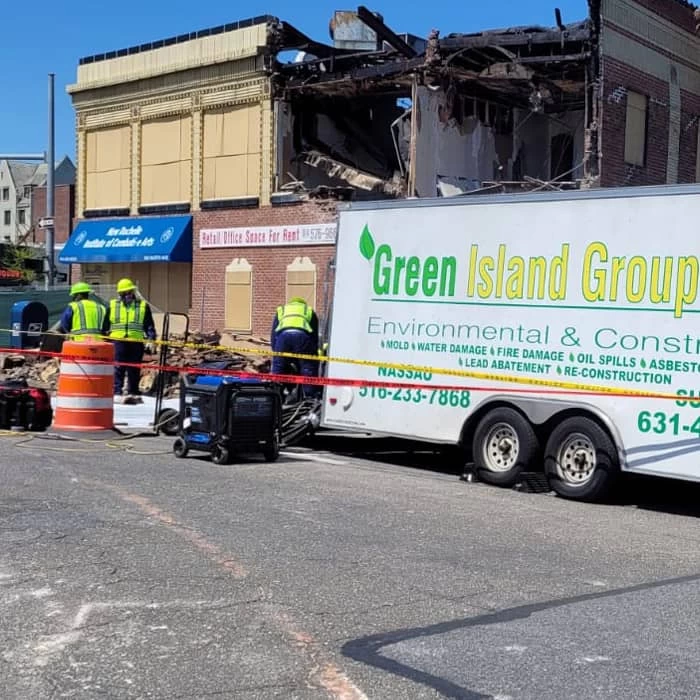
Fire damage restoration in Syosset means navigating older homes, oil heat systems, and a Town of Oyster Bay permit process — all while dealing with your insurance company. We handle every piece of it, start to finish.
I needed a professional consultation explanation of procedure for safe removal of Asbestos in my apartment complex. Without having an account yet, I was very impressed with the caring, knowledgeable and generous advice offered by Jessica, and will look forward to doing business in the future. Thank you so much! I feel much more informed about a sometimes scary endeavor. Peace. Nancy Silva Mineola, NY.
Mia Munoz
Used this company to clean up some water flood in my house. They were fast and easy to work with.very professional, Would recommend to anyone!
Nini Valle
Great company, had a flood and they responded quickly and efficiently. Billed my insurance company directly. I highly recommend this company!
joe colapietro, jr
I had pipe freeze in my basement right before a snow storm and they made to within an hour to help start the clean up process. They we by our side throughout the entire process and even helped with the insurance company. They did such a great job with the cleanup, repair, remidiation, I contracted them to perform the repairs and finishes in the basement. They came with enough manpower and material to get the job done. Leo and Jessica were nothing but a pleasure to deal with!!
Cristian Arredondo c
I had some water damage in my home and Green Island was able to take care of my issue quickly and effectively. I am very pleased with the work they did. They responded quickly and were very professional.
Michael M
Outstanding service! From the office to the field crew everyone was friendly, helpful and responsive. I highly recommend Green Island Group.
Your Home Restored — Not Just Cleaned Up and Handed Back
There’s a big difference between a company that cleans visible soot and one that actually restores your home to what it was before. In Syosset, where most homes were built between 1950 and 1985, fire damage rarely stays contained to one room. Smoke moves through ductwork, soaks into insulation, and settles into wall cavities — sometimes in parts of the house that never saw a flame.
That matters even more in a Syosset home with original or older HVAC systems, which are common throughout the area’s split-levels and colonials. If the ductwork isn’t properly decontaminated, you’ll be smelling smoke months later and wondering why. Real fire smoke damage restoration means addressing the air you breathe, not just the walls you can see.
And then there’s the oil heat factor. Puff-back soot from an oil burner is a different animal entirely — it’s oily, it smears, and it gets into everything fast. If that’s what happened in your Syosset home, you need a team that’s handled this specific scenario dozens of times across Nassau County, not one that’s figuring it out as they go.
We’re a Long Island-based restoration company, headquartered in Bohemia, NY, and serving Nassau County communities including Syosset, Woodbury, Jericho, and Plainview. This isn’t a national franchise routing your call through a regional hub — it’s a locally owned operation with people who know Syosset, know the housing stock, and know what Town of Oyster Bay permits look like on a fire restoration job.
We hold an IICRC certification for fire and smoke damage restoration, a Nassau County General Contractor License, a NYS Department of Labor Asbestos License, USEPA Lead/RRP certification, and NADCA certification for HVAC cleaning. That combination matters in Syosset, where pre-1980 homes regularly turn up asbestos floor tiles and lead paint the moment fire or heat disturbs them.
With over 5,000 completed restoration projects across New York State, we’ve seen every version of this situation. We also bill insurance companies directly and have guided hundreds of Long Island homeowners through the claims process from first call to final walkthrough.
From Emergency Call to Move-Back-In Day — Here's What Actually Happens
The first call triggers a response within one hour, any time of day or night. When our crew arrives, the priority is stabilizing the property — boarding up openings, tarping if needed, and stopping any secondary damage from the water used to fight the fire. In Syosset’s finished-basement homes, that water drains down fast, and if it’s not extracted immediately, you’re looking at a mold problem on top of everything else within 24 to 48 hours.
From there, we conduct a full damage assessment that documents every affected area — structural, smoke, soot, water, and air quality. This documentation isn’t just for the job; it’s what your insurance adjuster needs to approve the full scope of work. We build that file from day one so nothing gets left out of your claim.
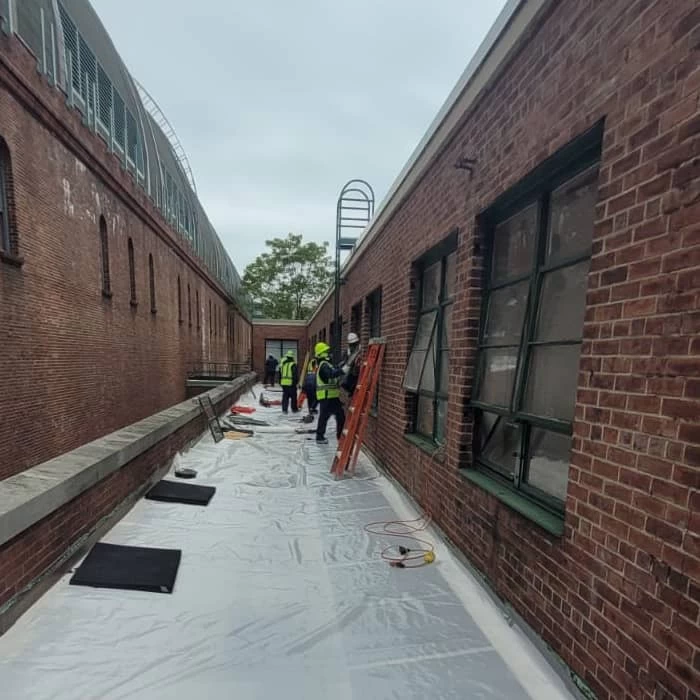
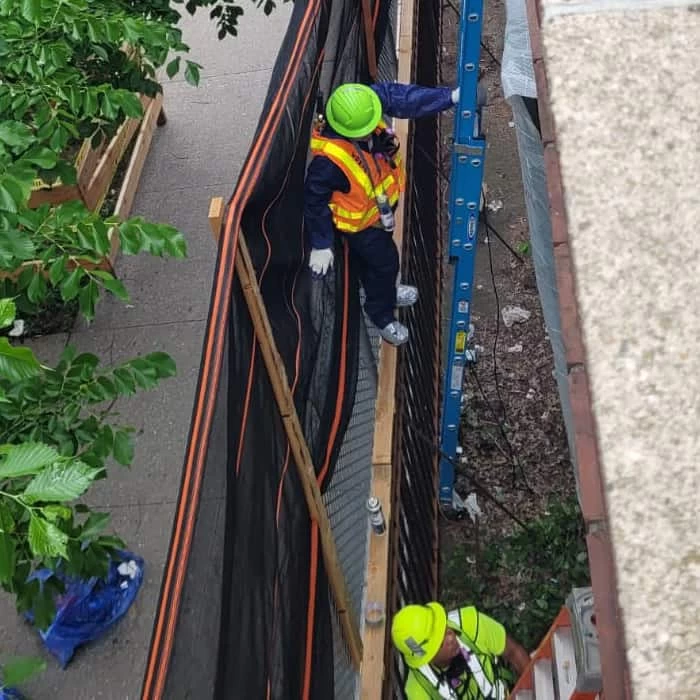
Then comes the actual restoration work: structural drying, smoke and soot removal, HEPA air scrubbing, NADCA-certified duct cleaning, and where applicable, licensed asbestos or lead abatement for the pre-1980 materials common throughout Syosset’s housing stock. Once remediation is complete, the reconstruction phase begins — and because we hold a Nassau County General Contractor License, we pull the Town of Oyster Bay building permits and manage inspections directly. You don’t have to find a second contractor or restart the process mid-job.
What's Actually Included When You Call Green Island Group
Fire damage restoration isn’t one service — it’s a sequence of them, and the order and completeness of that sequence determines whether your home is actually safe to live in again. We cover the full scope: emergency stabilization and board-up, water extraction and structural drying, smoke and soot removal from all surfaces, thermal fogging and ozone treatment for odor, NADCA-certified HVAC duct cleaning, and complete reconstruction with Town of Oyster Bay permit management.
For Syosset homes specifically, the hazardous materials piece is not optional. Homes built before 1980 — which describes the majority of properties throughout the Syosset 11791 ZIP code — frequently contain asbestos in 9×9 floor tiles, pipe insulation around boiler systems, and older ceiling materials. Fire or heat disturbs those materials, and at that point, New York State law requires a licensed abatement contractor to handle them. We hold that NYS DOL Asbestos License, along with USEPA Lead/RRP certification for the lead paint present in most pre-1978 homes. No subcontracting, no gap in accountability.
The insurance side is built into the process from the start. Direct billing, detailed documentation at every phase, and hands-on support through material selection and adjuster communication. In a Syosset home with a high replacement value and a complex claim, that advocacy makes a real difference in what you walk away with.
Does fire damage restoration in Syosset require permits from the Town of Oyster Bay?
Yes — and this is one of the most important things to confirm before you hire anyone. Because Syosset is an unincorporated hamlet, all building permits for fire restoration work go through the Town of Oyster Bay Building Department, not a separate village office. That means any structural repairs, electrical work, plumbing, or HVAC modifications following a fire require a permit application, inspections, and in some cases a Certificate of Occupancy upon completion.
The contractor you hire needs to hold a Nassau County General Contractor License to legally pull those permits. Many restoration companies — including some national franchise brands — are not licensed general contractors and will need to subcontract the reconstruction phase, which creates a handoff point where timelines slip and accountability gets murky. We hold that license and manage the entire Town of Oyster Bay permit process as part of the job, so there’s no gap between the remediation phase and the rebuild.
My oil burner backfired and covered everything in soot — is that fire damage?
It’s called a puff-back, and yes, it’s covered under most standard homeowners insurance policies as fire-related damage — even though there was no actual fire. A puff-back happens when an oil furnace misfires and blasts a cloud of fine, oily soot through the heating system and into your living space. In Nassau County, where oil heat is the dominant fuel source, this is one of the most common restoration calls there is, especially in the fall when systems fire up for the first time after sitting dormant all summer.
The reason puff-back soot is particularly difficult to deal with is that it’s oil-based, not dry. It doesn’t vacuum — it smears. It gets into HVAC ductwork, embeds in upholstery, coats walls and ceilings, and contaminates clothing and soft goods. Cleaning it properly requires specific protocols, the right products, and NADCA-certified duct cleaning to clear the system that spread it throughout your home. We handle puff-back remediation regularly across Syosset and the surrounding Nassau County communities — it’s not an unusual scenario for our team.
How do I know if my Syosset home has asbestos that fire damage may have disturbed?
If your home was built before 1980 — which covers most of Syosset’s residential housing stock — you should assume asbestos-containing materials are present until testing proves otherwise. The most common locations in Nassau County homes of that era are 9×9 vinyl floor tiles (almost universally asbestos-containing), pipe insulation around boiler and heating systems, joint compound used in drywall finishing, and some ceiling tiles. When fire or heat disturbs any of these materials, they can release fibers into the air, and at that point, New York State law classifies the property as a regulated hazardous materials site.
Only contractors holding a NYS Department of Labor Asbestos License can legally perform abatement on those materials. If a restoration company begins work without identifying and addressing asbestos, they’re not just cutting corners — they’re creating a legal and health liability for you as the homeowner. We hold this license and conduct proper testing and abatement as part of the restoration process, so you’re not left managing a separate abatement contractor or discovering the issue mid-project.
How long does fire damage restoration typically take for a home in Syosset?
It depends on the scope, but here’s a realistic breakdown. A smoke and soot event with no structural damage — like a kitchen fire or an oil burner puff-back — typically takes one to two weeks for full remediation, including HVAC cleaning and odor treatment. A fire that caused structural damage to one or more rooms adds the reconstruction phase, which generally runs four to eight weeks depending on the extent of the work, material availability, and permit timelines through the Town of Oyster Bay Building Department.
Larger fires affecting multiple rooms or requiring hazardous materials abatement will extend that timeline further. What affects the timeline most, outside of scope, is how quickly the documentation and insurance approval process moves. We start building the insurance file from day one and communicate directly with your adjuster to avoid delays on the approval side. The faster the claim moves, the faster the work can proceed — and that’s something a well-organized restoration company can actually influence.
Will my homeowners insurance cover the full cost of fire restoration in Syosset?
Most standard HO-3 homeowners insurance policies cover fire damage restoration, including smoke damage, water damage from firefighting efforts, and reconstruction — but the amount you actually receive depends heavily on how thoroughly the damage is documented and how the claim is presented. In Syosset, where median home values are well above $700,000 and many homes have high-end kitchen renovations, finished basements, and custom finishes, the gap between a well-documented claim and a poorly documented one can easily reach tens of thousands of dollars.
Insurance adjusters work for the carrier, not for you. Their job is to settle the claim, not necessarily to maximize it. Having a restoration company that documents every phase with insurance-standard records, understands what’s claimable, and communicates directly with your adjuster is one of the most practical things you can do to protect your outcome. We bill insurance directly and have walked hundreds of Long Island homeowners through this process — including situations where the initial adjuster estimate significantly undervalued the full scope of work.
Can smoke damage spread beyond the room where the fire started in my Syosset home?
Yes — and in Syosset’s mid-century split-levels and colonials, it often does. Smoke doesn’t respect room boundaries. It travels through HVAC ductwork, moves into wall cavities, penetrates insulation, and can reach areas of the home that never had visible fire damage. In homes with older forced-air systems — which are common throughout Syosset’s 1950s to 1980s housing stock — the ductwork essentially acts as a highway for smoke and soot to travel through the entire house within minutes of a fire starting.
This is why a proper fire smoke damage restoration job includes NADCA-certified duct cleaning, not just surface cleaning of the affected rooms. If the HVAC system isn’t fully decontaminated, smoke odor will persist long after everything looks clean, and fine soot particles will continue circulating through your air supply. For households with children, elderly residents, or anyone with respiratory sensitivities — which is a real consideration in a community like Syosset with a high concentration of families — indoor air quality after a fire isn’t a secondary concern. It’s one of the most important things to get right.